

Personalisation in Marketing: How Brands Turn Data Into Customer Loyalty
Why Some Brands Feel Like They Know You Better Than Your Friends
Walk into your local coffee shop and order the same drink every morning. After a few visits, the barista remembers your order.
You feel recognised.
You feel valued.
You feel like a regular.
Personalisation in marketing is essentially the digital version of that interaction.
At its best, personalisation makes customers feel understood. At its worst, it can feel intrusive, creepy, or simply inaccurate. The challenge for marketers is finding the sweet spot between relevance and privacy.
In a world where consumers are bombarded with thousands of marketing messages every day, relevance has become one of the most valuable currencies available.
This article explores what personalisation actually means, why it works psychologically, and how some of the world’s most successful brands have elevated it from a marketing tactic into a competitive advantage.
The Marketing Made Clear Podcast
This article features content from the Marketing Made Clear Podcast – check it out on all good platforms.
What Is Personalisation?
Personalisation is the practice of tailoring products, services, communications, or experiences to individual customers based on data, behaviour, preferences, or previous interactions.
The concept is not new.
Local shopkeepers have been doing it for centuries.
The difference today is scale.
Modern technology allows organisations to personalise experiences for millions of people simultaneously.
Examples include:
- Product recommendations
- Personalised email campaigns
- Dynamic website content
- Tailored advertising
- Loyalty programme offers
- Customised products
- Personalised pricing and promotions
The goal is simple:
Deliver the right message, to the right person, at the right time.
Why Personalisation Works
Several psychological theories help explain why personalisation is so effective.
The Cocktail Party Effect
Psychologists have long observed that people instinctively pay attention when they hear their own name.
Even in a crowded room filled with conversations, someone mentioning your name immediately captures your attention.
This phenomenon, known as the Cocktail Party Effect, demonstrates that humans are naturally drawn to information that relates directly to themselves.
Personalised marketing leverages this same principle.
When an email references previous purchases or a recommendation aligns perfectly with your interests, it feels more relevant than generic advertising.
Self-Relevance Theory
Research suggests people devote more cognitive processing to information that relates directly to their identity, needs, or goals.
This means personalised messages are more likely to:
- Be noticed
- Be remembered
- Influence decision-making
In short, people care more about information that appears to be about them.
Which is perhaps why nobody ever says, “Tell me more about your mortgage,” but everyone enjoys talking about their own.

The Netflix Masterclass
When discussing personalisation, it is difficult to ignore Netflix.
Most people assume Netflix’s success is based on content.
In reality, a significant part of its success comes from helping users discover content.
Netflix collects enormous amounts of behavioural data, including:
- What you watch
- How long you watch
- When you stop watching
- Which genres you prefer
- Which actors you seem to favour
- Which devices you use
This information powers highly personalised recommendations.
Even the artwork you see for the same programme may differ from what another user sees.
Someone who enjoys action films might see explosions and chase scenes.
Someone who watches romantic dramas might see images highlighting relationships.
The content is identical.
The presentation changes.
Netflix reportedly believes that recommendation systems drive a substantial proportion of viewing activity, helping reduce subscriber churn and increase engagement.
The lesson?
Personalisation is not just about selling.
It is also about helping customers navigate complexity.
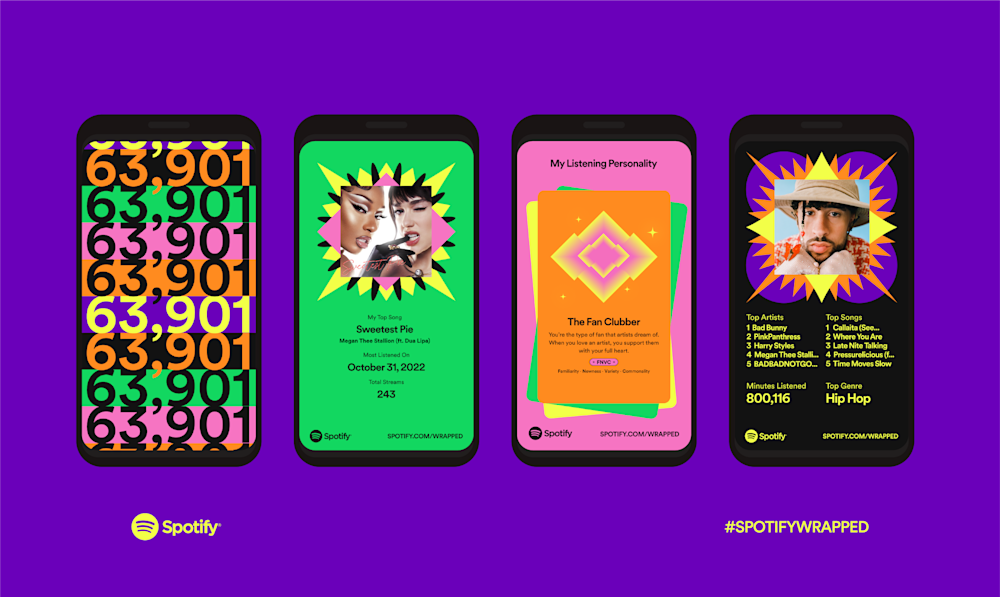
Spotify Wrapped: Turning Customers Into Marketers
Few campaigns demonstrate personalisation better than Spotify’s annual Wrapped campaign.
Every December, users receive a personalised summary showing:
- Most-played artists
- Favourite songs
- Listening habits
- Total listening time
- Genre preferences
The campaign achieves something remarkable.
People actively share marketing content.
Millions voluntarily post their Wrapped results across social media.
Why?
Because the content is about them.
Spotify transformed customer data into a social currency.
Instead of creating advertisements people tolerate, they created content people want to distribute.
This represents personalisation operating at its highest level.
Amazon: The Personalisation Machine
If Netflix mastered recommendations and Spotify mastered self-expression, then Amazon mastered commercial personalisation.
Almost every aspect of the Amazon experience is personalised.
Customers see:
- Recommended products
- Recently viewed items
- Related purchases
- Frequently bought together suggestions
- Tailored offers
The company’s recommendation engine has become one of the most studied examples in marketing and data science.
The principle is straightforward.
If someone purchased a dog bed yesterday, there is a reasonable chance they might need dog toys tomorrow.
Rather than making customers search, Amazon attempts to anticipate needs.
This reduces friction and increases sales.
A classic example of marketing making buying easier rather than harder.

Starbucks: Personalisation in the Physical World
Many marketers associate personalisation exclusively with digital channels.
However, Starbucks demonstrates how effectively it can work in physical environments.
Its loyalty app tracks:
- Purchase history
- Preferred drinks
- Visit frequency
- Time of purchase
This enables highly targeted offers.
Someone who regularly buys a latte might receive a promotion for a new latte variant.
A customer who has not visited recently may receive an incentive to return.
The result is a personalised experience that feels relevant rather than random.
Starbucks effectively combines digital intelligence with physical retail.
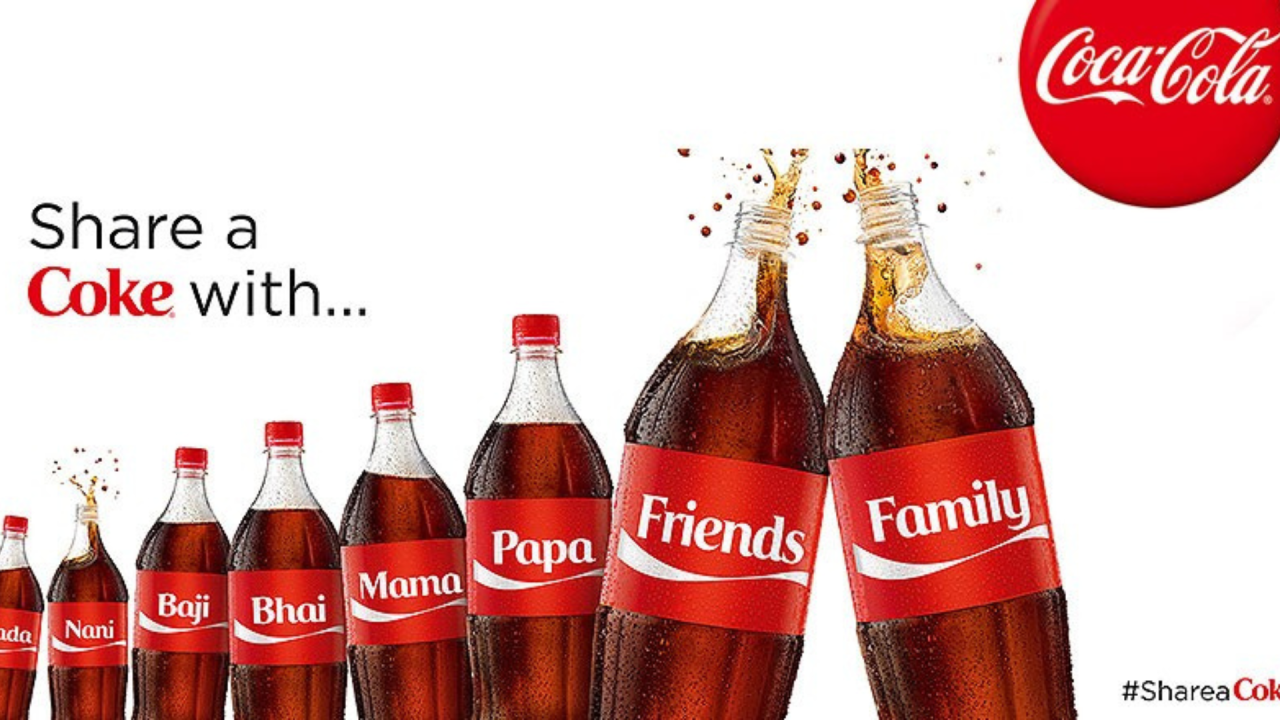
Coca-Cola’s “Share a Coke”
One of the most famous personalisation campaigns in history came from The Coca-Cola Company.
The “Share a Coke” campaign replaced the Coca-Cola logo with individual first names.
The concept was astonishingly simple.
People searched for their own names.
Then they searched for the names of friends and family.
Then they bought bottles to share.
The campaign generated enormous engagement worldwide and demonstrated an important principle:
Personalisation does not always require sophisticated technology.
Sometimes a person’s name is enough.
The campaign succeeded because it tapped into identity, recognition, and social connection.
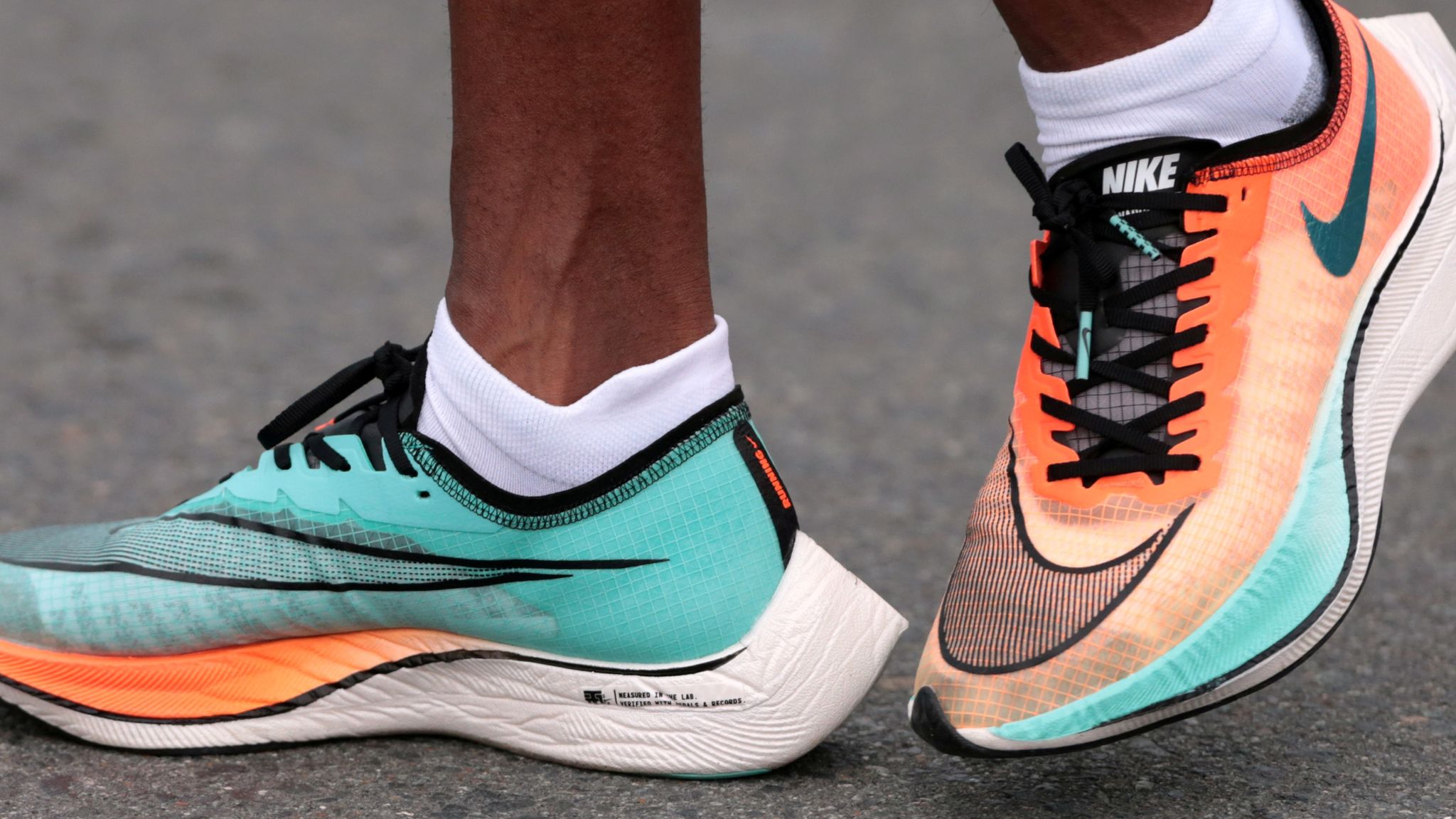
Nike: Personalisation as a Product
Many brands personalise communication.
Nike took things further by personalising the product itself.
Nike By You allows customers to customise:
- Colours
- Materials
- Designs
- Personal text
Consumers become co-creators.
This increases emotional attachment because people value things they help create.
Behavioural economists sometimes refer to this as the “IKEA Effect” – the tendency for people to place greater value on products they have contributed to creating.
The result is a stronger connection between customer and brand.

Tesco Clubcard: One of Britain’s Most Powerful Data Assets
Long before “big data” became a buzzword, Tesco was using customer information to personalise marketing.
The Clubcard programme transformed retailing.
By analysing purchasing behaviour, Tesco gained insights into:
- Household preferences
- Shopping frequency
- Product affinities
- Seasonal behaviour
The retailer could then create increasingly relevant promotions.
What made Clubcard revolutionary was not simply collecting data.
It was using data to improve decision-making.
A lesson many organisations still struggle with today.
When Personalisation Goes Wrong
Not every attempt succeeds.
Personalisation can fail when it becomes:
Too Creepy
Customers may feel uncomfortable if brands appear to know too much.
There is a fine line between helpful and unsettling.
Too Inaccurate
Few things are more frustrating than being shown products you’ve already purchased or recommendations that are wildly irrelevant.
Too Dependent on Automation
Many organisations automate personalisation without considering customer context.
The result can be embarrassing.
Few experiences are quite as awkward as receiving a “we miss you” email five minutes after placing an order.
What Marketers Can Learn
The best personalisation strategies share several common characteristics.
They Solve Problems
Netflix helps users find content.
Amazon helps customers discover products.
Personalisation works best when it improves the customer experience.
They Create Relevance
The objective is not simply to use data.
The objective is to make communications more useful.
They Respect Privacy
Trust is essential.
Consumers increasingly expect transparency regarding how their data is collected and used.
They Feel Human
Technology enables personalisation.
But the experience should still feel human.
As marketing legend Philip Kotler has long argued, successful marketing begins with understanding customer needs.
Personalisation is ultimately just another way of demonstrating that understanding.
The Future of Personalisation
Artificial intelligence is pushing personalisation into new territory.
Brands can now personalise:
- Website experiences in real time
- Product recommendations instantly
- Customer service interactions
- Content creation
- Search experiences
The next generation of marketing may involve experiences that adapt continuously to individual customers.
Yet despite the technological advances, the underlying principle remains unchanged.
People like feeling recognised.
They like feeling understood.
And they like feeling that a brand values them as an individual rather than a customer number.
The technology may evolve.
Human psychology largely does not.
Final Thoughts
The most successful personalised marketing does not feel like marketing.
It feels helpful.
Whether it is Netflix recommending your next favourite series, Spotify revealing your listening habits, Amazon anticipating your needs, or Starbucks remembering your coffee preferences, the common thread is relevance.
Personalisation is not about collecting more data.
It is about using data more intelligently.
As George Orwell once observed, good communication is about making meaning clear. The same principle applies here. The best personalisation helps customers find what they want more quickly, more easily, and with less effort.
Done well, personalisation creates value for both the customer and the brand.
Done brilliantly, customers barely notice the marketing at all.
TL;DR
- Personalisation tailors marketing, products, and experiences to individual customers.
- It works because people naturally pay more attention to information that feels personally relevant.
- Netflix, Spotify, Amazon, Starbucks, Nike, Coca-Cola, and Tesco provide some of the strongest real-world examples.
- The most effective personalisation solves customer problems rather than simply pushing products.
- Successful brands balance relevance, convenience, privacy, and trust.
- AI is accelerating personalisation, but the underlying psychology remains unchanged.