

Spotify Wrapped: How a Yearly Music Recap Became One of the Best Marketing Campaigns Ever Made
The psychology, storytelling, and genius behind Spotify’s annual data-driven phenomenon
Every December, millions of people willingly advertise Spotify for free. Not because they’re paid, not because they’re influenced, but because Spotify Wrapped has become a cultural ritual.
Wrapped is one of the most effective pieces of marketing in the last two decades – a personalised, shareable annual summary of your listening habits that regularly dominates timelines, news cycles, and dinner-table conversations. It is part analytics, part self-expression, part humblebrag.
This article explores how Spotify Wrapped became a global marketing engine, why people love sharing it, and what lessons marketers can draw from it – with references to Kotler, behavioural science, and a touch of Orwellian clarity where relevant.
The Marketing Made Clear Podcast
Check out the Marketing Made Clear Podcast on all good streaming platforms including Spotify:
What Is Spotify Wrapped?
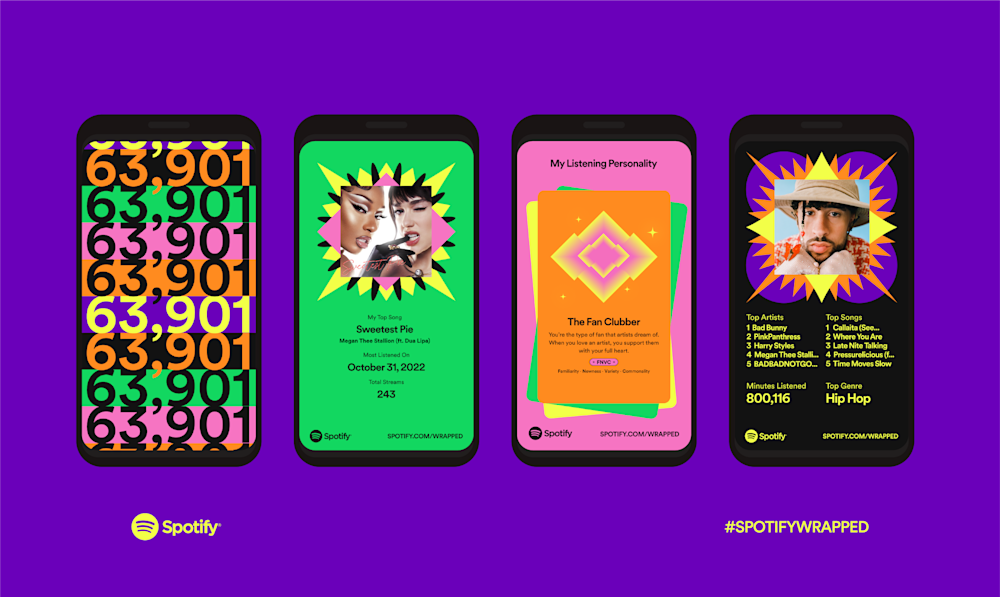
Spotify Wrapped is an annual, personalised listening report released every December. Users receive a bespoke interactive experience presenting:
- Top artists
- Top songs
- Total listening minutes
- Favourite genres
- Mood, habits, and listening patterns
- Audio personality traits
- Playlists generated from the year
Spotify first launched what would become Wrapped in 2015 (initially called “Year in Review”) and gradually developed it into a bold, design-led, socially optimised storytelling event.
Today, Wrapped is as much a cultural moment as the Christmas adverts or the Boxing Day sales.

Why Spotify Wrapped Works So Brilliantly
1. It taps into identity
Wrapped is not really about audio. It’s about me.
People love content that tells them who they think they are – or who they want others to believe they are.
This plays directly into:
- Identity signalling – users share Wrapped to express taste, values, and personality.
- Self-presentation theory – Wrapped works because the data feels flattering and insightful.
- Belk’s “extended self” – people use possessions and experiences (like playlists) to define themselves.
Spotify isn’t selling music here. It’s selling you back to yourself.
2. Wrapped makes the user the hero
Spotify’s brand takes a back seat in Wrapped. The hero is the listener. This aligns with Kotler’s principle that marketing succeeds when brands act as enablers, not protagonists.
Wrapped amplifies you – your year, your soundtrack, your emotional arc.
3. Social-first design
Wrapped is built to be shared. The visual cards:
- Use bold colours that stand out on feeds
- Follow the perfect aspect ratios for mobile platforms
- Contain bite-sized stats people instinctively want to compare
- Feel “braggable” but without slipping into arrogance
The entire experience is essentially a social pack disguised as an analytics tool.
4. It’s a positive feedback loop
Users share Wrapped.
Those posts create FOMO.
The FOMO makes non-users sign up.
More users means more data.
More data means better Wrapped.
Better Wrapped means even more sharing.
This is the modern definition of a marketing flywheel.
5. It creates a seasonal ritual
Humans love rituals – Christmas, New Year’s Eve, the John Lewis advert. Wrapped has secured its place in that calendar.
It is not just content; it is an event, one people anticipate.
This gives Spotify something incredibly rare: predictable viral reach.
6. It uses data as narrative, not numbers
Wrapped proves that even raw data can tell a story when framed correctly. The narrative structure typically looks like:
- Your year in sound
- Your unique behaviours
- Your unexpected moments
- Your audiotype
- A reflection of your mood
- Your personal highlights
This is textbook storytelling psychology: a beginning, middle, and end presented with emotionally resonant framing.

Wrapped as Behavioural Science
Spotify Wrapped is an applied behavioural experiment across 600+ million users.
Some key psychological levers include:
- Social comparison – “Who listened to more minutes?”
- Cognitive fluency – visually digestible, quick, satisfying.
- Nostalgia – reminding people of their year through music.
- Gamification – streaks, rankings, badges, traits.
- Belonging – a global community sharing at the same time.
It takes the intangible nature of music and anchors it to identity.
Orwell’s writing on clarity is quietly relevant: the magic of Wrapped is that it takes sprawling behavioural data and presents it in simple, emotionally precise language.
Wrapped as a Brand Strategy
1. It differentiates Spotify
Competitors like Apple Music have tried to produce their own versions, but none approach the scale or cultural relevance of Wrapped. Spotify’s first-mover advantage became a brand-defining tradition.
Wrapped essentially says:
Spotify is the world’s cultural soundtrack.
2. It drives retention
Users are unlikely to abandon their listening history in September if they know December’s Wrapped will be incomplete.
This is a masterstroke in soft-lock retention and mirrors Kotler’s work on “value-add ecosystems”.
3. It creates UGC at scale
Wrapped turns users into voluntary brand ambassadors. Every Instagram story, TikTok, and X post is free advertising with a personal endorsement attached.
There is no better marketing than people defending their taste online.
4. It adds emotional depth to the platform
Streaming apps are often functional and forgettable. Wrapped gives Spotify soul.
It transforms a utility into a cultural brand.
What Marketers Can Learn
1. Personalisation isn’t optional any more
People expect content tailored to them. Not broad segmentation – real personalisation.
Wrapped shows what happens when personalisation is done creatively rather than transactionally.
2. Create moments, not just campaigns
Annual rituals outperform isolated campaigns because they build anticipation and loyalty.
Wrapped is proof that the best marketing is repeatable, predictable, and eagerly awaited.
3. Make data easy to emotionally understand
Too many brands hoard customer data but don’t translate it meaningfully.
Wrapped succeeds because it turns:
- Minutes into milestones
- Genres into identities
- Habits into stories
- Patterns into personalities
Every brand with data can do this if they’re willing to position the customer as the protagonist.
4. Design for shareability
Digital-first brands must accept:
If it’s not easily shareable, it won’t scale.
Wrapped’s visual formatting is as important as the content itself.
5. Celebrate your users, not your product
Most brands would see an enormous uplift simply by shifting the spotlight.
Why Wrapped Became a Cultural Force
Spotify Wrapped is more than marketing. It is a moment of collective reflection.
It brings joy, humour, self-discovery, and a small but meaningful snapshot of the year that people genuinely look forward to.
It’s also a clever reminder that brands don’t need to shout to create impact. They need to understand people, identity, and behaviours – and then design something irresistible around them.
If Kotler had written Marketing Management for the streaming era, he might have used Spotify Wrapped as a textbook example of brand storytelling done right.
TL;DR
Spotify Wrapped is one of the most successful marketing campaigns of the modern era. By blending personal data, identity psychology, storytelling, and social sharing, Spotify turned a simple listening report into a global annual ritual. It drives retention, generates massive user-generated publicity, differentiates Spotify from competitors, and reinforces the platform’s cultural relevance. Wrapped succeeds because it puts the user at the centre – not the brand.