

Consumer Behaviour & Tribal Marketing
Why We Form Tribes: Tribal Marketing and the Consumer Need to Belong
From football terraces and metal gigs to gaming clans, sneakerheads and raw feeding communities, consumers repeatedly form groups around shared passions, rituals and objects. Bernard and Véronique Cova's theory of tribal marketing helps explain why — and why the most powerful role for a brand may be to connect people rather than simply sell to them.
Some of the most powerful things we consume do more than solve a problem. They give us something to gather around.
I have spent a surprising amount of my life in tribes.
Not actual tribes, obviously. There were no spears involved.
But I have played in local metal bands where the same people would turn up to gigs, wear the shirts, know the songs, meet in the same pubs and support other bands from the same scene.
You would see the same faces at the local metal night. Friendships formed. Relationships formed. Certain venues mattered. Certain bands mattered. Certain clothes mattered.
There were rituals too.
Going to gigs. Standing in roughly the same part of the venue. Moshing. Buying a shirt. Knowing which obscure band somebody was talking about. Arguing about whether a band had "sold out" because 47 additional people had started listening to them.
Football was remarkably similar.
Growing up playing for football teams, Saturday or Sunday wasn't simply a sporting fixture. You trained together. You played together. You went to the pub afterwards.
Quite often the local pub would provide food because it understood a fairly simple piece of economics: feed the football team some chips and sausages and twenty thirsty people might remain in your pub for several hours.
But economically, socially and psychologically, something else was happening.
A group of people had formed around a shared activity.
There were rituals, symbols, language, places, heroes, stories and eventually a sense of identity.
There was, in other words, a tribe.
And this is where marketing gets very interesting.

The tribalisation of society
In 2002, Bernard Cova and Véronique Cova published Tribal Marketing: The Tribalisation of Society and its Impact on the Conduct of Marketing in the European Journal of Marketing.
Their argument challenged one of the dominant ideas about the modern consumer.
Much marketing theory had increasingly focused on the individual.
Consumers were becoming more independent, more fragmented and more difficult to categorise. Mass markets were breaking down. Personalisation was developing. Marketing was becoming increasingly concerned with satisfying the needs of individual consumers.
Cova and Cova suggested that something rather different was happening at the same time.
Their paper contrasts this individualistic view with what they describe as a more communal, "Latin" perspective. The important social question, they argued, was not simply how people could escape social constraints, but how they might re-establish communal embeddedness.
In other words, modern consumers might be becoming more individually free while simultaneously looking for new ways to belong.
As older social structures became less dominant, people did not necessarily become happily independent little economic units wandering around supermarkets making rational purchasing decisions.
They looked for new ways to connect.
People formed small, informal and emotionally significant groups around shared passions, activities, experiences and objects.
Cova and Cova called these postmodern tribes.
A postmodern tribe is a relatively fluid social group connected by shared passions, emotions, experiences, rituals or symbols rather than necessarily by traditional structures such as family, geography, occupation or social class.
Crucially, membership does not have to be exclusive. One person can move between several tribes at once.
You might be:
- a Southampton supporter;
- a CrossFitter;
- a gamer;
- a metalhead;
- a sneaker collector;
- a raw feeder;
- a member of a particular online fandom;
- and someone who becomes inexplicably evangelical about their preferred type of coffee machine.
None of these identities has to completely define you.
But each can become one small part of who you are.
That is tribalisation.
A tribe is not a market segment
This distinction matters enormously for marketers — and it is one of the most useful ideas in Cova and Cova's paper.
We have traditionally become very good at dividing people into segments.
A segment might consist of men aged 25–34, living in urban areas, earning £35,000–£50,000 and interested in fitness.
Useful?
Potentially.
But a tribe is fundamentally different.
People who are similar
Members share characteristics that are useful for analysis or targeting.
They may never meet, communicate or even know that the other members of the segment exist.
Similarity is the important thing.
People who are connected
Members share a passion, activity, experience or identity.
They communicate, influence one another and may develop rituals, language, symbols and status.
Relationships are the important thing.
Imagine 10,000 people have bought the same running shoes.
That is a customer base.
Now imagine some of those people meet every Saturday morning, run together, share their times online, have in-jokes, recommend equipment to one another, organise events, celebrate personal bests and encourage new members.
Something else has appeared.
There is a social structure.
That second question can reveal far more about behaviour.
The link can matter more than the thing
Perhaps the most important concept in Cova and Cova's tribal marketing work is linking value.
Products obviously have practical value.
- A football shirt is clothing.
- A guitar is a musical instrument.
- A games console plays games.
- A pair of trainers protects your feet.
- Dog food feeds a dog.
But products can possess another kind of value: their ability to create or reinforce relationships between people.
Cova and Cova describe this as linking value — the contribution a product or service makes towards establishing or strengthening social bonds.
Linking value
A product can sit between people and provide the symbol, experience or activity through which a connection develops.
The value is not only in what a product does for an individual. It can also lie in what it helps people do together.
Once you start looking for linking value, you see it everywhere.
Consider football shirts.
Objectively, wearing a Southampton shirt while watching Southampton play has no effect whatsoever on Southampton's ability to win the match.
I have conducted extensive personal research into this.
And yet the shirt matters.
It signals membership.
It identifies allies.
It can start conversations between complete strangers.
Walking through another country wearing your team's shirt and hearing somebody shout the name of the club at you is a tiny social interaction created almost entirely by an object.
The value is not simply in owning the shirt.
The shirt helps connect people.

This is also why kit launches can become much more culturally important than the release of a new piece of polyester would logically suggest. I've looked at this elsewhere in Southampton FC's "Show Your Stripes" campaign, where the return of the club's traditional stripes became a mechanism for identity and participation.
The same thing happens with band T-shirts.
A relatively obscure logo across somebody's chest can turn two strangers into people who suddenly have something to talk about.
That is linking value.
The product is sometimes almost secondary. What people are really consuming is belonging.
Products become tribal symbols
This is where consumer culture starts becoming slightly strange.
Objects stop being merely functional.
They acquire meaning.
A particular guitar can represent a musical scene.
A pair of Nike Dunks can signify knowledge of sneaker culture.
A Stanley cup can become part of an online aesthetic.
A mechanical keyboard can tell somebody far more about another person's hobbies than any mechanical keyboard probably has a right to.
A football shirt represents a club, a city and sometimes generations of family history.
Products become symbols of membership.

This idea overlaps beautifully with Russell Belk's concept of the extended self.
In his influential 1988 paper Possessions and the Extended Self, Belk argued that possessions can become important contributors to and reflections of our identities.
I've explored Belk's theory elsewhere on Marketing Made Clear, including in AI as an Extension of Self.
The basic principle is deceptively simple.
What we regard as mine can become incorporated into our understanding of me.
That helps explain why apparently trivial products can generate extraordinary emotional responses.
You aren't always criticising someone's shoes.
You might be criticising their taste.
Their expertise.
Their memories.
Their social group.
Or, at some level, them.
The product has crossed an invisible boundary between something I own and something that says something about who I am.
This is me.
The product contributes to how I understand and express my own identity.
These are my people.
The product also communicates membership and connects me to other people.
Put Belk together with Cova and Cova and the product begins doing two jobs at once.
It helps construct individual identity:
This is me.
And it communicates tribal membership:
These are my people.
That is an extraordinarily powerful position for a brand to occupy.
Tribes need rituals
Tribes aren't held together purely by products.
They need behaviour.
Cova and Cova devote considerable attention to rituals, along with the objects, clothing, places, words, idols and symbols that help give social groups continuity.
Again, once you start looking for them, consumer rituals are everywhere.
Shared passion
The thing that gives people a reason to gather in the first place.
Rituals
Repeated behaviours that reinforce participation and membership.
Symbols
Products, clothing, imagery and objects that carry shared meaning.
Language
Words, jokes and references that demonstrate insider knowledge.
Places
Pubs, venues, stadiums, shops, forums, servers and online platforms.
Status
Knowledge, experience and behaviour that create credibility within the group.
Football supporters travel to the ground.
They meet in certain pubs.
They sing the same songs.
They wear particular colours.
They stand in particular areas.
They complain about the referee.
That last one may actually be legally compulsory.
Metal gigs have their own rituals.
Certain clothing.
Certain venues.
The movement of the crowd.
The mosh pit.
The merchandise table.
The encore.
Even the slightly awkward moment when somebody starts aggressively headbanging to the support band at 7:14pm while there are only twelve people in the room.
These behaviours help maintain the group.
And modern consumer tribes behave in remarkably similar ways.
CrossFit: when exercise becomes ritual
CrossFit provides an almost perfect contemporary example.
Research into CrossFit communities has identified linguistic, physical and emotional elements of ritual within the culture, including the recurring Workout of the Day, or WOD.
The ritual does more than organise exercise.
Participation creates shared experience.
It gives members common language.
It creates milestones, stories, status and memories.
It would be easy for a traditional marketer to look at CrossFit and see gym memberships.
A tribal marketer sees something much richer.
Shared suffering
Members experience the same physical challenge.
Specialist language
WODs, AMRAPs, boxes and other terminology create insider knowledge.
Repeated rituals
Participation is structured around recurring communal behaviours.
Progression
Improvement creates stories, milestones and status.
Identity
Exercise can move from something a person does to something they are.
Belonging
The activity provides relationships as well as physical benefits.
The exercise matters.
But the social experience surrounding the exercise matters too.
From the pub to Discord
What makes Cova and Cova's 2002 paper particularly interesting today is the timing.
They were writing while online communities were still relatively primitive.
- Facebook had not yet launched.
- YouTube did not exist.
- Reddit did not exist.
- Twitter did not exist.
- Discord certainly did not exist.
- The iPhone was still five years away.
Yet the internet was already beginning to remove the geographical limitations traditionally placed on communities.
Since then, digital communication has turbocharged tribal behaviour.

The metal scene I knew was largely geographical.
You went to the same venues because you lived in the same area.
Today's equivalent might begin on TikTok, move into Discord, spread across Reddit, develop its own memes, language and creators, arrange real-world meet-ups and contain members living thousands of miles apart.
Gaming is an obvious example.
Players don't simply consume a game individually.
They form clans.
Guilds.
Teams.
Discord servers.
Subreddits.
YouTube communities.
They develop slang, hierarchies, rivalries and rituals.
People may spend hundreds or thousands of hours interacting with the same individuals without ever standing in the same physical room.
The tribe has escaped geography.
Modern consumer tribes are everywhere
Some are organised around brands.
Others exist around activities where brands merely participate.
Some are almost entirely digital.
The shoe becomes cultural material
Sneaker culture combines collecting, fashion, expertise, scarcity, history and social identity.
Knowing the product becomes part of membership. Certain releases matter. Certain collaborations matter. Specialist terminology develops.
Status attaches to knowledge as well as ownership.
The product becomes a portal
The bike may sit in somebody's spare room, but the experience contains instructors, usernames, challenges, leaderboards and online groups.
The physical product provides access to an ongoing social environment.
The community changes what owning the bike means.
The audience becomes a community
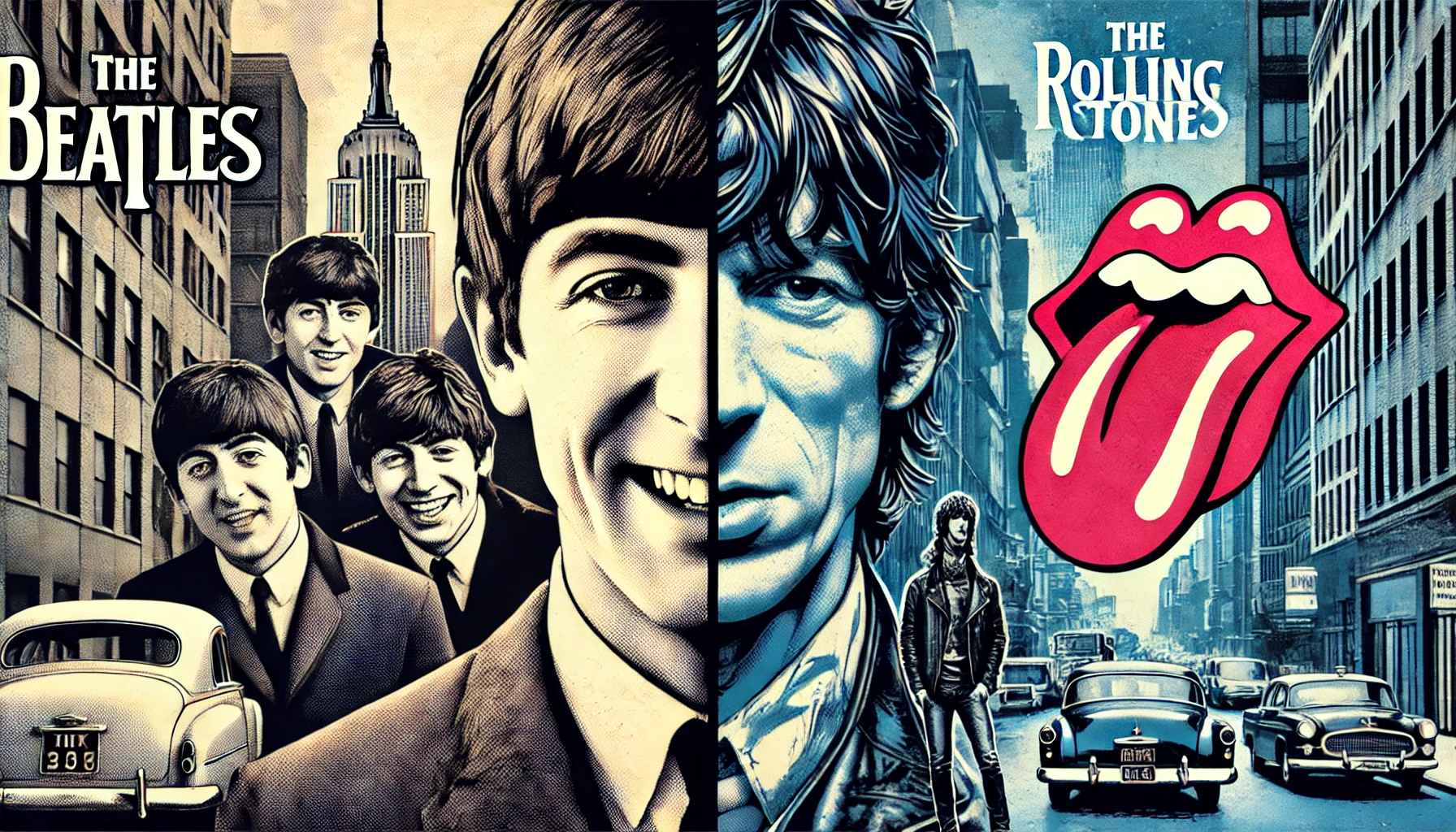
Metalheads. Swifties. Juggalos. K-pop fandoms. Punk scenes. Dance music communities.
Fans develop language, symbols, knowledge, hierarchy and status.
They attend rituals too — although we normally call them concerts because it sounds less alarming.
Consumption becomes practice
Vegan communities. Barbecue enthusiasts. Craft beer obsessives. Coffee people. Sourdough bakers.
People who own pizza ovens and suddenly have remarkably strong opinions about hydration percentages.
Practice becomes knowledge. Knowledge becomes identity. Identity becomes community.
Even dog food has tribes
One of the most interesting examples for me is raw dog food.
At first glance, dog food seems about as functionally driven as a market can get.
Animal requires food.
Owner purchases food.
Dog eats food.
Marketing department goes home.
Except that isn't how the category actually behaves.
Raw feeding has developed communities around an underlying belief about how dogs should be fed.
Within that larger group there are smaller tribes.
Some people strongly advocate DIY raw feeding.
Others prefer complete commercial raw food.
Some follow particular feeding ratios.
Some become loyal to particular brands.
People exchange photographs, advice, feeding plans, freezer recommendations and opinions about ingredients.
There are recognised experts.
There are debates.
There are norms.
There are occasional arguments of such astonishing intensity that you would be forgiven for forgetting everybody is discussing minced meat for a Labrador.
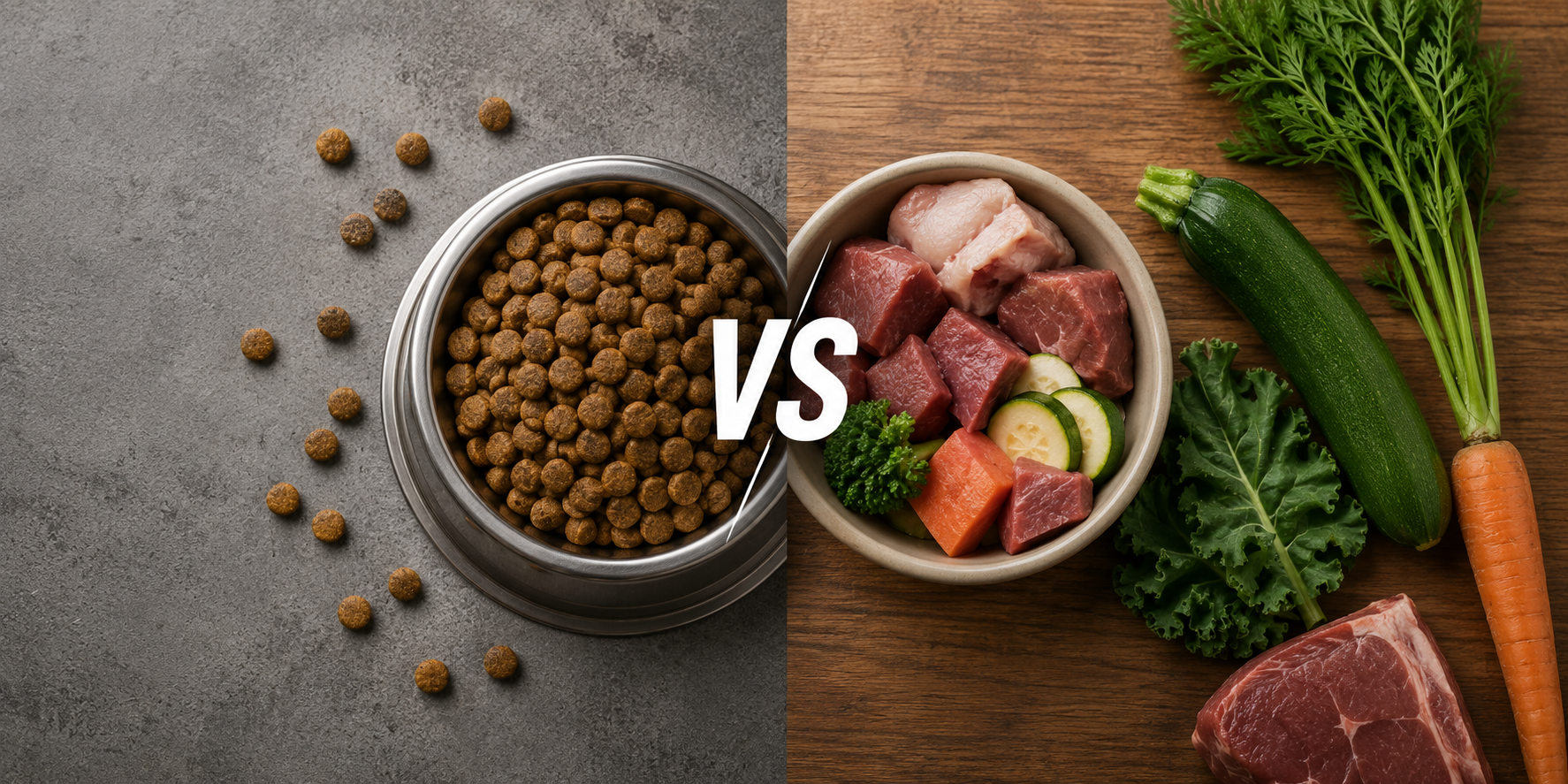
I've explored that conflict in much more detail in The Marketing War Between Raw and Kibble, but the point here is slightly different.
The intensity tells us that food choice has become connected to identity.
The product is something I purchase.
The behaviour has become part of who I am.
That linguistic change is enormous.
A purchase has become an identity.
And once an identity exists, a tribe can form around it.
Tim Tams and the strange power of cultural objects
Tribal value does not always require a formal community either.
Sometimes a product acts like a cultural password.
Consider something like Tim Tams.
For Australians living overseas — or even people who have spent significant time in Australia — seeing a packet somewhere unexpected can generate a surprisingly strong reaction.
It is only a chocolate biscuit.
Technically.
But it can carry memories of places, people and experiences.
Two Australians discovering Tim Tams in a British supermarket may suddenly have a conversation that has very little to do with biscuits.
The object creates recognition.
You know this thing.
Which can very quickly become:
You understand something I understand.
Brands such as Marmite have long recognised a related phenomenon.
The product itself carries cultural meaning far beyond its functional role as something brown to put on toast while frightening visitors from abroad.
This is where tribal marketing starts overlapping with nostalgia, nationality, subculture and identity.
The strongest products often come with accumulated cultural baggage.
Sometimes that baggage is more valuable than the product specification.
This sits naturally within the ideas explored in Consumer Culture Theory: people do not simply consume utility. They consume meaning, identity, status, relationships and participation in culture.
Is a tribe the same as a brand community?
Not quite.
Around the same period as Cova and Cova's work, Albert Muñiz Jr. and Thomas O'Guinn introduced the influential concept of the brand community.
They defined brand communities as specialised, geographically unbound communities based on social relationships between admirers of a brand.
Their research identified three important characteristics:
- shared consciousness;
- rituals and traditions;
- a sense of moral responsibility.
There is clearly enormous overlap.
But Cova and Cova's tribal approach gives us an important additional perspective.
The brand does not have to be at the centre of the tribe.
A running tribe may use Garmin watches, Strava, Nike trainers, Maurten gels and dozens of other products.
A metal scene contains hundreds of brands.
A gaming community may exist around a particular game but interact through Discord, Twitch, Reddit and YouTube.
A raw feeding tribe might contain customers of competing food companies.
This matters.
Because marketers have an understandable tendency to imagine the universe with their own logo positioned conveniently in the middle.
Consumers rarely organise their lives that neatly.
Cova and Cova's argument suggests that it can be more productive for businesses to support existing tribes than attempt to dominate them or manufacture their own supposedly authentic community.
That changes the role of marketing.
You cannot simply announce that you have a tribe
This is perhaps where tribal marketing gets abused.
A company launches a Facebook Group.
Four employees join.
Someone from marketing posts:
Corporate community building, apparently
"Welcome to the [BRAND NAME] TRIBE!"
And apparently civilisation has now reorganised itself around a mid-market moisturiser.
That isn't a tribe.
Putting the word community in the navigation menu doesn't create one either.
Nor does calling customers the family.
A tribe exists because meaningful connections develop between members.
The brand may facilitate those connections.
- It may provide meeting places.
- It may create tools.
- It may support rituals.
- It may give people symbols.
- It may introduce members to each other.
But it cannot simply declare the relationship into existence.
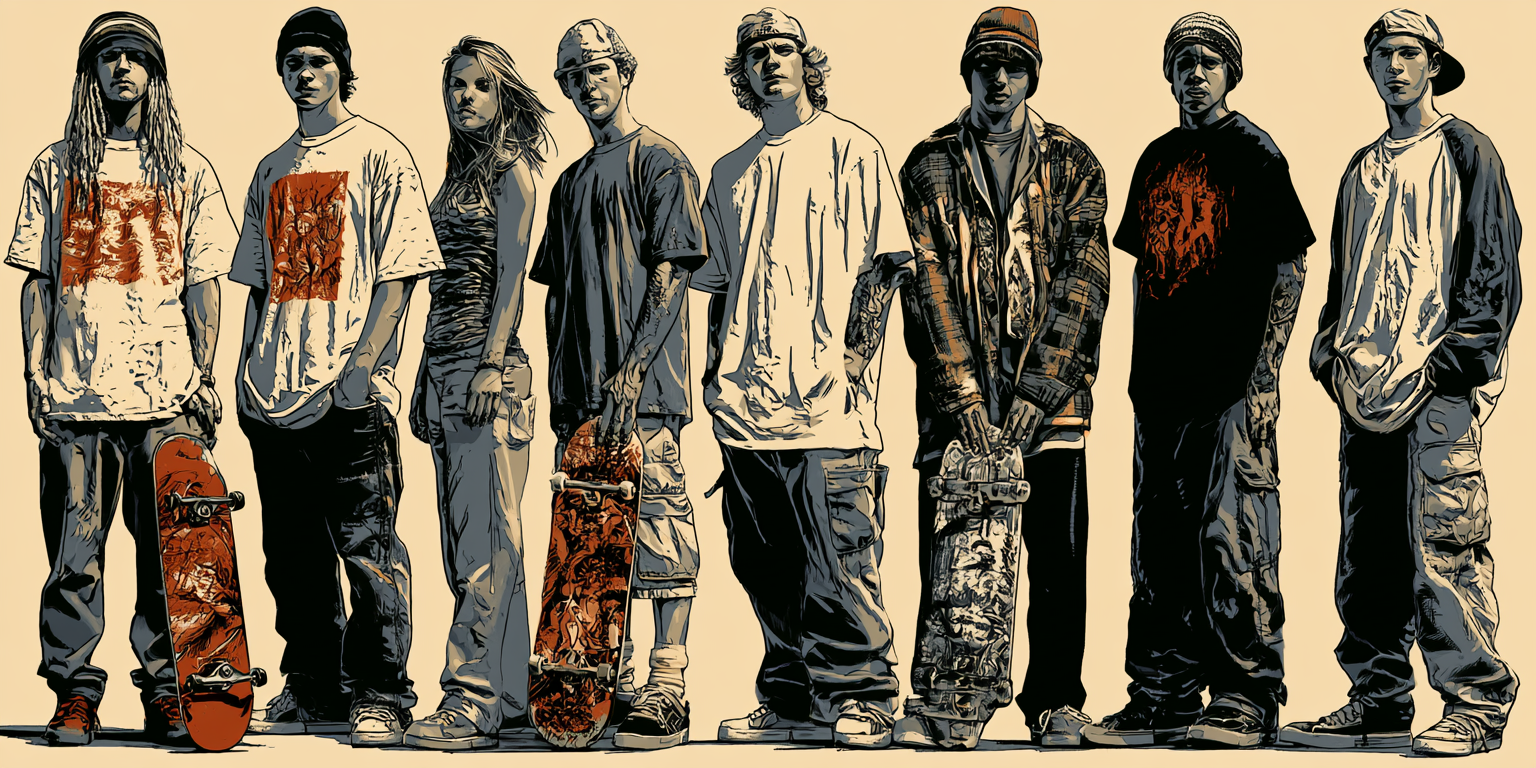
Cova and Cova's interest in skating was not incidental. Their earlier study, Tribal Aspects of Postmodern Consumption Research: The Case of French In-Line Roller Skaters, examined precisely how a consumption activity could create communal bonds.
The 2002 tribal marketing paper then discusses companies attempting to work with the skating tribe. The important distinction was whether companies genuinely participated in and supported the culture — including events, practice and product development — or merely tried to market at it.
Companies may need to support tribes rather than control them.
That remains exceptionally good advice.
It also overlaps strongly with the distinction explored in Subcultures and Marketing: a company can attempt to enter a culture, but ultimately the culture decides whether the company belongs.
Tribal marketing means relinquishing some control
Traditional brand management loves control.
Control the visual identity.
Control the messaging.
Control the positioning.
Control the tone.
Control the customer journey.
Tribes are inconvenient because people start creating meaning themselves.
They create
Nicknames, jokes, memes, terminology and interpretations the brand never planned.
They modify
Products, behaviours and traditions to better suit the culture they have created.
They judge
Which products, brands and even other members are considered authentic.
They may criticise changes.
Argue amongst themselves.
Decide which products are authentic.
Decide which members are authentic.
And sometimes decide that the company responsible for the product no longer understands its own culture.
From a traditional marketing perspective, this can look terrifying.
From a tribal perspective, it is evidence that something culturally meaningful has developed.
Cova and Cova's argument ultimately requires marketers to surrender some ownership of meaning.
The people in the tribe aren't simply an audience. They are participants.
The tribe can become more powerful than the brand
This also explains why brands entering established cultures need to be careful.
Imagine a company suddenly deciding that metal fans represent an attractive demographic.
It buys some distressed typography.
Sponsors a festival.
Puts a skull on something.
Perhaps somebody in the agency suggests making the logo "a bit more metal".
None of this guarantees acceptance.
Members of tribes often possess considerable cultural knowledge.
They know which brands have genuinely supported their scene.
They know which companies employ people from it.
They know who has been there for years.
They recognise outsiders attempting to borrow the aesthetics without understanding the culture underneath them.
The same applies to skateboarding.
Gaming.
Football.
Streetwear.
Fitness.
Food.
Subcultures develop extremely efficient bullshit detectors.
That is why authenticity matters so much in tribal marketing.
You are not simply communicating at consumers.
You are entering a social environment in which consumers communicate with one another.
They can compare notes.
Tribes also have a darker side
Belonging necessarily raises another question.
If there is an "us", is there also a "them"?
Usually, yes.
Tribes can produce inclusion, friendship and belonging.
They can also produce gatekeeping, conformity and hostility towards outsiders.
Anyone who has spent enough time around music knows this.
You like the band...
But do you like the early albums?
You support the club...
But do you actually go to games?
You play the game...
But what rank are you?
You feed raw...
But do you feed DIY?
Tribal knowledge creates belonging, but it can also establish status hierarchies.
People begin determining who is a "real" member.
Marketers therefore need to recognise that strong communities are not automatically harmonious ones.
The same emotional forces that create extraordinary loyalty can create conflict.
And brands attempting to manipulate those relationships too aggressively may find themselves becoming the common enemy.
Nothing unites a tribe quite like somebody they collectively dislike.
Why tribal marketing matters even more now
When Cova and Cova were writing in 2002, their argument might have sounded like an interesting counterpoint to the increasing individualisation of marketing.
Today, it feels remarkably familiar.
Much of modern digital culture is tribal.
TikTok
Finds people who share an obsession.
Gives them somewhere to discuss it.
Discord
Gives them somewhere to congregate.
YouTube
Provides teachers, personalities and shared knowledge.
Provides symbols, visibility and social status.
Ecommerce
Gives the tribe an almost unlimited supply of things to buy.
The physical and digital worlds then feed back into one another.
Someone discovers running online.
Buys shoes.
Joins Strava.
Finds a local running club.
Makes friends.
Enters a race.
Buys a Garmin.
Travels to another race.
Posts about it.
Encourages somebody else to start.
Advocacy exposes new people to the activity, and the cycle begins again.
At what point did that stop being a purchasing journey and become part of somebody's life?
That is precisely the limitation of viewing consumers purely through funnels.
Awareness.
Consideration.
Conversion.
Retention.
Useful concepts.
But human beings do not experience their lives as CRM stages.
Sometimes they buy because people they trust are doing something.
Sometimes they buy because they want to participate.
Sometimes the purchase is the entry ticket to the group.
And sometimes they continue buying because leaving the product would feel a little like leaving the tribe.
What should marketers actually do with tribal marketing?
The lesson isn't:
Then ask different questions.
And perhaps most importantly:
Would this community still exist if our brand disappeared tomorrow?
If the answer is yes, you may have found something much more interesting than a brand community.
You may have found a tribe.
Then the question becomes how your brand can contribute to it.
Not capture it.
Not manufacture it.
Not stick a logo on it.
Contribute to it.
The best brands sometimes become part of the ritual
This is where the commercial potential becomes enormous.
A brand reaches an unusually powerful position when its product becomes woven into the recurring behaviour of the group.
- The drink everybody orders.
- The shoes everybody recognises.
- The platform everybody records their activity on.
- The venue everybody visits.
- The equipment beginners are told they need.
- The product members recommend without being asked.
At that point, the brand has become part of the tribe's cultural machinery.
Red Bull provides an obvious example of the general principle.
Its relationship with extreme sports goes far beyond traditional sponsorship advertising. Athletes, events, media and experiences have become central to the way the brand is understood.
The drink remains the commercial product.
But the cultural infrastructure surrounding the drink creates something much larger.
That is linking value at scale.
Perhaps we never became as individual as we thought
This is what I find most interesting about tribal marketing.
Modern marketing talks constantly about the individual.
Personalisation.
My account.
My recommendations.
My feed.
My preferences.
My experience.
My data.
Yet some of our strongest motivations remain stubbornly social.
We want to belong.
We want recognition.
We want shared experiences.
We want people who understand the references.
We want somewhere we can turn up without explaining why we are there.
In that sense, perhaps Cova and Cova's argument was less about marketing than it first appears.
It was about what happens when traditional forms of community become weaker but the human desire for connection remains.
We find new things to gather around.
Music. Football. Games. Fitness. Food. Brands. Hobbies. Creators. Products. Experiences.
Some last decades.
Some last six months.
Some exist entirely online.
Some require you to stand in a muddy field while somebody screams into a microphone.
But the underlying mechanism is remarkably similar.
The important point is that consumption can become woven into the relationships, rituals and identities surrounding the product.
The link is the thing
People connect. Connections acquire rituals. Rituals acquire meaning. Meaning becomes part of identity.
And consumption becomes tangled up with all of it.
Sometimes the most valuable thing your product can do isn't solve a problem.
It is help somebody find their people.
Academic sources and further reading
Tribal Marketing: The Tribalisation of Society and its Impact on the Conduct of Marketing. European Journal of Marketing, 36(5/6), 595–620.
The central source for this article and the paper in which Cova & Cova set out the implications of postmodern tribalisation for marketing.
Tribal Aspects of Postmodern Consumption Research: The Case of French In-Line Roller Skaters. Journal of Consumer Behaviour, 1(1), 67–76.
Possessions and the Extended Self. Journal of Consumer Research, 15(2), 139–168.
Brand Community. Journal of Consumer Research, 27(4), 412–432.
Elements of Rituality in Consumer Tribes: The Case of CrossFit. Journal of Customer Behaviour, 16(4), 353–370.
Work[out] from Home: Examining Brand Community Among Connected Fitness Brand Users. International Journal of Sport Management and Marketing, 24(2), 113–136.
I Wear, Therefore I Am: Investigating Sneakerhead Culture, Social Identity, and Brand Preference Among Men. Fashion and Textiles, 8, Article 1.