

The Sound of Taste
How Sonic Branding Shapes the Way We Experience Food
Marketing is often described as a visual discipline; logos, colours, packaging, and advertising creative tend to dominate the conversation. But there is another sensory dimension that quietly influences how we experience brands – sound.
In food marketing in particular, sound plays an unexpectedly powerful role. The hiss of a fizzy drink opening, the crunch of a crisp, or the gentle fizz of carbonation can trigger anticipation before a single bite or sip has occurred.
Psychologists call this cross-modal perception – the way one sense influences another. In simple terms, what we hear can change how we taste.
For marketers, this means sound is not just a by-product of consumption. It can be a deliberate part of brand identity.
The Marketing Made Clear Podcast
Check out the Marketing Made Clear Podcast on all good streaming platforms including Spotify:
Why Sound Matters in Food Marketing
Sound is uniquely powerful because it is immediate and emotional. Unlike visual elements, which require focused attention, sound can trigger reactions instantly.
The moment a can of cola opens, most people know exactly what is about to happen.
The same is true when someone opens a packet of crisps or pours a bowl of cereal.
These sounds do three important things for marketers:
-
They signal freshness and quality
-
They create anticipation and sensory expectation
-
They reinforce brand recognition
The result is that sound becomes part of the product experience itself, rather than just the marketing around it.
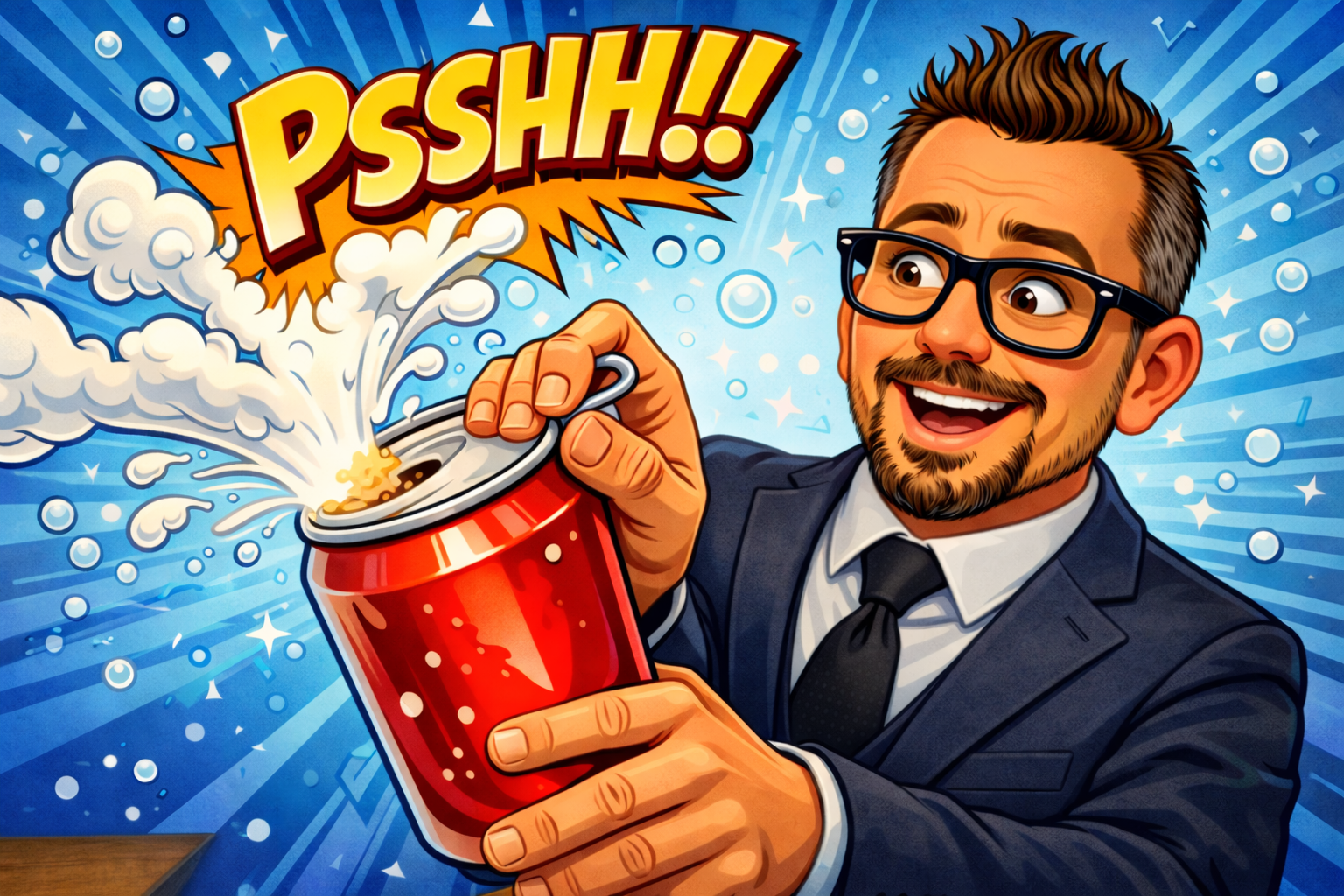
The “Pssshh” of Carbonated Drinks
Few sounds are as universally recognisable as the opening of a fizzy drink.
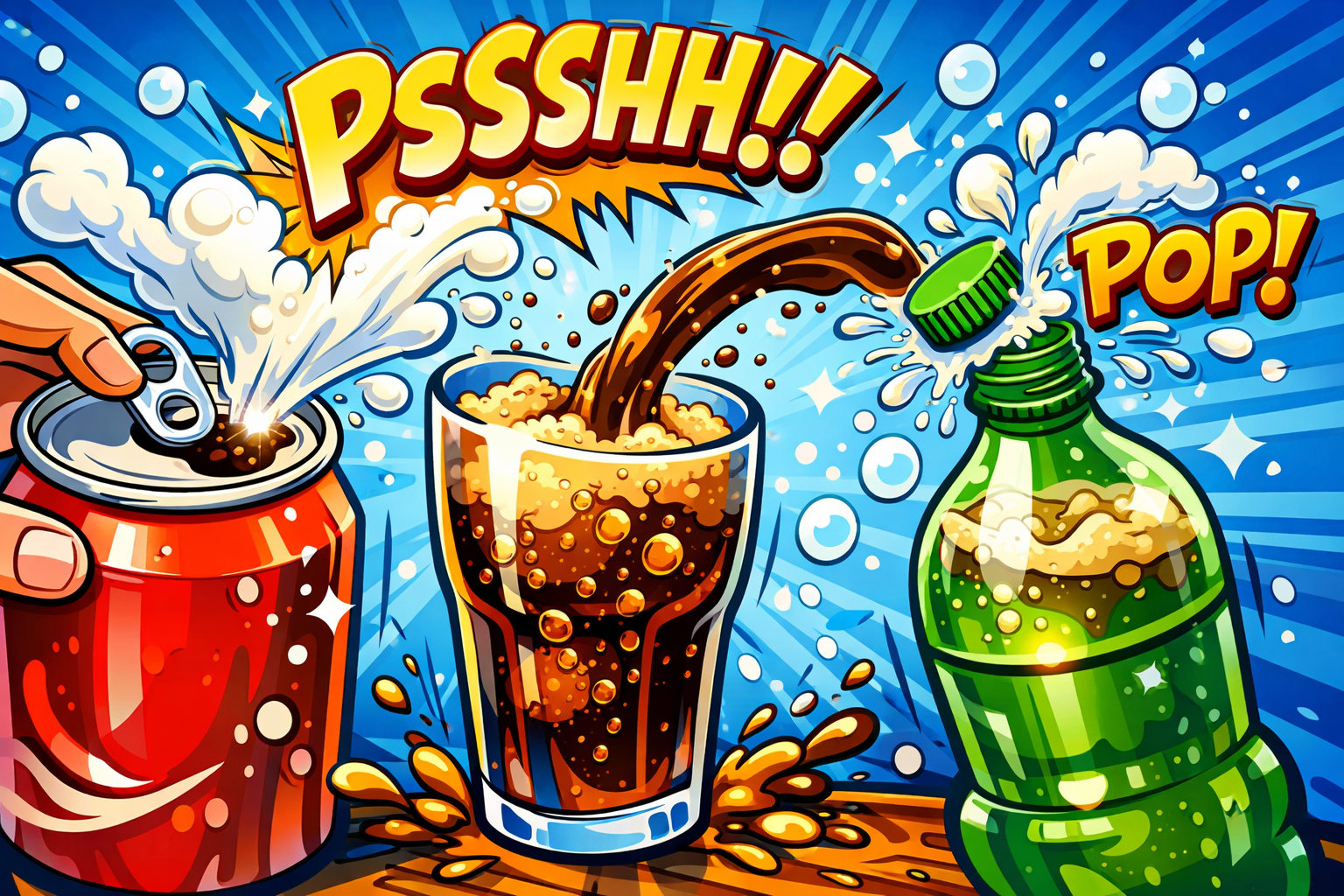
The distinctive psshh of carbonation escaping has become an auditory signal of refreshment. It communicates coldness, effervescence, and thirst-quenching satisfaction in a fraction of a second.
Major brands such as Coca-Cola, Pepsi, and Sprite frequently amplify this sound in advertising.
In many commercials, the opening of the bottle or can is exaggerated deliberately. The fizz is louder, the bubbles more energetic, and the pouring more theatrical than in real life.
This is not accidental.
Researchers in sensory marketing have found that the sound of carbonation can increase perceptions of freshness and coldness, even when the drink itself is unchanged.
In other words, a louder fizz can literally make the drink feel more refreshing.
The Snap, Crackle, and Pop of Breakfast
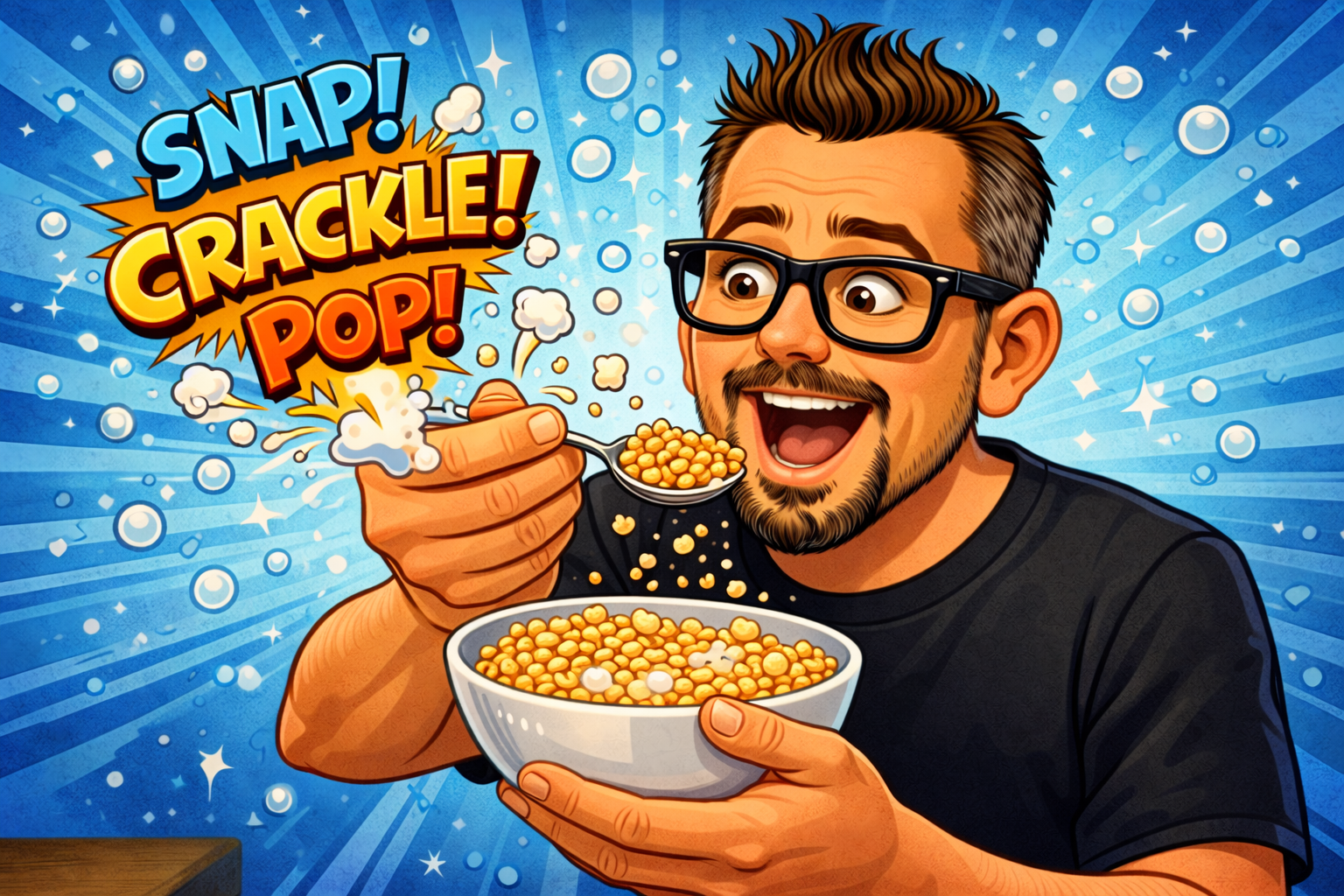
The cereal’s famous slogan – “Snap, Crackle, Pop” – was introduced in the 1930s and refers to the popping sounds made when milk is added to the cereal.
Rather than ignoring the noise, Kellogg’s turned it into the product’s defining characteristic.
The sounds were personified as mascots: Snap, Crackle, and Pop, who became enduring brand characters.
This is a remarkable marketing move for two reasons:
-
The sound happens during consumption, not before purchase
-
The brand elevated a physical property into a narrative identity
Most products try to minimise unpredictable noises. Kellogg’s built an entire brand around one.
Crunch as a Signal of Quality
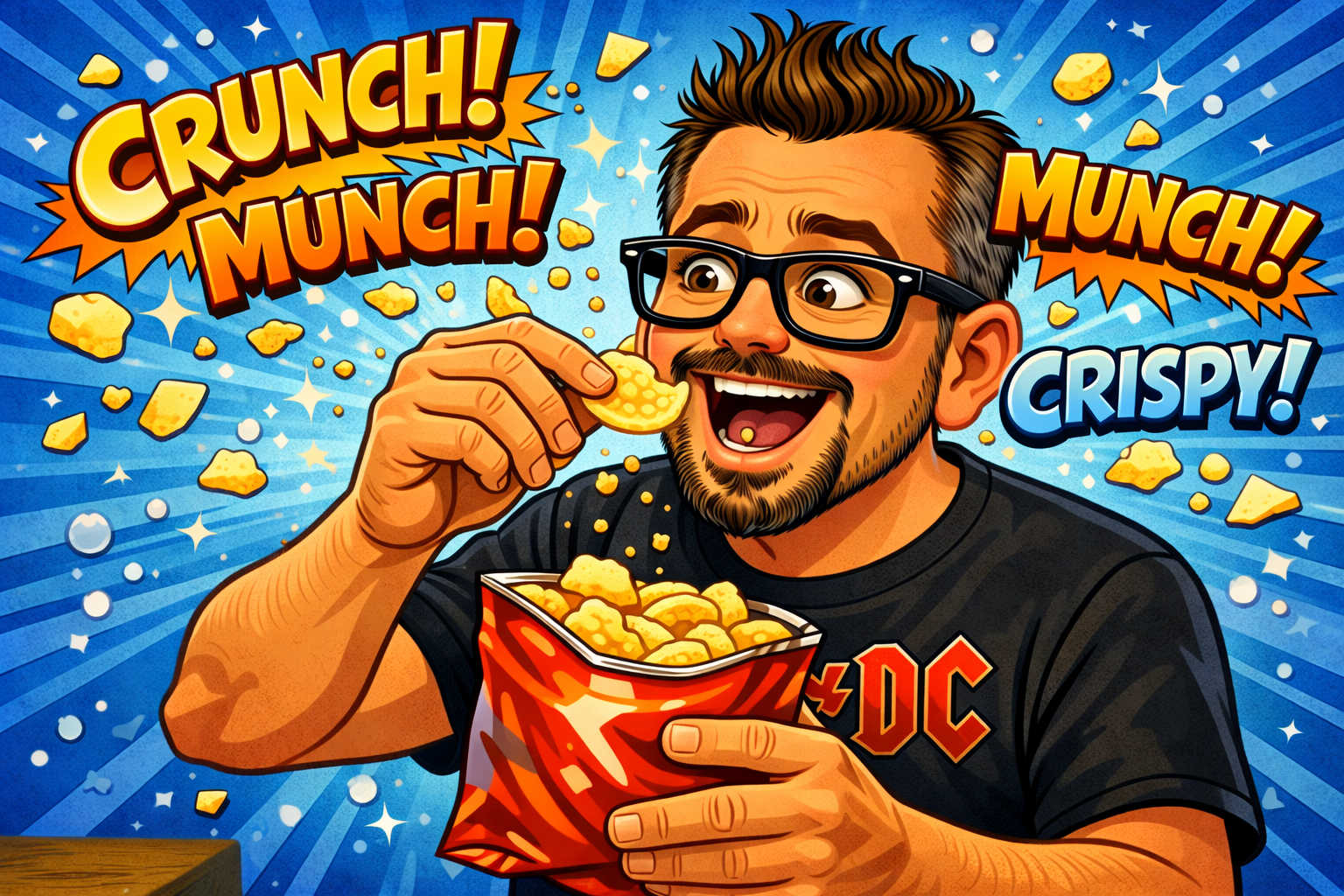
Consumers strongly associate loud crunching sounds with freshness. When a crisp packet opens or a chip breaks loudly, our brain interprets it as a signal that the product is fresh and high quality.
Food scientists and marketers actively engineer this.
Companies such as Pringles, Doritos, and Walkers invest heavily in product texture design to ensure the crunch feels satisfying.
The sound of a crisp breaking has even been studied in laboratories.
Researchers have found that amplifying the crunch sound through headphones can make people perceive the food as fresher, even when it is identical.
This shows how strongly sound influences taste perception.
The Theatre of Food Advertising
Food advertising frequently exaggerates sound to heighten sensory impact.
If you watch closely, many food adverts contain extremely deliberate audio cues:
-
The dramatic crack of chocolate snapping
-
The exaggerated crunch of a biscuit
-
The loud fizz of pouring soda
-
The sizzling of food hitting a hot pan
These sounds are often recorded separately in studios to make them more satisfying.
The goal is simple: make the viewer feel the taste through sound alone.
Fast food brands have mastered this technique. The sizzling burger, the crisp bite, and the bubbling cheese all act as sensory triggers.
The soundscape becomes part of the brand experience.
Sonic Branding Beyond Advertising
Sound is not limited to adverts. Increasingly, brands are designing consistent sonic identities across multiple touchpoints.
Examples include:
-
Signature pouring sounds used in commercials
-
Audio cues in vending machines or retail displays
-
Product packaging designed to produce distinctive noises
-
App and digital interface sounds linked to food brands
This is where sonic branding starts to resemble the role of logos or colour palettes.
Some brands are even exploring ASMR-style content, where the focus is entirely on satisfying food sounds – chewing, crunching, pouring, and fizzing.
This content performs particularly well on platforms like TikTok and YouTube because it triggers strong sensory responses.
Why Sonic Branding Works
From a psychological perspective, sonic branding works because it taps into anticipatory reward systems in the brain.
When we hear a sound associated with food – the crack of a crisp or the fizz of a drink – our brain begins preparing for consumption.
This creates a small dopamine response linked to expectation.
The marketing effect is powerful:
-
Sound primes the sensory experience
-
It reinforces product freshness
-
It strengthens brand memory
Over time, certain sounds become inseparable from specific brands.
Much like a logo or slogan.
The Future of Sonic Food Marketing
As marketing becomes more immersive and multi-sensory, sound will likely play a bigger role.
Advances in technology are opening new opportunities:
-
Spatial audio in digital advertising
-
Smart packaging with sound cues
-
Voice assistants recommending food brands
-
AI-generated soundscapes designed to trigger appetite
Food marketing may increasingly resemble cinema, where audio design is carefully engineered to evoke emotion and anticipation.
For marketers, this raises an important question.
If branding can influence what we see, read, and feel – why not what we hear as well?
TL;DR
Sound is a powerful but often overlooked tool in food marketing. The hiss of a fizzy drink, the crunch of crisps, and the popping of Rice Krispies are all examples of sonic cues that shape how consumers perceive freshness, taste, and quality. Brands have learned to amplify these sounds in advertising and product design, turning everyday noises into powerful marketing assets. In many cases, the sound of the product becomes just as important as the taste itself.