

Reinventing Yourself: What Marketers Can Learn from Prince, Madonna and the Art of Starting Again
Why Some People Stay Relevant While Others Become a Footnote
One of the most fascinating questions in marketing is why some brands, businesses, and individuals remain relevant for decades while others disappear almost overnight.
The answer is not always talent.
It is not always intelligence.
And it is certainly not always being first.
More often than not, the difference comes down to one thing:
The ability to reinvent yourself.
History is littered with examples of artists, celebrities, politicians, and businesses that enjoyed extraordinary success before fading into irrelevance because they failed to adapt.
Yet there are others who seem almost immune to ageing. They evolve, change, challenge expectations, and somehow remain culturally relevant long after their contemporaries have disappeared.
Few people illustrate this better than Prince and Madonna.
While their stories are very different, both demonstrate one of the most important lessons in marketing and life:
If you become too attached to who you were, you may struggle to become who you need to be next.
The Marketing Made Clear Podcast
Check out the Marketing Made Clear Podcast on all good streaming platforms including Spotify:
Why Reinvention Matters
Marketing academics have long studied concepts such as adaptation, innovation, and market orientation.
Professor Philip Kotler often argued that organisations must continually respond to changing customer needs and environmental conditions.
The same principle applies to individuals.
The world changes.
Technology changes.
Culture changes.
Consumer expectations change.
The skills that made someone successful twenty years ago may not be enough to guarantee success today.
The challenge is that reinvention is uncomfortable.
Humans naturally seek consistency.
Psychologists refer to this as cognitive consistency – our tendency to prefer information and behaviours that align with our existing identity and beliefs.
Reinvention requires the opposite.
It requires letting go of certainty.
Prince: The Master of Creative Evolution
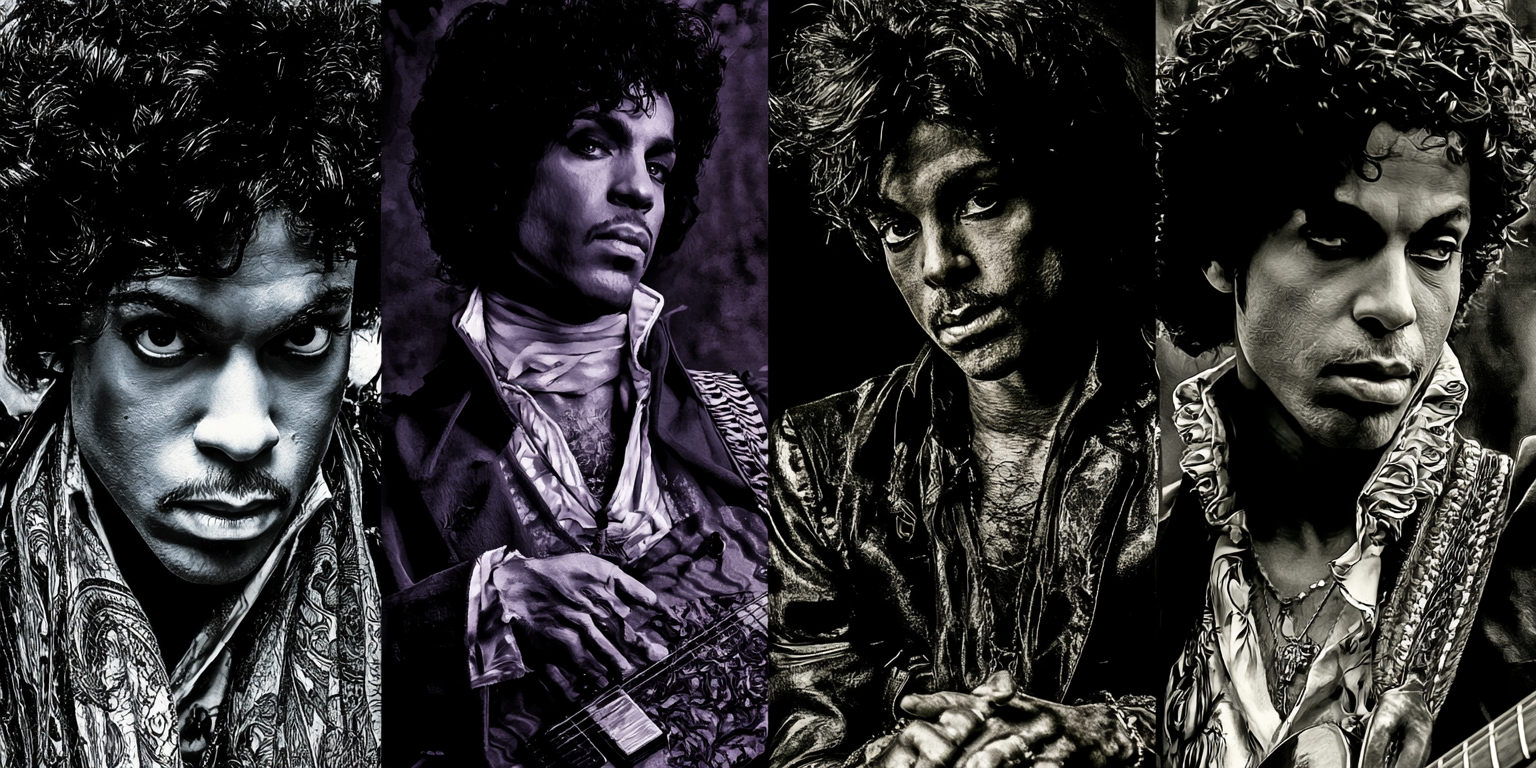
Few artists reinvented themselves more dramatically than Prince.
Throughout the 1980s and 1990s, Prince constantly changed his sound, appearance, image, and even his name.
Most musicians spend years trying to establish a recognisable identity.
Prince seemed determined to destroy his and build a new one every few years.
The artist who recorded Purple Rain was not the same artist who released Sign o’ the Times.
The Prince of the early 1980s looked different from the Prince of the late 1980s.
The themes changed.
The music changed.
The visual identity changed.
The audience changed.
Perhaps the most famous example came in 1993 when Prince abandoned his own name and adopted an unpronounceable symbol.
At the time, many observers thought he had lost his mind.
In reality, it was a highly visible act of reinvention and rebellion against the constraints he felt were being imposed by the music industry.
While the move was controversial, it reinforced something important:
Prince refused to become a museum exhibit of his former self.
He understood that relevance often requires evolution.
Many artists spend their later years performing the same songs in front of nostalgic audiences.
Whether every reinvention succeeded is almost beside the point.
The willingness to change became part of the brand itself.

Madonna: Reinvention as a Business Strategy
If Prince mastered artistic reinvention, Madonna arguably turned reinvention into a business model.
Since emerging in the early 1980s, Madonna has repeatedly transformed her image, music, and cultural positioning.
There was the “Like a Virgin” era.
Then the “Material Girl” era.
Then the Vogue era.
Then the Ray of Light era.
Then electronic dance music.
Then spiritual exploration.
Then political activism.
Then social commentary.
Each transformation attracted criticism.
Each transformation risked alienating existing fans.
Yet each transformation also allowed Madonna to connect with new audiences and remain culturally relevant.
Many of her contemporaries became associated with a specific decade.
Madonna became associated with change itself.
This is remarkably similar to how successful brands operate.
The strongest brands are often not those that remain identical.
They are those that evolve while maintaining a recognisable core.
Madonna’s core proposition remained relatively consistent:
Provocation.
Individuality.
Empowerment.
Self-expression.
The packaging changed repeatedly.
The underlying promise did not.
That is a lesson many businesses could learn.
David Bowie: The Chameleon
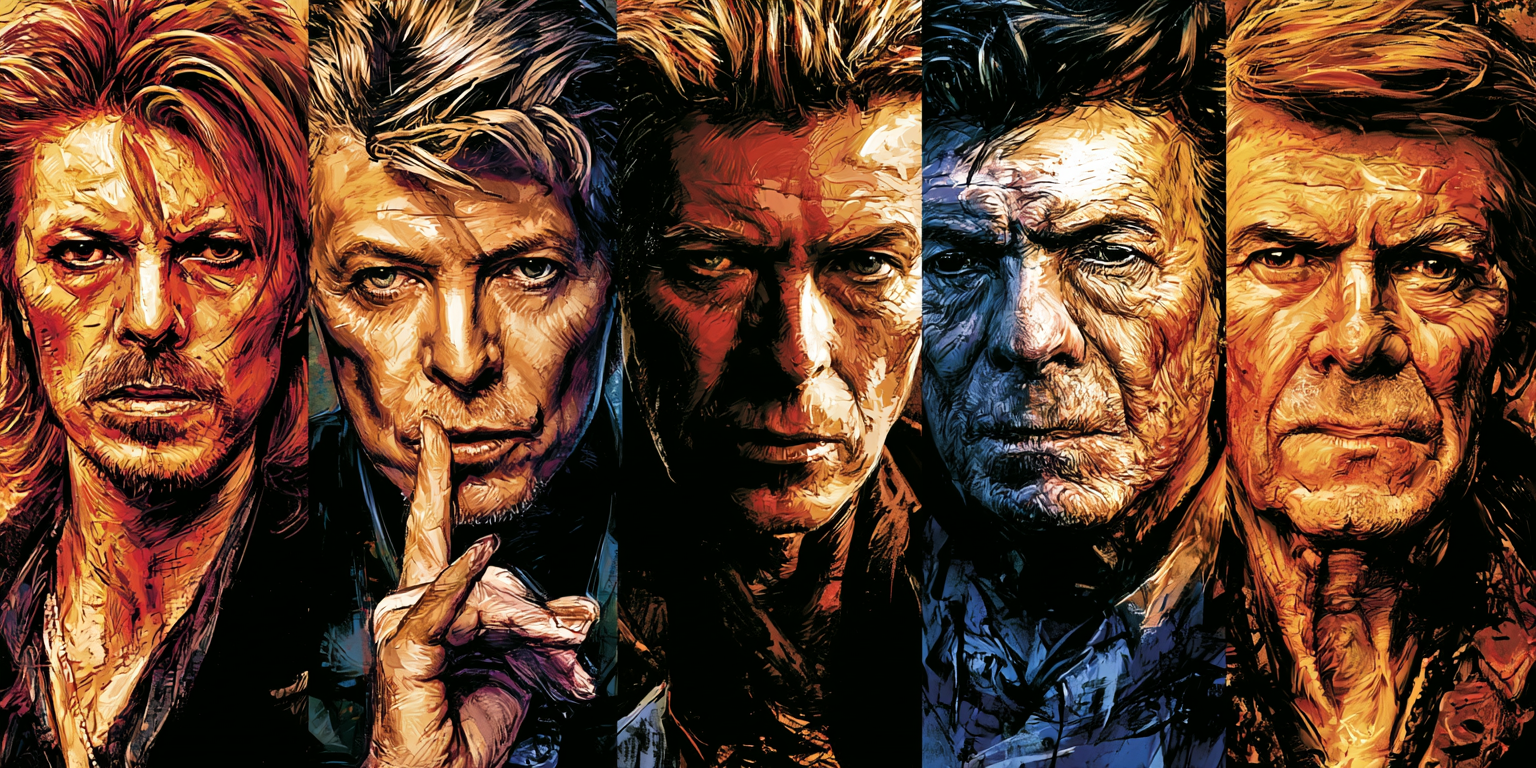
No discussion of reinvention would be complete without mentioning David Bowie.
Bowie created entire characters throughout his career.
Ziggy Stardust.
Aladdin Sane.
The Thin White Duke.
Each represented not simply a visual makeover but a complete artistic transformation.
In many ways, Bowie understood something marketers now discuss frequently:
People do not buy products.
They buy stories.
Every new Bowie persona gave audiences a new story to engage with.
Few artists have demonstrated such a sophisticated understanding of personal branding.
What Brands Can Learn
While individuals often provide the most dramatic examples of reinvention, businesses face exactly the same challenge.
Netflix
Perhaps no modern company demonstrates reinvention better than Netflix.
Many younger consumers have no idea that Netflix originally mailed DVDs through the post.
Its leaders recognised that streaming would eventually replace physical media and were willing to disrupt their own business before somebody else did.
The result was one of the most successful business transformations of the modern era.
LEGO
At the beginning of the 2000s, LEGO was facing severe financial difficulties.
The company had expanded into too many areas and lost focus.
Instead of stubbornly continuing down the same path, it reinvented itself by returning to its core strengths while embracing digital experiences, licensing partnerships, films, and gaming.
Today it is one of the world’s strongest toy brands.
Burberry
For a period during the early 2000s, Burberry faced significant brand image challenges.
The famous check pattern had become overexposed and was losing its luxury appeal.
Through careful repositioning, premiumisation, and digital innovation, Burberry transformed itself into one of the most admired luxury brands in the world.
The product changed less than the perception.
Sometimes reinvention happens in the mind of the customer.
Why People Resist Reinvention
The irony is that most people know reinvention is necessary.
Yet many still resist it.
There are several reasons.
Fear of Failure
A new identity creates the possibility of public failure.
Remaining the same feels safer.
Sunk Cost Bias
Behavioural economists such as Daniel Kahneman have shown that people often continue investing in existing approaches simply because they have already invested heavily in them.
This is known as the sunk cost fallacy.
The years spent building an identity can become the very thing preventing change.
Success Can Become a Trap
Ironically, success can make reinvention harder.
The more successful someone becomes, the stronger the temptation to preserve what already works.
Yet markets rarely stand still.
What works today may not work tomorrow.
The Marketing Lesson
Perhaps the biggest lesson from Prince, Madonna, and Bowie is that reinvention does not mean abandoning who you are.
It means deciding which parts of your identity are permanent and which parts should evolve.
The strongest brands maintain a consistent purpose while allowing their execution to change.
The strongest marketers do the same.
The strongest careers often follow the same pattern too.
When I look back at my own career, from music and touring through to marketing, ecommerce, digital transformation, and business leadership, there have been multiple reinventions along the way.
None of them felt entirely comfortable at the time.
Most involved learning new skills, entering unfamiliar environments, and leaving behind things that had previously defined me.
Yet each stage opened doors that would never have existed otherwise.
Final Thoughts
The world often celebrates consistency.
But history frequently rewards adaptability.
Prince changed because he was creatively restless.
Madonna changed because she understood culture.
Bowie changed because he recognised the power of storytelling.
The businesses that survive for decades do much the same thing.
The challenge is knowing which parts of yourself to preserve and which parts to leave behind.
Because sometimes the greatest threat to future success is not failure.
It is becoming too attached to past success.
TL;DR
- Reinvention is often the key difference between long-term relevance and decline.
- Prince continually evolved his music, image, and identity throughout his career.
- Madonna turned reinvention into a strategic advantage, remaining culturally relevant across multiple decades.
- David Bowie demonstrated how storytelling and personal branding can support continual transformation.
- Brands such as Netflix, LEGO, and Burberry show that businesses must reinvent themselves too.
- Psychological biases such as sunk cost thinking often make change difficult.
- The most successful people and organisations preserve their core purpose while evolving how they express it.
- Long-term success often depends less on consistency and more on adaptability.