

Ozzy Osbourne: The Reinvention of Metal’s Ultimate Madman
A Personal Tribute by a Long-Term Ozzy Fan – and Marketer Who Finally Got to Say Goodbye
Yesterday, on 22nd July 2025, Ozzy Osbourne passed away.
A metal pioneer. A Brummie icon. And for me – a lifelong fan who only just saw him perform live for the very first (and now final) time – it was a gut punch. Not unexpected, but painful all the same – as Alice Cooper said, “it might be expected, but it still takes your breath away”.
I was there at Villa Park, Birmingham, for ‘Back to the Beginning’ with my buddy Chris. And for a man who was physically broken and no longer able to walk, Ozzy somehow managed to bring the entire stadium to life.
He sat on a throne. He blasted his way through the classics. And it was glorious. It felt historic. It was moving. This article is my tribute to the man who helped birth an entire genre – and kept reinventing it for over 50 years.

Black Sabbath: Metal is Born (1968–1979)
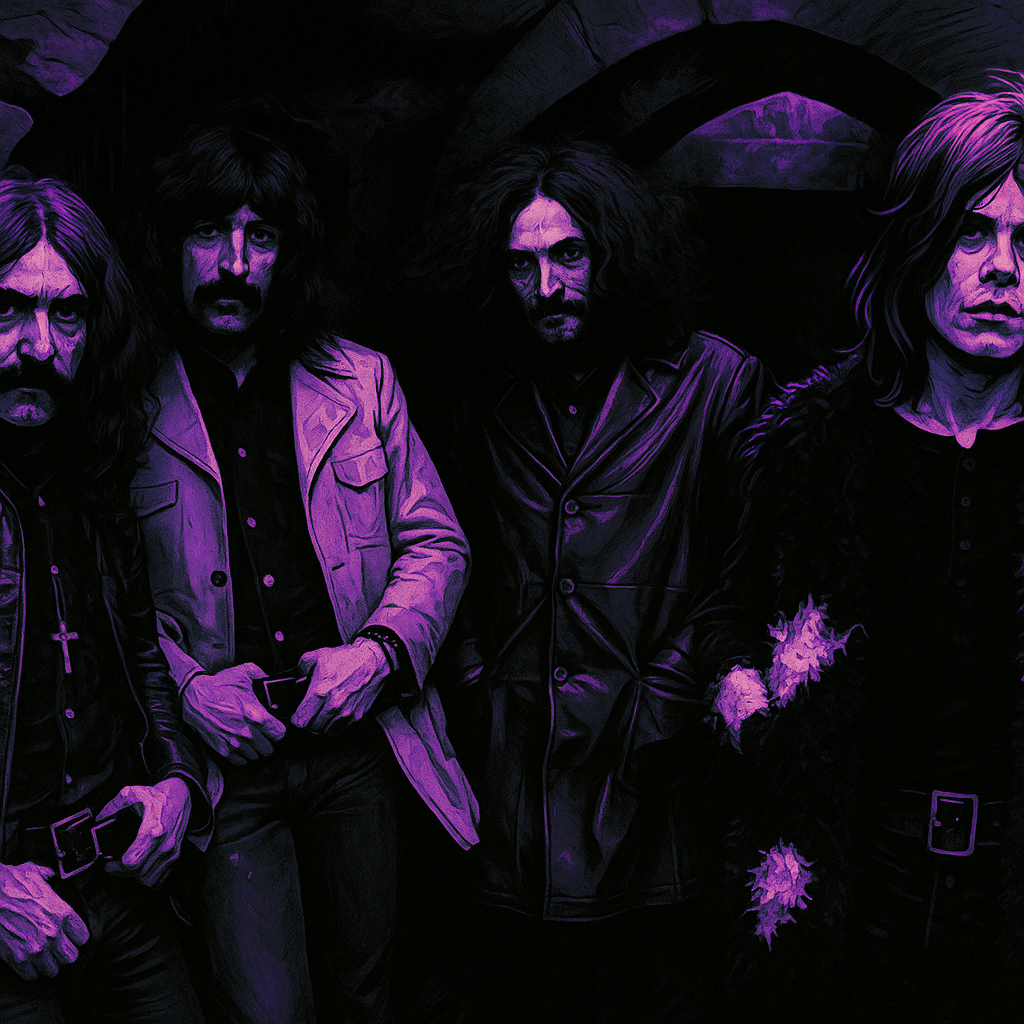
Ozzy’s story began in Aston, Birmingham – same place as the gig I saw him at (just a stones throw from his childhood home). In 1968, he joined Tony Iommi, Geezer Butler, and Bill Ward. The band was originally called Earth. Then they changed their name to Black Sabbath, after the Boris Karloff horror film. And yes, that was deliberate. Their 1970 debut album dropped like a hammer – dark, slow, and doom-laden.
It didn’t sound like Led Zeppelin.
It didn’t sound like anything that had come before.
This was proto-metal. Sabbath invented it.
Iommi’s detuned guitar sound (a workaround due to losing his fingertips in an industrial accident), Geezer’s lyrics about war, death and demons, Bill Ward’s pioneering drumming styles (later to be classified as “Metal Drumming”) and Ozzy’s chilling vocals – it was a new sonic language. They went on a tear: Paranoid, Master of Reality, Vol. 4, Sabbath Bloody Sabbath. Each album changed the rules. And each line-up change slowly unravelled the original magic.
By 1979, Ozzy’s drug use had become a liability. He was fired. Sabbath hired Ronnie James Dio, and Ozzy… well, many assumed he’d burn out. Instead, he reinvented himself.
Again and again.
Solo Resurrection: The Randy Rhoads Era (1980–1982)
With help from Sharon Arden (later Sharon Osbourne), Ozzy picked himself up and started again. He auditioned musicians for a new solo project and struck gold with Randy Rhoads – a young guitarist who blended classical training with searing metal riffs.
The result? Blizzard of Ozz (1980) – an album that gave us “Crazy Train” and “Mr. Crowley”. It was tight, inventive, and packed with energy. Randy didn’t just join Ozzy’s band – he saved Ozzy’s life. “He gave me a reason to carry on,” Ozzy once said. And it showed. The follow-up, Diary of a Madman, proved they weren’t a fluke.
But in 1982, Rhoads died in a freak plane crash while on tour. Ozzy was devastated. Yet somehow, he carried on. It became a pattern. Lose a band member. Pick up the pieces. Reinvent.
Side note: One of the other people who tragically died in that same plane crash was makeup artist Rachel Youngblood – not to be confused with the contemporary musician Yungblud, who appeared at Ozzy’s final show in 2025 and sung a stunning rendition of “Changes”. A strange coincidence that felt oddly poignant during that night at Villa Park.
Jake E. Lee & the Glam Metal Years (1983–1986)
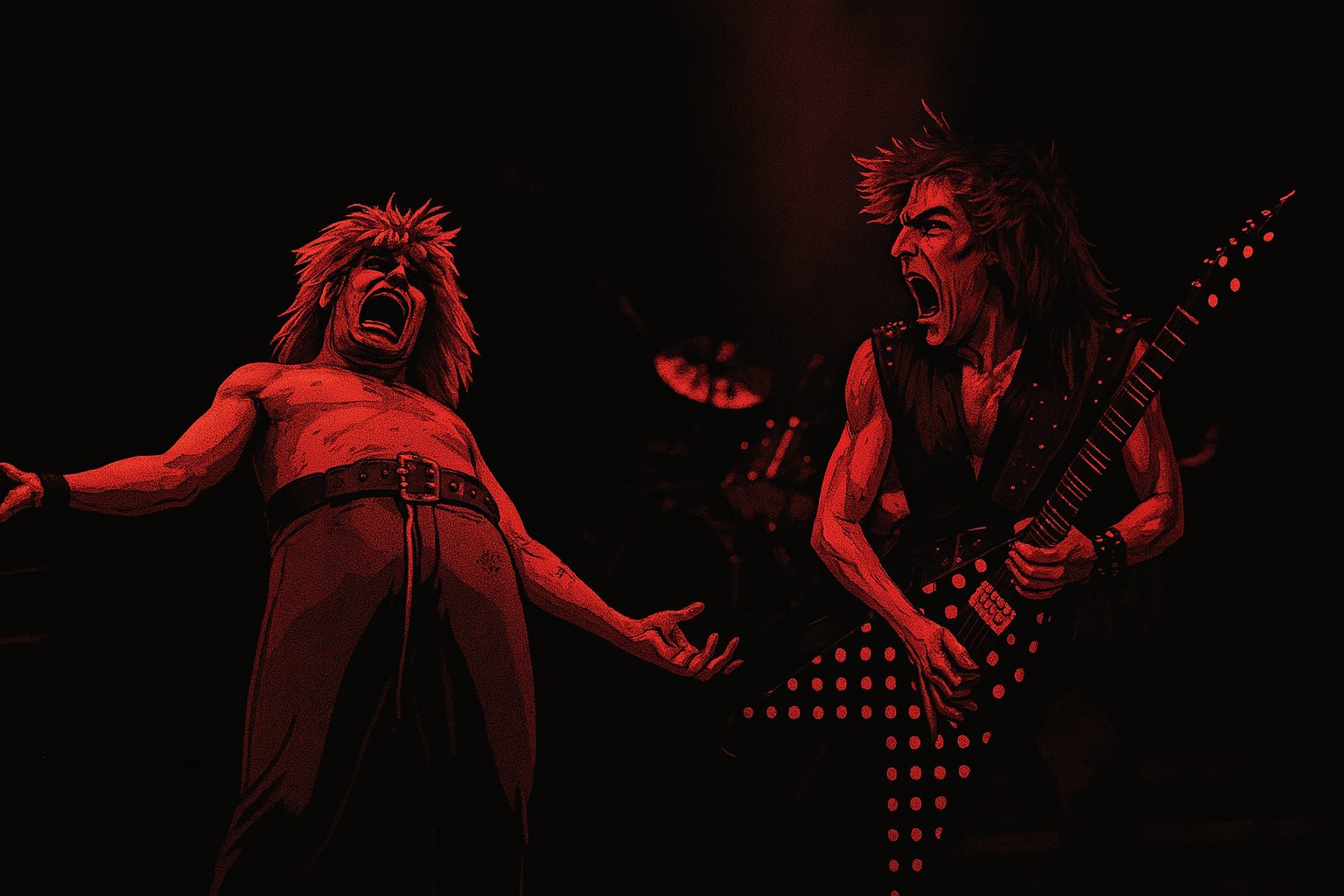
After Rhoads, Ozzy recruited Jake E. Lee. A different flavour entirely. Sleek, shreddy, very 80s. Bark at the Moon (1983) saw Ozzy lean into glam metal without ever fully surrendering to it. The Ultimate Sin (1986) gave us “Shot in the Dark” – Ozzy’s first Top 10 UK single.
This era divided fans, but not me, I love it (although I was listening to it long after its release).
I see it now as Ozzy doing what all great marketers do – adapting to trends while staying true to core values. He didn’t become Bon Jovi, but he shared a stage with him and stole the show.
Things famously soured between Ozzy and Jake E. Lee in later years – royalties, credit disputes, and a general sense of being overlooked by the Osbourne camp. But seeing Jake E Lee walk out on stage at ‘Back to the Beginning’ was an unexpected emotional high. Whatever had passed between them, it clearly didn’t matter anymore. The fans remembered. Ozzy remembered. And Jake E. Lee reminded us all just how vital he was to Ozzy’s story.

Zakk Wylde, Pinch Harmonics & Power Ballads (1987–1995)
In 1987, Ozzy found another guitar prodigy: Zakk Wylde. Beefy sound. Bullseye Les Paul. More blues, less Bach. Together, they released No Rest for the Wicked (1988) and then No More Tears (1991). The latter gave us “Mama, I’m Coming Home” – a love letter to Sharon and a radio staple for years.
Zakk wasn’t a clone of Rhoads or Lee even though he credits them as two of his biggest influences – he was his own man, and Ozzy let him flourish. Zakk had the unique position of being an unbelievable guitarist in his own right but also incredibly respectful for those that came before him and revering the position he held in Ozzy’s band.
Again, another line-up, another reinvention. And by the early 90s, Ozzy had announced his “No More Tours” farewell… which of course, didn’t stick.
He released Ozzmosis in 1995, because retiring just wasn’t in his DNA.
This period is probably my favourite. It’s when I really started getting into heavy metal. For me, Zakk Wylde could be the greatest ever metal guitarist. I loved this lineup. My mates and I used to sit around watching the VHS tapes and later DVDs of these performances, studying every move. Not just the playing – the performance. The way Zakk and Ozzy owned the stage. It taught me how to perform, how to hold a crowd, and what it means to be at the top of your game.
This wasn’t just music – it was a masterclass.

Ozzfest & Reality TV: Ozzy the Brand (1996–2000s)
In the late 90s, Ozzy did something even more surprising. He stopped being just a musician and became a brand. Ozzfest (launched in 1996) brought metal back to the masses. It was a masterclass in audience segmentation – blending legacy acts with new metal (inc. nu-mental) bands, appealing to everyone from old-school Sabbath fans to teenage Slipknot kids.
Interestingly, Ozzfest was born out of rejection. When Ozzy was turned down for a slot at Lollapalooza, Sharon Osbourne decided to take matters into her own hands. Instead of taking the snub quietly, she created a rival festival that quickly became the destination for heavy music. In true Osbourne fashion, they didn’t wait to be invited to the party – they threw their own and made it louder, heavier, and more influential than anything else at the time.
Then came The Osbournes (2002). MTV turned Ozzy into a reality star. We saw the mumbly, lovable, confused dad behind the bat-biting headlines. A whole new audience discovered him.
This was peak reinvention. He didn’t just survive changing media – he owned it.

Hellraiser: My Favourite Music Video
One curious gem from this era is the song “Hellraiser.” Co-written by Ozzy and his friend Lemmy Kilmister of Motörhead, it’s one of those rare songs with two original versions – Ozzy recorded it for No More Tears in 1991, and Motörhead did their own version a year later. Neither is a cover – both artists had equal claim to it. What makes it even more special is that, for the song’s 30th anniversary in 2021, a new animated video was released, featuring a brilliant cartoon version of Ozzy and Lemmy fighting demons and flying through the underworld on motorbikes. It was part tribute, part time capsule, and pure heavy metal fantasy. A fitting visual for one of the great collaborative anthems in rock history.
Late-Career Highlights & Health Battles (2010–2024)
In the 2010s, Ozzy reunited with Black Sabbath for one final album (13) and a farewell tour. The album went to No.1 – proof that their sound still mattered. His solo work continued too: Ordinary Man (2020) and Patient Number 9 (2022) featured guests from Jeff Beck to Post Malone.
But behind the scenes, his health was deteriorating.
Parkinson’s. Spinal surgeries. Cancelled tours.
My wife Lucy had bought me tickets to see Ozzy supported by Judas Priest at the O2 in London – a dream line-up. But the show kept being postponed due to Ozzy’s health problems and the chaos of the COVID lockdowns. It felt like seeing Ozzy live would never happen.
To me, that gig represented my chance to finally see him live – and year after year, it slipped further away. He finally admitted in 2023 that he couldn’t tour anymore.
And yet…
Back to the Beginning: The Final Bow (2025)
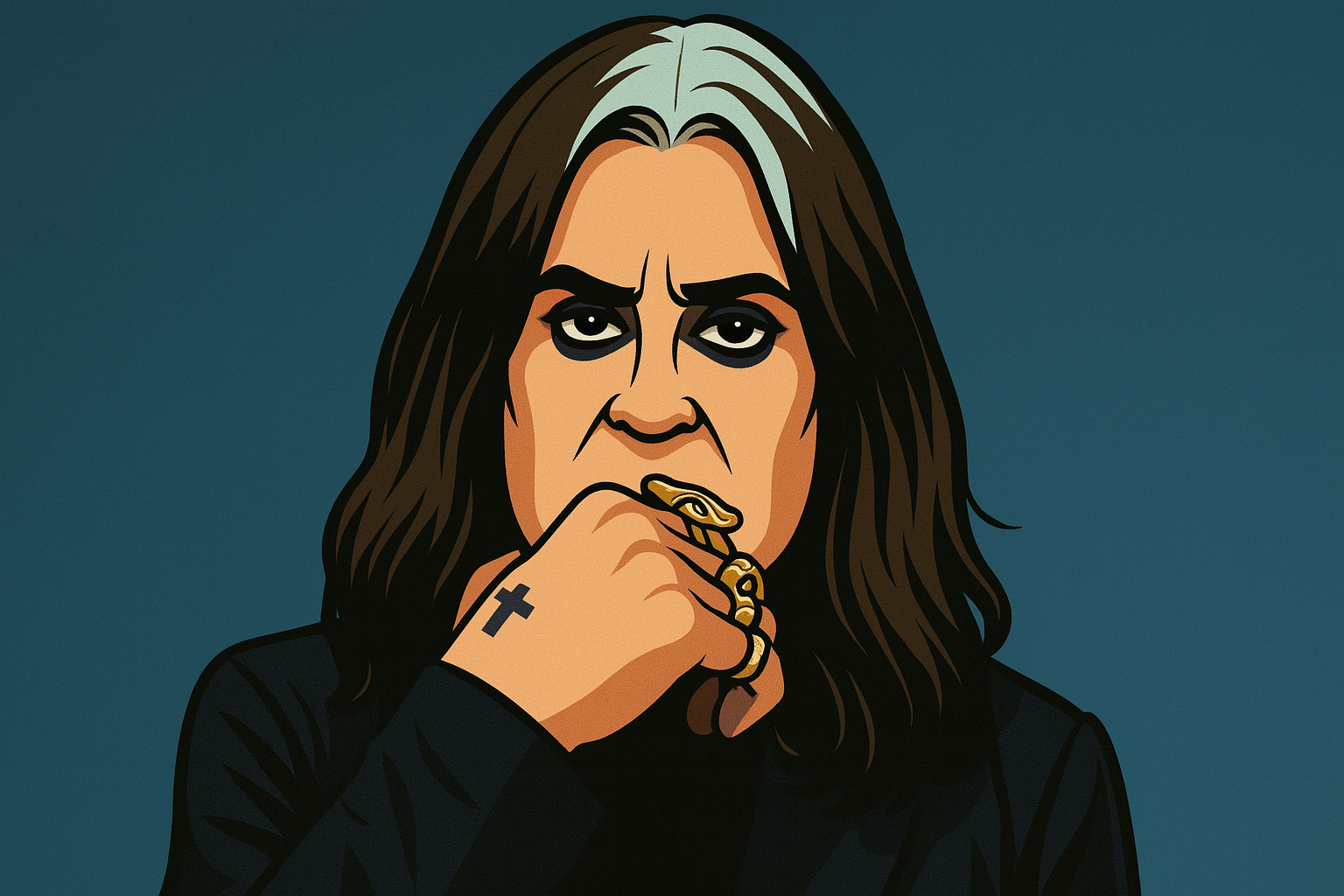
On 5th July 2025, I sat among 45,000 people in Villa Park for the ‘Back to the Beginning’ gig – a charity concert organised by Sharon and Ozzy. It was billed as one last performance.
I’d never seen Ozzy live before.
This was my first and last.
And what a lineup it was. A dream ticket for any metal fan. Metallica, Pantera, Lamb of God, Guns N’ Roses, Slayer, Tool, Anthrax, Alice in Chains, Gojira, Hailstorm, Mastadon and guest appearances you could only dream of, like Van Halen’s Sammy Hagar, Ghost’s Papa, Aerosmith’s Steven Tyler joining for a guest vocals, and guitar heroes like Tom Morello, Ronnie Wood and Nuno Bettencourt. It was as if every corner of heavy music had turned out to say thank you. Bands played covers, collaborations happened you’d never expect, and the whole thing was one giant love letter to Ozzy.
For someone who had grown up watching all of these artists on stage and screen, it was surreal seeing them united by a single influence. The atmosphere was electric – reverent and chaotic in equal measure.
He was rolled on stage in a throne. His voice cracked at times. But that didn’t matter – the crowd willed him on. Metallica, Tool, Pantera, Guns N’ Roses, Slayer – they were all there to pay tribute.
But the night belonged to one man.
Black Sabbath reunited – the full original line-up – and closed the show. “War Pigs,” “Iron Man,” “Paranoid.” I can neither confirm nor deny whether I shed a tear. Same for the guys next to me. Thousands of us, singing the words of the man who invented the music we loved.
Seventeen days later, Ozzy died.

Legacy: A Marketer’s Perspective on a Metal God
Ozzy Osbourne wasn’t just a great musician. He was a master of reinvention.
Each new band line-up wasn’t just about chemistry – it was strategy. Fresh guitarists meant fresh ideas. Changing producers, adapting sounds, embracing emerging media – it was marketing at its finest.
Ozzy took personal tragedy and turned it into creative evolution. He built a brand without trying to. He laughed at himself, never took it all too seriously, and still gave us timeless music. His albums weren’t always perfect, but they were always him. Raw, weird, dark, funny.
In my opinion he was one of the greatest marketers that ever lived – whether he knew it or not. And I’ll forever be grateful that I got to see him – once – before he left us.
Thank you, Ozzy. Rest in peace, and thanks for all the noise.