

Christmas in Beirut
A Festival of Lights, Faith, and Resilience
Beirut is a city that has lived through turmoil, but every December it glows with colour, music, and celebration. Lebanon is home to one of the largest Christian populations in the Middle East, and in Beirut, Christmas is both a sacred festival and a symbol of unity.
From illuminated streets and grand midnight masses to Arabic-infused carols and Middle Eastern feasts, Christmas in the Lebanese capital is a cultural blend like no other.
The Marketing Made Clear Podcast
This article features content from the Marketing Made Clear podcast. You can listen along to this episode on Spotify:
A Christian Heart in the Middle East
Roughly a third of Lebanon’s population identifies as Christian, and in Beirut the holiday is widely celebrated by Maronite Catholics, Greek Orthodox, Armenian Apostolics, and Protestant communities. Christmas is an official national holiday, and even Lebanese Muslims often join in the festivities – visiting friends, exchanging sweets, or enjoying the city’s spectacular light displays.
This cross-communal participation makes Christmas not only a religious occasion but also a symbol of Lebanon’s pluralism and coexistence.
St Barbara’s Wheat Sprouts: The First Sign of the Season
One of Lebanon’s earliest Christmas traditions arrives weeks before Christmas itself, on 3 December, the Feast of Saint Barbara, known locally as Eid al-Burbara. According to legend, Saint Barbara fled from her father, hiding in a wheat field as it miraculously grew behind her to shield her from capture.
To commemorate this, Lebanese families plant wheat, lentils, or chickpeas in small pots on 3 December. By Christmas Day, the green shoots have sprouted and are placed around nativity scenes and under Christmas trees as a symbol of new life and resurrection.
It’s a quiet yet deeply symbolic ritual that connects the Christmas season to both the Christian story and Lebanon’s agricultural roots. The green shoots; humble and homemade, contrast with the city’s grand illuminations, reminding people that faith and family traditions remain at the heart of the celebration.
Beirut Dressed in Light
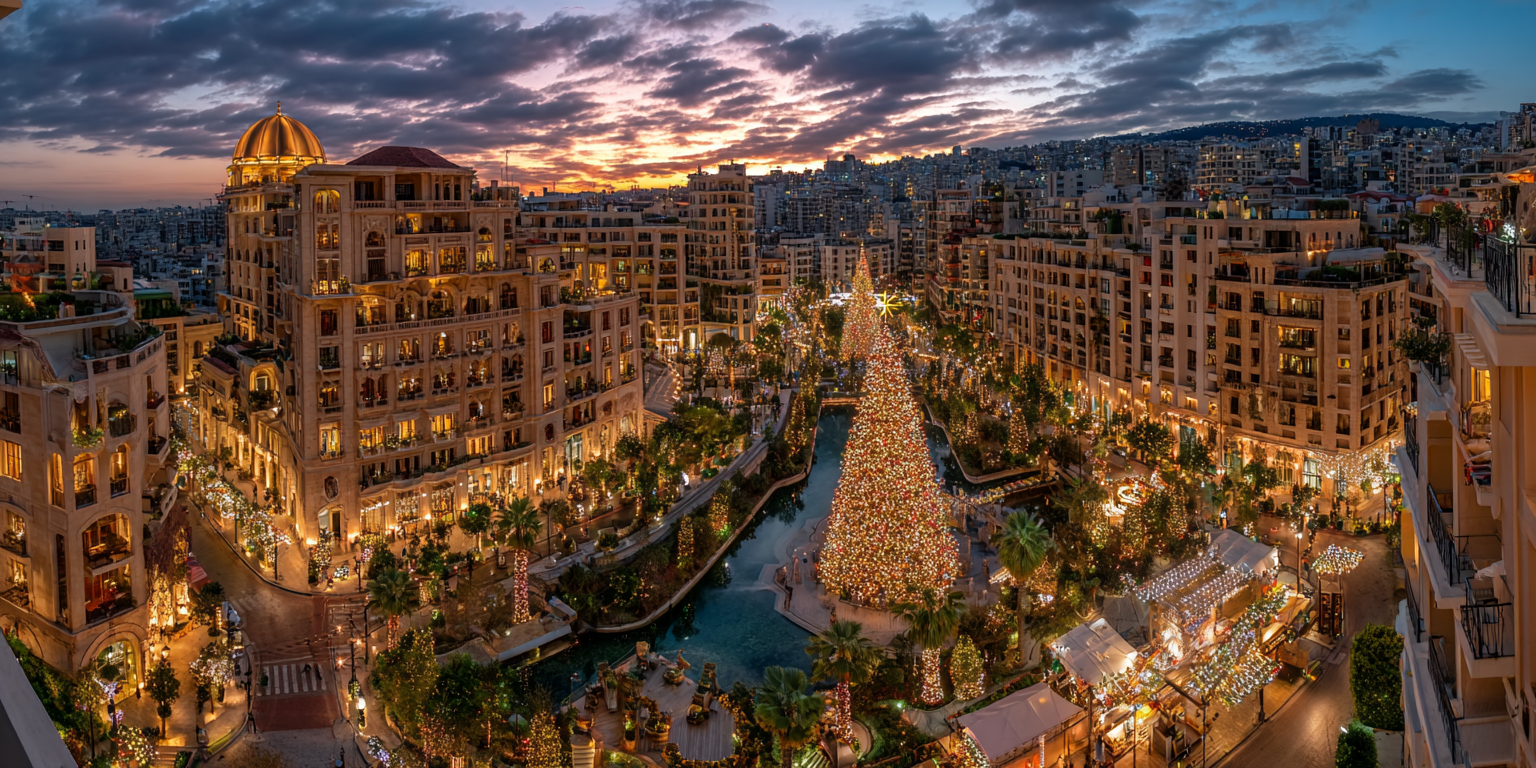
Each year, Beirut’s districts compete to outdo one another with Christmas decorations. Martyrs’ Square and Downtown Beirut host towering trees and elaborate illuminations, while neighbourhoods like Ashrafieh, Hamra, and Zalka sparkle with festive lights. Shopping malls, especially ABC and City Centre, transform into winter wonderlands with extravagant displays that rival those in Europe.
These illuminations carry added symbolism in a city often marked by hardship; the lights are a gesture of hope, resilience, and continuity.
Sacred Traditions: Midnight Mass and Community
For Lebanese Christians, the spiritual core of Christmas remains Midnight Mass, held in churches across Beirut and televised nationwide. The largest services take place at the Maronite Cathedral of Saint George and other historic churches in the city. Families gather afterward for festive meals, often continuing late into the night.
Carols are sung in Arabic, French, and English, reflecting Lebanon’s layered identity. Choirs perform hymns in both traditional and modern arrangements, filling churches and public squares with music.
Feasting the Lebanese Way
Christmas meals in Beirut combine global traditions with Lebanese flavours. While turkey or roast meats may appear on the table, they are often accompanied by mezze spreads of hummus, tabbouleh, kibbeh, and stuffed vine leaves. Sweets such as ma’amoul (semolina pastries filled with dates, walnuts, or pistachios) are a festive staple, shared with guests and neighbours.
Two especially symbolic Christmas desserts are meghli and karawiyah, spiced puddings made with rice flour or caraway. Traditionally served to celebrate the birth of a child, they carry special meaning at Christmas in honour of the birth of Jesus. Flavoured with cinnamon and anise, and topped with coconut shavings and nuts, these dishes blend sweetness with symbolism, embodying the nativity in culinary form.
In recent years, some families have also added European-style desserts like bûche de Noël (yule log cake), a legacy of French influence. The blend of East and West is unmistakable — a culinary reflection of Lebanon’s cultural crossroads.

The Wider Lebanese Christmas
Beyond Beirut, Christmas celebrations flourish across Lebanon. In mountain villages like Bcharre and Zahle, snow often blankets the churches and squares, adding a wintry backdrop to the festivities. Armenian communities in Bourj Hammoud and Anjar celebrate according to their own calendar in early January, extending the season.
Wherever you go, the holiday is marked by processions, choirs, and community events that bring together families and neighbours.
The Christmas Camel
In Lebanon and across parts of the Middle East, children don’t just wait for Santa Claus (Baba Noël in Arabic). Some stories tell of gifts being delivered by the Christmas Camel, a nod to the nativity story, where camels carried the Wise Men across the desert to Bethlehem.
In Lebanese folklore, the Christmas Camel is sometimes said to accompany Baba Noël, helping bring presents to children. While not as commercially prominent as Santa’s sleigh and reindeer, the camel adds a distinctly regional flavour to the season’s mythology. In some villages and community events, you’ll even see camels appearing in processions or live nativity scenes, reminding families of the Middle Eastern setting of the original Christmas story.
A Season of Resilience
For many Lebanese, celebrating Christmas in Beirut is about more than religion or tradition. It is a public affirmation of resilience in the face of economic crises, political instability, and past conflicts. The lights, the music, and the joy are all acts of defiance against despair, proof that the city’s spirit endures.
TL;DR
Christmas in Beirut is both sacred and spectacular. The city lights up with elaborate decorations, Midnight Mass draws huge congregations, and feasts blend roast turkey with Lebanese mezze and sweets. Celebrated by Christians and embraced by the wider population, Christmas in Lebanon’s capital is a festival of faith, family, and resilience — a reminder that even in difficult times, Beirut shines.