

Consumer Behaviour & Innovation
Why Do Tastes Evolve? And Can You Be Too Far Ahead of Your Audience?
Why does yesterday's extreme become today's normal? From Black Sabbath to modern extreme metal, from fashion runways to product innovation, our tastes seem capable of travelling enormous distances – but perhaps only if we take the journey one step at a time.
There is a thought experiment that has been bothering me.
Imagine it's 1971.
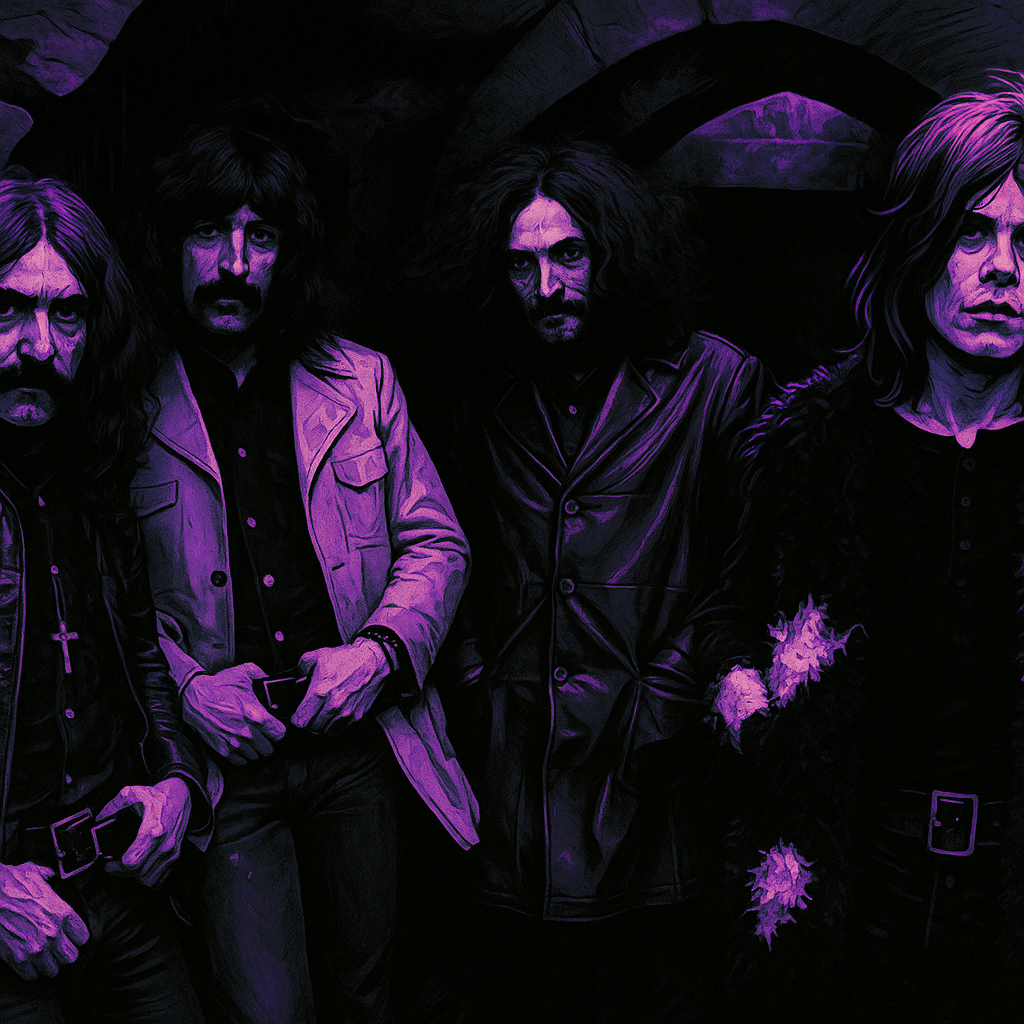
Black Sabbath released Paranoid the previous year. Heavy metal, at least as we would come to understand it, is taking shape. To many listeners at the time, Sabbath sounded dark, distorted, threatening and extraordinarily heavy.
Now find someone who absolutely loves them.
Sit them down.
And play them one of the heaviest pieces of music you can find from 2026.
Not Metallica. Not Slipknot. Go properly heavy. Something from the more extreme reaches of death metal, black metal, deathcore or whatever particular subdivision of sonic warfare you fancy.
What happens?
Or do they stare at you as if you've just played them the sound of a washing machine falling down a staircase?
I suspect, for plenty of people, it would be the latter.
And if that's true, it raises a fascinating question about consumers, culture and marketing.
Do our tastes evolve because we genuinely develop preferences for increasingly extreme things, or because we've gradually learned how to appreciate them?
More importantly for marketers:
Can something be too far ahead of its audience to succeed?
Yesterday's Extreme Is Today's Normal
This isn't only about heavy metal.
Look at fashion.
Take an outfit from an avant-garde fashion show today and transport it back to Britain in the 1950s.
Would people recognise it as incredibly sophisticated fashion from the future?
Probably not.
There's a reasonable chance they'd think something had gone terribly wrong.
And yet fashion has managed to travel from the conventions of the 1950s to where we are today without society collectively deciding to stop wearing clothes.
It happened progressively.
Hemlines changed. Silhouettes changed. Materials changed. Gender conventions changed. Subcultures emerged. Designers borrowed from them. Celebrities adopted new styles. Early adopters made strange things slightly less strange. High-street retailers produced more accessible versions.
Then the boundary moved again.
How yesterday's strange becomes today's normal
The idea sits outside the consumer's normal frame of reference.
People repeatedly see, hear, use or experience it.
What once felt extreme becomes another reference point.
You can see similar patterns almost everywhere.
Stronger flavours
Tastes can become hotter, smokier, sourer or more complex as diners become familiar with stronger sensations.
From simple to specialised
Instant coffee becomes espresso, then single-origin beans, processing methods, altitude and increasingly detailed discussions about flavour.
Learning to love smoke
A heavily peated whisky can move from tasting like someone extinguished a bonfire in it to becoming exactly what the drinker wants.
Escalating intensity
Techniques that once shocked audiences can become familiar, pushing filmmakers to find new ways to create fear and discomfort.
Moving the visual boundary
Silhouettes, materials and styling that initially look outrageous can migrate gradually towards mainstream acceptance.
Getting heavier
Each generation can inherit an expanded definition of what speed, aggression, distortion and extremity sound like.
Let's Invent a Completely Unscientific Scale
Imagine that “extremeness” can be measured from one to ten.
It can't.
But humour me.
Imagine four represents something you're currently entirely comfortable with.
Five is recognisably similar, but a little more adventurous.
Six initially feels challenging, but after a while you begin to understand it.
Eventually six becomes normal.
So you move to seven.
Then eight.
Several years later, you're happily consuming something you would previously have rated a ten.
The ladder of acceptable weirdness
Each individual step is relatively small. But enough small movements can eventually carry the consumer a very long way from where they started.
This is not a scientific measurement of taste. The important part is the route: 4 → 5 → 6 → 7 → 8 → 9 → 10 may feel completely different from jumping directly from 4 → 10.
Now imagine we'd skipped all of those intermediate steps.
This is where the consumer's expectations currently sit.
No stepping stones. No gradual acclimatisation.
The product is identical.
The person is biologically much the same.
But their reaction could be completely different.
What changed?
Their frame of reference.
That could mean consumer preference isn't simply a destination.
It's a journey.
And the route matters.
Your Brain Likes Familiarity
There is psychological research that gives us good reason to think repeated exposure can affect preference.
One of the best-known concepts is the mere-exposure effect , most famously associated with psychologist Robert Zajonc.
Broadly, repeated exposure to a stimulus can make it feel more familiar and, under the right circumstances, increase our liking for it.
This doesn't mean playing somebody a terrible song 600 times will inevitably make it their favourite song.
Anyone who has worked somewhere with a particularly repetitive Christmas playlist can confirm the limitations of that theory.
But familiarity matters.
Unfamiliar stimuli can require more effort to understand. We don't necessarily possess the framework through which to interpret what we're experiencing.
Research specifically into music has also found that repeated listening can increase liking, with the effect interacting with musical complexity .
In other words, sometimes we have to learn how to hear something.
The unfamiliar becomes familiar.
And once something becomes familiar, something slightly beyond it becomes less unfamiliar too.
You Learn How to Listen
Think about wine.
Give somebody with very little experience two glasses of wine and their assessment might essentially be:
Nice.
and
Not as nice.
Give the same wines to an experienced enthusiast and they may identify differences in grape variety, acidity, tannins, oak, region, age, climate and potentially the emotional state of the Frenchman who picked the grapes.
Their tongue hasn't evolved into a fundamentally different biological instrument.
Their ability to interpret the information has changed.
Music works in much the same way.
What initially sounds like noise can, with experience, reveal structure.
You begin recognising rhythmic patterns, production techniques, vocal styles, guitar tones, references to other artists and differences between subgenres that previously sounded virtually identical.
Your ears haven't necessarily changed.
You have.
And as their expertise develops, the products capable of exciting them can change too.
So Would a Black Sabbath Fan Like Modern Extreme Metal?
This is where Black Sabbath become particularly useful.
I've written previously about Ozzy Osbourne and the reinvention of metal , so I won't retell the entire history here.
But Sabbath's importance to this thought experiment is difficult to overstate.
Their early music helped establish a genuinely new sonic vocabulary: darker riffs, heavier guitar tones, ominous lyrical themes and an overall sound that pushed significantly beyond much of the rock music around it.
In other words, somebody in the early 1970s could genuinely have been attracted to the extreme end of the music available to them.
But that does not automatically mean they would like anything objectively more extreme.
That's the distinction.
Our imaginary Sabbath fan might love Sabbath precisely because the band are standing near the edge of the musical landscape they understand.
Move the edge another five miles and the response may not be:
“More of the thing I love!”
It could simply be:
“What the hell is this?”
More than half a century of moving the boundary
Not a perfect family tree – metal fans may now commence hostilities – but a useful illustration of successive boundaries being pushed.
Between the Black Sabbath of the early 1970s and the extreme edges of metal today sits more than half a century of musical evolution, audience learning and shifting cultural expectations.
| Broad stage | What changed? | What happened to the listener's reference point? |
|---|---|---|
| Early heavy metal | Darker riffs, distortion, weight and menace become central to the sound. | “Heavy” acquires a recognisable musical vocabulary. |
| New Wave of British Heavy Metal | Speed, attack and technicality are pushed further. | Faster and more aggressive music becomes increasingly intelligible rather than simply chaotic. |
| Thrash metal | Speed and aggression are pushed dramatically further. | Yesterday's fast metal starts to sound comparatively restrained. |
| Death and black metal | Vocals, guitar tones, drumming, imagery and production move into more extreme territory. | Sounds previously regarded as inaccessible develop their own conventions and audiences. |
| Modern extreme subgenres | Further combinations of heaviness, speed, production, vocal techniques and rhythmic complexity. | The edge moves again. |
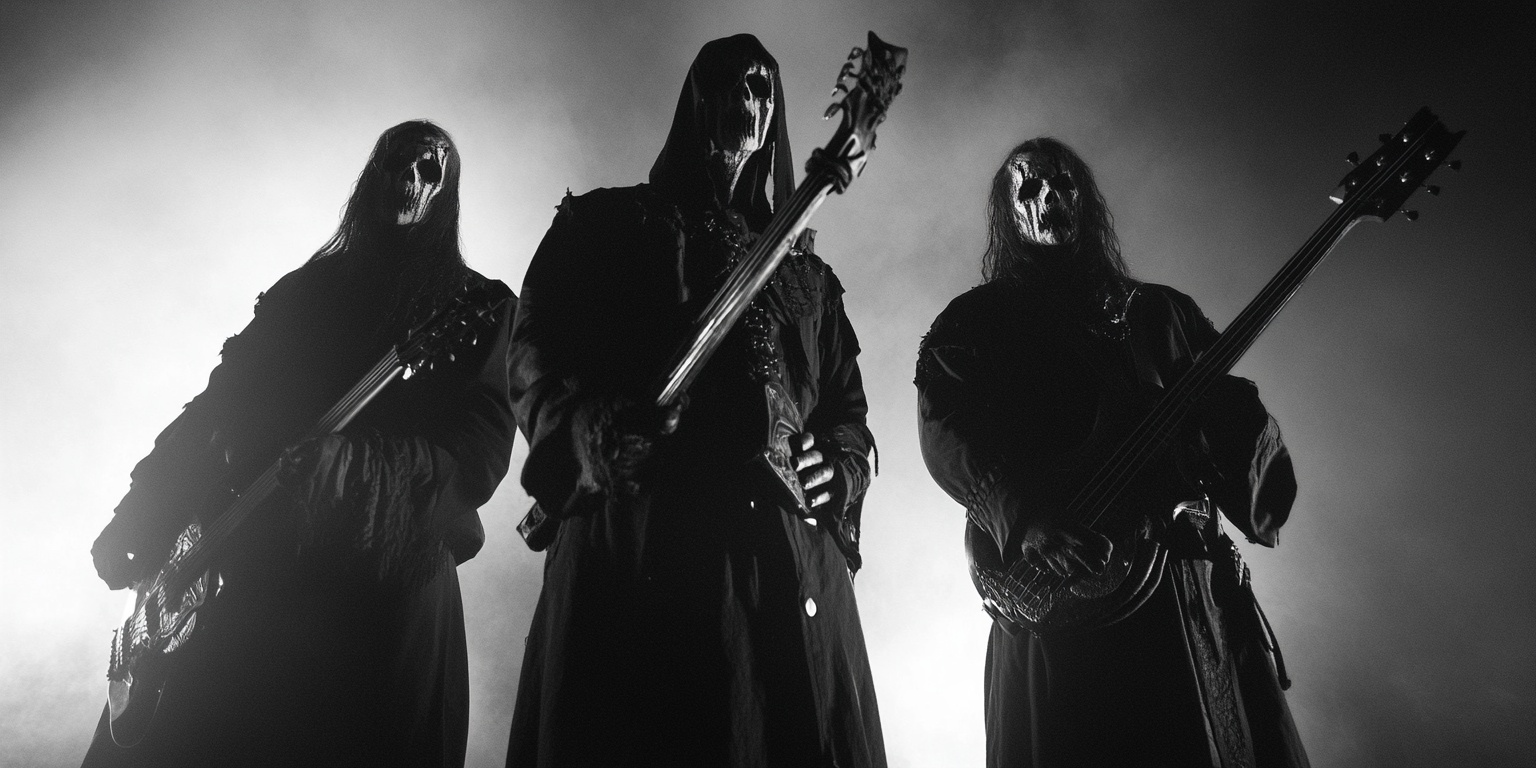
That's not intended as a perfect genealogy of heavy metal – metal fans can argue over subgenre family trees with the intensity of mediaeval theologians – but that's not really the point.
The important thing is that there were stepping stones.
One of the fascinating things about Ozzy's later career was that he continued to sit within this evolving ecosystem. Ozzfest, for example, brought established acts and newer generations of heavy bands into the same environment, putting old-school Sabbath fans and younger metal audiences under the same banner.
My own experience of seeing Ozzy and Black Sabbath's final performance at Villa Park brought that lineage together physically too: artists from multiple generations and very different corners of heavy music were on the same bill, many owing part of their musical ancestry to Sabbath.
I've written about that night separately in “The Final Final Tour” – How Farewell Tours Became a Marketing Encore .
For this discussion, though, what matters is the journey between those generations.
An Experiment I'd Love Someone to Conduct
You could actually test something resembling this.
Take people with similar starting musical preferences and divide them into two groups.
Two routes to exactly the same destination
The destination is identical. The variable is the journey taken to reach it.
Then measure how much each group enjoys, understands or tolerates the final piece.
Obviously, you'd need a rather more sophisticated experimental design than I've just constructed while writing a marketing article.
But the underlying question is serious.
Does gradual exposure to intermediate forms increase our eventual appreciation of something more extreme?
If it does, taste has a degree of path dependency.
Where you end up depends partly upon the route you took to get there.
And suddenly we're no longer talking about heavy metal.
We're talking about innovation.
Most Advanced Yet Acceptable
There's an idea from industrial design that comes remarkably close to the thing we're describing.
The American industrial designer Raymond Loewy became associated with a principle known as MAYA: Most Advanced Yet Acceptable.
Loewy's underlying tension was wonderfully simple: people can be attracted to novelty while simultaneously resisting solutions that depart too dramatically from what they have been conditioned to regard as normal.
Safe but boring
Easy to understand, but potentially too close to what already exists to feel particularly interesting.
Advanced but unacceptable
Different enough to feel confusing, threatening, unnecessary or simply irrelevant.
New enough to be exciting. Familiar enough to be understood.
That might explain an enormous amount about successful innovation.
A genuinely innovative product isn't necessarily the product that changes absolutely everything.
It might be the product that changes exactly as much as consumers are currently prepared to accept.
The Maximum Viable Distance From Normal
I like to think of this as the maximum viable distance from normal.
Imagine consumer expectations as a circle.
Inside the circle are things people already understand.
Immediately outside it are things that feel innovative.
Travel slightly further and you reach things that feel challenging.
Keep going and eventually you reach something consumers don't merely dislike.
They don't know what to do with it.
| Distance from normal | Likely consumer reaction | Marketing implication |
|---|---|---|
| Very close | Familiar, safe, potentially boring. | You may struggle to create distinctiveness. |
| Slightly beyond | Fresh, interesting and recognisable. | Often a powerful innovation zone. |
| Challenging | Interesting to some; uncomfortable to others. | Education, demonstration and early adopters become more important. |
| Far beyond | Confusing, unnecessary or simply “weird”. | The market may not yet possess the reference points required to understand the proposition. |
What Does “Ahead of Its Time” Actually Mean?
This gives us a more useful way of interrogating one of business's favourite post-mortems:
What does that actually mean?
Sometimes it's simply something people say about an unsuccessful idea afterwards to make everybody involved feel better.
But sometimes it may describe something real.
Perhaps an innovation can be too many evolutionary steps ahead of the market.
The destination may be perfectly sensible.
The consumer just isn't ready to make that jump.
Markets Need Stepping Stones
Imagine launching a product in 2000 containing a collection of features consumers would happily use today.
Technically, you might be able to build it.
Conceptually, it might be brilliant.
But would consumers understand why they needed it?
Would the surrounding infrastructure exist?
Would established behaviours support it?
Would people trust it?
Would they even possess the vocabulary necessary to describe its benefits?
Now imagine launching essentially the same concept 15 years later.
Suddenly it works.
We often credit the second company with executing better – and sometimes they undoubtedly did.
But something else has happened.
The market has moved closer to the idea.
Other products have created useful behaviours.
Technology has improved.
Competitors have educated consumers.
Language has developed.
Cultural expectations have changed.
The missing stepping stones have appeared.
The journey became possible.
Marketing Doesn't Just Sell Products. It Teaches Consumers
This is where the idea becomes particularly important for marketing.
We often imagine marketing as responding to existing consumer needs.
Consumers want something.
A company identifies the need.
The company creates a product.
Marketing communicates the benefits.
Everyone goes home.
Reality is considerably messier.
Because marketing also helps consumers learn what products are, how they should be used and why they should matter.
Think about the first time consumers encounter a genuinely unfamiliar product category.
There isn't necessarily a fully formed reservoir of demand waiting conveniently to be harvested.
The category may need to be explained.
Demonstrated.
Compared with something familiar.
Integrated into existing behaviour.
Early adopters try it.
Other people observe them.
Social proof develops.
Language develops around the category.
Competitors enter.
Eventually everyone understands it.
At that point the product can feel obvious.
But obviousness is often something markets create retrospectively.
This is also where the argument naturally connects with Diffusion of Innovation : first an idea has to be acceptable enough for somebody to adopt it; then adoption has to spread through a social system.
Familiarity Is a Bridge
This also helps explain why revolutionary products so often contain reassuringly familiar elements.
Old language
Early motor vehicles were explained using concepts inherited from horse-drawn transport.
The desktop
Files, folders, desktops and rubbish bins gave digital interfaces familiar physical metaphors.
Inherited behaviour
Digital cameras retained many conventions already understood from film photography.
Familiar digital objects
Early interfaces often visually imitated real-world objects to help people understand unfamiliar digital behaviour.
“This is new. But here's the bit you already know.”
They allowed consumers to approach something unfamiliar using concepts they already understood.
That's MAYA in practical form.
Fashion Has Been Doing This Forever
Fashion makes the process unusually visible because the boundary itself can become part of the product.
Designers push.
Early adopters experiment.
Celebrities amplify.
Culture reacts.
Some ideas disappear.
Others survive.
The surviving elements get softened, copied and commercialised.
Eventually they reach the mainstream.
Then something interesting happens.
They stop signalling novelty.
If everybody is wearing something, wearing it no longer communicates that you're particularly adventurous for wearing it.
So innovators move again.
This brings us to another important force behind evolving tastes.
Identity.
We Don't Only Consume Things Because We Like Them
Consumption communicates.
The music we listen to, clothes we wear, food we eat, cars we drive and brands we choose all provide information about us – or at least information we'd quite like other people to believe about us.
Sociologist Pierre Bourdieu's work on taste, distinction and cultural capital is useful here because taste isn't purely an individual sensory response.
It's also social.
Knowing about obscure music can signal cultural knowledge.
Understanding wine can signal expertise.
Wearing a fashion before it becomes mainstream can signal membership of a particular group.
And this creates another engine for taste evolution.
Once something becomes widely adopted, its ability to distinguish us diminishes.
So people at the boundary move somewhere else.
How the Shocking Becomes Normal
That process can be simplified into a cultural journey.
Then somebody moves the boundary again.
Not everything follows this pattern.
Most novel things simply disappear because they're rubbish.
But many successful cultural innovations appear to travel through some version of it.
And importantly, every successful journey potentially moves the starting point for whatever comes next.
What Happens If You Push Too Far?
This creates a difficult problem for innovators.
If you're only marginally different from everybody else, consumers might not care.
If you're dramatically different, consumers might not understand you.
So where should you position yourself?
There isn't a universal answer.
Different audiences have different boundaries.
Early adopters can tolerate – and actively seek – greater novelty.
Mainstream audiences may require more familiarity.
Experts can appreciate distinctions novices cannot.
Subcultures can travel far beyond mainstream taste.
Which means the “maximum viable distance from normal” isn't fixed.
It depends upon whose normal you're measuring.
Needs familiarity
Too much complexity can feel confusing because the consumer lacks a reference framework.
Wants something more
Some novelty feels exciting because the consumer already understands the underlying category.
Needs greater distinction
What feels advanced to a novice may already feel ordinary to somebody deeply immersed in the category.
The same product can simultaneously be boring to an expert, exciting to an enthusiast and incomprehensible to a novice.
The Innovator's Problem
There's also an uncomfortable implication here.
The people creating products are often experts.
Designers study design.
Engineers study technology.
Chefs study food.
Musicians study music.
Marketers study marketing.
Their personal scale might have moved from four to eight years ago.
Then they create something they consider a perfectly reasonable nine.
The consumer is sitting at four.
“This is what normal currently looks like to me.”
“This only feels like the logical next step.”
The creator says:
“They just don't get it.”
And they might be right.
But that's still a marketing problem.
Expertise can create perceptual distance between the people producing something and the people expected to buy it.
The innovation feels incremental to the creator because they've experienced every intermediate step.
The consumer hasn't.
The Same Problem Exists in Advertising
Marketing itself isn't immune from any of this.
Advertising techniques become normalised too.
A new creative style captures attention.
Other brands imitate it.
Consumers become familiar with it.
Eventually they barely notice it.
So advertising pushes further.
Faster edits.
More provocative headlines.
More unusual creative.
More personalisation.
More emotion.
More absurdity.
Sometimes more outrage.
And increasingly:
more stimulation.
Which brings us to the slightly uncomfortable modern version of this entire argument.
What Happens When Algorithms Learn Our Tastes Faster Than We Do?
For most of human history, cultural evolution was relatively messy.
Artists created things.
Audiences reacted.
Successful ideas spread.
Other creators responded.
Taste gradually moved.
But today there's another participant.
The recommendation algorithm.
Streaming and social platforms can use our behaviour – what we choose, replay, skip, like, share or keep watching – to refine what they show us next.
That potentially creates an extraordinary feedback loop.
The personalised escalation hypothesis
Imagine your current taste sits at six. A recommendation system does not need to throw you directly to ten. It can keep finding things that are just slightly beyond the last thing that held your attention.
Each recommendation only needs to be slightly more specialised, stimulating or extreme than the one before it.
Nobody consciously decided to take you from six to seven.
But optimisation may have discovered the path.
Increasingly, culture can be personalised around the individual consumer.
And that raises a fascinating question.
Could recommendation systems accelerate the evolution – or escalation – of taste?
Are We All Climbing Different Ladders?
This could help explain something peculiar about modern culture.
Historically, mass media created enormous shared reference points.
Millions watched the same television programmes, listened to the same radio stations and encountered broadly similar advertising.
Today, recommendation systems can take people progressively deeper into incredibly specific interests.
Music. Comedy. Fashion. Fitness. Food. Interior design. Marketing. Whatever interests you.
The ladder can become personalised.
And because every step is only slightly removed from the previous one, the final destination may never feel particularly extreme to the person who arrived there.
To somebody looking in from outside, however, it can seem completely baffling.
Which brings us straight back to our Black Sabbath fan.
Perhaps Taste Isn't About the Destination
Maybe we've been thinking about taste incorrectly.
We tend to say:
“I like this.”
As though preference is a relatively stable characteristic stored somewhere inside us.
But perhaps taste is better understood as a continually updated relationship between:
Experience
What we've previously encountered.
Understanding
What we currently know how to interpret.
Identity
What our social groups value and what we want to signal.
Familiarity
What currently feels comfortable and recognisable.
Novelty
What feels different enough to remain interesting.
Next exposure
The next thing capable of moving the boundary again.
If that's right, two people presented with the same product – or the same person presented with it at different points in their journey – could respond completely differently.
Not because the product changed.
Because everything leading up to it did.
The Marketing Lesson: Don't Just Design the Destination
This has significant implications for innovation.
The best future product isn't necessarily the most advanced product you can imagine.
It's the most advanced product consumers can successfully reach from where they are now.
Sometimes that means pushing harder.
Sometimes it means simplifying.
Sometimes it means retaining familiar design cues.
Sometimes it means targeting enthusiasts first and allowing them to normalise the behaviour.
Sometimes it means educating the market.
And sometimes it means accepting that an idea genuinely might be too early.
That's a subtly different question.
And potentially a much more useful one.
Back to 1971
So let's return to our imaginary Black Sabbath fan.
Would they like the heaviest music of 2026?
Maybe.
Human beings are gloriously unpredictable, and there may well have been somebody in Birmingham in 1971 who would hear modern extreme metal and immediately demand another song.
But I don't think that's the most interesting answer.
The interesting possibility is that they could eventually love it while hating it on first exposure.
Perhaps we'd need to give them the missing 55 years.
Not literally.
Just the important musical stepping stones.
Let them hear heaviness evolve.
Let yesterday's extreme become normal.
Then move the boundary.
Then move it again.
Eventually, press play on exactly the same song they rejected at the beginning.
And perhaps this time they'd understand it.
Which tells us something surprisingly important about marketing.
Innovation isn't just about how good the destination is.
It's about whether consumers can make the journey.