

The Psychology Behind Christmas Marketing: How John Lewis, Coca-Cola and M&S Shape Our Festive Behaviour
Understanding the cognitive biases, cultural rituals and emotional triggers that make Christmas campaigns so effective
Few moments in the marketing calendar carry as much psychological weight as Christmas. It is simultaneously a cultural ritual, a commercial engine, a memory machine and, depending on your stress levels in mid-December, a mild psychological experiment in human resilience.
But behind every glossy supermarket film, every limited-edition product release and every advert featuring inexplicably tidy living rooms, there is a deep academic history that explains why festive marketing is so powerful.
This article takes a heavier psychological lens, drawing from consumer psychology, behavioural economics, cultural theory and even ritual studies, to unpack how Christmas marketing works on the human mind. It also explores how brands like John Lewis, Coca-Cola, Marks & Spencer, Boots, and smaller disruptors strategically use these principles to shape seasonal behaviour.
The Marketing Made Clear Podcast
This article features content from the Marketing Made Clear podcast. You can listen along to this episode on Spotify:
Christmas as a Psychological Ritual: Why Seasonal Marketing Works at a Cultural Level
Anthropologists and psychologists have long argued that rituals create meaning by providing structure, continuity and emotional resonance. Christmas is one of the few near-universal rituals in the Western world, making it a fertile ground for marketing.
Scholarship by Arnold van Gennep and Victor Turner on rites of passage shows that rituals follow predictable psychological patterns: separation, transition and reintegration. Christmas mirrors this beautifully: we step out of everyday life, enter a liminal, heightened period (lights, music, different foods), and re-emerge in January with slightly emptier bank accounts.
Marketers leverage this ritual structure by designing campaigns that:
-
amplify emotional transitions
-
attach brands to sacred moments
-
position products as facilitators of the ritual itself
Aldi’s Kevin the Carrot, for example, isn’t just a mascot – he’s a symbolic guide through the season’s emotional journey, creating continuity and familiarity year after year.

Nostalgia Marketing: John Lewis, Boots and the Pull of Memory
Nostalgia is one of the strongest psychological levers in marketing, associated with elevated mood, higher willingness to spend and increased brand attachment. Research published in the Journal of Consumer Research shows that nostalgia increases social connectedness and lowers price sensitivity.
John Lewis has become the high priest of nostalgic advertising. Whether the storyline revolves around companionship, childhood wonder or gentle melancholy, each film taps into:
-
autobiographical memory
-
longing for simpler times
-
emotional projection
-
narrative transportation
The crucial mechanic here is self-referencing: viewers insert themselves into the storyline. When executed well, nostalgia marketing doesn’t just recall memories – it manufactures them. The emotional response becomes a type of “borrowed sentiment” that consumers attach to the brand.
Boots has leaned into this with campaigns centred around caring, kinship and small interpersonal gestures, reinforcing the brand’s role as an enabler of seasonal meaning.

Scarcity, Social Proof and Retail Psychology: Argos, M&S and the Behavioural Economics of Festive Shopping
Seasonal scarcity is not accidental. Limited editions, special packaging, and short-run festive flavours hit three major behavioural biases:
-
Scarcity bias – limited availability increases perceived value
-
Temporal compression – deadlines intensify action
-
Social proof – crowds and queues signal desirability
Marks & Spencer’s festive food range is a textbook example. Its limited-edition lines align with the scarcity heuristic, while its famously busy aisles trigger the social proof effect: “If everyone else is buying it, it must be good.”
Argos and other omnichannel retailers apply similar principles digitally. “Last 3 in stock” indicators, cut-off dates for Christmas delivery and suggested complementary products all play into the behavioural model outlined by Kahneman and Tversky’s prospect theory – motivating action through perceived loss more than gain.

The Sensory Psychology of Christmas: Coca-Cola, Supermarkets and the Power of Cues
Christmas is one of the most sensory-saturated periods of the year. Marketers rely on stimulus-linked associations, where sensory cues trigger emotional and behavioural responses.
Coca-Cola and the Conditioning Effect
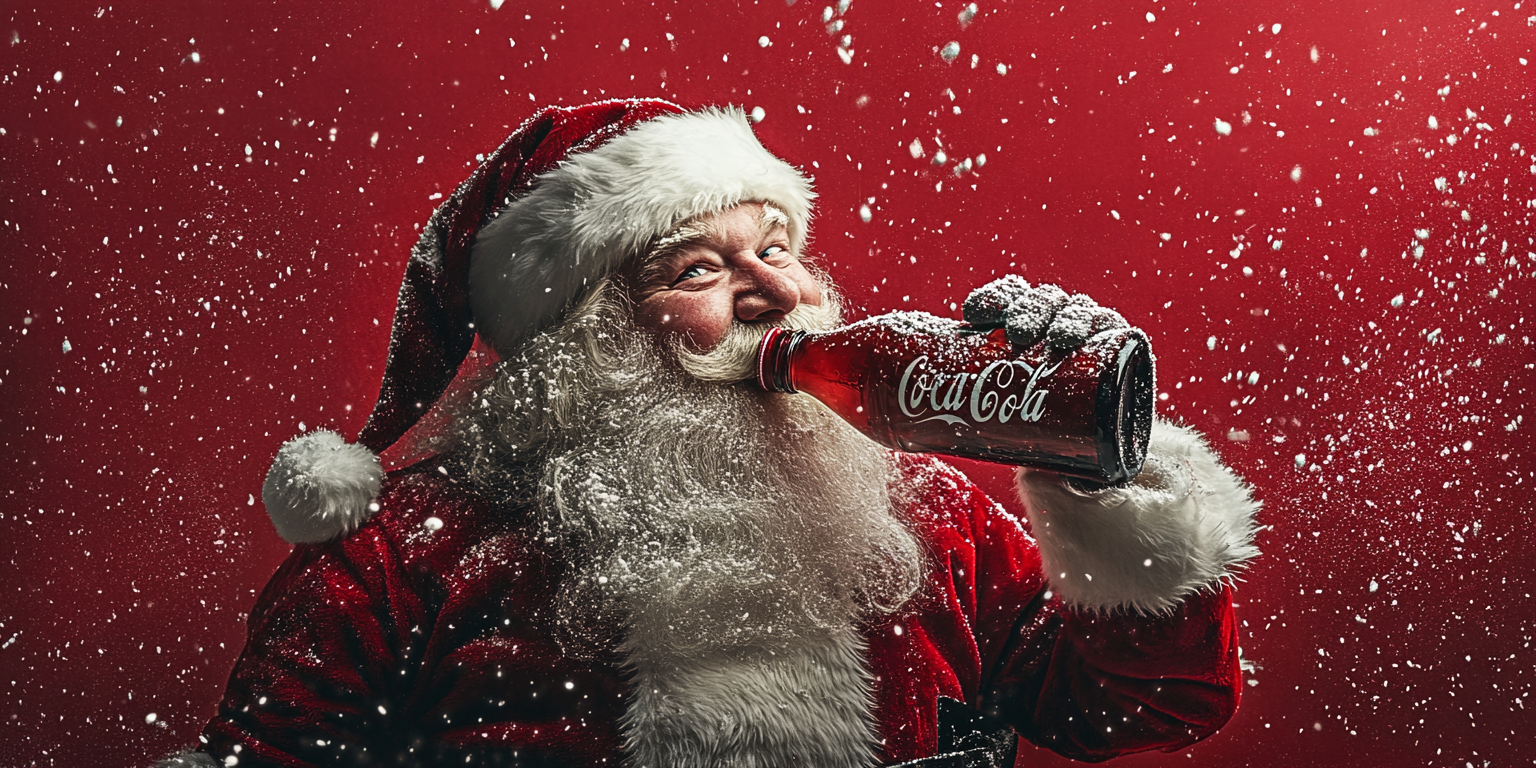
Coca-Cola’s classic Christmas campaigns rely on associative conditioning. For decades, the brand has repeated the same auditory and visual cues – the red trucks, the jingle, the “Holidays Are Coming” motif. Over time, these cues become psychologically fused with the arrival of Christmas itself.
This is known as Pavlovian conditioning and is supported by research on the “mere exposure effect,” which shows repeated cues enhance liking and familiarity.
Supermarkets and sensory overload
Tesco, Sainsbury’s and Waitrose simultaneously activate scent (mince pies, cinnamon), sound (choirs, bells), colour (reds and greens) and layout changes to prime festive behaviour. These multi-sensory interventions are rooted in embodied cognition – the idea that sensory experiences shape emotional and behavioural responses.
Fantasy, Idealised Selves and the Christmas Imagination: Why We Buy Into Perfect Worlds
Christmas marketing often presents an idealised world: immaculate homes, smiling families, and snow that somehow never becomes slush.
Psychologically, these narratives tap into:
-
possible selves theory – buying as a route to the person we want to be
-
compensatory consumption – spending to enhance mood or identity
-
narrative identity theory – constructing personal meaning through stories
Luxury brands like Fortnum & Mason or Liberty thrive here, framing Christmas as a story of indulgence, aspiration and self-definition. But even mainstream brands use it: M&S’s Christmas films routinely position their products as a bridge between the ordinary and the fantastical.

The Role of Social Identity and Belonging: Community as a Marketing Lever
Christmas is one of the rare moments where collective identity becomes highly salient. Studies in social psychology show that shared rituals enhance group cohesion and prosocial behaviour.
Brands capitalise on this by:
-
creating communal moments (Sainsbury’s WWI truce advert)
-
framing gifting as social signalling
-
linking products to group membership
Even seemingly playful campaigns, like Pret’s festive sandwich drop or Costa’s novelty cups, use community belonging as their primary psychological mechanism.
Ritualised Consumption and Repetition: Why We Buy the Same Stuff Every Year
Christmas triggers a unique feedback loop: repetition strengthens identity, which strengthens repetition. This is rooted in ritual theory and the endowment effect – we value what’s already “ours.” If you always buy a particular brand’s mince pies, decorations or perfume sets, you are participating in ritual reinforcement.
Brands like Lindt, Cadbury and Hotel Chocolat have mastered this, using consistency (packaging, flavour cues, iconography) to become embedded in annual ritual cycles.

The Ethics of Christmas Marketing: Nudging, Not Manipulating
A heavier psychological lens inevitably leads to ethical questions.
Academic debates around behavioural economics and influence often centre on whether nudges become coercive when deployed at scale. Christmas magnifies this dilemma because emotional vulnerability, social pressure and cultural ritual intersect.
Key ethical considerations include:
-
transparency of influence
-
responsible use of scarcity
-
avoiding exploitative emotional manipulation
-
sustainability and overconsumption
There is a growing body of research arguing for pro-social nudging, where brands use psychological insights to support better consumer outcomes rather than simply drive volume. Few brands fully embrace this, but the direction of travel is clear.
TL;DR
-
Christmas marketing works because it taps into deep psychological drivers: nostalgia, ritual, identity, sensory memory, social belonging and behavioural biases.
-
Brands like John Lewis, Coca-Cola, M&S, Boots, Tesco and Aldi exemplify these principles through powerful storytelling, limited editions, sensory cues and symbolic continuity.
-
Academic foundations come from consumer psychology, behavioural economics, narrative theory and ritual studies.
-
The result is a seasonal strategy that shapes not just what people buy, but how they feel, remember, and construct meaning during the festive period.