

Frightening the Competition
The Dark Art of Fear-Based Marketing
From anti-smoking campaigns to Burger King vs McDonald’s, how brands have used fear to spook consumers – with mixed results
As Halloween creeps closer, marketers love a seasonal tie-in. Pumpkins, skeletons, and a suspicious number of discount sweets all reappear like clockwork. But in marketing, fear isn’t just a seasonal gimmick, it’s one of the oldest persuasion techniques in the book. Rooted in psychology, fear-based marketing aims to unsettle consumers just enough to trigger action.
From grisly public health ads to rival brands casting each other as the villain of the piece, fear has been wielded to both chillingly effective and horrifically bad results. Like any horror story, the outcome depends on the script, the actors, and whether the audience buys into the fright.
So, let’s step into the haunted house of advertising history and examine some of the campaigns that sent shivers down spines, and others that turned into a marketing horror show.
The Marketing Made Clear Podcast
Check out the Marketing Made Clear podcast episode on Halloween:
The Classic Frights: Public Health Campaigns
Fear-based marketing has been most effectively deployed where the stakes are real, people’s health and lives.
Anti-smoking campaigns
Governments around the world have leaned on shocking imagery for decades. From tar-stained lungs on UK cigarette packets to Australia’s famous “Sponge” advert where black goo is squeezed out like poison, these campaigns don’t pull punches. They work by pairing visceral fear with a clear, healthier alternative: quitting. Studies have shown they do increase quit attempts, though critics argue they can desensitise over time.
Road safety campaigns
The UK’s THINK! campaign series in the 1990s and 2000s remains infamous. Ads showing fatal crashes, grieving families, and even children “killed” by careless driving made viewers recoil. While harrowing, they succeeded in raising awareness and reducing accident rates. In this case, fear’s power lay in its authenticity.
Commercial Fear: When Brands Scare Consumers into Switching
Fear doesn’t just apply to health, it’s also used to position one product as the ‘safe’ choice and rivals as the risky bet.
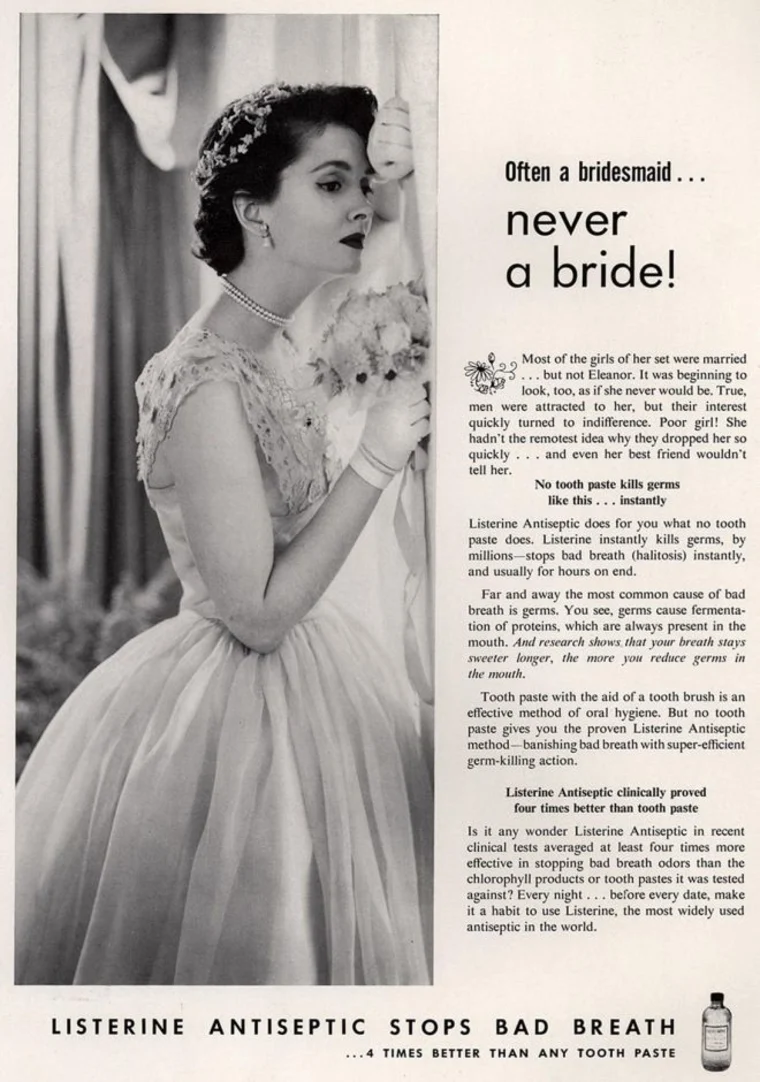
Listerine – “Always a Bridesmaid, Never a Bride” (1920s)
One of the earliest consumer fear campaigns, Listerine tapped into social anxiety.
The brand painted “halitosis” (bad breath) as a social curse that could cost you love and success. It turned a medical term into common vocabulary, skyrocketing sales.
A masterclass in inventing a problem only you can solve.
Burger King vs McDonald’s – the “Clown” campaigns
Burger King has often depicted Ronald McDonald in creepy, horror-inspired ways. In 2017, they ran a Halloween ad with the line “Come as a clown, eat like a king,” encouraging customers to dress as clowns for free food.
The fear wasn’t literal, but it played into cultural unease with clowns (thanks, Stephen King). A clever jab that worked.
The latest incarnation of the ongoing jibes is the #ScaryClownNight adverts – shown below.
Security software brands
Think of Norton Antivirus or McAfee’s old campaigns – dark imagery of hackers, viruses, and threats lurking behind your computer screen.
The implicit message? Fail to buy and you’re doomed.
While effective at the time, the overuse of cyber “boogeymen” eventually lost credibility as consumers grew sceptical.

When Fear Flopped: Marketing Horror Shows
Fear can grab attention, but if it goes too far, it risks backlash or ridicule.
Pepsi’s “Live for Now” (2017)
While not strictly a fear campaign, it attempted to exploit social unrest and protest imagery – something I covered in my series on “Car Crash Marketing” – but the advert ended up trivialising serious issues. The backlash was instant, and Pepsi pulled the ad within 24 hours. Instead of provoking thoughtful concern, it just provoked outrage.
Calvin Klein’s ‘Heroin Chic’ era (1990s)
Attempting to glamorise the dangers of drug culture, these ads (including Calvin Klein)backfired spectacularly. Critics slammed the brand for exploiting fear and addiction, and CK was forced into an awkward retreat.
Proof that aligning with danger can backfire if it feels exploitative.
Over-the-top scare tactics in health ads
Not every shock works. In the US, some anti-drug campaigns like “This is your brain on drugs” (with the frying egg) became cultural memes.
Instead of fear, they provoked humour and parody – undermining the intended message.
Why Fear Works – and Why It Sometimes Doesn’t
Psychologists argue fear campaigns work best when three conditions are met:
-
The threat is credible and relevant.
-
The consumer believes they’re personally at risk.
-
A clear and achievable solution is offered (quit smoking, choose this brand, wear a seatbelt).
When these elements are missing, fear can become either paralysing or laughable. Instead of prompting action, it makes consumers tune out – or worse, mock the brand. As Philip Kotler might put it, effective fear marketing balances tension with resolution. Without resolution, you just leave the audience in the dark with the monsters.
Conclusion: Handle with Care (and Garlic)
Fear-based marketing is powerful, but like summoning spirits, it’s not something you should do lightly.
Done well, it changes behaviour, drives switching, and cements cultural memory. Done badly, it’s a horror show that haunts brand reputation.
As Halloween looms, let’s remember that the scariest thing in marketing isn’t a creepy clown or a bloodied sponge – it’s an audience that laughs at your attempt to frighten them.
TL;DR
-
Fear-based marketing taps into primal psychology to influence behaviour.
-
Public health campaigns (smoking, road safety) show its effectiveness when stakes are real.
-
Commercial campaigns (Listerine, Burger King) show how fear can drive product choice.
-
Failures (Pepsi protests, Calvin Klein’s ‘Heroin Chic’) reveal the dangers of misjudging tone.
-
Fear works best when it’s credible, relevant, and paired with a solution – otherwise, it risks becoming a marketing nightmare.