

Branding · Culture · Consumer Behaviour
You Can’t Manufacture Cool: When Counterculture Becomes the Mainstream
Dr. Martens, Vans, Timberland, tattoos, workwear, Crocs and the strange journey from tribal signal to high-street normality. Who actually decides when something is cool?
Trying to define “cool” is one of those activities that becomes less cool with every additional minute you spend doing it.
I do not pretend to be an arbiter of what is cool. I know what I like.
Dr. Martens, Timberland and Vans feel genuinely cool to me. I have always liked DC Shoes. I am broadly positive about other skate brands such as Globe and Element, despite one fairly important gap in my credentials: I cannot really skate.
When I was younger, I was attracted to skate culture anyway. At one point I used to ride to college on a homemade longboard made from a snowboard with wheels attached to it.
There was one occasion when I was travelling down my parents’ road listening to music and failed to notice a police car behind me. It had apparently been there for long enough that the officers eventually had to beep the horn to alert me to its existence.
This may not qualify me to comment on skateboarding technique.
It does, however, say something useful about culture.
You do not necessarily need to perform the activity at the centre of a subculture to be attracted to its clothes, music, symbols and attitude. You can buy into the aesthetic without fully belonging to the tribe.
The awkward part is that other people may still assume you do.
Brands do not only tell people who they are. People use brands to tell other people who they are.
When Clothes Used to Tell You Something
When I was younger and heavily into metal, clothing, boots, tattoos and piercings were much more visibly associated with particular scenes.
They acted as signals.
You could look at somebody and make a reasonable guess that they listened to metal, punk, goth or alternative music. Not always correctly, obviously, but the aesthetic meant something.
It was tribal.
It could also attract comments, looks and ridicule from people outside the scene. That matters because a cultural signal is stronger when displaying it carries some kind of social cost.
Today, much of that visual language is completely ordinary. Heavily tattooed people appear throughout mainstream advertising and celebrity culture. Piercings and alternative styling no longer reliably tell you which music somebody listens to or which subculture they identify with.
A 2024 YouGov survey of 3,708 adults in Great Britain found that 28% had at least one tattoo: 24% had tattoos they did not regret and another 4% had at least one they did regret.
That does not make tattoos universal. It does make them rather difficult to describe as marginal.
There is a historical wrinkle here too. Tattoos have not followed one neat journey from deviance to acceptance. Research into more than 75,000 descriptions of tattoos on British convicts between 1791 and 1925 found that tattooing was often expressive rather than simply criminal, and that it became fashionable among sections of Victorian elite society before later becoming marginalised again.
From the 1950s, tattoos became strongly associated with groups including bikers, punks and rockers before spreading much more widely again.
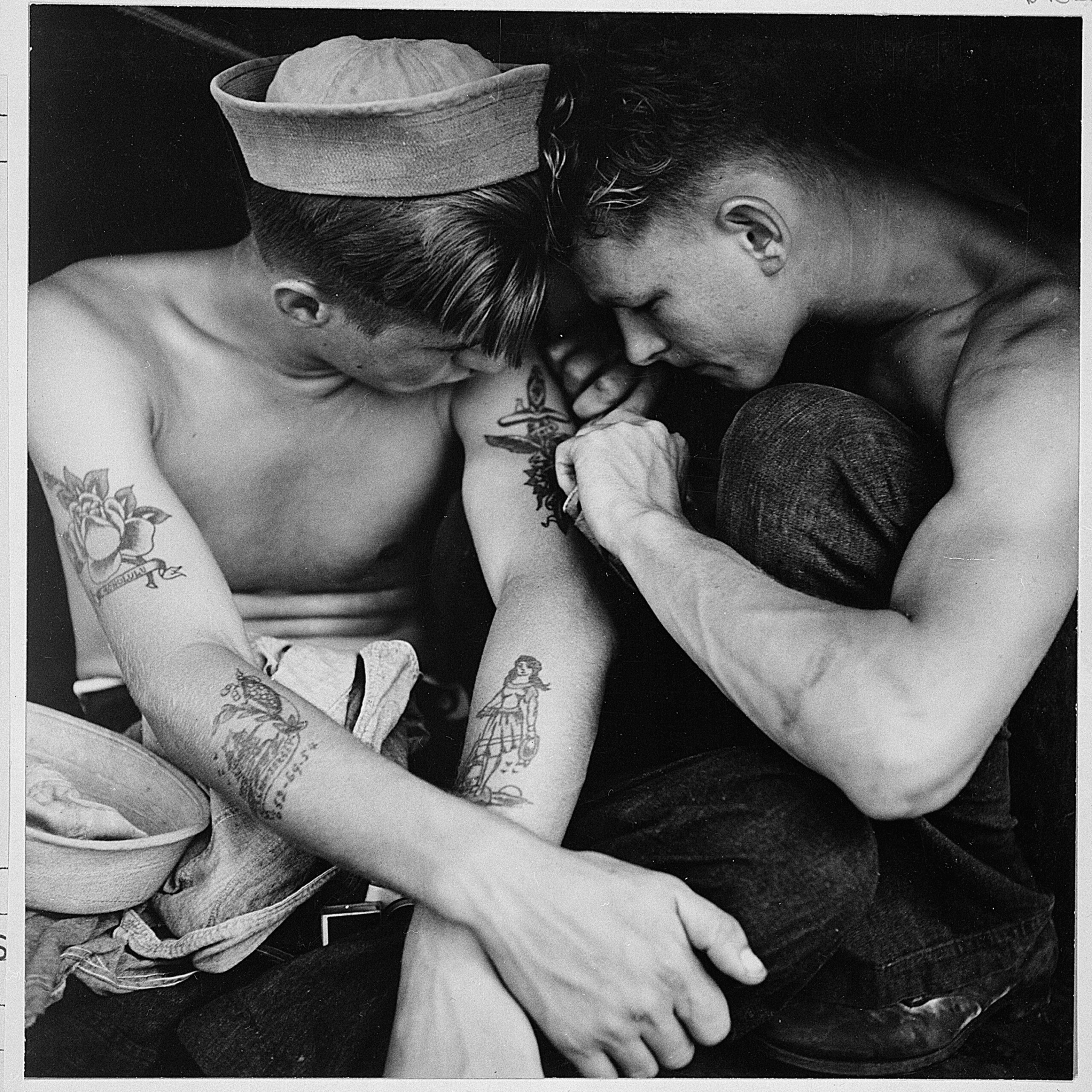
So the better question is not simply, “When did tattoos become mainstream?”
It is: what does a symbol mean when the people wearing it change?
Cool Is Social, Not a Product Feature
Marketing researchers have, perhaps bravely, attempted to study coolness without immediately making it uncool.
Caleb Warren and Margaret Campbell found that perceived autonomy can increase coolness: people and brands can seem cooler when they diverge from norms, provided that the divergence feels appropriate rather than simply chaotic.
Later research by Warren, Rajeev Batra, Sandra Loureiro and Richard Bagozzi identified ten characteristics associated with brand coolness, including originality, authenticity, rebelliousness, subcultural appeal, popularity and iconicity.
The particularly interesting finding is that coolness can change as a brand grows.
At the niche stage, cool brands tend to feel more subcultural, rebellious, authentic and original. As they are adopted by the mass market, the balance shifts towards popular and iconic.
That describes a lot of the brands in this article remarkably well.
It also explains why “cool” is not the same thing as “I like it”.
I understand that Birkenstocks are popular.
I remain emotionally unconvinced.
The Cultural Adoption Loop
Products often become culturally important through people rather than positioning decks.
It solves a real problem
A work boot, deck shoe, sandal, work trouser or insulated bottle exists for a practical reason.
A group adopts it
Skaters, musicians, workers, ravers, artists or another community find that it suits their needs and identity.
The object starts to mean something
Wearing it becomes a clue about taste, belonging, attitude or status.
Other people copy the signal
Music, celebrity, fashion, media and word of mouth move the aesthetic beyond the original group.
The meaning changes again
The product can become iconic, fashionable or simply normal. The old meaning may survive, but it is no longer exclusive.
A new group finds a new use
Culture rarely stops moving. Yesterday’s workwear can become streetwear, then luxury fashion, then something else entirely.
Dr. Martens: The Brand That Kept Getting Recruited
Dr. Martens is almost too perfect an example.
The 1460 boot launched in Britain in 1960 as a functional workwear product. The company’s own history describes its early years as those of a roughly £2 work boot worn by postmen and factory workers.
Then culture interfered.
Early British skinheads adopted the boots as part of a working-class style strongly connected to Jamaican ska. That original scene should not be lazily collapsed into the racist factions that later used the skinhead look; the early movement was culturally mixed and music-led.
Pete Townshend of The Who became a high-profile wearer. Punk, Two Tone, goth, psychobilly, grunge, Britpop, nu-metal and emo all found uses for the same basic boot over subsequent decades.
That is extraordinary cultural durability.
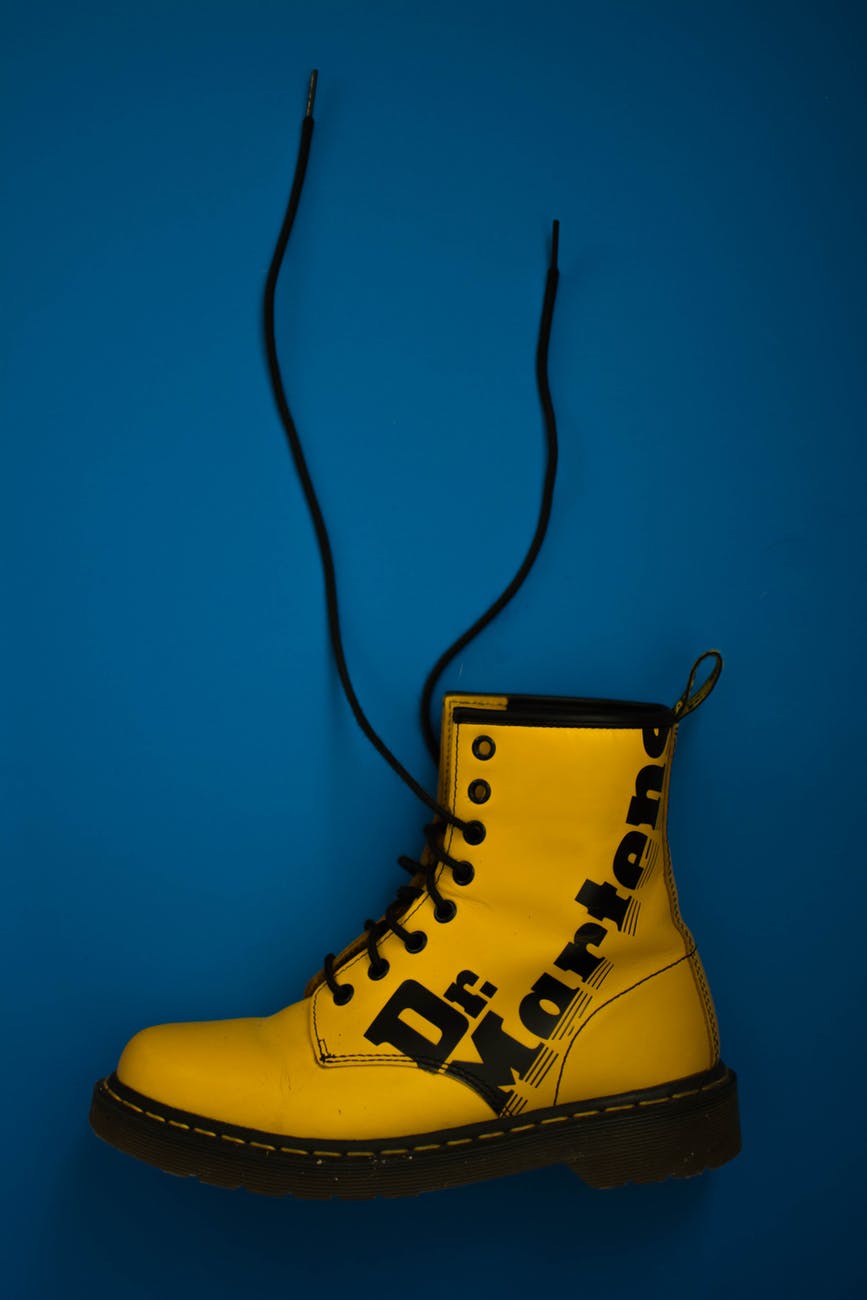
What I find interesting is that Dr. Martens did not invent most of those meanings.
The wearers did.
The company later learned to work with its cultural history, but the original subcultural value came from adoption rather than a campaign telling young people that the boots represented rebellion.
The product became a container into which successive groups poured their own identity.
Vans: You Do Not Have to Be Good at Skateboarding
Vans started in Anaheim, California in 1966. One of its original styles, later known as the Authentic, began as a simple deck shoe.
Southern California skateboarders discovered the sticky rubber sole in the early 1970s and adopted it. The famous “Off the Wall” language emerged later in that decade from skate culture itself.
Again, the interesting sequence is not:
brand invents meaning → customer receives meaning.
It is closer to:
product is useful → community adopts product → meaning accumulates → brand learns from community.
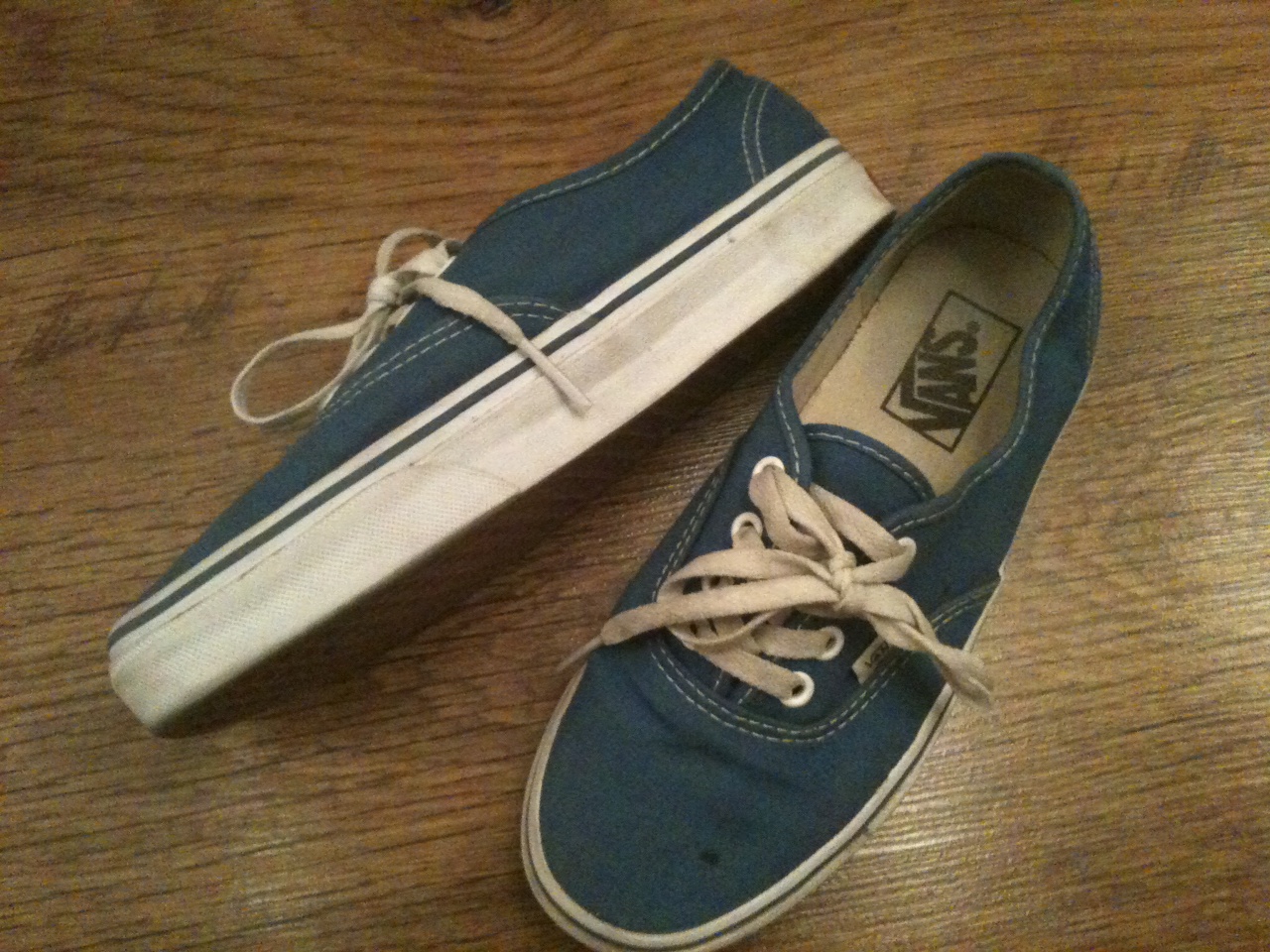
That matters to me because I liked skate brands without being much of a skateboarder.
I liked the music, visual language, footwear and wider culture. DC Shoes in particular has stayed with me because the shoes are comfortable and I still think they look good.
Does that make me inauthentic?
I do not think so.
Culture is porous. People can appreciate part of a scene without passing an entrance exam.
But symbols still create assumptions. If you wear the shirt, shoes or patches associated with a scene, somebody may reasonably assume you know something about it.
That can produce the slightly awkward moment where the person you have just met assumes you are an expert skateboarder and you have to explain that your most memorable achievement involved failing to hear a police car behind a homemade snowboard.
Workwear Keeps Escaping Work
Carhartt, Dickies and Timberland demonstrate another pattern: functional products becoming desirable precisely because their functionality feels authentic.
Carhartt began in Detroit in 1889 making hard-wearing work clothing. By the early 1990s its jackets and trousers were being adopted by rappers, graffiti writers and street cultures because the clothes were durable, practical and visually distinctive.
Carhartt Work In Progress, established in Europe in 1994, is an unusually good example of a company embracing cultural adoption without pretending the original industrial heritage never existed. WIP built direct relationships with music, skateboarding, BMX and art while the original Carhartt brand continued to serve workwear customers.
In other words, the business found room for two stories.
Dickies followed a similar route. Its 874 work trouser dates to 1967. By the late 1980s and 1990s, durable Dickies trousers had become part of West Coast streetwear and skateboarding.
Timberland’s yellow boot began in 1973 as waterproof footwear for harsh New England conditions. It was later adopted by scenes that had almost nothing to do with the original use case: Paninaro youth in Milan, British ravers, Tokyo street fashion and, most significantly, hip-hop.
That transition makes intuitive sense to me.
I like Timberlands. I also wear Dixxon shirts, which borrow heavily from workwear aesthetics even though I am normally wearing them somewhere considerably less hazardous than a building site.
What those products carry is not merely utility. It is the visual residue of utility: toughness, durability and the impression that the garment exists for a reason beyond fashion.
Then There Are the Ones I Still Don’t Quite Understand
There is another category of culturally successful product that interests me precisely because I would never have predicted it.
Crocs.
Birkenstocks.
Stanley cups.
Ugg boots.
None needs my approval, obviously. Their sales teams will cope.
Crocs began in 2002 as lightweight, slip-resistant footwear aimed at boating. By 2005 the company was already leaning into the polarising appearance with an “Ugly can be beautiful” campaign. Years later, collaborations with designers including Balenciaga and Simone Rocha placed essentially the same deliberately awkward silhouette inside high fashion.
That is not a product becoming beautiful in the conventional sense. It is the culture around ugliness changing.
Birkenstock is even stranger to me. The company’s roots go back to 1774, and its identity has long centred on foot health and the contoured footbed. Yet it has progressively moved into fashion and luxury, including its 1774 high-end line.
I understand the comfort argument.
I understand the fashion evidence.
I still look at them and think: those are Birkenstocks.
Which is probably a useful reminder that coolness is audience-dependent.
UGG began with Australian surfer Brian Smith bringing sheepskin boots into Southern California surf culture in the late 1970s. What started as an odd-looking post-surf comfort product eventually became celebrity fashion, then overexposed, then unfashionable, then fashionable again.
Stanley shows how quickly this can happen in a different category. The company had spent more than a century associated with rugged vacuum bottles and outdoor use. The Quencher tumbler became a social-media phenomenon after women behind The Buy Guide identified a different audience, pushed for continued production and demonstrated demand that the company itself had underestimated.
The lesson is not that every boring object is secretly waiting to become fashionable.
It is that customers can discover cultural value the manufacturer did not originally design.
What Happens When the Counterculture Wins?
This is the bit I find genuinely strange.
When I was younger, alternative clothing, tattoos and piercings helped mark people as outside the mainstream.
Now the mainstream has adopted enormous parts of that visual language.
Goth itself emerged from Britain’s late-1970s punk landscape and has spent decades moving in and out of mainstream culture. Academic work on the scene describes that tension directly: goth repeatedly reinvents itself both inside and against mainstream culture.
That raises an odd philosophical problem.
If part of the purpose of a countercultural style is to signal that you are not part of the mainstream, what happens when the mainstream copies the signal?
It does not make the original culture meaningless.
People do not stop loving the music because somebody on a reality programme gets a sleeve tattoo.
But the signal becomes weaker.
A black band shirt, piercings and tattoos once told you quite a lot about the probability that somebody shared a musical scene. Today they might tell you almost nothing.
The aesthetic survives.
The information content changes.
The Brand Does Not Own the Meaning
For marketers, this is the uncomfortable part.
We like to talk about positioning as though brands can decide what they mean and then install that meaning inside consumers.
They cannot.
They can create products, symbols, stories, partnerships and experiences. They can try to shape interpretation.
But once a product enters culture, other people get a vote.
Sometimes they get most of the votes.
The more visibly a brand tries to manufacture coolness, the easier it is to expose the manufacturing process.
Subcultures tend to value authenticity, autonomy and insider recognition. A corporate imitation of those signals can therefore destroy exactly what it is trying to acquire.
This does not mean brands should ignore unexpected audiences.
Quite the opposite.
If an unexpected community adopts your product and the association is compatible with the brand, embrace it.
Support it.
Learn from it.
But be careful about immediately rewriting the entire company around the new audience.
Carhartt WIP is a useful example because it built a distinct cultural expression while preserving the workwear source material. Vans did not need to pretend skateboarding had always been written into its original factory business plan. Dr. Martens can celebrate punk and goth without claiming to have invented either.
The relationship works best when the brand understands that it is a participant in the culture, not the landlord.
The Cultural Adoption Test
Before chasing an unexpected audience, ask what created the attraction in the first place.
What are they actually responding to?
The product, utility, history, design, scarcity, people already using it or something the brand did not consciously create?
Does the new association strengthen or distort the brand?
Most new audiences are welcome. Some associations can create genuine ethical or reputational conflicts.
Are you part of the culture or merely borrowing its costume?
Supporting a community is different from copying the visible bits once they become commercially useful.
What happens if you do less?
Sometimes the best marketing move is to give the audience space rather than announcing that the brand has discovered them.
Cool Can Survive the Mainstream. It Just Changes
I started this article thinking about brands that had accidentally become cool.
I am less convinced that “accidentally” is quite the right word now.
Dr. Martens did not accidentally make a durable boot.
Vans did not accidentally make shoes skateboarders found useful.
Timberland did not accidentally create a waterproof boot with a distinctive silhouette.
Carhartt did not accidentally make hard-wearing clothing.
What they could not fully control was what those objects would come to mean.
That part belonged to culture.
And culture is messy.
It allows a metalhead to wear skate shoes without being able to skate. It turns work trousers into streetwear. It makes tattoos conventional. It takes a gardening-looking sandal and places it in fashion magazines.
It even makes Crocs desirable.
I am prepared to accept most of this.
Birkenstocks remain under review.
Perhaps that is the most useful definition of cool after all: not a quality a marketing department can put into a product, but a judgement other people make about what the product has come to represent.
Sources and Further Reading
- Warren & Campbell (2014) — What Makes Things Cool? How Autonomy Influences Perceived Coolness, Journal of Consumer Research
- Warren, Batra, Loureiro & Bagozzi (2019) — Brand Coolness, Journal of Marketing
- Dr. Martens — brand and subcultural history
- Vans — The Story of the Authentic
- Carhartt WIP — history
- Timberland — The Original Timberland Boot Since 1973
- Dickies — workwear, streetwear and skate history
- UGG — brand history and surf origins
- Crocs — early brand history
- Birkenstock — company history
- YouGov (2024) — tattoos among GB adults
- Alker & Shoemaker (2022) — Convicts and the Cultural Significance of Tattooing in Nineteenth-Century Britain
- Goodlad & Bibby (eds.) — Goth: Undead Subculture
- Wikimedia Commons — Dr. Martens image, lil artsy, CC0
- Wikimedia Commons — Vans image, Campbells AW, CC BY-SA 3.0
- Wikimedia Commons / U.S. National Archives — tattooed sailor image, public domain