

What I Learned From… Working In Paris
What A British Marketer Learned Inside A French Paper Giant
I firmly believe that you can learn transferable skills that can help you in your career, whether it be marketing or anything else, from other experiences in life. This belief is at the core of the “What I Learned From” (WILF) series, where I reflect on hobbies, past jobs, and unexpected experiences to uncover valuable insights that apply to professional life. By drawing lessons from diverse activities, WILF aims to show that learning doesn’t just happen in classrooms or offices – it happens everywhere.
In 2011 I lucked into a job that would change how I think about business, culture and lunch. I joined Arjowiggins, the paper manufacturing behemoth created when the UK’s Wiggins Teape and France’s Arjomari-Prioux ended up under the same roof.
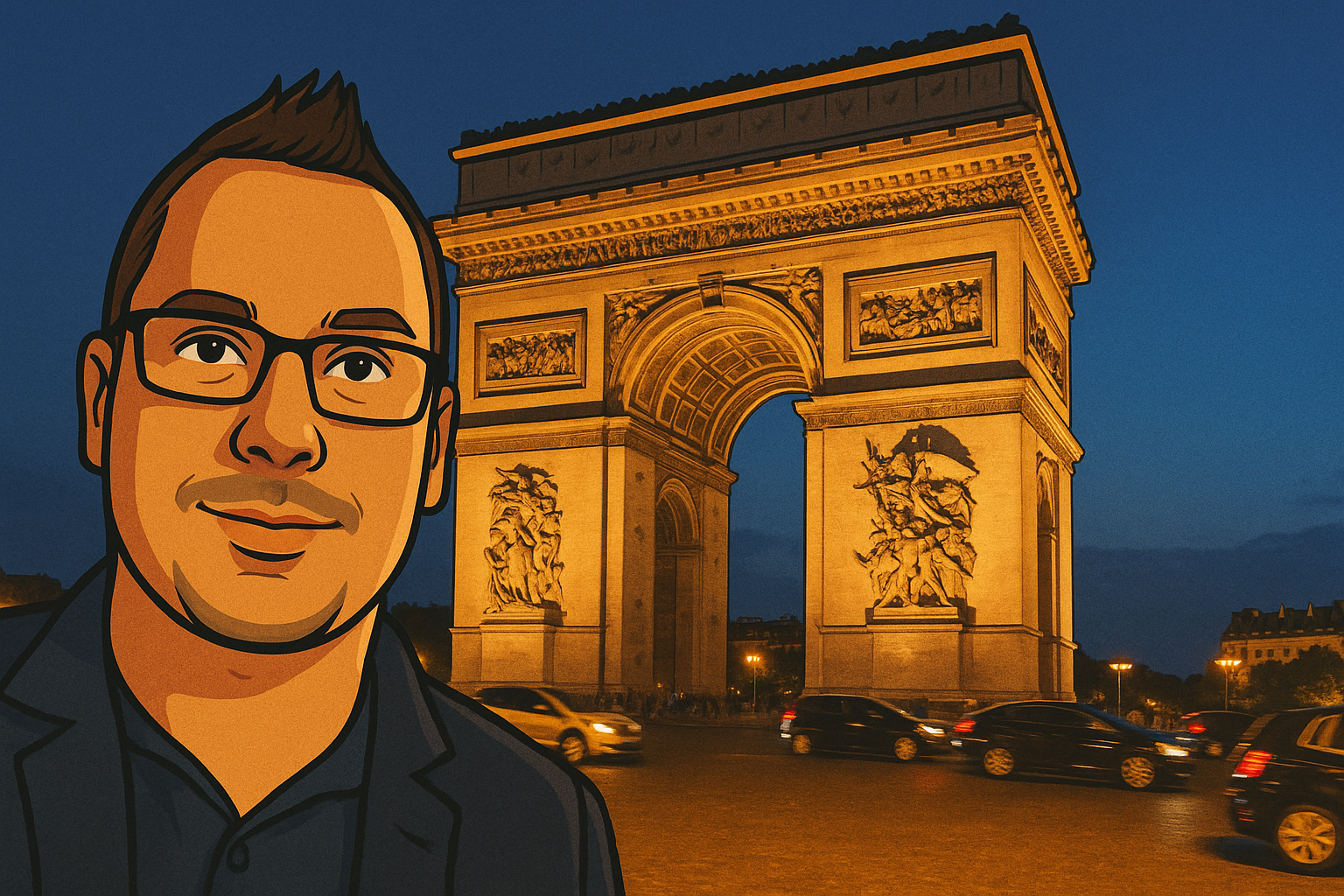
The twist: I started in the UK, then earned a promotion to the head office in Paris. Cue frequent flights from Southampton, long evening walks past Notre-Dame and the Eiffel Tower, and a crash course in cross-border company politics.
The Marketing Made Clear Podcast
Check out the Marketing Made Clear Podcast on all good podcast platforms for more from Will Green MA MBA.
The Company Backstory – Why It Mattered On The Ground
The corporate family tree explains a lot about day-to-day dynamics. Wiggins Teape was a storied British papermaker that became part of BAT Industries in 1970 before merging with Appleton Papers in 1990, and then, six months later, with France’s Arjomari-Prioux to create Arjo Wiggins Appleton. BAT subsequently floated the business and, in time, the group’s distribution arm was demerged as Antalis. Later the holding company took the name Sequana. The structure looks neat on a slide. Inside a business, the legacy lines are felt as identity, loyalties and, sometimes, friction.
By the late 2000s and 2010s, you could feel that inheritance in the way some teams stuck close to “their” country table at conferences. I never saw hostility, but there was a kind of polite insularity. The French office was HQ. Plenty of UK colleagues had worked for the UK business before the merger. If you have lived through an M&A integration yourself, you know what it’s like. Your email address changes long before the psychology does.
Then came the financial squeeze.
Sequana’s long legal dispute with British American Tobacco over historic dividends and environmental liabilities culminated in 2019, forcing Sequana into liquidation and triggering knock-on insolvency processes across parts of the group. In the UK, historic mills like Stoneywood in Aberdeen were pushed into administration in 2022. For those of us who loved the brands, the closures weren’t just news items – they were personal.

A British Marketer In Paris
Before Paris I’d visited the city a handful of times – a family holiday just before I joined, a few trade shows, the usual conference circuits.
The promotion changed the cadence completely. Thanks to direct flights from Southampton, it was quicker to reach Paris than parts of northern England, which meant I was in and out of CDG with a rhythm that made the city feel almost local.
I even spent 3 nights living at CDG when the “Beast From the East” hit the UK and grounded all flights!
The Paris office welcomed me warmly. Once colleagues found that I wasn’t “keeping to the UK table,” doors opened. Coffee became lunch, lunch became dinner, and suddenly I had a social life in a city where you can walk from Bologne-Billancourt up the Seine to the Eiffel Tower and still find energy for one last detour to the Champs-Élysées. Those evening walks recalibrated my work trips from functional to joyful.
Travel fatigue dissolves quicker when the route back to the hotel is via the Île de la Cité. I even managed to go to two PSG football games – including a Champions League game against Basel, and a heated derby against Marseille!
Lunch Is A Meeting, Not A Sandwich
One immediate cultural difference: lunch.
In the UK, eating at your desk is often worn as a badge of honour – at best a walk around the block together to get some fresh air… In Paris, and on visits to colleagues in regions like Champagne and Le Mans, a proper hot-lunch was normal, not a guilty pleasure. The tone over a table was different from the tone in a meeting room. Hierarchies felt flatter. People took time to ask about family, music, and why on earth Brits apologise so much. Decisions often moved faster after lunch than during a morning of PowerPoint.
None of that is to romanticise or stereotype. It’s simply how it felt to work there.
The Language Humility Gap
I was determined to improve my French.
I did make progress ordering taxis and meals, but business French is a different level altogether. My colleagues were keen to practise their English; the path of least resistance won. There’s nothing quite like being the only native English speaker in a meeting and realising the entire room has switched language to accommodate you.
Humbling.
Motivating.
Also a nudge to prepare harder and keep your slides twice as clear.
The Juxtaposition: Marketing Paper In A Digital Decade
Professionally, those years were when I honed my skills in digital marketing – SEO, analytics, building web properties – inside a company whose product was often painted as the casualty of the internet.
That paradox sharpened my thinking.
We weren’t just selling paper; we were selling purposeful print.
When does print outperform pixels?
How do you prove it?
The recycled portfolio was a gift for meaningful storytelling. Brands like Cocoon and Cyclus let us anchor campaigns in sustainability without compromising design standards. Cocoon’s extra-white 100% recycled sheets showed that “recycled” could look premium; Cyclus deliberately leaned into a more authentic recycled aesthetic for brands who wanted that visual cue. Those were strong positioning levers for segmentation.
I was working on a unifying web project to bring different business units together – the kind of platform that simplifies customer journeys and quietly rebuilds culture across legacy lines. When the liquidation news came, that effort froze. Strategy decks became keepsakes. That’s the sting you only understand if you’ve seen a great internal project stall for reasons beyond the team’s control.

What I Learned – And What Marketers Can Borrow
-
M&A leaves ghosts. Org charts update overnight. Culture updates slowly. If you inherit a merged brand, don’t just sell a new logo. Map the old loyalties and design rituals that build shared pride. Brief your managers to over-communicate the why.
-
Lunch is a channel. Social norms aren’t fluff. In some cultures, lunch is where trust compounds. If your calendar is wall-to-wall and you’re skipping meals to be “efficient,” you may be trading away the very conversations that unblock decisions.
-
Position paper as a medium, not a commodity. When digital eats attention, print wins by being tactile, rare and well-timed. Use it at the high-consideration moments where physical keepsakes, brand books or direct mail beat banner blindness. Recycled stocks like Cocoon and Cyclus show that sustainability can be an aesthetic, not a compromise.
-
Digital transformation works best when it unifies. The value of a new website is less the pixels, more the shared model: one taxonomy, one search, one sample-flow, one analytics truth. Integration is culture change in disguise.
-
Language humility is a superpower. If the room flexes to your mother tongue, repay the favour with immaculate clarity. Use plain words. Summarise out loud. Follow up in writing. It’s good manners and great risk management.
-
Make the city part of your routine. The difference between “another work trip” and a career-defining chapter was deciding to walk the city. Those miles recharged me and made me a better colleague at dinner.
A Brief History Of Arjowiggins – For Readers Who Love A Family Tree
- Wiggins Teape dates to the 19th century and acquired Buckland Mill in 1890. It joined BAT Industries in 1970 and, in June 1990, merged with Appleton Papers to form Wiggins Teape Appleton plc. Six months later it merged with Arjomari-Prioux to create Arjo Wiggins Appleton.
- Arjomari itself originated from a 1950s merger of French fine-paper mills including Arches, Johannot, Marais and Rives — the “Ar-Jo” in Arjomari. In 1968 it merged with Prioux-Dufournier to become Arjomari-Prioux.
- The group later demerged Antalis as its distribution arm and adopted the holding name Sequana. In 2019, following a long legal battle with BAT about historic dividends and liabilities, the French court placed Sequana into liquidation.
- Post-2019, various assets and brands moved. In the UK, Stoneywood’s administration in 2022 marked the end of a 250-year-old mill, with subsequent employment rulings still hitting headlines in 2024.
Closing The Paris Chapter
I don’t get over to Paris as much these days.
Colleagues have moved on.
Emails are quieter.
But I carry the experience with me: the hospitality, the pace of a city that rewards curiosity, and the lesson that a company is never just its products or P&L – it’s the people who choose to have lunch with you.