

What I Learned From… Watching a Company Collapse Around Me
Reflections from eight years at Arjowiggins Graphic and the reality of working inside a shrinking industry
There is a particular kind of professional experience that doesn’t get talked about much. Not redundancy in isolation, not corporate restructuring, not even industry disruption in the abstract. I mean the slower, more unsettling experience of watching a company gradually decline while you are still inside it, still working hard, still hoping things will turn around.
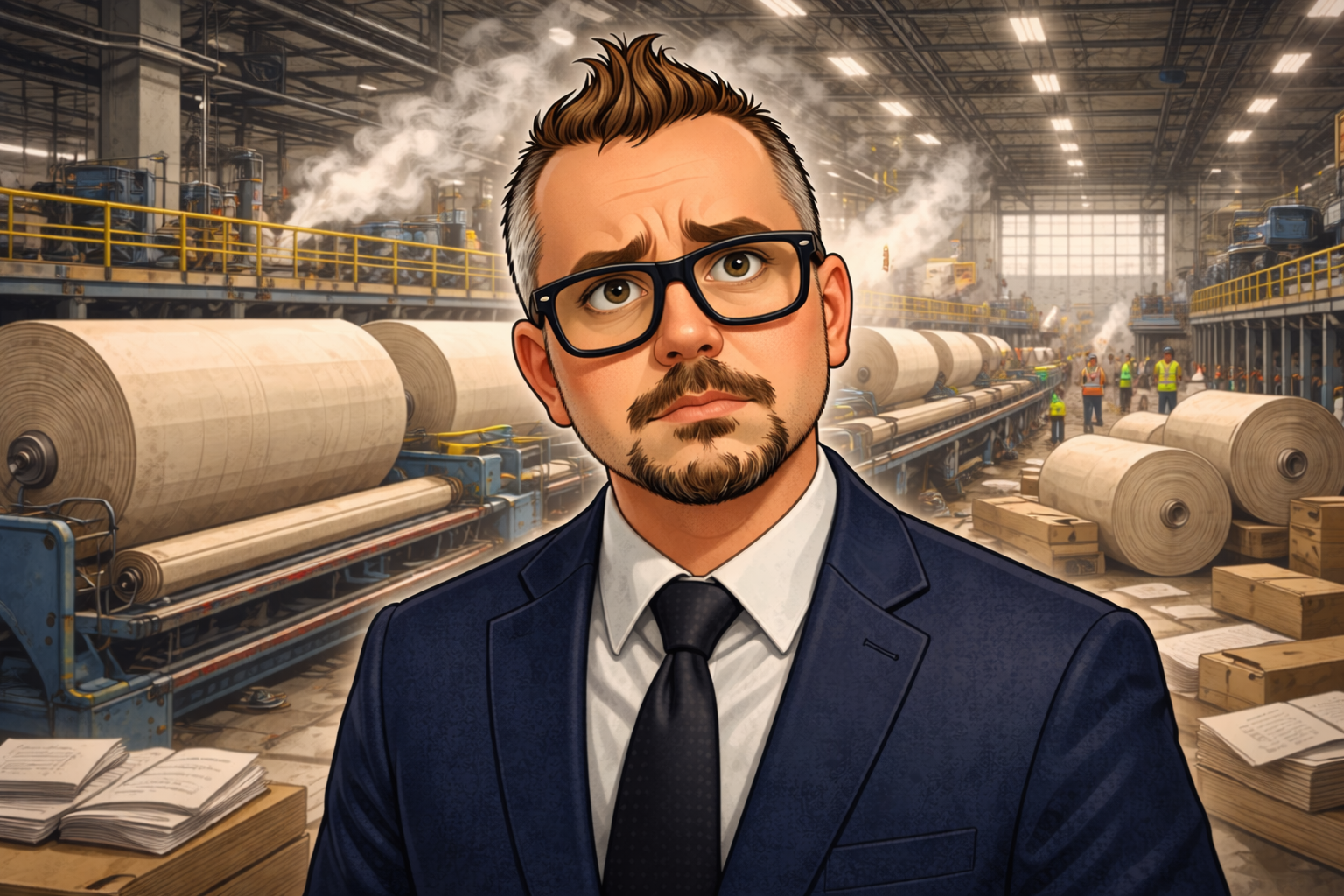
I spent eight years working for Arjowiggins Graphic, a historic paper manufacturer with deep European roots. I joined as a marketing coordinator and eventually became digital manager, working with both the UK operation and the French head office. It was a formative period in my career, professionally rewarding in many ways, but it also taught me lessons I would never have chosen to learn first-hand.
This is not really a marketing article. But if you work in marketing, business, or any industry facing structural change, some of this may feel uncomfortably familiar.
The Marketing Made Clear Podcast
Check out the Marketing Made Clear Podcast on all good podcast platforms for more from Will Green MA MBA.
Joining an Industry Already Under Pressure
Paper manufacturing was already in decline when I arrived. That wasn’t a secret. Digital communication had been chipping away at paper demand for decades – email replacing letters, PDFs replacing brochures, online reports replacing printed CSR documents.
Working in digital marketing inside a paper company did create an odd juxtaposition. Some people jokingly framed it as helping the very forces that were shrinking the industry. The reality was more nuanced. Digital wasn’t killing paper. Changing business behaviour, cost pressures, and evolving consumer habits were.
What struck me early on was the mismatch between production capacity and actual demand. Industry reports consistently showed excess capacity across Europe. Mills were reducing output, consolidating operations, or shutting entirely. Some of these sites dated back to the 1800s, or earlier, embedded in local communities for generations.
This wasn’t just business change. It was economic and social change too.
The Gradual Signs Something Was Wrong
Decline rarely arrives dramatically at first. It tends to seep in.
When I joined, the company already occupied a smaller office than it once had. Over the years, further downsizing followed. None of it was shocking individually, but cumulatively it told a story.
As I became more senior, I gained access to the monthly management meetings and broader European updates. That visibility changed everything. Instead of just working on campaigns, I was seeing the commercial reality.
Every month we reviewed:
-
Forecast versus actual sales
-
Year-on-year comparisons
-
Market performance across Europe
And, increasingly, it was a sea of red.
Forecasts were revised downward year after year. Demand for traditional graphic papers kept falling. Packaging was growing as a category, but we were not specialists there, so we were slightly out of position strategically.
Eventually the meetings began to feel like Groundhog Day. Same charts, same explanations, same uncomfortable conclusions.

The Structural Challenges We Couldn’t Control
Some pressures were internal. Many were not.
Raw material costs began rising sharply. That meant regular price increases were unavoidable. Customers who might once have accepted annual rises were now pushing back hard. Some simply traded down to cheaper alternatives, often imports from Asia.
We also relied heavily on merchant distributors in the UK, including major paper merchants who accounted for a large proportion of sales. As their markets tightened, the ripple effects were immediate.
From a marketing perspective, this created a difficult reality:
-
You can differentiate on sustainability and quality
-
You can strengthen relationships
-
You can improve communication
But you cannot manufacture demand that no longer exists.
That is a hard lesson for marketers, because we like to believe good marketing can solve almost anything. Sometimes it cannot.
When Financial Warning Signs Appear
The turning point was not one single event, but a cluster of signals.
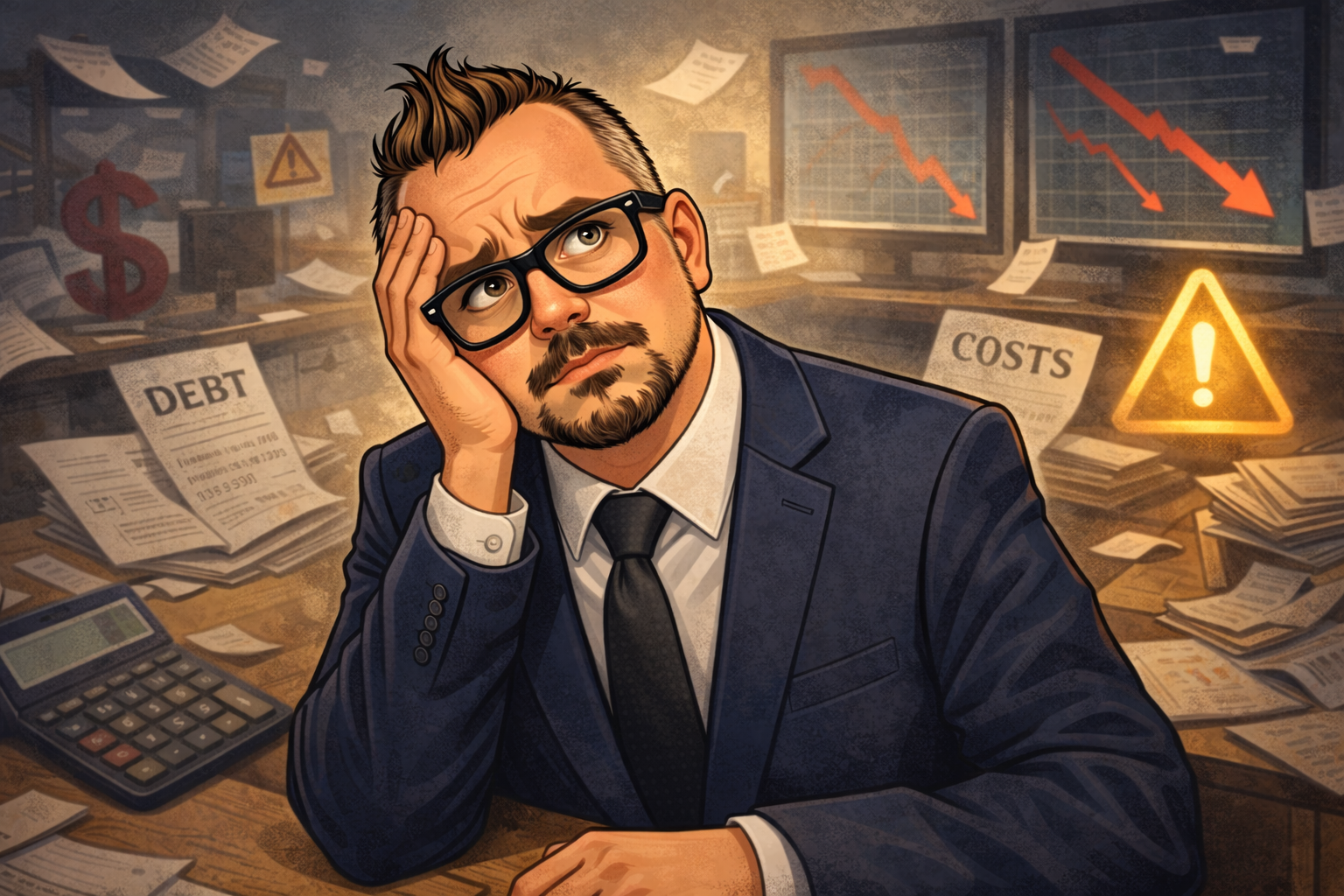
Cost controls tightened noticeably. Travel was reduced. Certain projects quietly stopped. Then came financial measures like invoice factoring, where invoices were effectively sold to a third party for immediate cash flow.
That sort of move isn’t necessarily catastrophic, but it does indicate pressure.
Rumours of a potential sale started circulating. There was also a long-running legal issue involving British American Tobacco and unpaid dividends that hung over the company. That uncertainty complicated any acquisition discussions.
Eventually we had the meeting everyone half-expected but still hoped wouldn’t happen: we were told the company was in serious financial difficulty and would enter administration.
The Three-Month Limbo
Management in France transferred three months’ salary funding into the UK operation so staff could continue to be paid while a buyer was sought. On paper, that provided reassurance. In reality, it created a strange in-between period.
People reacted differently.
Some disengaged quickly. Others became intensely focused. I threw myself into work, partly out of habit, partly out of hope. There were rumours of buyers, political interest in France, and a sense that perhaps the business could rise again in a leaner form.
Looking back, that period revealed a lot about character. Not in a judgemental way, just in terms of how people process uncertainty.
When the Sale Never Comes
Ultimately, no buyer emerged. The legal overhang and market conditions made the business unattractive commercially.
The final meeting was blunt.
Administration would lead to redundancies. Employment ended. Just like that.
After eight years in what had felt like a stable, long-term role, it was a jarring shift. Many colleagues had spent decades there. The idea that such an established company could disappear still felt surreal.
The Personal Aftermath
Finding a new role took a few months. I did some short-term contract work during that period, which I didn’t particularly enjoy. I realised I thrive in longer-term environments where relationships and strategy develop over time.
Emotionally, I coped reasonably well, although it was undeniably tough. What the experience did give me was sharper instincts. Since then, I’ve become much more attuned to early warning signs in businesses:
-
Persistent declining forecasts
-
Cost-cutting that targets capability rather than efficiency
-
Strategic drift without clear repositioning
-
Leadership messaging that doesn’t match the data
When information isn’t adding up, there is usually a reason.
What I’m Most Proud Of
Strangely, it isn’t a campaign or a project.
It’s maintaining my work ethic and integrity during a period when it would have been easy to disengage. Continuing to show up properly for colleagues and customers mattered, even when the outcome was uncertain.
Professional reputation often gets forged in difficult periods, not easy ones.
A Note for Marketers in Declining Markets
This isn’t a lecture, just an observation.
Marketing can:
-
Extend product life cycles
-
Improve customer loyalty
-
Support repositioning
-
Strengthen brand value
But marketing cannot reverse fundamental market contraction on its own.
If the total available market is shrinking significantly, the strategic question becomes:
-
Diversify?
-
Pivot?
-
Consolidate?
-
Exit gracefully?
Pretending marketing alone can fix structural decline can delay necessary decisions.
The Biggest Lesson I Took Away
If you are consistently seeing information that doesn’t quite add up, trust that instinct. Data patterns rarely lie for long.
And sometimes the bravest professional step isn’t working harder inside a struggling model. It is recognising when the model itself is under threat.
TL;DR
-
I spent eight years at Arjowiggins Graphic, progressing from marketing coordinator to digital manager.
-
The paper industry was already declining, and over time forecasts, sales performance, and market conditions steadily worsened.
-
Rising costs, global competition, and structural demand decline created challenges marketing alone could not solve.
-
Financial warning signs eventually led to administration and redundancy despite hopes of a buyer.
-
The experience reinforced the importance of recognising early warning signs, maintaining professional integrity during uncertainty, and accepting that sometimes markets shrink beyond what marketing can fix.