
What I Learned From… Learning Musical Instruments… And What it Taught Me About Becoming a Better Marketer
How practice, theory and a tuba shaped a career in modern marketing
Learning a musical instrument as a child is one of the purest forms of structured education. It demands patience, discipline, coordination, listening skills, and a willingness to push through repeated failure. But only as an adult (and particularly as a marketer) have I realised just how closely musical training mirrors everything we do in this profession.
This isn’t an article about playing in bands or gigging (that’s another story for another day). This piece is about the early years – the awkward beginnings, the practice sessions, the grade exams, the breakthroughs, the setbacks, and the strange reality that as a child I chose every instrument that is inconvenient to transport.
In hindsight, those formative experiences shaped how I approach preparation, confidence, creativity and technical learning in marketing more than any textbook ever could.
The Marketing Made Clear Podcast
Check out the Marketing Made Clear Podcast on all good podcast platforms for more from Will Green MA MBA.
My Early Journey: From Squeaky Strings to Brass and Beyond
The first instrument I picked up was the violin.
And like most people who’ve attempted a violin before they’ve developed fine motor skills, I didn’t last long. There’s nothing quite like the sound of a beginner violinist to make you question your life choices at age seven.
Next came the piano – an instrument I liked, but never truly connected with.
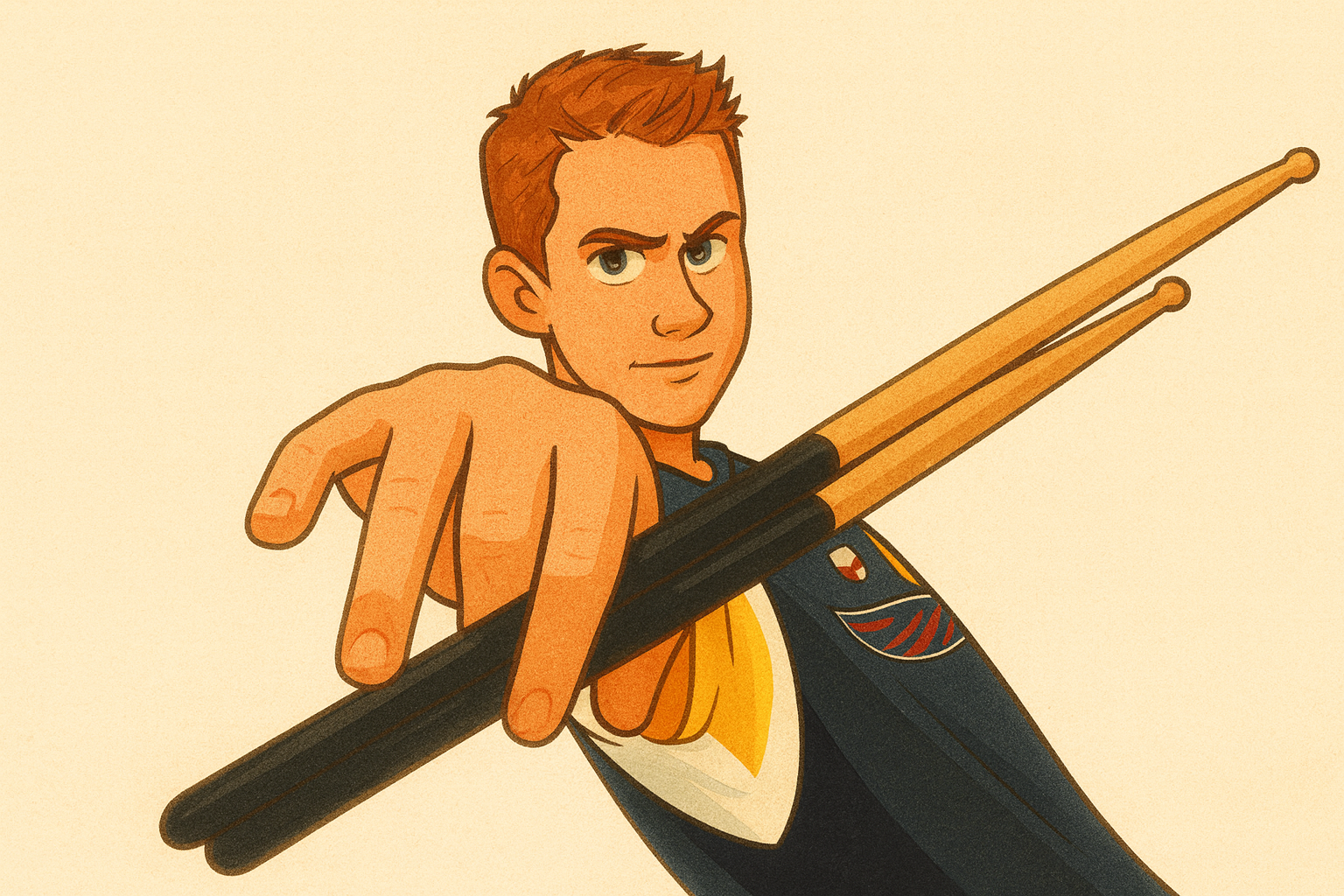
It wasn’t until the trumpet arrived that something clicked. I enjoyed it, I progressed quickly, and for the first time I felt remotely like a musician. But then, at around 13–14, I switched to the tuba – an instrument as glorious as it is enormous. This meant lugging a brass instrument roughly the size of a small asteroid onto the school bus every week. Later in life, when playing drums and bass guitar, I completed my destiny of selecting only instruments that require their own logistical team.
I’m sure it was good for my upper body strength!?
But these instruments – from violin to tuba to drums and bass – taught me far more than notes and rhythms.
They taught me how to learn.

The Breakthroughs: When Practice Turns Into Progress
One of the most satisfying parts of learning an instrument is the moment something hard suddenly becomes easy (or even just doable). With classical instruments like trumpet or tuba, that often came through reading notation and slowly building technical competence.
But drums and bass guitar were different.
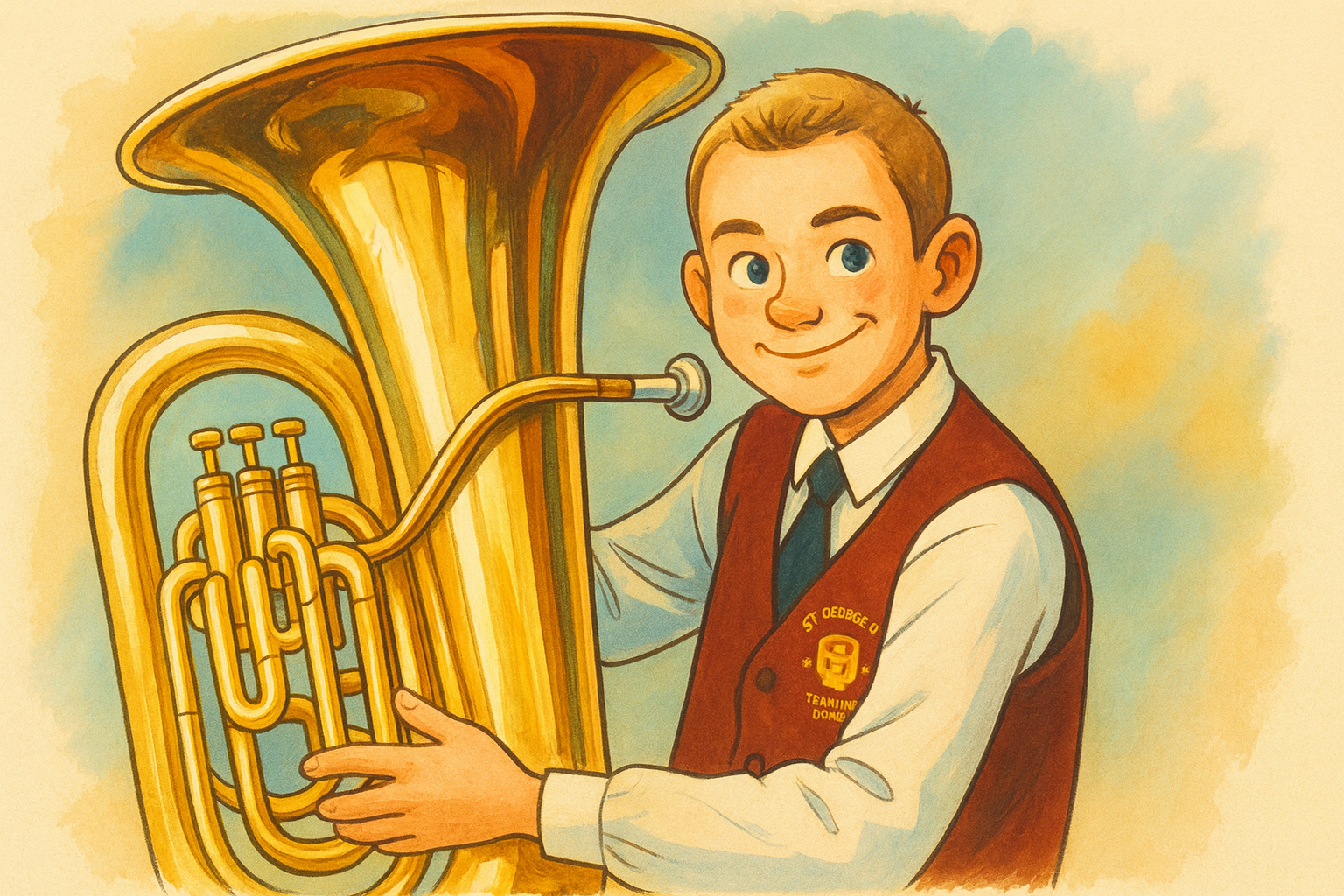
I learned them primarily by ear (although I did have lessons). I’d listen obsessively, break down songs, and replay sections endlessly until the rhythms and patterns sank in. I remember working through Korn’s Follow the Leader album at 14 or 15 – mastering not just the drum beats but the intricate fills.
There was no shortcut.
You practised until your hands hurt, and then you practised again. The same with bass: once you move beyond root notes and into more progressive or melodic lines, the challenge increases dramatically – and so does the reward.
These breakthroughs taught me two critical lessons that would later follow me into marketing:
-
Mastery only comes from repetition.
-
Small improvements compound until suddenly everything “clicks”.
That process: incremental, frustrating, deeply satisfying – is nearly identical to learning new marketing (or wider business) skills.
What Grade Exams Taught Me About Performing Under Pressure
Musical grades were my first introduction to high-stakes evaluation.
You sit in a room with an adjudicator, perform your pieces, run through scales, arpeggios and technical tests, and experience pressure in its purest form.
I learned early that I performed better under pressure than many others around me – something that translated well into presentations, leadership roles, and stakeholder discussions later in life.
The secret was simple: practice removes panic.
If you’ve done the work beforehand, pressure becomes fuel rather than fear.
The same applies to marketing.
Whether you’re presenting to senior stakeholders, defending a strategy, or pitching a campaign concept, you cannot fake preparation. Confidence doesn’t magically appear on the day – it’s built quietly, privately, through repetition.

The Rituals: Yes, Even the Slightly Embarrassing Ones
Most musicians have a pre-performance ritual. Mine was… practical.
I always made sure I went to the toilet just before going on stage. Boring. Not glamorous, not poetic, but honest. Nothing ruins a performance like the rising fear that you might need a wee seven minutes into a ten-minute piece.
That ritual was really about control. It was the last moment of certainty before stepping into uncertainty.
Marketing has its own version of that ritual:
-
Checking your slides for the tenth time
-
Running through your opener
-
Making sure everything is plugged in
-
Double-checking the Wi-Fi
They’re the tiny behaviours that help you take control right before you step into a situation that demands your full presence.

Transporting a Drum Kit: A Lesson in Commitment
If you ever want to understand true commitment, try transporting a drum kit.
Cymbals, stands, pedals, hardware bags, snare case, kick drum, toms – and that’s before you even add the bass amp for when you’re doubling on bass guitar. And don’t forget the tuba on public transport.
If you’re interested in the brands behind those cymbals, the Zildjian vs Sabian story is a fascinating example of family history becoming brand rivalry.
This wasn’t a hobby you could casually pick up. It required logistics. Planning. Time. Willpower.
Ironically, those skills transfer cleanly into marketing projects.
Campaigns aren’t neat. They require preparation, coordination, people management, deadlines, and resilience. And often, the work no one sees is what determines success. Just like the hours spent lugging gear in and out of venues.
Theory vs Practice: The Most Important Parallel With Marketing
One of the biggest realisations from music (and one of the central themes of this article) is the relationship between theory and practice.
In music, grades 1–5 develop technique. But to progress beyond Grade 5, you must pass Grade 5 Theory. There’s a reason for this: theory deepens understanding. It adds structure. It enables creative choices that aren’t available to someone who only plays by instinct.
Marketing is identical.
You cannot rely solely on doing. Execution without foundations leads to shallow work. Equally, understanding every model from Kotler to BCG is meaningless if you can’t actually apply it.
The best marketers (like the best musicians) blend both:
-
Theory: segmentation, STP, value propositions, pricing models, behavioural science, brand frameworks, SEO fundamentals, PPC structure.
-
Practice: executing campaigns, analysing performance, giving presentations, managing stakeholders, optimising landing pages, writing copy, producing content.
You need both sides of the brain. Music taught me that early.
Preparation: The Universal Skill
If there is one overriding lesson from my musical education, it is simply this:
Preparation is the most transferable skill in life.
When I joined a “professional” weddings and events band – before my first rehearsal (let alone gig), I create a huge handwritten book of notes, cues, structures and reminders for around 40 songs. I would even practise in the car before gigs, running through lines to make sure everything was locked in. Once I hit the opening note, the rest usually followed.
Marketing presentations are no different.
You prepare your data. You rehearse your narrative. You anticipate questions. You build your story. You make sure that when the “opening note” comes – the first slide, the first line, the first moment in the boardroom – the rest follows naturally.
It’s the same discipline expressed in a different context.
Final Thoughts
Learning musical instruments as a child wasn’t just about developing musical ability. It taught me:
-
how to learn new skills,
-
how to break big challenges into small pieces,
-
how to balance theory and practice,
-
how to prepare properly,
-
how to perform under pressure,
-
and how to carry a tuba without injuring passers-by.
Those early disciplines shaped the marketer I eventually became. They still shape how I work today.
Music gave me a foundation long before I knew what marketing was. And if there’s one message buried inside this article, it’s this:
Everything we learn early in life prepares us for the work we’ve not yet discovered.