

What I Learned From… Growing Up Loud: My Years in Rock and Metal Bands
How playing in rock and metal bands shaped my musicianship, mindset and understanding of audience-building
Before marketing entered my life, music came first.
Long before I was talking about segmentation, positioning or audience demand, I was sitting behind drum kits, playing in orchestras, jazz bands, rock bands and eventually heavy metal bands. And while this is very much a story about music, it’s also a story about frustration, ambition, teamwork, audience-building and the hard reality of growth – all things marketers deal with daily.
The Marketing Made Clear Podcast
Check out the Marketing Made Clear Podcast on all good podcast platforms for more from Will Green MA MBA.
Classical Foundations (and quiet frustration)
My early musical life was rooted in classical music. I played in school orchestras, ensembles and jazz bands, and I owe a huge amount of my technical ability to that period. Classical training gave me discipline, structure, timing and musical literacy. It taught me how to practise properly and how to listen.
But by secondary school, a problem emerged.
I wasn’t listening to classical music anymore – mainly because I could choose my own music at that stage…
Like many teenagers (not that I knew it at the time), I had discovered rock and metal in a big way, yet I was spending most of my musical time playing music I didn’t emotionally connect with. Worse still, my school didn’t really facilitate contemporary music. There were no rehearsal spaces, no band culture, no encouragement to form rock bands or play live.
Meanwhile, my friends from primary school had all gone to a much larger local secondary school – and their experience couldn’t have been more different.
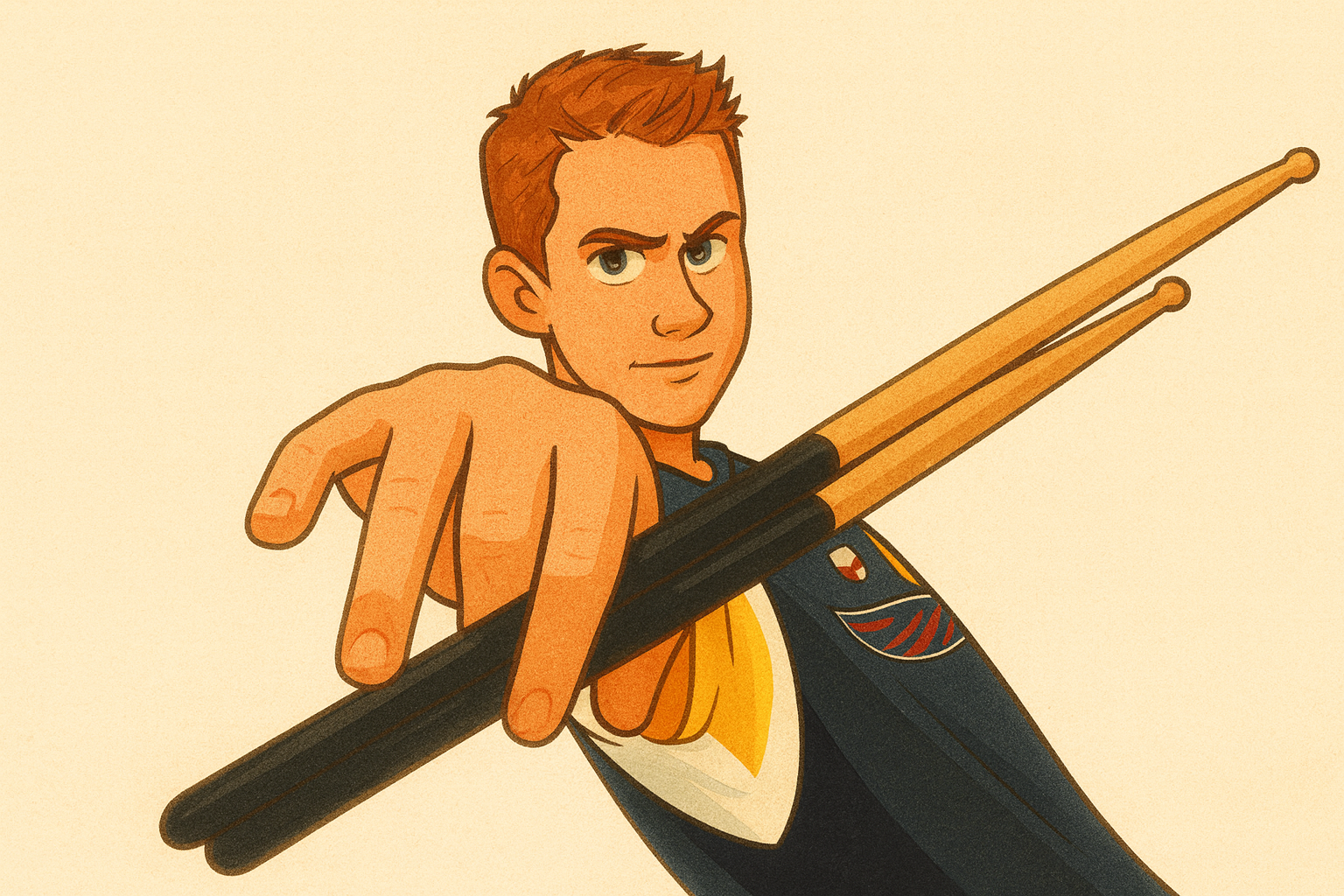
Seeing What Good Infrastructure Looks Like
Their school actively encouraged contemporary music. Students formed bands. They rehearsed. They played gigs at assemblies and school events. They were learning music in a way that felt alive.
I never lost touch with those friends, and through them I became part of their wider musical community. By the later years of secondary school, I was playing drums for bands at their school events – something I could only have dreamed of at my own.
That exposure led to some of my closest friendships, many of which still exist today, and ultimately to one of the most formative bands of my early life.

Resurrection: Learning What Momentum Feels Like
Alongside Bjorn, Mark, Doug and Dave, I joined a Queen tribute band called Resurrection. We recorded music for GCSE coursework, played Battle of the Bands events, performed at school shows and even organised and promoted our own fundraising gig – a full evening of Queen covers.
That band gave me one of the best summers of my life.
We rehearsed relentlessly. All our gear lived at my parents’ house, and we played for hours every day, weeks on end. We annoyed the neighbours so much that one of them came round to tell us off in person.
I loved every second of it.
For the first time, music didn’t feel forced. I wasn’t being told what to play. I wasn’t ticking boxes. I was playing, listening, improving and enjoying myself. And unsurprisingly, we all improved rapidly.
Looking back, this was my first real experience of momentum – something marketers will recognise immediately.
When the conditions are right, progress compounds quickly.
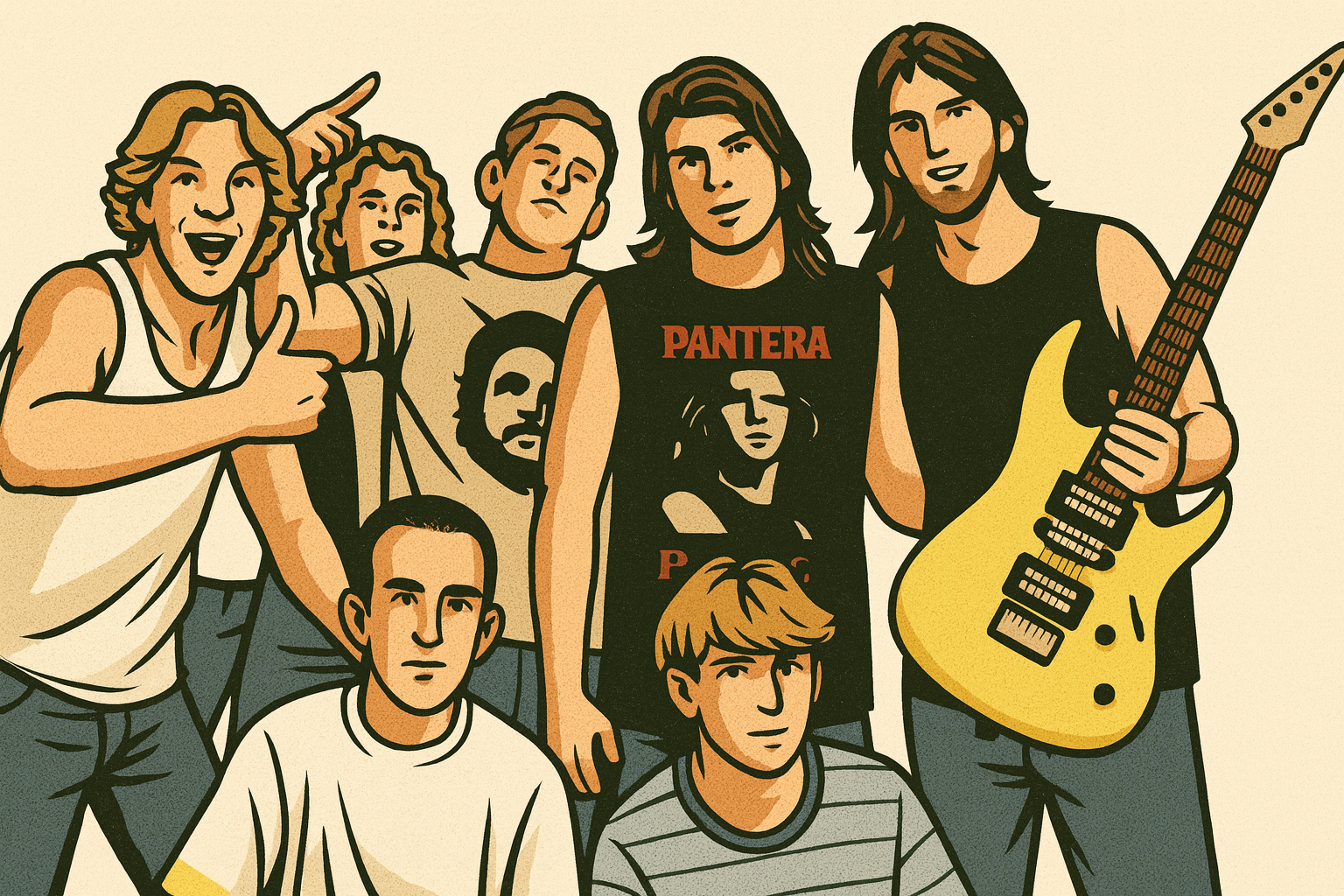
First Paid Gigs and the Step into Metal
As we moved into college, we started playing public shows: village festivals, local events and eventually paid gigs. Until this point, everything had been covers.
Then an opportunity came through my friend Mark’s college. A teacher was looking for a drummer for a heavy metal band called Modular Series. The band already existed as a three-piece, playing to backing tracks. They wanted to become a fully live act.
I was young.
The rest of the band were in their early-to-mid 20s. I was suddenly playing venues I wasn’t even legally allowed to be in as a punter.
And musically, it was a shock to the system.
This was my first proper metal band. The learning curve was steep, but I was finally playing the music I loved most. More importantly, this is where I learned my first major marketing lesson.
The Brutal Truth: Audiences Create Opportunity
What I quickly realised was simple:
-
Bands that sell tickets get opportunities
-
Bands that don’t… don’t
Talent mattered, but not as much as audience draw.
Because I was at college, surrounded by the exact demographic that loves going out, I was able to bring large crowds to gigs. That changed everything.
Suddenly, Modular Series – and later AMOKI – were getting better support slots, better venues and more exposure.
We supported bands like Skindred and Hed Planet Earth, released two CDs, received coverage in Kerrang!, and were voted the second most popular band to potentially support Supergrass at Faceparty’s anniversary show in London.
We didn’t win, but we got tickets to the show: Beni and I attended an overnight party at Old Billingsgate Market and even ended up backstage with Supergrass.
From a marketing perspective, this reinforced a harsh reality:
Demand precedes investment.
No label signs a band because they might build an audience. They sign bands that already have one.
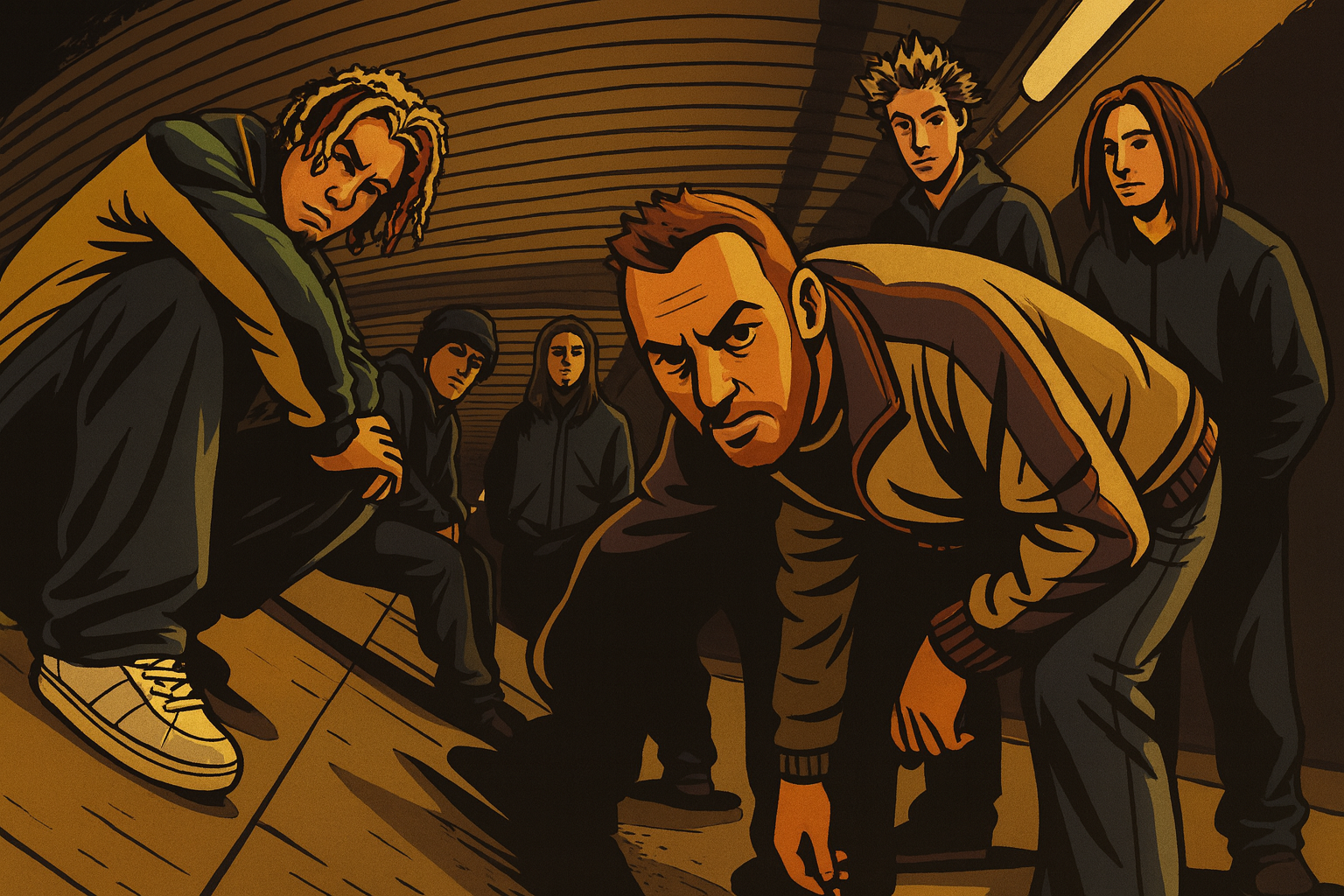
Line-Up Changes and Leadership Lessons
Between Modular Series and AMOKI, we went through a singer change. I found this incredibly difficult. I was young and largely a passenger in the decision-making process, but emotionally it felt similar to letting someone go from a job later in my career.
You see the same expressions. You feel the same doubts. And even when you know the decision is right, it doesn’t make it easy.
Another brutal lesson emerged:
-
Playing to an empty room is soul-destroying
-
Promoting your shows is non-negotiable
And one line from a bandmate stuck with me permanently:
“When you play live, you should only be playing at about 80% of your ability.”
If you’re playing at 100%, you’re far more likely to make mistakes. Performance needs headroom. That lesson applies just as much to presentations, pitches and leadership as it does to live music.
Seeing the Industry From the Inside
Later, working at Roadrunner Records, I saw first-hand what labels actually expect. And it was far more than we realised at the time.
In the US, bands are expected to tour nationally. Because many UK labels are US-owned or US-influenced, they apply similar thinking here. UK bands touring Europe isn’t a bonus – it’s often the baseline.
This is where perception and reality diverge sharply.
Bands often think they’re “nearly there”. Labels see them as nowhere near ready.
And there’s another misconception: selling out gigs because your friends attend is not the same as selling out gigs because strangers want your music. From a marketing lens, that’s the difference between activation and true demand – which maps perfectly onto segmentation, targeting and positioning.
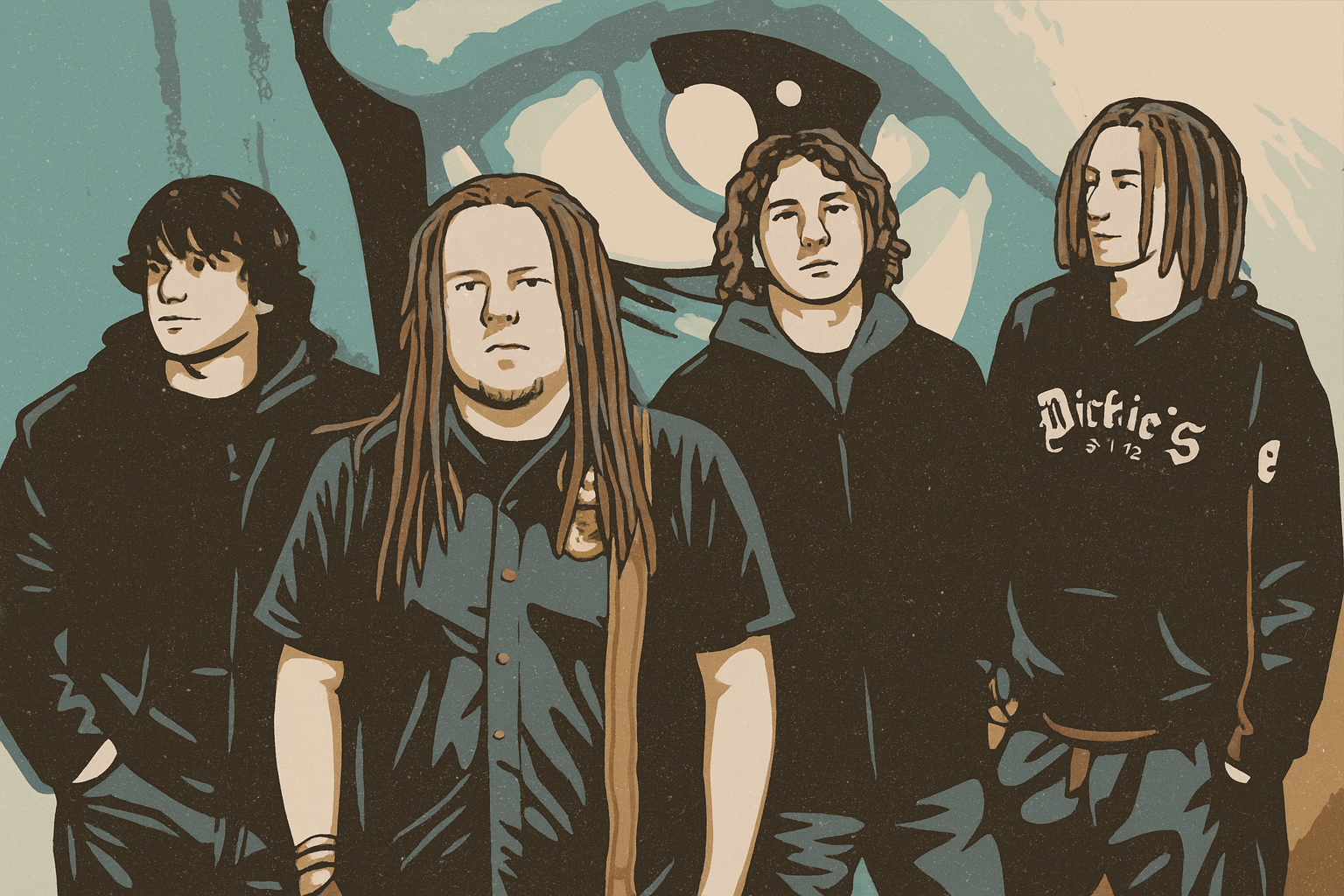
From Playing Music to Managing Bands
When those metal bands ended, I was devastated. I told the others I didn’t want to start again. The emotional cost felt too high.
Ironically, Kai from Amok went on to become a very successful promoter – see Kai at Divergent Promotions – something I’m genuinely proud to see.
My career shifted towards managing music rather than playing it, including work with Roadrunner Records and Ministry of Sound. I’ll cover that chapter separately.
That said, music never fully lets go.
Covers bBands, Scale and Marketing Properly
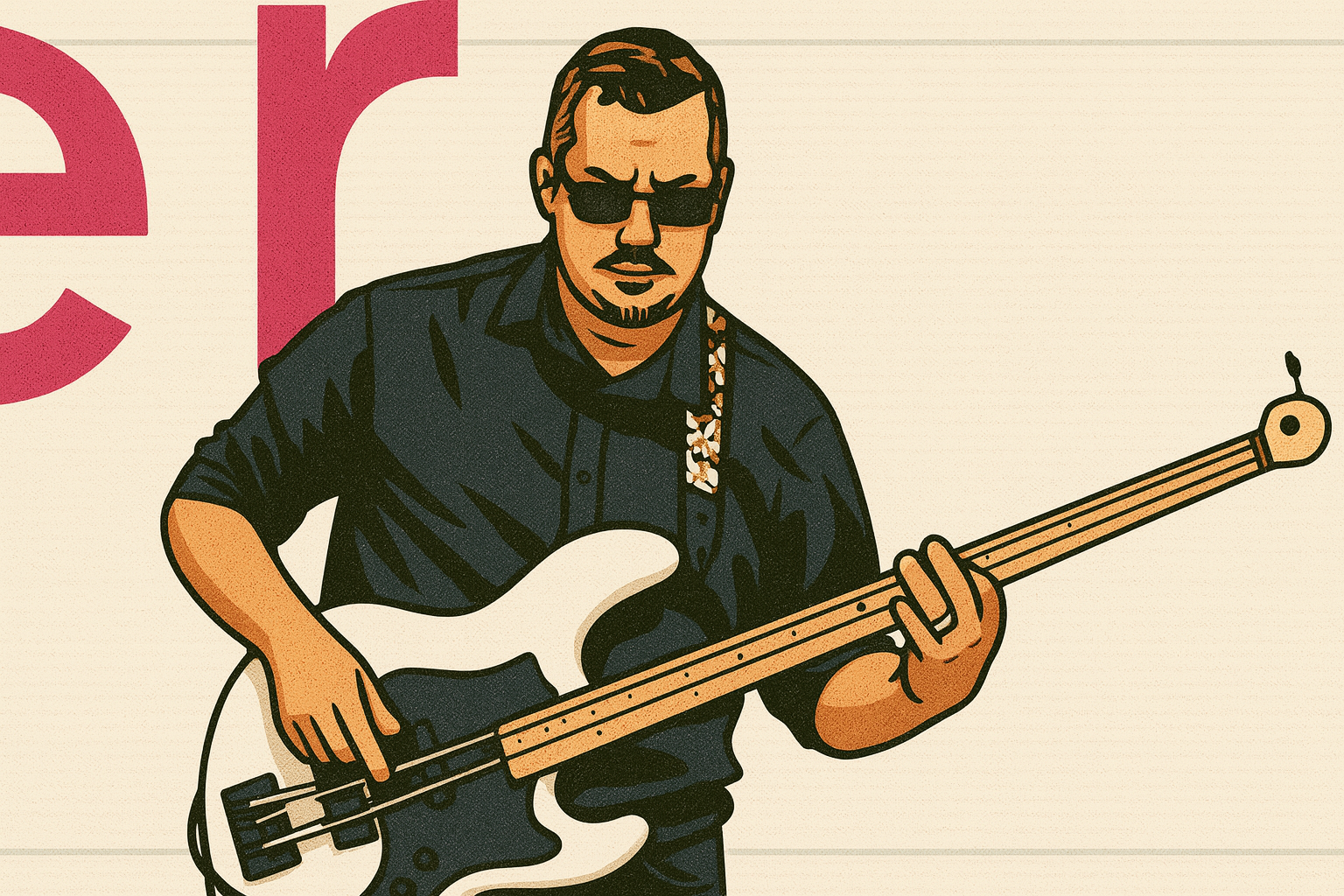
Years later, I joined Bigg Doggs, then The Gunshow – initially as a drummer, later as a bass player. Joining as a bassist was particularly challenging: I had to learn around 50 songs in a few weeks, on an instrument that wasn’t my primary one.
I leaned heavily on a learning method I’d refined at university: writing everything down. It accelerated learning and created reference material for live shows.
I also took on the organisational side of the band:
-
Venue liaison
-
Wedding clients
-
Contracts
-
Hiring and firing musicians
I became the de facto band manager – a very different experience from being a passenger in earlier bands.
Pre-Covid, we scaled properly:
-
More gigs
-
Higher-quality bookings
-
A website
-
Consistent social media
One particularly effective tactic was advertising wedding performance videos directly to newly engaged people locally. It worked.
Demand increased.
We played regularly at Hampshire Cricket Ground after T20 matches and even performed at a screening of Bohemian Rhapsody.
When Teams Destabilise
Eventually, long-term singer changes, deputy musicians and scheduling conflicts took their toll. Auditioning singers was one of the hardest periods I’ve experienced in any team environment.
Some singers were objectively brilliant – but wrong for us.
It reinforced something I now firmly believe:
The best team is not the one with the most talent. It’s the one with the right mix.
Covid then hit, and the industry still hasn’t fully recovered. The Gunshow went on hiatus in 2021 after more than 20 years.
Looking Back – and Forward
With the metal bands, I wish we’d pushed harder geographically and believed in ourselves more. With the covers bands, I genuinely think we achieved everything we realistically could.
I played hundreds of gigs. I became a better musician. I gained confidence that carried into business, leadership and marketing.
Recently, something unexpected happened. Old bands discussed reforming for nostalgic shows. The Gunshow received a message asking us to play again. We rehearsed. We played our first gig in nearly four years.
And it reminded me why music mattered in the first place.
So what does the future hold?
Probably fewer gigs. Less frequency. But enough to keep it fun.
And that, ultimately, might be the perfect balance.
TL;DR
-
Classical music built my technical foundations, but contemporary bands gave me momentum
-
Audiences matter more than talent when it comes to opportunity
-
Demand always comes before investment
-
Teams succeed on balance, not just ability
-
Playing live taught me more about marketing, leadership and growth than I realised at the time
-
Music never really leaves you – it just changes shape