

The Genius of the Marketing of Meat For Dogs
Why brutal simplicity might be the smartest strategy in pet food right now
There’s a moment in marketing when complexity becomes a crutch.
When brands start layering features, benefits, ingredients, claims, sub-claims, and disclaimers on top of each other – not because it helps the customer, but because it helps the brand feel more sophisticated.
And then, every now and again, something comes along that does the opposite.
Meat For Dogs is one of those things.
The Marketing Made Clear Podcast
This article features content from the Marketing Made Clear podcast. You can listen along to this episode on Spotify:
A Brand That Removes, Not Adds
Most pet food brands build by addition.
- More ingredients
- More science
- More claims
- More reasons to believe
Meat For Dogs does the reverse.
It removes.
- No vegetables
- No supplements
- No long ingredient lists
- No “functional” extras
What’s left?
Meat. Bone. Offal.
That’s not just a product decision. It’s a marketing strategy.
This is classic Occam’s Razor in branding – the simplest explanation is often the most powerful.
The Power of a Single Idea
Philip Kotler often talks about the importance of a clear value proposition. Not a complicated one. Not a layered one.
A clear one.
Meat For Dogs has arguably one of the clearest in the entire category:
“We give you meat. You feed meat to your dog.”
That line does more heavy lifting than most 10-page brand decks.
It answers:
- What the product is
- Why it exists
- How to use it
- Why it matters
All in one sentence.
That’s not accidental. That’s disciplined positioning.
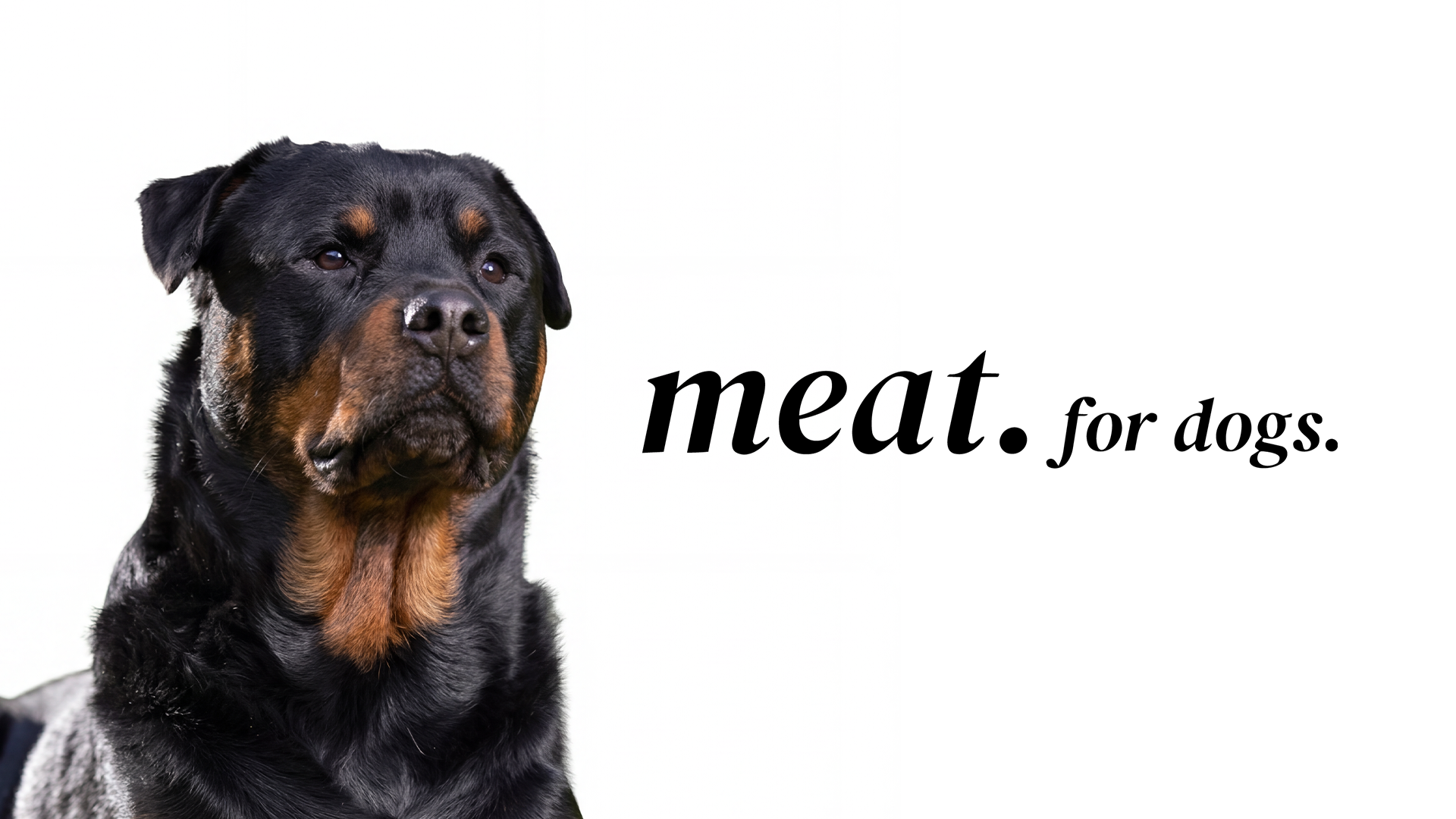
Category Contrast: The Real Masterstroke
The brilliance of Meat For Dogs doesn’t exist in isolation. It exists in contrast.
The pet food category is dominated by:
- Ultra-processed products
- Long ingredient lists
- Scientific-sounding formulations
- Shelf-stable convenience
Which means when a brand comes in and says:
“It’s just meat.”
It doesn’t feel simple.
It feels radical.
This is a textbook example of positioning through opposition, a concept popularised by Al Ries and Jack Trout.
You don’t just define what you are.
You define what you are not.
Meat For Dogs is not:
- Overcomplicated
- Processed
- Artificial
- Hard to understand
And that clarity gives it power.
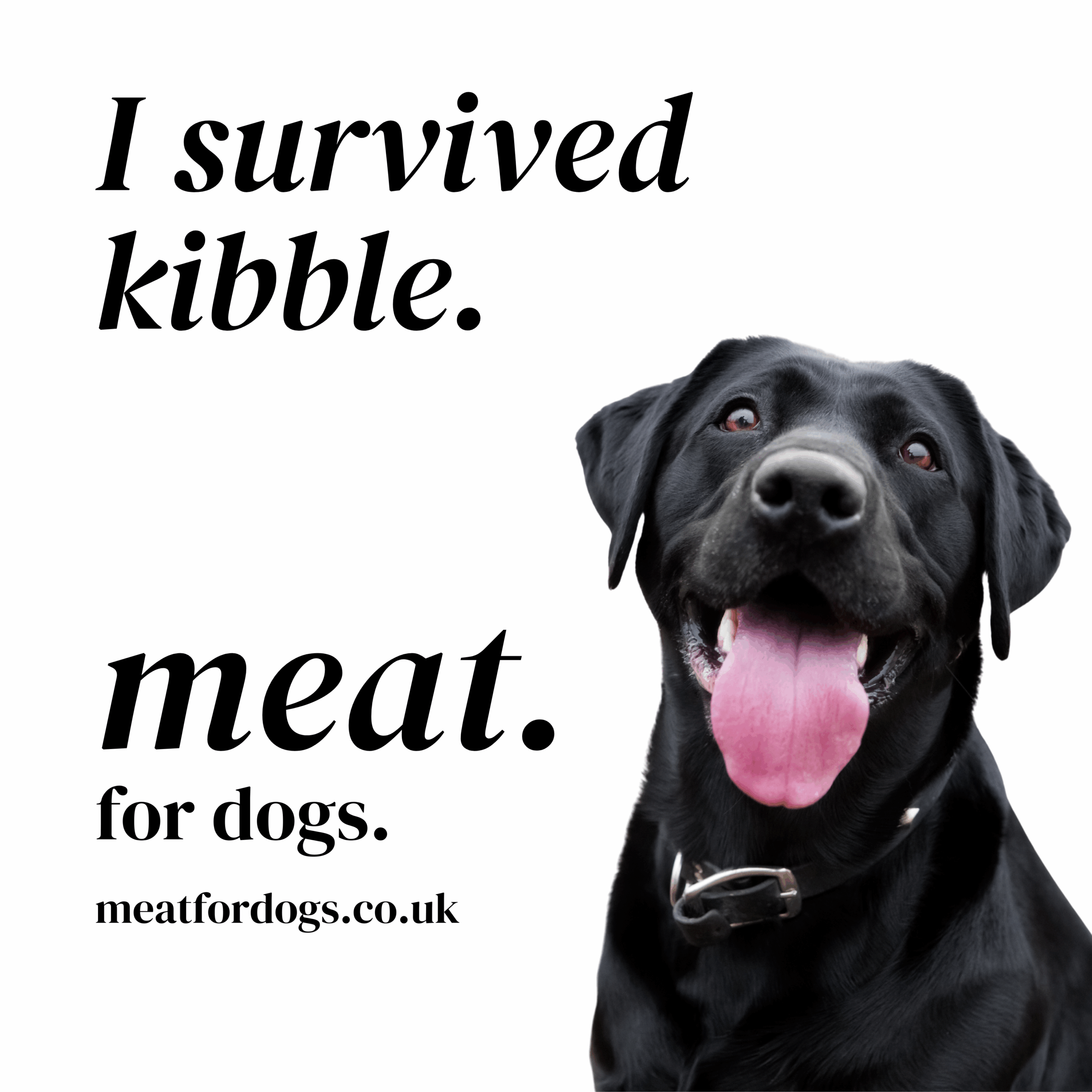

Behavioural Science: System 1 Wins
From a consumer psychology perspective, this is where things get interesting.
Daniel Kahneman’s System 1 vs System 2 thinking comes into play here.
- System 2: analytical, effortful, slow
- System 1: intuitive, fast, emotional
Most pet food brands require System 2 thinking:
- “Is this nutritionally balanced?”
- “What does this ingredient do?”
- “Is this better than that?”
Meat For Dogs bypasses that entirely.
It goes straight to System 1:
Dogs eat meat.
That’s it.
No cognitive load. No decision fatigue.
Just instinct.
The Pricing Strategy: Confidence Over Games
Another subtle but important piece of the strategy is pricing.
Where many brands rely on:
- First-order discounts
- Subscription incentives
- Constant promotional cycles
Meat For Dogs takes a different approach:
- No new customer discount
- No subscription discount
- Price set from the start
From a marketing perspective, this signals confidence.
As Seth Godin would argue, pricing is a story.
And the story here is:
“We don’t need to convince you with offers. The product stands on its own.”
That’s a risky move in performance marketing terms.
But in brand terms?
It’s powerful.
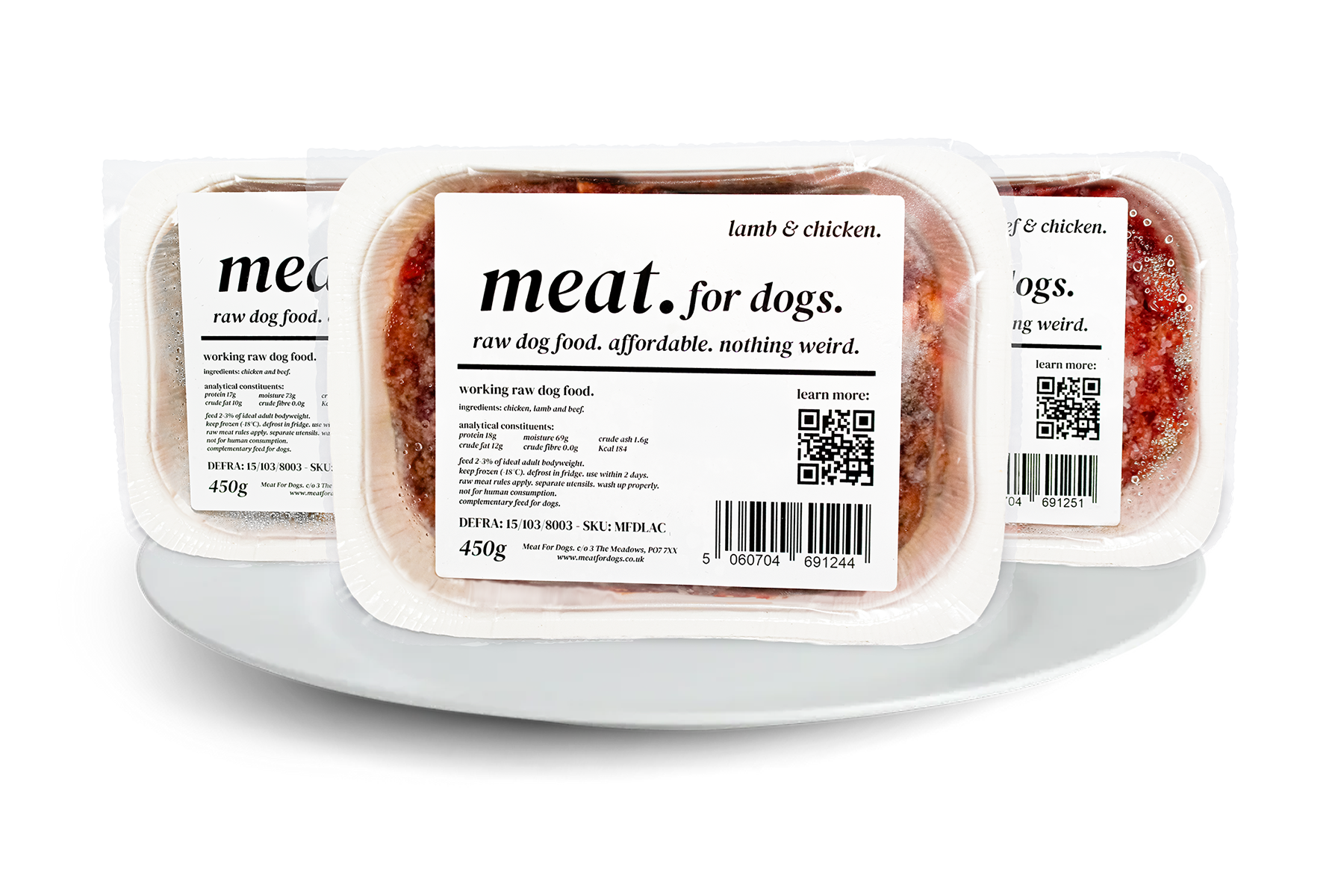
Channel Strategy: Supporting Retail, Not Undermining It
One of the more overlooked elements of the strategy is how Meat For Dogs handles channel conflict.
Many modern brands struggle with this:
- Sell direct-to-consumer
- Discount heavily online
- Undercut retail partners
The result?
Retailers lose trust.
Meat For Dogs flips this:
- No online discounting
- Same pricing across channels
- Retail can sell single packs (online sells in bulk)
This creates a rare dynamic:
The brand doesn’t compete with its stockists.
From a trade marketing perspective, this is a serious advantage.
It aligns incentives instead of fragmenting them.
Simplicity as a Sales Tool
There’s also a practical, in-store benefit to the strategy.
Retail staff don’t have time to explain complex products.
They need something they can sell quickly and confidently.
Compare:
- “This is a nutritionally optimised blend with added botanicals…”
vs - “It’s just meat.”
One requires training.
The other sells itself.
This is where simplicity becomes not just a brand asset, but a distribution advantage.
The Role of Humour and Tone
Another layer to the marketing is tone.
Meat For Dogs leans into:
- Dry humour
- Slight provocation
- Cultural references (Rocky, memes, etc.)
This is important.
Because the product itself is simple, the communication has room to be playful.
This balance avoids the brand becoming:
- Too worthy
- Too preachy
- Too clinical
Instead, it feels human.
And in a category often dominated by pseudo-science, that stands out.

The Risk (Because There Always Is One)
No strategy is perfect.
And it’s worth acknowledging the trade-offs.
By stripping everything back, Meat For Dogs:
- Limits its ability to segment
- Reduces opportunities for premium upsells
- Relies heavily on a single core idea
If that idea stops resonating, the brand has less to fall back on.
But…
That’s also what makes it strong.
As George Orwell once argued in his writing rules:
“If it is possible to cut a word out, always cut it out.”
Meat For Dogs has applied that principle to an entire category.
What Marketers Can Learn
There are a few clear takeaways here:
1. Simplicity is not weakness
It’s discipline. And it’s rare.
2. Contrast creates attention
Being different matters more than being better (initially).
3. One strong idea beats ten weak ones
Clarity wins.
4. Pricing tells a story
Discounting isn’t always the answer.
5. Distribution is part of marketing
Not just a logistics function.
TL;DR
Meat For Dogs is a masterclass in radical simplicity. By stripping away complexity, aligning with instinctive consumer thinking, and positioning itself directly against an overcomplicated category, it creates a brand that is easy to understand, easy to sell, and hard to ignore.