

Remembering Animal Farm at 80
The Political Fable That Publishers Feared
This article is a little different to my usual marketing-focused content on Marketing Made Clear. But as a long-standing admirer of George Orwell, and someone fascinated by the role of communication, storytelling, and public perception, I couldn’t let the 80th anniversary of Animal Farm pass without marking it.
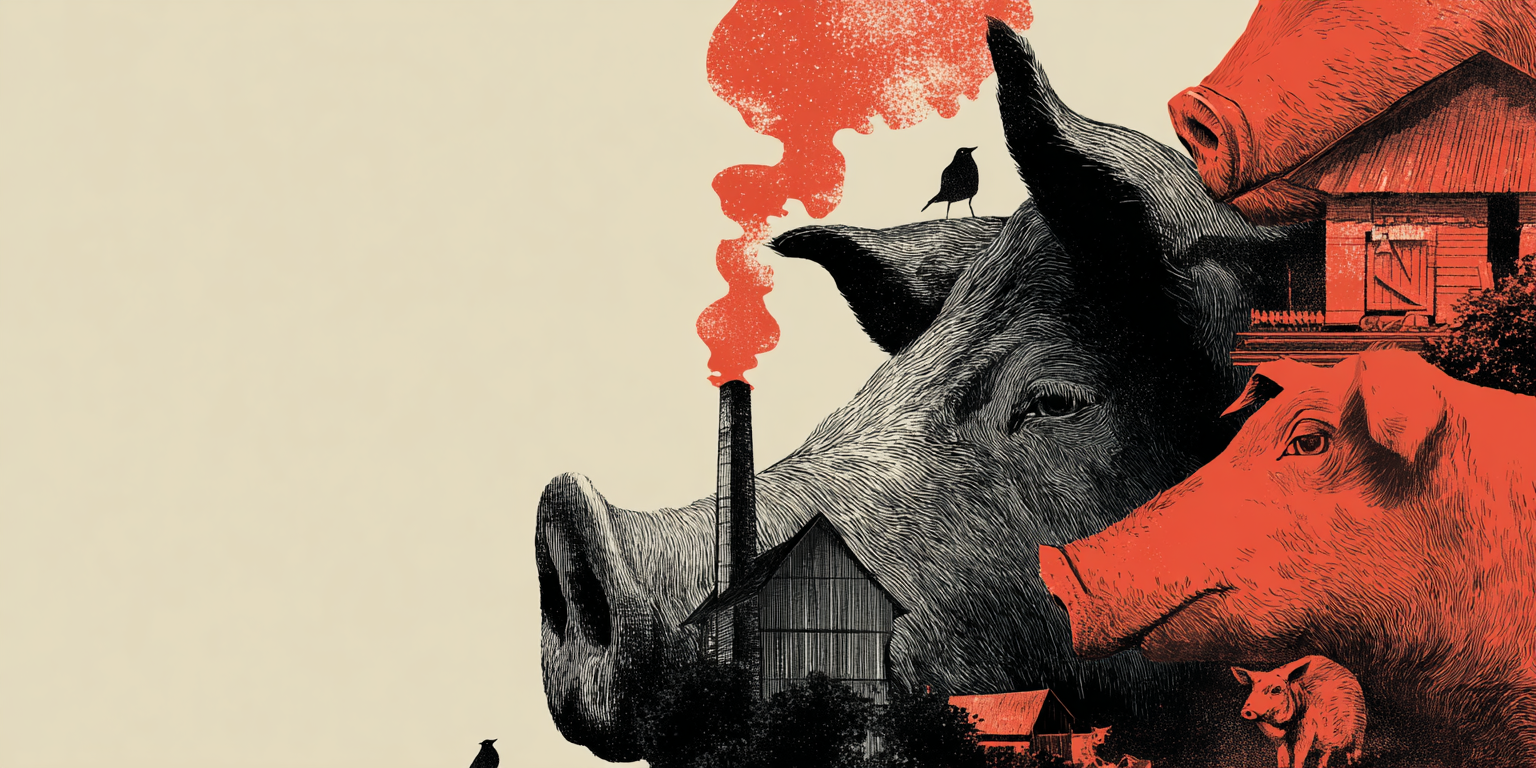
Because Animal Farm isn’t just a novella. It’s one of the boldest acts of political communication of the 20th century – a blistering satire disguised as a fairy tale. And its journey to publication was anything but straightforward.
The Marketing Made Clear Podcast
Check out the Marketing Made Clear Podcast on all good streaming platforms including Spotify:
The British Left, Stalin, and a Talking Pig
When Orwell began writing Animal Farm in 1943, Britain was still deep in the Second World War. The Soviet Union was not just an ally; it was seen by many in Britain – particularly on the political left – as a beacon of hope. Stalin was “Uncle Joe” in the popular press. To criticise the USSR at this time was to risk being branded unpatriotic, or worse, sympathetic to fascism.
Unthinkable now really.
But Orwell saw things differently.
A democratic socialist himself, he had fought in the Spanish Civil War and witnessed firsthand the corruption of socialist ideals by Stalinist forces. He wrote Animal Farm as a reaction to what he saw as a dangerous blindness in Britain: the idea that the USSR represented a successful model for socialism.
In his words, it was about the degeneration of revolutionary ideals, not a condemnation of socialism itself. But nuance, as ever, was in short supply.

The Publishing Battle: Orwell vs The Establishment
Once the manuscript was finished in 1944, Orwell faced the unexpected next phase: trying to get it published.
Easier said than done.
Jonathan Cape, the major publishing house, initially agreed to publish the book. But then they had a quiet word with Peter Smollett, an official at the Ministry of Information. Smollett advised them against it.
Cape withdrew. Orwell was stunned.
Why did a civil servant hold such sway? Because Smollett wasn’t just any civil servant. He was later unmasked as a Soviet agent. Orwell had effectively been censored by a man working for the very regime he was indirectly criticising.
Even the mighty Faber & Faber, under the literary stewardship of T.S. Eliot, turned it down. Eliot, in a somewhat backhanded letter, praised Orwell’s skill but questioned whether it was helpful to criticise the Soviet regime while it was still fighting the Nazis.
It’s worth pausing there: George Orwell, author of 1984, rejected by the author of The Waste Land because he was too politically risky.
Pot. Kettle……
Eventually, Secker & Warburg agreed to publish Animal Farm. They were one of the few publishers in Britain at the time with a track record of printing anti-Stalinist works. And thank goodness they did.
Tragedy and Timing
As if Orwell hadn’t been through enough, Animal Farm‘s release was overshadowed by personal tragedy. His wife, Eileen, died unexpectedly during a routine hysterectomy in March 1945. She hadn’t told Orwell much about the operation, likely due to cost concerns and the belief it would be minor. She died under anaesthetic while Orwell was away in Europe.
He returned briefly to grieve, then went back to the continent before finally settling in London that summer to cover the 1945 General Election.
On 17 August 1945, Animal Farm: A Fairy Story was finally published in Britain. Just a week after the war ended. A year later, it was published in the United States, where it became a bestseller.
Why Animal Farm Still Matters (Especially to Marketers)
So why talk about this on a marketing site? Because Orwell understood communication like few others.
He knew how to boil down big, uncomfortable truths into simple, memorable messages. He understood the power of narrative. He knew that slogans mattered. And he also understood the danger of groupthink, euphemism, and blind allegiance to any brand – political or otherwise.
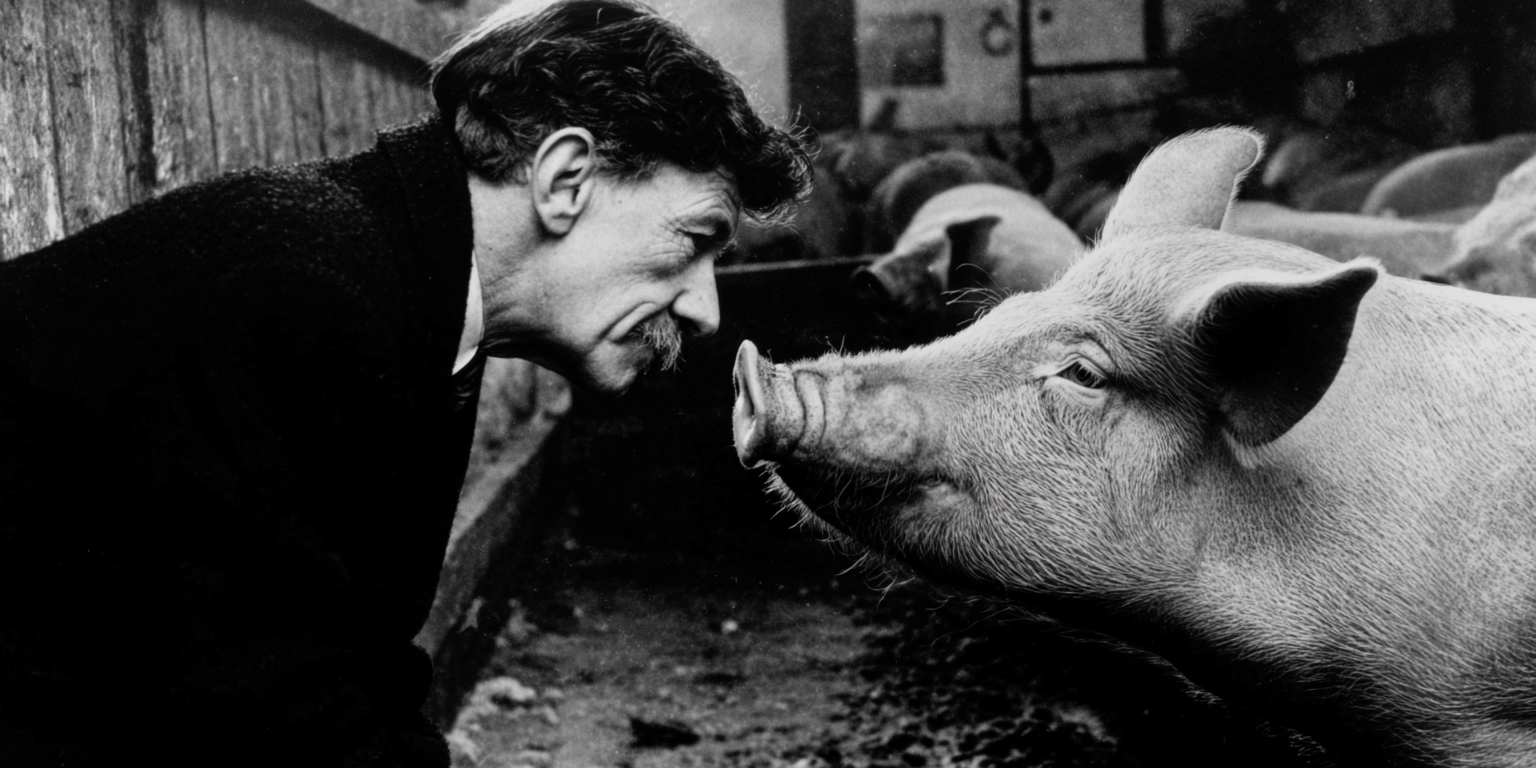
Animal Farm‘s greatest achievement is not its criticism of Soviet communism, but its universality. “All animals are equal, but some animals are more equal than others” could be pasted on the wall of any modern boardroom, lobbying group, or marketing campaign gone rogue.
As marketers, we craft stories. We shape perception. Orwell’s work is a constant reminder to do so ethically, with clarity and with our eyes open to the consequences.
TL;DR
-
Orwell wrote Animal Farm as a response to British intellectuals blindly supporting Stalin’s Russia.
-
Several publishers rejected the book, including Faber & Faber (where T.S. Eliot called it the “wrong point of view”) and Jonathan Cape, who pulled out after consulting Peter Smollett – later exposed as a Soviet agent.
-
Orwell’s wife Eileen died suddenly in 1945 just before publication, adding personal tragedy to political frustration.
-
Animal Farm was finally published on 17 August 1945 in the UK and a year later in the US.
-
For marketers, it’s a masterclass in clear, ethical, powerful communication.
Let Orwell’s clarity of purpose and suspicion of doublespeak continue to guide not just writers and journalists, but marketers too. After all, if anyone knew how dangerous a catchy slogan could be, it was the man who gave us “Big Brother is watching you.”