

Abraham Maslow’s Birthday (1 April): The Psychologist Who Was No Fool
How the psychologist born on April Fool’s Day developed one of the most serious, and enduring frameworks for understanding human motivation and consumer behaviour
Every year on 1 April, the world celebrates April Fool’s Day, a tradition dedicated to pranks, hoaxes, and playful deception. It’s a day when people willingly fall for tricks, fake headlines, and elaborate gags.
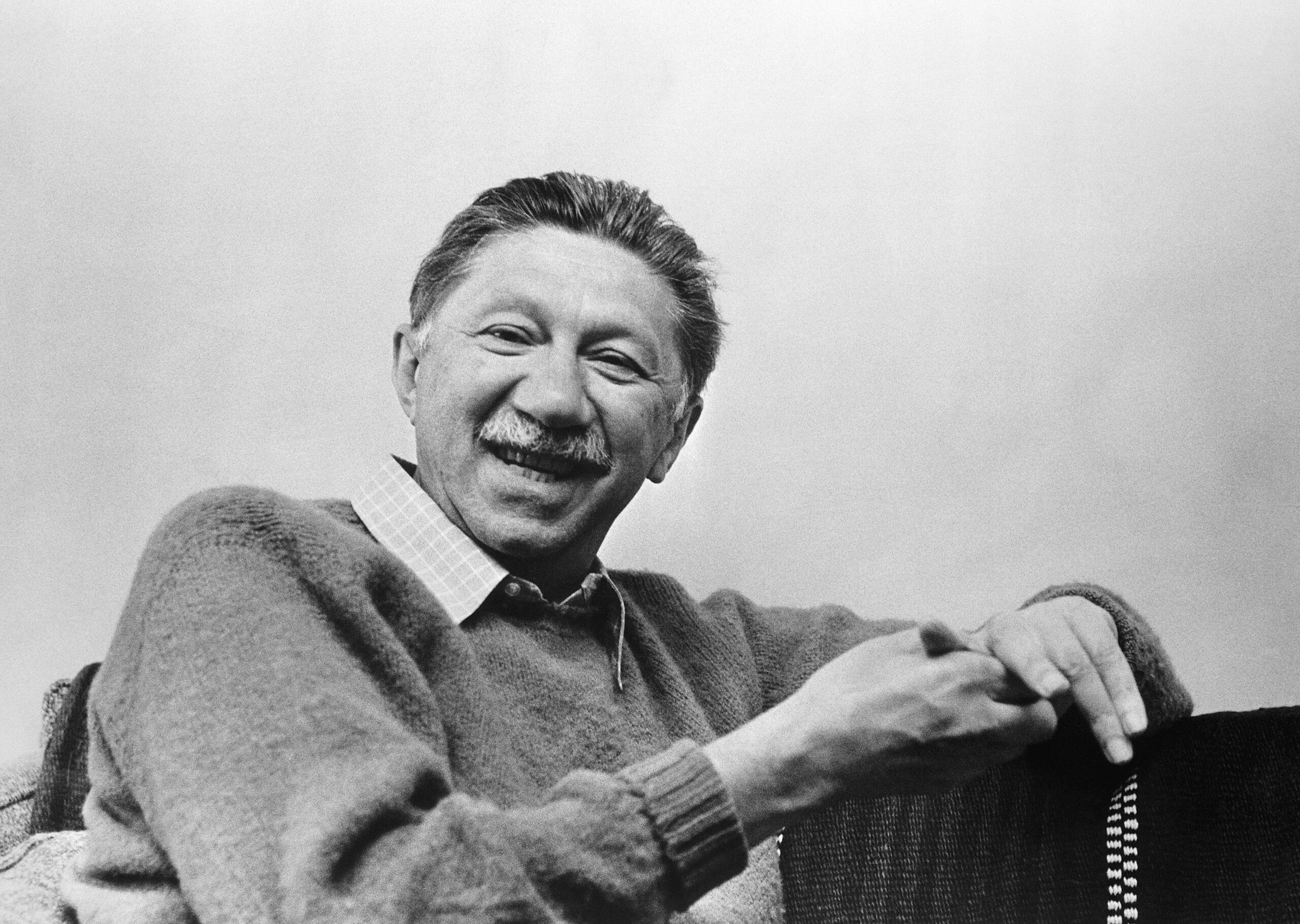
But while the world may be joking around, it also happens to be the birthday of one of the most serious thinkers in modern psychology: Abraham Maslow (1908–1970).
And Maslow, it must be said, was no fool.
In fact, his work fundamentally changed how we understand human motivation, ambition, and fulfilment. For marketers, his ideas remain one of the most enduring frameworks for understanding why people buy, believe, aspire, and ultimately form relationships with brands.
If April Fool’s Day is about tricking people, Maslow’s work is about something quite different: understanding what truly motivates them.
The Marketing Made Clear Podcast
This article features content from the Marketing Made Clear Podcast – check it out on all good platforms.
A Brief Look at Maslow’s Life
Abraham Maslow was born on 1 April 1908 in Brooklyn, New York, the eldest of seven children of Jewish immigrants from Russia.
His early life was not particularly easy. Maslow later described his childhood as lonely and intellectually focused, spending long hours reading in libraries rather than socialising. Books became both refuge and inspiration.
He initially studied law at the City College of New York, before switching to psychology at the University of Wisconsin–Madison, where he completed his BA, MA and PhD.
During his studies he worked under Harry Harlow, whose famous research on attachment in rhesus monkeys explored the emotional bonds between mothers and infants. That research profoundly influenced Maslow’s thinking about human needs and emotional development.
Maslow later taught at Brooklyn College and Brandeis University, where he developed the ideas that would later form the foundation of humanistic psychology.
At a time when psychology was dominated by behaviourism and Freudian psychoanalysis, Maslow took a radically optimistic view of human beings. Instead of focusing on mental illness or conditioned behaviour, he asked a different question:
What makes people thrive?
The Hierarchy of Needs: A Simple Idea That Changed Everything
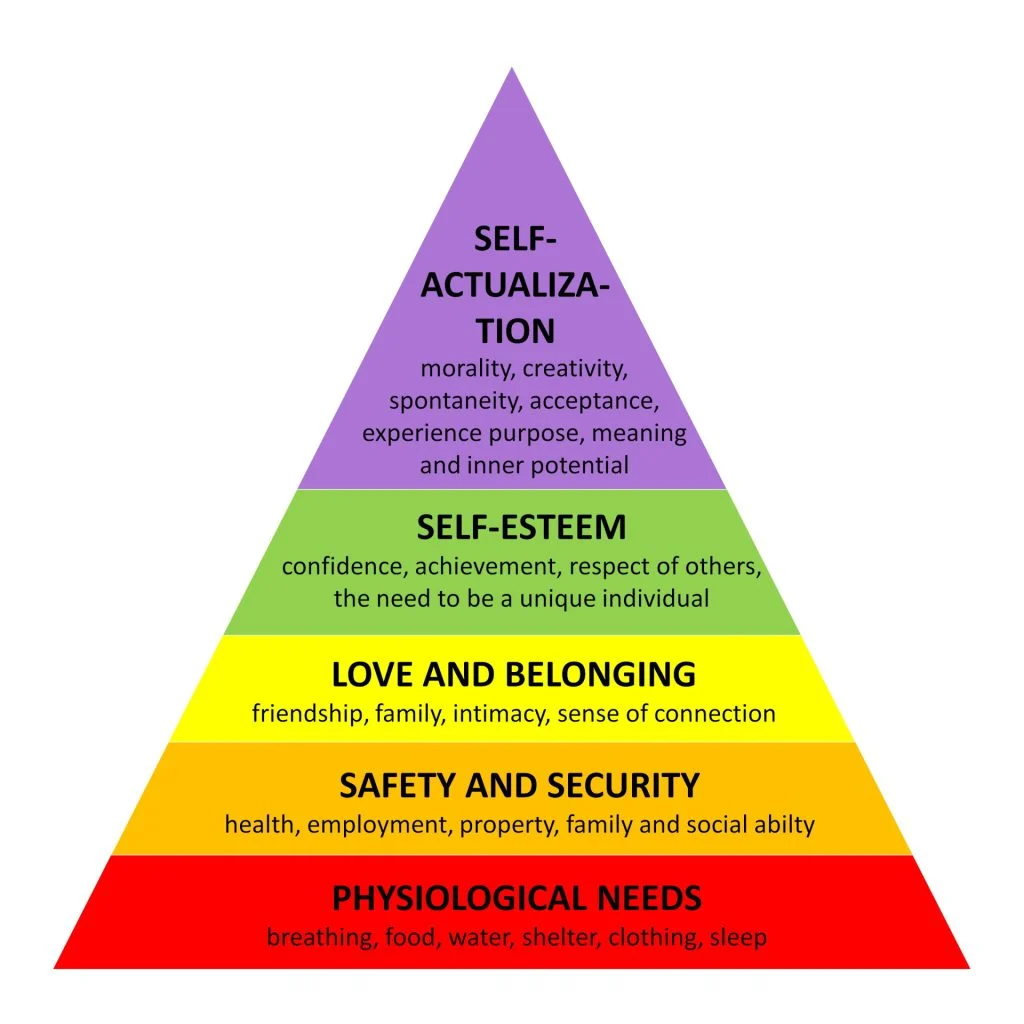
In it, he proposed what would become one of the most recognisable frameworks in psychology: the hierarchy of needs.
The model is usually visualised as a pyramid, with five layers of human motivation.
Physiological Needs
At the base are the most fundamental requirements for survival:
-
Food
-
Water
-
Shelter
-
Sleep
-
Basic biological functions
Until these needs are satisfied, people have little capacity to focus on anything else.
From a marketing perspective, products addressing these needs tend to emphasise reliability, accessibility, and functionality.
Food, healthcare, utilities, and housing brands often operate in this space.
Safety Needs
Once survival is secured, people seek stability and security.
This includes:
-
Personal safety
-
Financial stability
-
Health and wellbeing
-
Protection from harm
Insurance companies, financial services firms, and home security brands often position themselves around this level of need.
Their messaging frequently centres on peace of mind.
Love and Belonging
Humans are social creatures. Once survival and safety are assured, we begin to prioritise relationships and social identity.
This includes:
-
Friendship
-
Family
-
Romantic relationships
-
Community and belonging
Many brands operate powerfully in this space.
Social media platforms, sports clubs, fashion brands, and lifestyle products all tap into the desire to feel connected to something larger than ourselves.
Esteem Needs
Beyond belonging, people seek recognition and status.
Maslow divided esteem into two parts:
-
Self-esteem – confidence, competence, achievement
-
External recognition – status, respect, reputation
Luxury brands and aspirational products frequently appeal to this level.
Ownership becomes a signal of success, identity, or accomplishment.
Self-Actualisation
At the top of the pyramid sits Maslow’s most intriguing concept: self-actualisation.
This is the desire to become the best version of oneself.
Maslow famously summarised it with the phrase:
“What a man can be, he must be.”
Self-actualisation involves:
-
Creativity
-
Personal growth
-
Meaningful goals
-
Pursuing one’s full potential
Brands that inspire personal development; education platforms, fitness programmes, personal development tools – often appeal to this level.
Maslow Later Added a Sixth Level
In later writings, Maslow suggested a further stage beyond self-actualisation: self-transcendence.
This involves contributing to something larger than oneself, such as:
-
Altruism
-
Spiritual meaning
-
Social causes
-
Environmental responsibility
Today, this idea resonates strongly with modern consumers.
Brands focused on sustainability, ethical production, or social impact frequently tap into this motivation.
For marketers, it helps explain why people support companies that align with their values and worldview.
What April Fool’s Day Teaches Us About Marketing Psychology
There’s an interesting irony in Maslow sharing a birthday with April Fool’s Day.
April Fool’s works because it exploits human psychology.
People believe outrageous stories or absurd claims because they momentarily suspend scepticism. Curiosity, surprise, and social participation all play a role.
Brands often participate in April Fool’s Day campaigns because the day provides a rare opportunity to engage audiences through humour and playful deception.
But the best examples don’t simply trick people.
They also reveal something deeper about the brand’s personality.
Brands That Use April Fool’s Day Well
Several companies have become famous for their annual pranks.
For example:
-
Google has historically released elaborate fake products on 1 April, including fictional search tools and absurd innovations.
-
Tesco has occasionally launched tongue-in-cheek products designed purely for the day.
-
Food brands frequently invent strange flavour combinations or ridiculous packaging concepts.
What these campaigns achieve is not deception for its own sake, but attention and brand affinity.
They operate primarily at the belonging and esteem levels of Maslow’s hierarchy:
-
People enjoy sharing the joke.
-
Audiences feel included in the brand’s sense of humour.
-
The brand appears human and culturally aware.
In other words, even a prank still works best when it taps into real human motivations.

Why Maslow Still Matters for Marketers
More than 80 years after his original paper, Maslow’s hierarchy continues to influence marketing thinking.
There are several reasons for this.
First, the framework is remarkably intuitive. It provides a simple way to think about why people behave the way they do.
Second, it emphasises human motivation rather than product features.
Marketing often fails when it focuses purely on the product itself. Maslow reminds us that consumers are driven by needs, aspirations, and identity.
Finally, the model encourages marketers to think about progression.
A consumer’s relationship with a brand may evolve:
-
Initially meeting practical needs
-
Then creating emotional connection
-
Eventually becoming part of identity or purpose
Some of the strongest brands manage to operate across multiple levels of the hierarchy.
The Real Lesson: Understanding People
April Fool’s Day reminds us that people enjoy humour, surprise, and a bit of mischief.
Maslow’s work reminds us of something far more important: people are motivated by deeply human needs.
Marketers who understand those motivations can build campaigns that resonate on a profound level.
Those who ignore them are left relying on gimmicks and tricks.
In other words, while April Fool’s Day might celebrate the art of the prank, Abraham Maslow spent his life trying to understand what truly drives human behaviour.
And that’s no joke.
TL;DR
-
**Abraham Maslow was born on 1 April 1908, sharing his birthday with April Fool’s Day.
-
His Hierarchy of Needs remains one of the most influential frameworks for understanding human motivation.
-
The model progresses from physiological needs and safety through belonging and esteem to self-actualisation and later self-transcendence.
-
Marketers can use the framework to align messaging with real human motivations.
-
Even playful marketing like April Fool’s campaigns works best when it taps into genuine psychological needs.
-
Maslow may share a birthday with a day of pranks, but his ideas remain some of the most serious – and useful – insights into human behaviour ever developed.