

Marketing Strategy
Marketing Strategy vs Marketing Tactics: What’s the Difference?
Strategy decides where you're going, who you're trying to win and how you intend to compete. Tactics are the things you actually do to make that strategy happen. Posting more on LinkedIn is not a strategy.
Somewhere in a meeting room right now, somebody is saying:
“Our marketing strategy is to post four times a week on LinkedIn.”
It isn't.
That's a content schedule.
Elsewhere, somebody's strategy is apparently “TikTok”, somebody else's is “email marketing”, and a third organisation has bravely announced that its strategy is to “do more video”.
These may all be perfectly sensible things to do.
But they are not, by themselves, strategies.
The confusion between marketing strategy and marketing tactics is one of those apparently simple problems that causes surprisingly large amounts of nonsense.
It matters because tactics are visible.
You can see the advert. You can publish the email. You can launch the promotion. You can brief the influencer. You can build the landing page.
Strategy is less obvious.
It sits behind those activities and explains why these actions, for these customers, in this market, rather than all the other things you could have done instead.
The Quick Answer
A marketing strategy is the set of choices that determines how an organisation will achieve its marketing objectives.
Marketing tactics are the specific actions used to execute those choices.
Strategy provides direction.
Tactics create movement.
You need both.
The Marketing Made Clear Podcast
This article originally accompanied an early episode of the Marketing Made Clear podcast. You can listen to that discussion below.
What Is a Marketing Strategy?
A marketing strategy explains how marketing will help the organisation achieve a desired outcome.
But a useful strategy does more than announce an ambition.
“We want to grow” isn't a strategy.
“We want younger customers” isn't a strategy either.
And “we're going digital” should probably be accompanied by a note explaining which decade the meeting is taking place in.
A meaningful strategy involves choices.
Choices about:
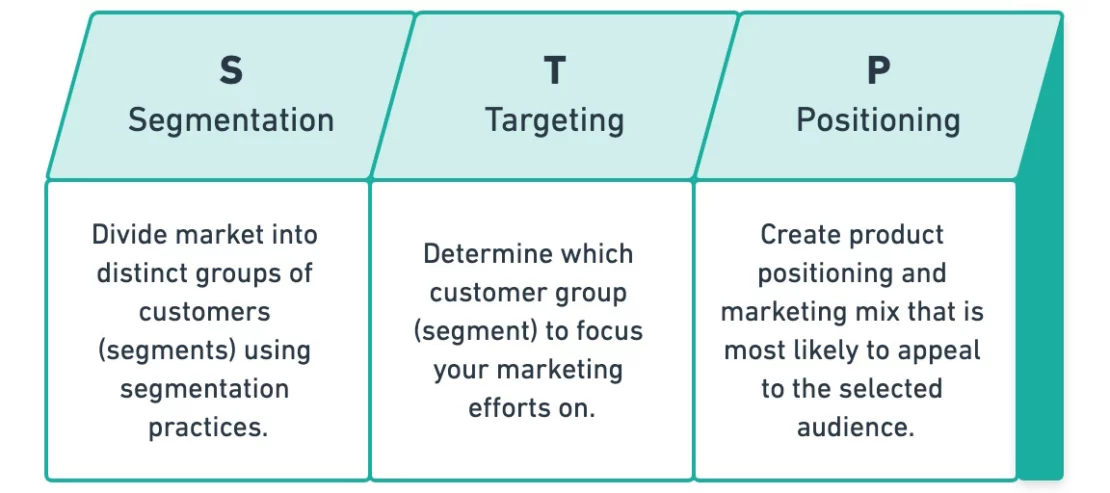
- which customers or segments matter most;
- which customer needs you intend to satisfy;
- how you want the brand or offer to be positioned;
- how you will create an advantage over alternatives;
- where resources should be concentrated;
- and, importantly, what you are not going to prioritise.
That final point matters.
If your strategy includes everybody, every channel, every proposition and every possible opportunity, you haven't made many strategic choices.
You've written a Christmas list.
What Are Marketing Tactics?
Tactics are the specific actions used to execute the strategy.
Strategy
The Direction
Which customers will we prioritise?
What do we want them to believe?
How will we create value for them?
Where can we compete effectively?
What will we deliberately not prioritise?
Tactics
The Execution
Which campaigns will we run?
Which channels will we use?
What content will we produce?
Which promotions, partnerships or activations will we deploy?
What exactly are we going to do?
Tactics might include:
- paid search;
- SEO;
- email campaigns;
- retargeting;
- PR;
- events;
- sampling;
- influencer partnerships;
- sales promotions;
- referral programmes;
- content marketing;
- social advertising;
- retail activation;
- pricing offers;
- distribution initiatives;
- and approximately 84,000 other things somebody will try to sell you at a marketing conference.
Notice that tactics aren't necessarily channels.
A price promotion is a tactic.
A sampling programme is a tactic.
A retail partnership can be a tactic.
So can changing the pack format or creating a trial product if those actions are being used to execute a broader strategic choice.

Marketing is considerably broader than deciding what to post on Instagram.
Objective, Strategy, Tactics and Plan Are Not the Same Thing
This is where terminology starts becoming muddled.
A simple hierarchy helps.
01 — Objective
What needs to change?
The result you want to achieve.
For example: increase first-time customer revenue by 20% over the next 12 months.
02 — Strategy
How will we achieve it?
The choices governing where and how you intend to compete.
03 — Tactics
What will we actually do?
The campaigns, channels, offers and activities used to execute the strategy.
04 — Plan
Who does what, when and for how much?
The organised programme that turns strategy and tactics into responsibilities, timings, budgets and measurement.
I've covered that final distinction separately in Marketing Strategy vs Marketing Plan.
The terms overlap in normal business conversation, and different organisations will structure their planning differently.
That's fine.
The important thing is that you don't confuse the outcome you want, the choices you're making, the actions you're taking and the document that organises the whole thing.
The Easiest Way to Spot a Tactic Pretending to Be a Strategy
Look for a channel name.
That may be a sensible tactical decision.
But it tells us almost nothing about the strategy.
Why TikTok?
For whom?
To change what?
What customer behaviour are we trying to influence?
How does appearing there help us compete?
Why does this deserve investment ahead of all the other things we could do?
Those questions drag you back towards strategy.
“Use TikTok” is an activity.
“Become the most trusted source of beginner advice for first-time buyers before they enter the category” is much closer to a strategic direction.
TikTok may then be one of several tactics used to deliver it.
The Same Tactic Can Support Completely Different Strategies
This is one of the most useful ways to understand the distinction.
Take email marketing.
Email itself tells us almost nothing about the strategy.
Strategy A
Increase Customer Retention
Email might be used to improve onboarding, educate customers, anticipate repurchase and reduce churn.
Strategy B
Increase Average Order Value
The same email platform might instead support bundles, cross-selling and personalised product recommendations.
Strategy C
Win Back Lapsed Customers
Email might be used to identify disengaged customers and trigger specific reactivation journeys.
Same Tool
Completely Different Logic
The channel hasn't changed.
The reason for using it has.
That is why asking:
“Should we be doing email?”
is usually less useful than asking:
“What are we trying to achieve, and is email a good way of helping us achieve it?”
It sounds like a small difference.
It isn't.
A Worked Example
Imagine a fictional running-shoe brand.
It has decent awareness among serious runners but wants to grow among recreational runners buying their first proper pair of running shoes.
The Objective
Increase revenue from first-time customers by 20% over the next 12 months.
The Strategy
Win the nervous recreational runner
Prioritise recreational runners aged roughly 25–40 who want comfort and confidence rather than elite performance.
Position the brand as the easiest credible choice for people taking running seriously for the first time.
Reduce purchase anxiety by simplifying product choice, emphasising comfort and fit, and offering a strong trial proposition.
Do not attempt to out-Nike Nike by spending the entire budget trying to look like an Olympic performance brand.
The Tactics
- Create a simple online shoe-selection tool for beginner runners.
- Build landing pages around common first-purchase questions.
- Target high-intent searches such as “best running shoes for beginners”.
- Seed products with credible recreational-running creators rather than only elite athletes.
- Introduce a 30-day trial or easy exchange proposition to reduce perceived risk.
- Develop beginner-focused email onboarding content.
- Partner with local running groups and beginner programmes.
- Retarget visitors who used the shoe-selection tool but didn't purchase.
Now the tactics make sense.
Not because Google Ads, creators, email and running clubs are inherently clever.
They make sense because they are connected to a specific customer, a specific problem and a deliberate way of competing.
Strategy Means Choosing What Not to Do
This is the bit that organisations often dislike.
Good strategy removes options.
If we are prioritising first-time recreational runners, perhaps we aren't prioritising elite marathon runners this year.
If our advantage is simplicity, perhaps launching another 46 confusing product variants isn't particularly helpful.
If retention is currently more valuable than acquisition, perhaps the next £100,000 shouldn't automatically disappear into another awareness campaign.
Choice means sacrifice.
And sacrifice is uncomfortable because everybody has a favourite project.
A strategy that never tells you “no” probably isn't doing much strategic work.
This is partly why tactics often take over.
Tactics feel productive.
A team can launch a campaign, produce content and report that 1.7 million people saw something.
Strategy asks the considerably more irritating question:
Why did we want those particular 1.7 million people to see it in the first place?
Strategy Without Tactics Is Just a Nice Document
There is, however, an opposite problem.
Some organisations love strategy so much that it never suffers the indignity of being implemented.
There are workshops.
There are frameworks.
There are 84-slide PowerPoint decks.
There may even be a new triangle.
Six months later, everybody is doing exactly what they were doing before.
Strategy Without Tactics
Direction Without Movement
You know where you want to go but nothing changes in the market.
Tactics Without Strategy
Movement Without Direction
Everyone is extremely busy, but nobody is quite sure whether the activity is taking the business somewhere useful.
Neither is particularly impressive.
Effective marketing connects the two.
Can Tactics Change Without Changing the Strategy?
Absolutely.
In fact, they probably should.
Your strategy should normally be more stable than the tactics used to deliver it.
Suppose your strategy is to become the easiest brand for first-time buyers to understand and trust.
You might initially use paid social, educational video and search advertising.
After six months, search might perform brilliantly while one social platform produces very little commercially meaningful behaviour.
You can change the media mix.
The strategy hasn't necessarily changed.
You've simply learnt something about how best to execute it.
Strategy provides consistency. Tactics provide adaptability.
When Should the Strategy Change?
Strategies aren't sacred.
Markets change.
Competitors change.
Customers change.
Technology changes.
Your assumptions may simply turn out to have been wrong.
If the segment you chose isn't commercially attractive, the advantage you expected doesn't exist, or customer needs have shifted significantly, continuing with the same strategy because “it's in the plan” isn't strategic discipline.
It's stubbornness with a spreadsheet.
The trick is not to confuse every disappointing campaign with evidence that the entire strategy is wrong.
Sometimes the strategic direction is sound and the tactic is poor.
Sometimes the tactic is executed badly.
Sometimes the creative is rubbish.
Sometimes the offer is weak.
And sometimes, yes, the underlying strategic assumption deserves to be challenged.
Knowing which level has failed is rather important.
Five Questions to Test Whether You Actually Have a Strategy
Question 01
Who are we prioritising?
If the answer is “everyone”, try again.
Question 02
What do we want to change?
Awareness? Trial? Retention? Penetration? Perception? Behaviour?
Question 03
Why should customers choose us?
What value, advantage or meaningful difference are we building around?
Question 04
What are we choosing not to prioritise?
If nothing has been excluded, the choices may not be very strategic.
Question 05
Do our tactics follow logically?
Could somebody look at the activities and understand why they support the strategic choices?
A Brief Word About Sun Tzu
The original version of this article opened with Sun Tzu, because the distinction between strategy and tactics has obvious military roots.
And the basic comparison remains useful.
Tactics are the visible actions.
Strategy is the logic that determines which actions are worth taking.
Business writers have subsequently spent decades quoting The Art of War, sometimes insightfully and sometimes because calling a competitor “the enemy” makes an otherwise ordinary quarterly planning session sound considerably more exciting.
Marketing isn't warfare.
Your customers aren't territory to be conquered.
But the distinction survives rather well.
Visible activity is not the same thing as strategic thinking.
The Marketing Lesson
Marketing teams are under constant pressure to do things.
Launch something.
Post something.
Send something.
Sponsor something.
Optimise something.
Ideally by Friday.
Activity matters.
But activity is not automatically progress.
Strategy Gives Tactics a Reason to Exist
The strategy explains where you want to compete, whom you want to serve, what advantage you're trying to create and what you're willing not to do.
The tactics turn those choices into activity customers can actually encounter.
Strategy without tactics goes nowhere.
Tactics without strategy can go absolutely anywhere.
That's the problem.
TL;DR
- Marketing objectives describe what you want to achieve.
- Marketing strategy sets the choices and direction for achieving those objectives.
- Marketing tactics are the specific activities used to execute the strategy.
- A marketing plan organises strategy and tactics into timings, responsibilities, budgets and measurement.
- Channels such as TikTok, email, SEO and paid search are not strategies by themselves.
- The same tactic can support several completely different strategies.
- Good strategy requires choices, including deciding what you will not prioritise.
- Tactics should change as marketers learn what works, without automatically requiring the underlying strategy to change.
The simplest distinction: strategy explains why and where you will compete; tactics are what you do about it.