

Consumer Behaviour
The Raw Feeding Pipeline
Dog food marketing often focuses on vets, retailers and advertising. But for many raw feeders, the first real influence comes much earlier: the breeder.
There is a strange little ritual that happens when someone collects a puppy.
The new owner arrives excited, nervous and slightly terrified. They have probably bought a bed, bowls, toys, a lead, a crate they may or may not use properly, and at least one chew that looks medically unwise.
Then the breeder begins the handover.
There is paperwork. Vaccination records. Microchip details. Sometimes a contract. Sometimes a blanket that smells of the litter. Sometimes a toy.
And often, there is food.
Not just any food. The food the puppy is already eating.
Keep them on this for now.
Do not change too quickly.
This is what they are used to.
In that moment, the breeder is not simply handing over a puppy. They are handing over a feeding routine, a set of assumptions and a first version of what “good care” looks like.
That matters more than the pet food industry often admits.
Because by the time the new owner gets to the vet, speaks to a pet shop, watches a TikTok, or Googles “best puppy food UK”, one of the most important decisions may already have been framed.
The first dog food recommendation often does not come from a brand.
It comes from the person who handed over the dog.
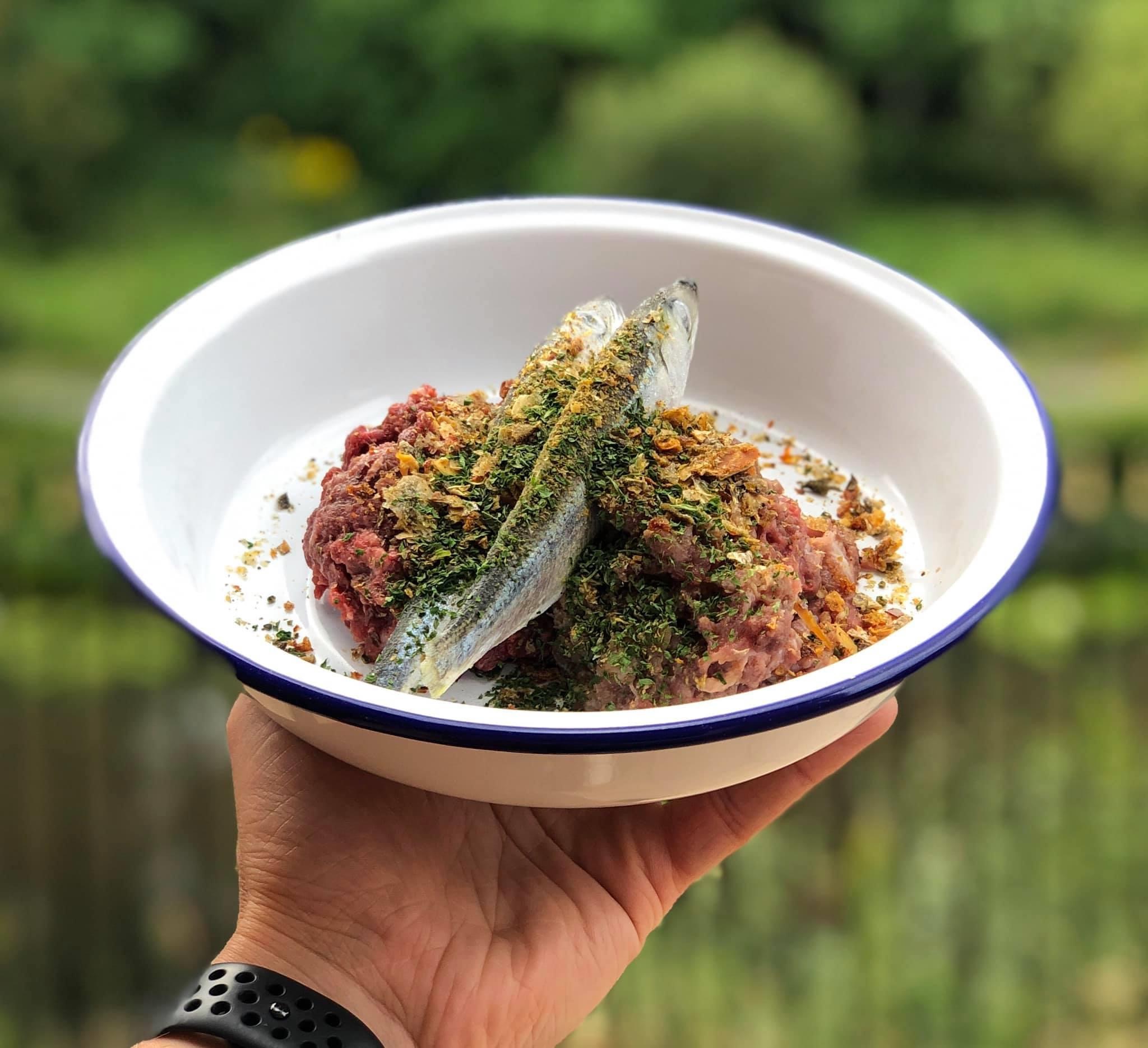
The first food in the bowl often becomes the default.
For many new owners, the first feeding decision is not an open comparison between brands. It is a continuation of what the puppy is already eating.
That makes breeder influence commercially powerful: it shapes the starting habit before the category looks active.
The hidden channel in dog food marketing
Pet food marketing usually talks about the obvious influence points.
Vets
Retailers
Advertising
Social media
Search
Reviews
All of those matter. Some matter a lot.
But they are not always first.
For many owners, especially those buying from professional breeders, the breeder is the first trusted voice in the dog food decision journey. This is not a formal media channel. There is no CPM, no click-through rate, no agency deck with a funnel diagram.
It is much more powerful than that.
It is a person with authority, handing advice to a new owner at the exact moment they are most receptive.
New dog owners are not casually browsing. They are emotionally loaded, risk-averse and eager to do things properly. They do not want to experiment. They want certainty.
The breeder does not simply recommend a food. They often establish the first version of normal.
And the breeder has three forms of authority that most brands would pay handsomely to borrow.
Proximity
They know the puppy.
Experience
They have likely raised litters before.
Emotional legitimacy
The owner already trusts them enough to take a dog from them.
That creates a very different type of influence from a standard advert.
An advert says: You should buy this.
A breeder says: This is what your puppy is already eating.
Those are not the same thing.
One is persuasion.
The other is continuity.
And continuity is much harder to argue with.
What the research suggests
In the survey analysis behind this series, anti-kibble owners were significantly more likely to have bought their dog from a professional breeder: 40.1% compared with 24.0% among the less-against group.
That does not prove that breeders cause raw feeding.
It would be too neat, and slightly too convenient, to say:
Breeder recommends raw
Owner becomes raw feeder
Case closed
Consumer behaviour is rarely that tidy. People are not vending machines where you insert advice and receive a behaviour.
But it does suggest that breeders sit inside an important pipeline.
The same analysis found that anti-kibble owners were much more likely to use frozen raw daily: 56.4% compared with 7.2% in the less-against group. They were also less likely to use kibble daily, with kibble used by 20.5% of anti-kibble owners compared with 47.4% of the less-against segment.
Anti-kibble owners who bought from a professional breeder
Less-against owners who bought from a professional breeder
Anti-kibble owners using frozen raw daily
Less-against owners using frozen raw daily
That makes the breeder connection commercially interesting.
Not because every breeder recommends raw.
They do not.
Not because every breeder is a nutrition expert.
They are not.
But because, in a category shaped by trust, habit and fear of getting it wrong, the breeder often reaches the owner before the rest of the market does.
And in marketing, being first is rarely irrelevant.
The dog food decision is partly inherited
We tend to imagine consumer choice as something active.
A person recognises a need.
They search for information.
They compare alternatives.
They make a decision.
They evaluate it afterwards.
That is the classic consumer decision process. It is useful, but dog food complicates it.
Because many dog owners do not begin with a blank sheet of paper.
They inherit a decision.
The breeder has already been feeding something. The puppy is already used to a food. The new owner is told not to disrupt its digestion. The first bag, pack or tub is often provided.
So the initial choice is not really: What food should I buy?
It is: Should I continue with what has already been started?
That is a very different psychological question.
The first version invites comparison.
The second invites caution.
And caution is a powerful force in pet food.
With your own lunch, you can try something new and deal with the consequences. If the sandwich is disappointing, life continues.
With a puppy, the stakes feel different. New owners are worried about diarrhoea, weight, growth, development, allergies, behaviour, and being judged by everybody who has ever owned a dog and now considers themselves an unpaid consultant.
So the safest choice is often to continue.
The breeder’s recommendation becomes the default.
And defaults are incredibly sticky.
Pet food advice no longer comes from one authority source.
Vets carry formal medical authority. Breeders carry contextual authority. Raw feeding communities, specialist retailers and online research add further layers.
That is why raw feeding brands need to build trust across an ecosystem, not rely on one influence point.

Why breeder advice feels different from vet advice
Veterinarians have formal authority. They are medically trained. They are regulated. They are trusted in matters of health, treatment, diagnosis and welfare.
But breeders have contextual authority.
Veterinary authority
Formal, medical and regulated. Vets are trusted for health, diagnosis, treatment and welfare.
Breeder authority
Contextual, specific and immediate. Breeders are trusted because they know the puppy, the litter and the early routine.
The vet may know more about veterinary medicine.
The breeder may appear to know more about the specific puppy in front of the owner.
This is not an argument that breeder advice is always better. It is not. It varies wildly. Some breeders are exceptionally informed and responsible. Some are less so. Some may be guided by habit, anecdote, commercial preference or whatever they have always done.
But marketing is not only about who has the strongest formal claim to expertise.
It is about who is believed, when they are believed, and why.
The breeder is believed at a particularly sensitive moment.
The owner has just made a major emotional and financial commitment. They want to preserve what the breeder has successfully started. They want to be a good owner. They want to avoid making the first week a disaster involving carpet cleaner, regret and a WhatsApp message that begins, “Sorry, quick question…”
That makes breeder advice unusually powerful.
Raw feeding and the importance of community transmission
Raw feeding has always had a strong community dimension.
It spreads through owners, breeders, trainers, working dog circles, breed clubs, Facebook groups, local recommendations and people who say things like “I did my own research”, which is either inspiring or alarming depending on what happened next.
This is one of the reasons raw feeding is not only a product category. It is also a belief system.
For committed raw feeders, the argument is rarely just: My dog likes this.
This is more natural.
This is less processed.
This is closer to what dogs should eat.
I do not trust what goes into conventional pet food.
My dog improved when I switched.
That kind of belief does not spread like a normal product benefit. It spreads through testimony.
And breeders can be powerful sources of testimony because they are seen as experienced dog people. They are part of the owner’s entry into dog ownership, especially for first-time owners or breed-specific buyers.
This is particularly important because raw feeding can feel intimidating at first.
Freezer space
Defrosting
Portioning
Handling
Transitioning
Bone content
Offal
Completeness
Then there is the vague fear that you are somehow going to do it wrong and either poison the dog or become the sort of person who owns seven freezers and refers to chicken carcasses as “beautiful”.
For many people, raw feeding needs a guide.
Breeders can become that guide.
Breeders as pre-purchase educators
Most pet food brands think about acquisition after the customer enters the market.
A person gets a dog, then the brand tries to win them.
But breeders operate before that.
They are upstream of the normal marketing funnel.
That makes them important not only as recommenders, but as pre-purchase educators.
Breeders can shape:
- what the owner thinks counts as quality;
- what ingredients the owner notices;
- whether raw feels normal or extreme;
- whether kibble feels sensible or over-processed;
- which brands feel trustworthy;
- which feeding routine feels manageable;
- and which claims sound credible.
A customer who first encounters raw feeding through a confusing online argument may see it as risky, strange or tribal.
A customer who first encounters raw feeding through a calm breeder handover may see it as normal.
Same category.
Different entry point.
Different psychology.
That is the raw feeding pipeline.
The breeder’s recommendation reduces perceived risk
Marketing people often talk about benefits.
Better ingredients
Better coat
Better digestion
Better stools
Better energy
Better everything, apparently, including the dog’s aura and possibly its GCSE results.
But in high-consideration categories, reducing risk can matter just as much as promising benefits.
Dog food is a risk category because owners fear making the wrong choice. They may not fully understand nutrition. They may be overwhelmed by claims. They may see conflicting advice from vets, brands, influencers and other owners.
The breeder recommendation cuts through that.
Not because it provides perfect evidence.
But because it gives the owner a practical starting point.
Feed this.
At this amount.
At these times.
Here is how to transition.
Here is what to expect.
That reduces decision stress.
And when a brand is attached to that recommendation, the brand inherits some of the breeder’s credibility.
This is why puppy packs, breeder programmes and early-life feeding guides are not just “nice support materials”.
They are strategic tools.
They sit at the point where trust, habit and routine are being formed.
Why this matters for challenger brands
For challenger pet food brands, the breeder channel is especially important.
Big pet food companies have scale advantages.
They have retail distribution.
They have vet relationships.
They have media budgets.
They have decades of brand recognition.
They have packaging that looks like it was assembled by a committee of nutritionists, lawyers and someone who owns a labrador called Max.
Challenger brands often cannot outspend them.
But they can out-context them.
Challenger brands can win where belief is formed more personally:
- breeders;
- trainers;
- nutritionists;
- specialist retailers;
- dog clubs;
- breed communities;
- search content;
- owner education.
Breeders are part of that alternative authority structure.
Raw feeding does not always win by looking more convenient than kibble. It usually does not. A bag of dry food is difficult to beat on convenience. You open it, scoop it, and feel briefly organised.
Raw wins by changing the customer’s frame.
The question becomes less: What is easiest?
And more: What do I believe is better for my dog?
Breeders can help create that frame before the owner settles into a conventional feeding habit.
The first habit is expensive to break
Once a dog is settled on a food, switching becomes difficult.
Not impossible.
But difficult.
The owner may worry about stomach upset. They may not want to waste food. They may be reassured by the fact that the dog seems fine. They may simply not want another decision.
This is why early feeding routines matter so much.
A brand that becomes the first normal food has an advantage. Not because consumers are passionately loyal from day one, but because switching away requires effort.
In marketing terms, the breeder does not just influence awareness.
They influence the starting habit.
And starting habits can become long-term behaviour.
Sometimes growth is not won through dazzling creativity. Sometimes it is won by becoming the food already in the bowl.
- The breeder recommended it.
- The puppy does well on it.
- I know how to feed it.
- I do not want to upset things.
This is the boring, unglamorous, commercially powerful reality of pet food.
But breeder influence needs to be handled carefully
There is an obvious risk here.
If brands recognise breeders as influential, the temptation is to treat them as a sales channel and nothing else.
That would be a mistake.
Breeders are not just distribution points. They are trusted intermediaries. If that trust is exploited, it collapses.
The right approach is not simply: Give breeders discounts and hope they recommend us.
It should be: Help breeders give better, clearer, safer and more transparent feeding guidance.
That means:
- clear feeding instructions;
- responsible transition advice;
- honest complete and complementary labelling;
- safe handling information;
- puppy-specific guidance;
- plain-English ingredient explanations;
- support for questions after the puppy leaves;
- and no overclaiming.
The goal should not be to turn breeders into unpaid sales reps.
It should be to equip credible breeders with resources that help owners make confident decisions.
The distinction matters.
One builds trust.
The other looks like a commission scheme wearing a fleece gilet.
What pet food marketers should learn from this
The breeder pipeline tells us something important about dog food marketing.
Influence does not begin at the point of purchase.
It begins at the point of entry into ownership.
For some people, that point is a rescue centre.
For others, it is a friend or family member.
For many, it is a breeder.
Each route creates a different kind of owner, with different information sources, expectations and levels of trust.
That means pet food brands should stop thinking only in terms of broad audience groups like “dog owners” or “premium shoppers”.
Those labels are too blunt.
A first-time puppy buyer from a professional breeder is not in the same psychological state as an experienced rescue owner, a working dog handler, a long-term raw feeder, or someone grabbing a supermarket bag because the dog food has run out and the dog is looking at them like a disappointed accountant.
The route into dog ownership shapes the route into dog food.
And if the research suggests anything, it is that the route through professional breeders is unusually relevant to raw feeding.
The role of vets does not disappear
None of this means vets do not matter.
They do.
For health, diagnosis, treatment and reassurance, vets remain highly important. Most owners will still turn to a vet when something is wrong.
But food advice is more contested.
Especially in raw feeding, many owners appear to separate veterinary authority from nutrition authority. They may trust vets for medical issues, but not necessarily for everyday feeding choices.
That does not mean they are right in every instance.
It does mean the market has changed.
Authority is no longer concentrated in one place.
Breeder for early feeding
Vet for medical issues
Google for comparison
Community for reassurance
Brand content for practical guidance
This is messy.
It is also normal consumer behaviour.
People do not move through categories like neat diagrams. They assemble confidence from multiple sources.
The brands that understand this will build ecosystems of trust.
The brands that do not will keep asking why their beautifully designed campaign did not change behaviour that had already been shaped three months earlier in a breeder’s kitchen.
The marketing lesson: win before the category looks active
The most valuable moment in marketing is not always when the customer is actively shopping.
Sometimes it is before they realise they are shopping at all.
In dog food, that moment can happen before the puppy comes home.
The breeder has already started the decision. The owner is already forming beliefs. The first routine is already taking shape.
By the time the customer searches, “best dog food for puppy”, they may not be asking an open question.
They may be looking for confirmation.
That is a very different marketing challenge.
For raw and natural brands, the opportunity is clear.
Do not only fight at the shelf.
- Do not only fight on social.
- Do not only fight in vet waiting rooms.
- Build trust upstream.
- Work with the people who shape the first routine.
- Support the owner before confusion sets in.
- Make the first version of raw feeding feel safe, understandable and normal.
Because in pet food, the first recommendation does not always win forever.
But it often gets a very useful head start.
And in a category where switching is difficult, trust is fragile and everyone has an opinion, a head start is worth having.
TL;DR
- Dog food marketing often focuses on vets, retailers, advertising and social media, but many owners receive their first real feeding advice from the breeder.
- The research behind this series found that anti-kibble owners were more likely to have bought from a professional breeder, and were far more likely to feed frozen raw daily.
- This does not prove breeders cause raw feeding, but it does suggest that breeders act as an important early influence in the raw feeding journey.
- Breeders matter because they reach owners at a highly emotional, risk-averse moment: when the dog is first coming home.
- Their advice becomes the default routine, and default routines are hard to break.
- For raw and natural brands, the breeder channel should be treated as an education and trust-building channel, not a quick sales tactic.
The big marketing lesson is simple: in dog food, influence often starts before the customer thinks they are choosing.