

Why Packaging Is One of Marketing’s Most Powerful Weapons
The bottle, the box and the silent salesman.
Walk through any supermarket and try something.
Forget the advertising. Ignore the promotions. Pretend you’ve never heard of any of the brands before.
Now ask yourself one simple question.
Which product would you pick up first?
The answer probably has very little to do with the product itself.
It has everything to do with the packaging.
Marketers often describe packaging as the “silent salesman”, but that almost undersells it. In many situations packaging is the brand. It’s the first conversation with a customer, the final nudge before purchase, and often the lasting memory long after the product has been used.
Some of the world’s most valuable brands haven’t simply created better products.
They’ve created better boxes.
The Marketing Made Clear Podcast
Check out the Marketing Made Clear Podcast on all good streaming platforms including Spotify:
Packaging became marketing long before marketing departments existed
For most of human history, products weren’t really packaged at all.
You bought flour from sacks.
Beer came in barrels.
Soap was cut from large blocks.
The shopkeeper did most of the selling.
Then came industrialisation.
Suddenly manufacturers weren’t selling to one local shopkeeper – they were selling to thousands of strangers. Those strangers had never met the company, had no relationship with the people making the product and often couldn’t judge quality before buying.
Packaging stepped in to bridge the gap.
It became proof of quality.
Proof of consistency.
Proof that someone cared.
The humble box had suddenly become a marketing channel.
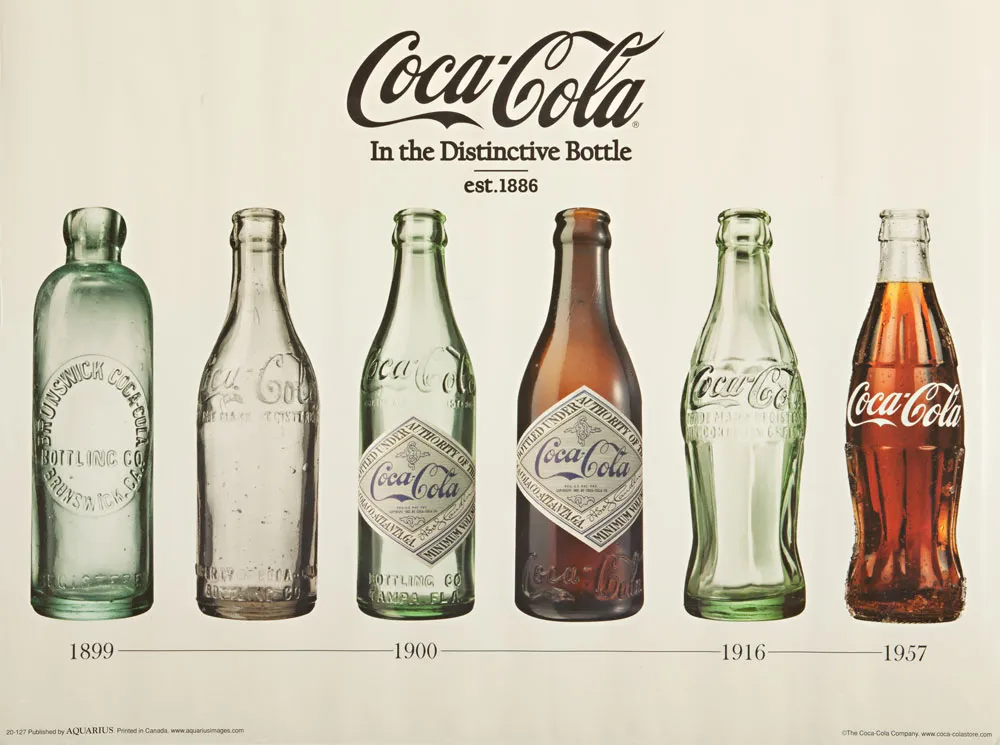
Coca-Cola didn’t just invent a bottle. It invented recognition.
Perhaps the greatest example in marketing history is the iconic contour bottle from The Coca-Cola Company.
By the early 1900s, Coca-Cola had a problem.
The drink was hugely popular, but so were the imitators.
There were dozens of copycat brands using similar names, similar labels and similar colours. Some were called Koca-Nola. Others used almost identical scripts in the hope customers wouldn’t notice.
So Coca-Cola asked for something unusual.
Design a bottle that could be recognised in the dark.
Or even if it smashed into pieces.
That request led to the famous contour bottle introduced in 1915.
Its curves were unlike anything else on the market.
Even without a logo.
Even without a label.
Even without colour.
People knew exactly what it was.
That is extraordinary marketing.
Because recognition is one of the biggest drivers of brand choice.
Every pound spent on advertising became more effective because the packaging reinforced it. Every supermarket shelf became another billboard.
Today, that bottle is one of the most recognised pieces of industrial design in history.
The packaging became intellectual property.
Chanel sells luxury before you even see the perfume
If Coca-Cola shows packaging through recognition, Chanel demonstrates packaging through emotion.
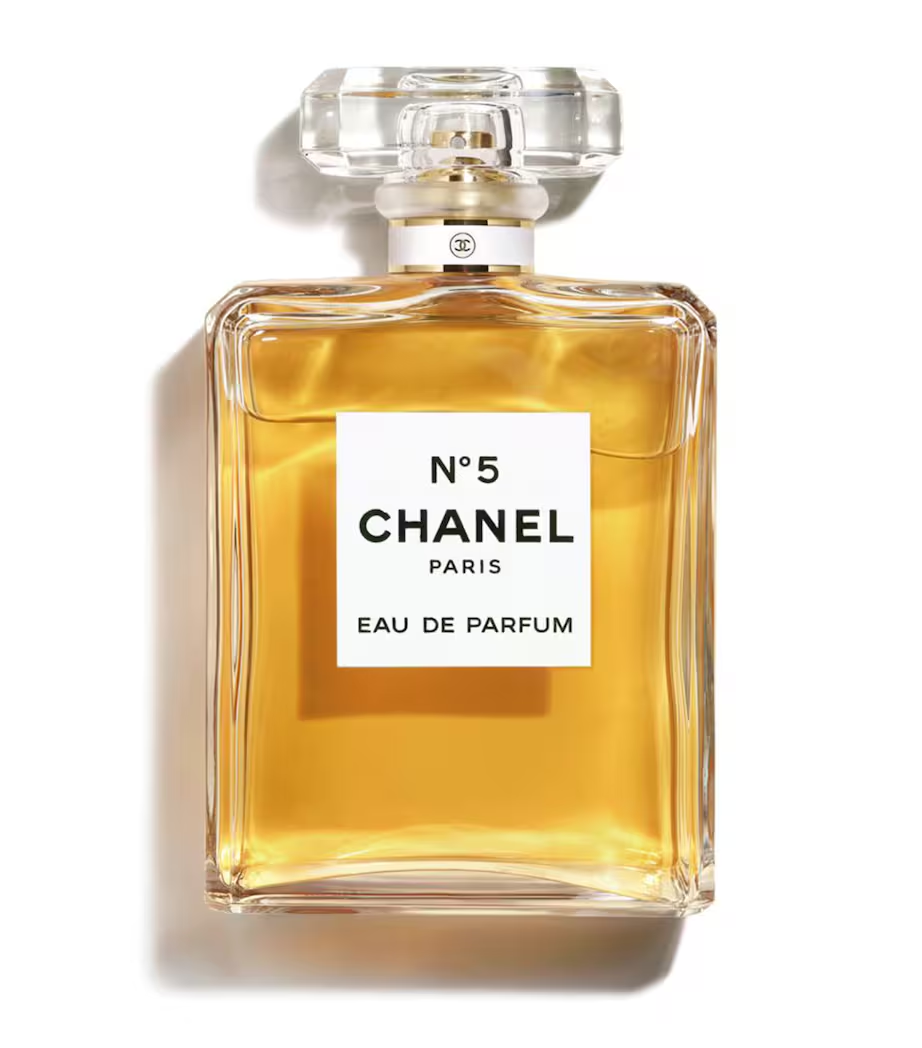
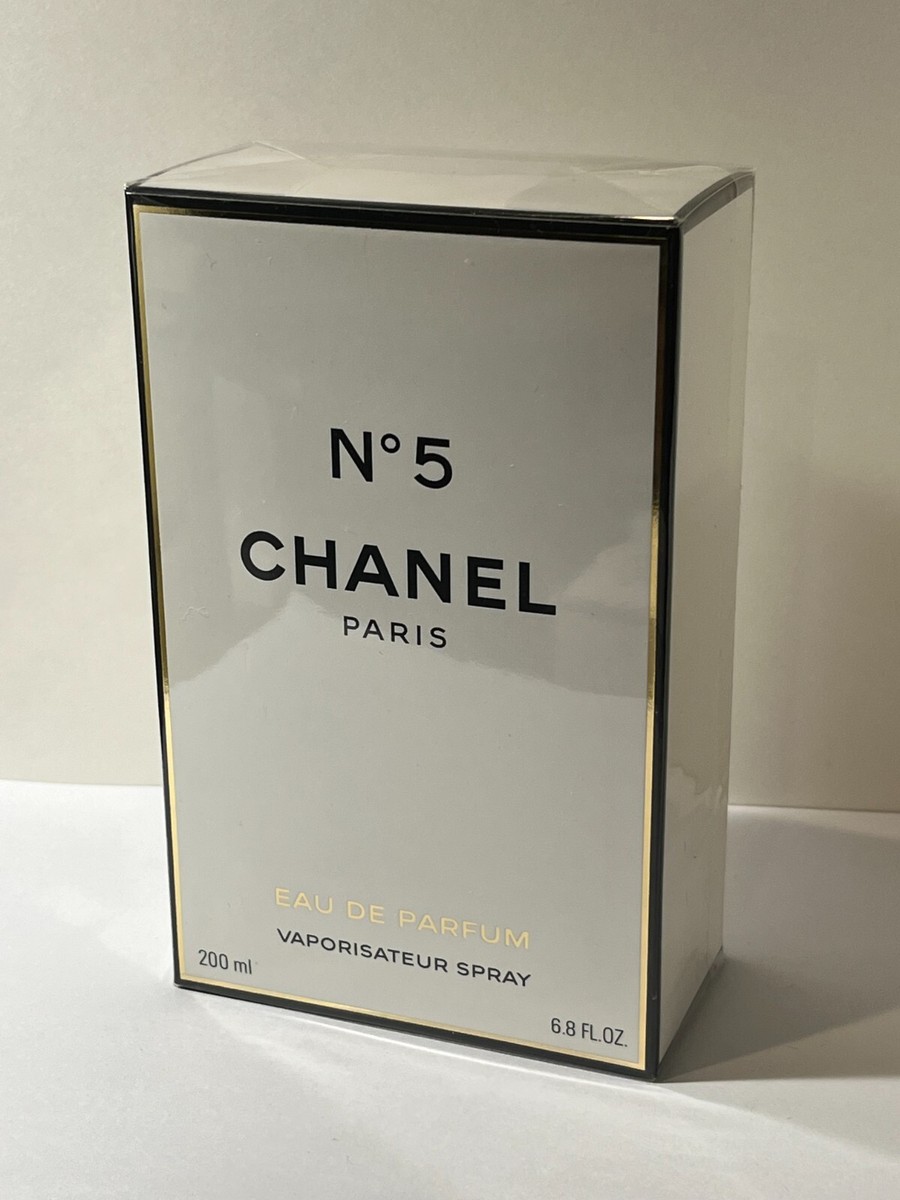
Think about buying a bottle of Chanel No. 5.
You’re not just buying perfume.
You’re buying an experience.
The weight of the bottle.
The clean geometric lines.
The crisp black-and-white colour palette.
The perfectly folded tissue paper.
Even the shopping bag communicates luxury.
None of these elements make the perfume smell any different.
But they dramatically change how customers perceive its value.
Marketing researchers have repeatedly found that expectations influence experience. If people believe something is premium, they often perceive it to perform better—even when the product itself hasn’t changed.
Packaging doesn’t simply protect the product.
It shapes reality.
The Apple unboxing phenomenon
When Apple launches a new product, millions of people voluntarily watch someone else open a cardboard box.
Think about how ridiculous that sounds.
Yet “unboxing videos” have become an entire category of content.
That isn’t accidental.
Apple engineers the experience.
Boxes open slowly because air pressure creates resistance.
Accessories are arranged with precision.
Materials feel substantial.
Everything is choreographed to create anticipation before the device has even been switched on.
The packaging has become part of the product.
That’s remarkable because customers are emotionally engaging with something they’ll throw away within minutes.

Packaging changes behaviour
Packaging doesn’t just influence what we buy.
It influences how we use products:
- Tall glasses encourage people to pour more than short glasses.
- Larger bowls increase food consumption.
- Small snack packs reduce portion sizes.
- A pump dispenser changes how much soap people use.
- A resealable pouch increases repeat usage.
These aren’t accidents.
They’re examples of behavioural design.
Good marketers understand that packaging continues influencing customers long after the sale has been made.
Sometimes the package is worth more than the product
Luxury fashion has understood this for decades.
Many customers keep shopping bags from Chanel, Hermès or Tiffany & Co..
Some even buy empty branded boxes online.
Think about that for a second.
People are paying for packaging that no longer contains the product.
Why?
Because packaging carries meaning.
It signals status.
It tells stories.
It becomes part of someone’s identity.
That little blue Tiffany box is arguably as famous as the jewellery inside it.
Sustainable packaging has become part of the brand story
Today’s consumers increasingly judge businesses by their environmental choices.
Packaging is often the most visible evidence of whether a company genuinely cares about sustainability or is simply talking about it.
Brands that reduce plastic, improve recyclability or eliminate unnecessary materials aren’t just cutting waste.
They’re communicating values.
Of course, there’s a fine line.
Consumers are becoming increasingly sceptical of companies making vague environmental claims without meaningful action.
Green packaging only works as marketing if it reflects genuine business decisions.
Otherwise it quickly becomes greenwashing.
What marketers should learn
Packaging is often treated as something that happens after the branding has been completed.
In reality, it should be part of the branding process from the very beginning.
Ask yourself:
- Would someone recognise your product without the logo?
- Does your packaging communicate your positioning within three seconds?
- Does opening it create an experience worth remembering?
- Does it reinforce every message your advertising is making?
Because every customer who picks up your product is having a conversation with your packaging.
Whether you’ve designed that conversation intentionally is another matter.
The final thought
There’s an old saying in retail that products are bought with the eyes before they’re bought with the wallet.
That’s probably truer today than ever before.
In an age where consumers scroll thousands of products online and walk past hundreds more in shops, packaging isn’t decoration.
It’s strategy.
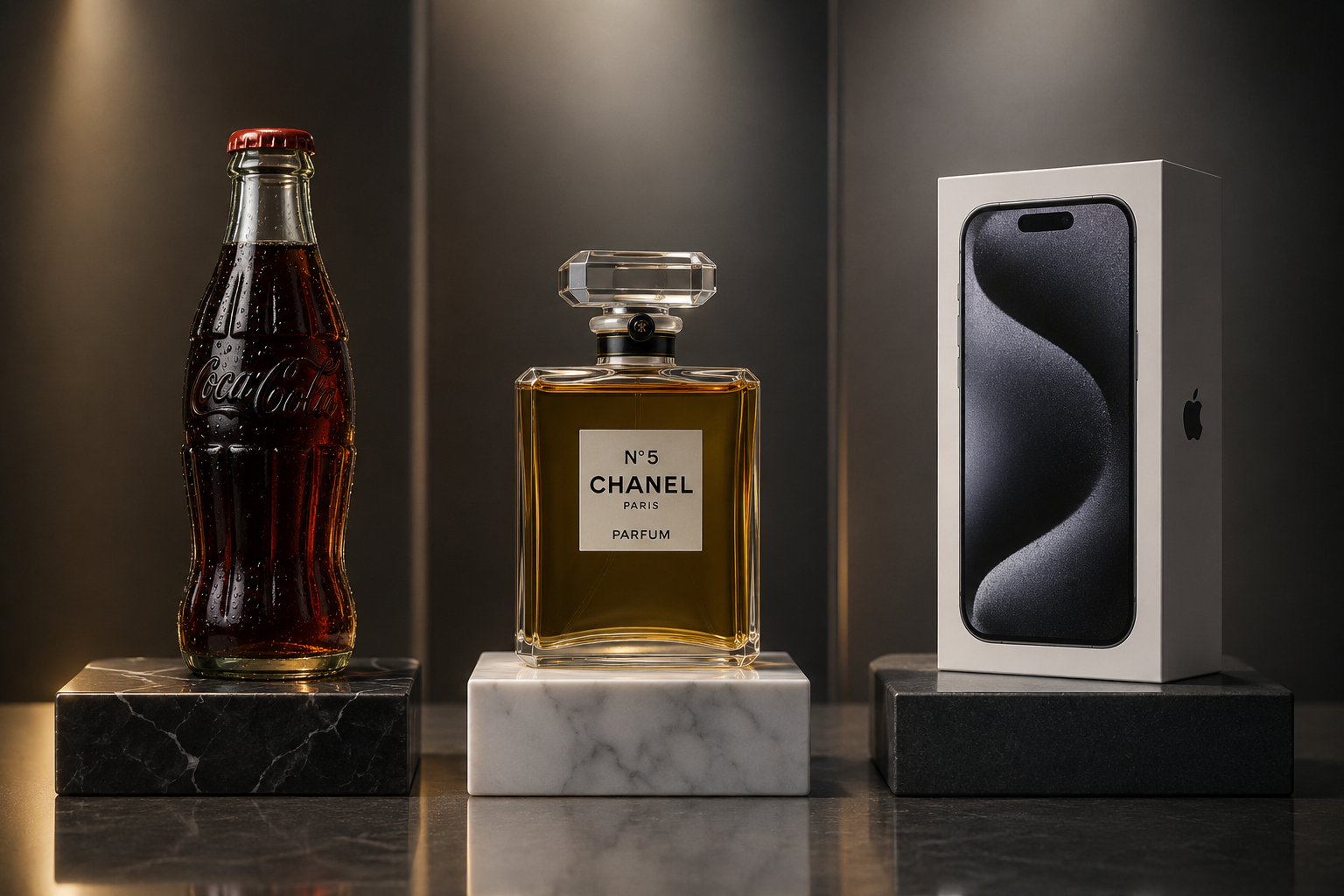
Coca-Cola proved a bottle could become an icon.
Chanel proved a box could become luxury.
Apple proved opening the packaging could become entertainment.
The lesson for marketers is simple.
Never think of packaging as the thing that protects the product.
Think of it as the first advert your customer ever holds in their hands.