

The First Viral Campaign?
How the French Revolution Was Won with Rumours, Pamphlets and Propaganda
When people picture the French Revolution they imagine angry crowds, guillotines and Marie Antoinette supposedly suggesting people eat cake.
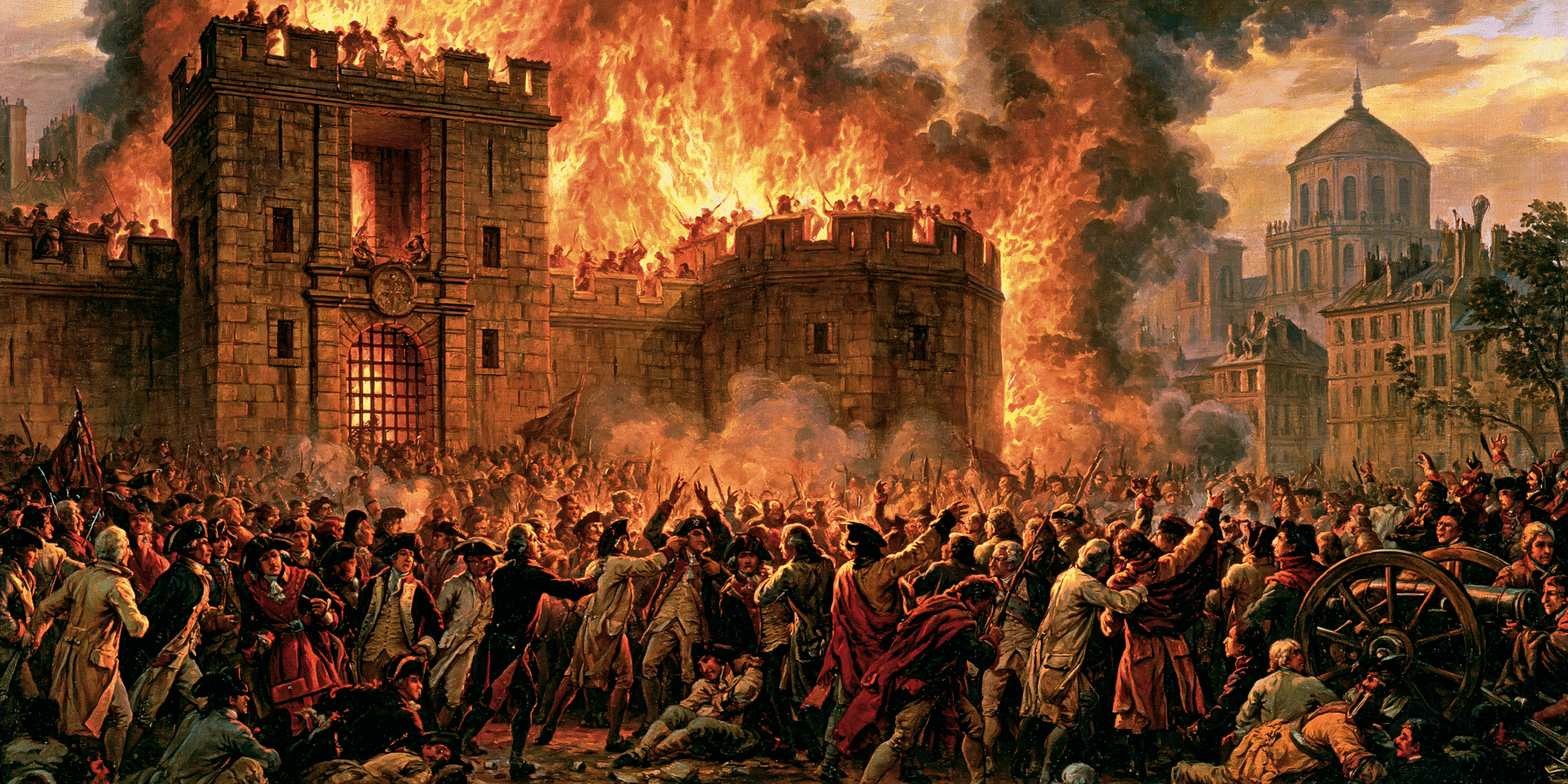
The Bastille has become the defining image of revolution. Every 14 July France celebrates the moment ordinary citizens marched on a medieval fortress that symbolised royal oppression.
It is one of history’s great turning points.
But revolutions are rarely won by the people carrying the muskets.
They’re usually won long before that by the people controlling the story.
Long before the first stone of the Bastille fell, France had become a battleground of misinformation, political theatre and propaganda. False stories spread faster than facts. Pamphlets flooded Paris. Anonymous writers destroyed reputations. Pornography became political weaponry.
If that sounds strangely familiar, perhaps it should.
The technology has changed.
Human nature hasn’t.
The Marketing Made Clear Podcast
Check out the Marketing Made Clear Podcast on all good streaming platforms including Spotify:
A kingdom built on whispers
By the late eighteenth century France was already in trouble.
Years of war had emptied the treasury. Harvest failures had driven bread prices to painful levels. The tax system overwhelmingly favoured the wealthy while ordinary people struggled to survive.
None of this automatically produces revolution.
History is full of countries suffering hardship without overthrowing their governments.
What changed in France was the narrative.
Printing had become dramatically cheaper.
Literacy was increasing.
Pamphlets could be produced quickly, anonymously and in astonishing quantities.
For the first time, ordinary people didn’t simply receive official information from the monarchy or the Church.
Anyone with access to a printing press could become a publisher.
Sound familiar?
France’s version of social media
Paris became flooded with what were known as libelles.
These weren’t newspapers.
They were sensational pamphlets.
Anonymous.
Scandalous.
Often completely unverified.
Many attacked the royal family personally rather than politically.
King Louis XVI was portrayed as weak, indecisive and incompetent.
His Austrian-born queen, Marie Antoinette, received even harsher treatment.
Pamphlets accused her of countless affairs.
They accused her of wasting vast fortunes.
Some claimed she was secretly working for Austria against France.
Others became so graphic they descended into outright pornography.
Very little needed to be true.
It simply needed to be repeated.
Modern marketers call this repetition and availability bias.
Eventually people stop asking whether something is accurate.
They simply remember hearing it.
The original fake quote
Perhaps no piece of misinformation has survived longer than:
“Let them eat cake.”
It remains one of the most famous quotations in history.
There is just one problem.
Marie Antoinette almost certainly never said it.
The phrase appeared years before she even became queen and was attributed by Jean-Jacques Rousseau to an unnamed princess.
Yet the quote perfectly reinforced an existing story.
That the queen was extravagantly out of touch.
That she didn’t understand ordinary people.
That she simply didn’t care.
Whether it happened became almost irrelevant.
It fitted the narrative.
And narratives are remarkably difficult to dislodge.
The Great Fear
Perhaps the most remarkable example came only weeks after the Bastille.
During the summer of 1789 rumours exploded across rural France.
Travellers claimed gangs of brigands were marching through villages.
Others insisted aristocrats had hired mercenaries to destroy crops and starve the population.
No one seemed entirely sure where these stories originated.
Yet thousands believed them.
Entire villages armed themselves.
Local militias formed almost overnight.
Many peasants attacked manor houses before any supposed invaders even arrived.
Historians now call this period The Great Fear.
It demonstrates one of propaganda’s greatest strengths.
People don’t need evidence when they’re already frightened.
Fear does most of the work itself.
Why propaganda works
Modern psychology explains much of what happened.
Humans rarely evaluate information objectively.
Instead we ask ourselves much simpler questions.
- Does this fit what I already believe?
- Does everyone else seem to believe it?
- Does it make emotional sense?
If the answer is yes, we become surprisingly willing to accept weak evidence.
The revolutionaries instinctively understood this.
They didn’t need every accusation to be true.
They simply needed enough stories pointing in the same direction.
Eventually public opinion reached a tipping point.
The Bastille itself
Ironically, the Bastille wasn’t especially important militarily.
Only seven prisoners were inside when it fell.
Seven.
Its real value was symbolic.
For generations it had represented royal authority.
When crowds captured it, the image travelled faster than the facts.
It became proof that ordinary people could defeat absolute power.
That image mattered more than the prison itself.
Once again, perception became reality.
Marketers should recognise this immediately.
Brands often spend fortunes trying to create symbolic moments because symbols spread much faster than statistics.
What marketers should learn
Most marketers think propaganda belongs in history books.
It doesn’t.
The underlying mechanics appear everywhere.
Brands compete to define the story before competitors do.
Political campaigns frame events before facts fully emerge.
Influencers build narratives around products people haven’t yet tried.
Social media rewards emotionally engaging content long before it rewards accuracy.
The French Revolution reminds us that information is rarely neutral.
Someone is almost always shaping it.
The real question is whether we notice.
A final thought
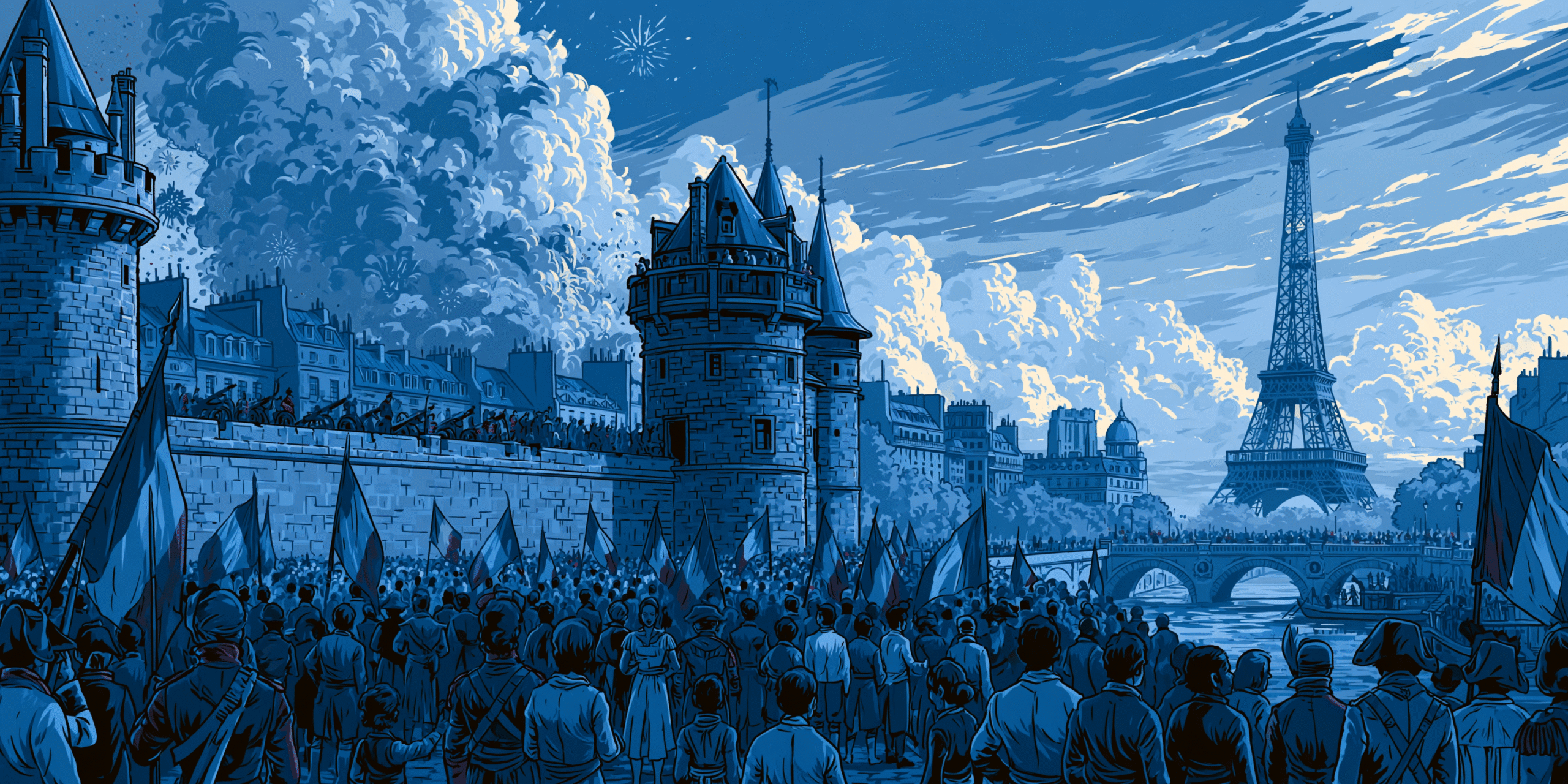
Bastille Day celebrates the birth of modern France.
It deserves to.
But perhaps its greatest lesson isn’t about prisons or kings.
It’s about communication.
The revolution wasn’t won solely because people were hungry.
It succeeded because millions of people came to believe the same story about why they were hungry, who was responsible and what had to happen next.
Whether every detail of that story was true mattered far less than whether enough people believed it.
Two hundred and thirty-seven years later, we still live in exactly the same information battlefield.
The printing presses have become smartphones.
The pamphlets have become social media feeds.
The rumours travel faster.
But the marketing hasn’t changed nearly as much as we’d like to think.