
Decision Paralysis: Why Too Much Choice Is Costing Brands Conversions
Or: how giving people “options” can quietly kill sales
Decision paralysis is one of those concepts that sounds like a modern affliction but has been quietly ruining conversion rates for decades. In simple terms, it happens when people are presented with so many options that they struggle to choose at all – or they choose badly, regret it, and never come back.
For marketers, this is not just a psychological curiosity. It is a commercial problem hiding in plain sight. From bloated product ranges and over-engineered landing pages to subscription plans that look like a mobile phone tariff from 2006, decision paralysis can quietly undermine even the strongest brands.
The Marketing Made Clear Podcast
Check out the Marketing Made Clear Podcast on all good streaming platforms including Spotify:
The Psychology Behind Decision Paralysis
Decision paralysis sits at the intersection of cognitive overload, fear of regret, and limited mental resources. Several well-established psychological frameworks help explain why it happens.
Hick’s Law – Time Increases with Choice
One of the most cited principles in UX and behavioural psychology, Hick’s Law states that the time it takes to make a decision increases logarithmically with the number of choices available.
In marketing terms:
-
More options = slower decisions
-
Slower decisions = higher abandonment rates
This is why streamlined navigation, limited calls-to-action, and simplified pricing pages consistently outperform their “let’s show everything” counterparts.
The human brain likes efficiency. When we overload it, it pushes back.
The Paradox of Choice (Barry Schwartz)
Barry Schwartz’s Paradox of Choice argues that while choice is essential for autonomy and satisfaction, too much choice creates anxiety, dissatisfaction, and regret.
Consumers faced with endless options tend to:
-
Delay making a decision
-
Feel less satisfied after choosing
-
Blame themselves if the choice turns out poorly
For marketers, this means that adding more variants, bundles, and configurations can actively reduce perceived value rather than enhance it.
More is not always better. Sometimes it is just louder.

Cognitive Load Theory
Cognitive Load Theory explains that working memory has a finite capacity. When people are asked to evaluate too many attributes, features, or comparisons at once, their ability to process information collapses.
This is particularly relevant in:
-
SaaS onboarding
-
Comparison tables
-
Feature-heavy landing pages
-
B2B procurement decisions
When cognitive load exceeds capacity, people do not rationally “compare harder”. They disengage.
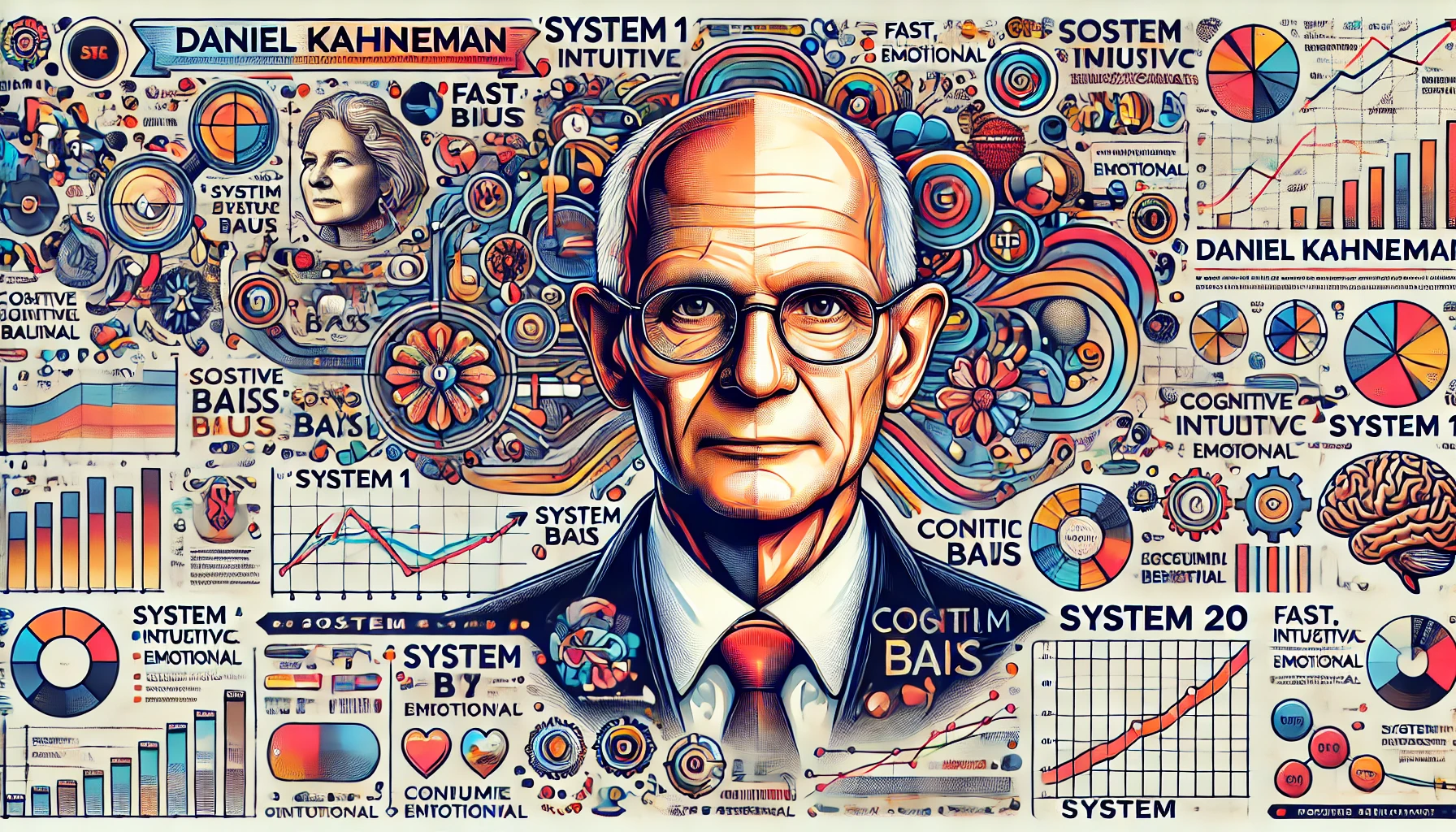
Kahneman’s System 1 and System 2
Daniel Kahneman’s distinction between System 1 (fast, intuitive thinking) and System 2 (slow, effortful thinking) is especially useful here.
Decision paralysis often occurs when:
-
System 1 wants a quick answer
-
System 2 is forced to analyse too many variables
Marketers frequently force System 2 engagement unnecessarily – long before a consumer is emotionally ready to commit.
If everything requires deep thought, nothing gets chosen.
How Decision Paralysis Shows Up in Marketing
Decision paralysis rarely announces itself. It appears quietly, disguised as “consideration”.
Common symptoms include:
-
High traffic, low conversion
-
High add-to-basket, low checkout completion
-
Long dwell time with no action
-
Repeated visits without purchase
Marketers often respond by adding more information, more reassurance, more FAQs. Ironically, this often makes the problem worse.
What Brands Have Done to Combat Decision Paralysis
Some of the most effective brands in the world have not succeeded by offering more choice – but by curating it aggressively.
Netflix – Reducing Choice Through Algorithms
Netflix famously offers thousands of titles, but users rarely see more than a fraction of them.
Instead of presenting the full catalogue, Netflix:
-
Curates rows based on behaviour
-
Limits visible options at any given moment
-
Uses social proof (“Trending”, “Top 10”)
The illusion of choice remains, but the cognitive burden is dramatically reduced.
The decision becomes “which of these few?”, not “what on earth should I watch?”
IKEA – Choice Within Constraints
IKEA offers vast product ranges, yet decision-making is tightly structured.
It does this by:
-
Designing showrooms that guide flow
-
Grouping products into realistic use cases
-
Offering “good, better, best” tiers within categories
Customers are not asked to design from scratch. They are invited to choose within a framework.
This is decision architecture at scale.
Spotify – Defaulting the Decision
Spotify combats paralysis by making decisions for the user.
-
Auto-play
-
Curated playlists
-
Personalised “Daily Mixes”
The default experience removes the burden of choice entirely. You can still browse, but you do not have to.
In behavioural terms, Spotify leans heavily on default bias – the human tendency to stick with pre-selected options.

Basecamp – Radical Simplicity in Pricing
Basecamp has repeatedly resisted the SaaS industry’s obsession with tiered pricing.
At various points, it has offered:
-
One plan
-
One price
-
One clear value proposition
This removes comparison entirely. There is nothing to optimise. You either want it or you do not.
For certain audiences, this is enormously freeing.
Aldi – Fewer Products, Faster Decisions
Aldi’s limited assortment strategy is a masterclass in reducing decision fatigue.
Compared to traditional supermarkets:
-
Fewer SKUs
-
Fewer brands per category
-
Clear private-label positioning
Shoppers move faster, feel more confident, and experience less post-purchase regret.
Efficiency becomes part of the brand promise.

Design Tactics Marketers Use to Reduce Decision Paralysis
Beyond brand-level strategy, there are practical techniques marketers use every day.
-
Anchoring: Presenting a “premium” option to make others feel easier to choose
-
Progressive disclosure: Revealing complexity only when needed
-
Recommended options: Explicitly signalling the “most popular” or “best value”
-
Defaults: Pre-selecting sensible choices
-
Bundling: Reducing micro-decisions into single actions
None of these remove choice entirely. They shape it.
The Ethical Line
There is a fine line between helping people decide and manipulating them into decisions they may regret.
George Orwell warned against language and systems that obscure truth rather than clarify it. Decision architecture should reduce confusion, not disguise it.
Good marketing makes decisions clearer, not murkier.
Why This Matters More Than Ever
In an age of:
-
Infinite content
-
Infinite products
-
Infinite opinions
Decision paralysis is becoming the default state.
The brands that win will not be the ones shouting loudest, but the ones that make choosing feel safe, simple, and human.
Or, to put it more bluntly: if everything is an option, nothing gets chosen.
TL;DR
-
Decision paralysis occurs when too much choice overwhelms cognitive capacity
-
Key frameworks include Hick’s Law, the Paradox of Choice, Cognitive Load Theory, and Kahneman’s System 1 and 2
-
Too many options increase anxiety, regret, and abandonment
-
Brands like Netflix, IKEA, Spotify, Aldi, and Basecamp succeed by curating, defaulting, or simplifying choices
-
The best marketing does not remove choice – it structures it
-
Clarity beats abundance, especially when attention is scarce