

What Modern Marketers Can Learn from the Rules of Heraldry
Heraldry as the First Brand Identity System
Long before Instagram algorithms, Super Bowl ads, and colour-matched Pantone guides, there was heraldry. Beginning in the 12th century, heraldry served a practical purpose: to help warriors recognise each other on the battlefield when everyone was covered in chainmail and steel. Shields and banners became canvases for identity, a way of saying: this is who I am, this is my allegiance, this is my story.
What developed from these practical beginnings became one of the most sophisticated identity systems in history. British heraldry, in particular, evolved a strict set of rules that balanced creativity with legibility. If you think modern brand guidelines are strict about what shade of blue you can use in your PowerPoint decks, spare a thought for the medieval knight who could be hauled before the College of Arms for putting the wrong beast on his shield.
Heraldry was not just decoration. It was the medieval equivalent of a brand: a consistent, recognisable, legally protected identity that communicated values, lineage, and legitimacy. And the rules that governed heraldry still hold lessons for marketers today.
Let’s walk through the main rules of heraldry, why they mattered historically, and what modern marketers can take from them.
The Marketing Made Clear Podcast
Check out the Marketing Made Clear Podcast on all good streaming platforms including Spotify:
The Rule of Tincture: Contrast is King
One of the most famous heraldic rules is the Rule of Tincture. Heralds divided colours into two categories:
-
Metals – light colours: Or (gold/yellow), Argent (silver/white)
-
Colours – dark hues: Gules (red), Azure (blue), Vert (green), Purpure (purple), Sable (black)
The rule was simple: don’t put colour on colour or metal on metal. A red lion on a blue field was banned. Instead, heralds alternated metal and colour to ensure maximum contrast.
Why? Because a shield had to be legible at a distance, through dust and chaos. A knight couldn’t risk being mistaken for the enemy.
Marketing lesson: High-contrast colours cut through noise. That’s why brands like Coca-Cola (red and white) or IKEA (blue and yellow) stand out. Poor contrast (e.g. navy logo on black background) is the heraldic equivalent of disappearing in battle. Modern brand guidelines enforcing colour ratios are just updated tincture rules.
Ordinaries and Subordinaries: Structure Before Detail
Heraldry was built on ordinaries – geometric shapes like the cross, chevron, bend (diagonal), fess (horizontal band), pale (vertical band), saltire (X-shape), and chief (a bar across the top). Subordinaries included shapes like the bordure (border) or lozenge (diamond).
These weren’t just decoration. They provided a framework. The ordinary gave the shield structure before any animals or objects were added.
Marketing lesson: A strong brand needs a simple structure before you add flair. Think of the ordinary as your core logo shape; the Nike swoosh curve, the Apple bite. Keep the skeleton strong, then build around it. Too many details without structure creates clutter, just as a shield overloaded with charges (symbols) would lose impact.
Charges: The Power of Iconography
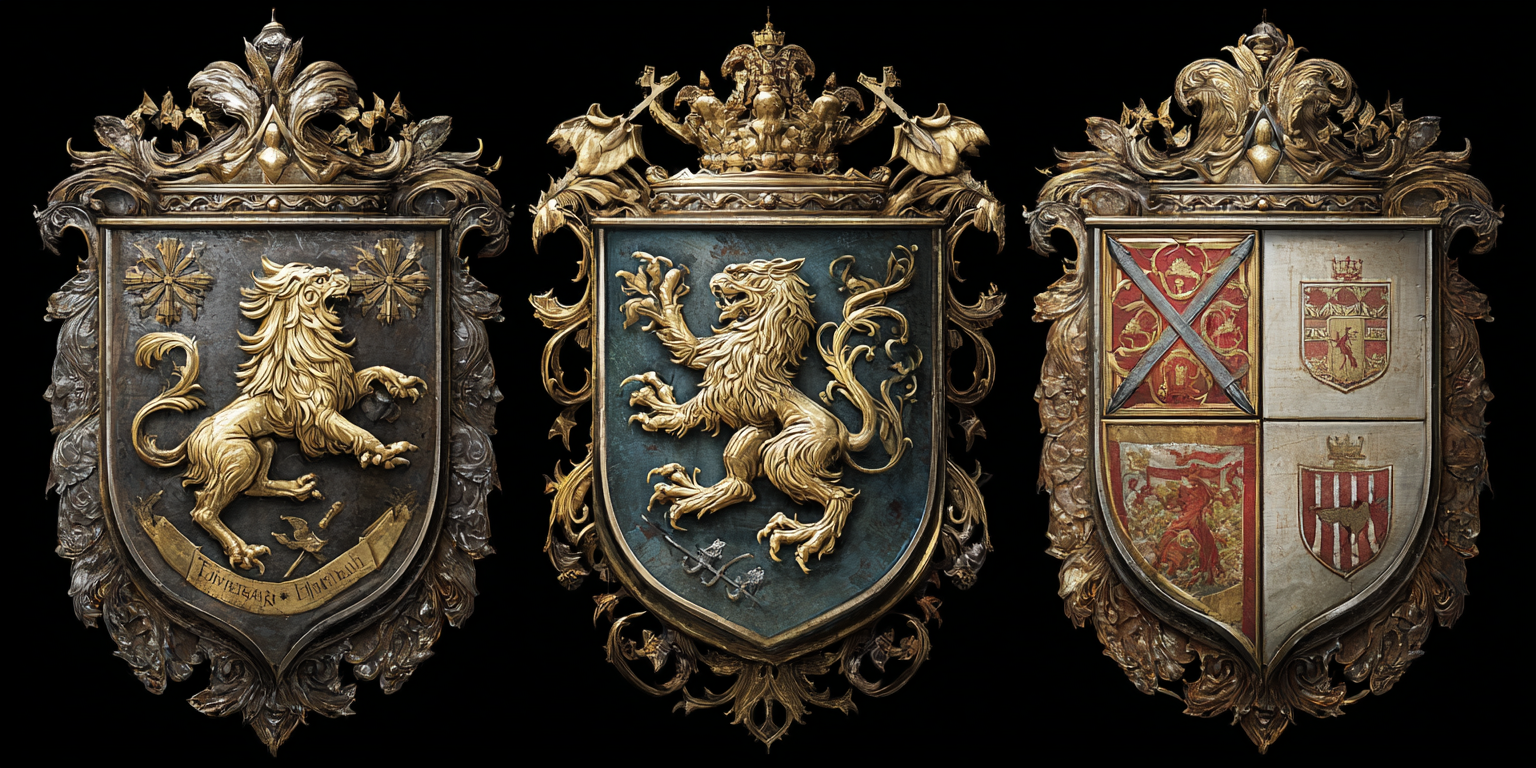
A charge was any symbol placed on the shield: lions, eagles, fleurs-de-lis, roses, swords, stars, crescents, anchors, and more. Charges carried symbolic meaning:
-
Lions = courage and nobility
-
Eagles = power and vision
-
Stags = wisdom and regeneration
-
Anchors = hope and steadfastness
These became archetypes, a shared symbolic language across Europe.
Marketing lesson: Brands thrive on bold, simple iconography. The Starbucks siren, the Lacoste crocodile, the Apple logo; all echo heraldic charges. Pick one symbol and let it carry meaning. Don’t clutter your logo with multiple icons. A single charge speaks louder.
Attitudes of Beasts: Body Language Matters
In heraldry, not only what animal you used mattered, but how it was posed — its attitude. For example:
-
Rampant: standing on one hind leg, claws raised (aggressive, powerful)
-
Passant: walking with one paw raised (calm authority)
-
Sejant: sitting (poise, watchfulness)
-
Couchant: lying down (rest, loyalty)
This meant a lion wasn’t just a lion. Its stance conveyed character.
Marketing lesson: Body language in design matters. The difference between a swoosh angled upward (progress, optimism) and downward (decline) is significant. Think about your brand mascot or logo posture. Is your eagle soaring upwards, or slumped sideways? Heraldry teaches us that pose communicates as much as presence.
The Crest: A Crown for Your Identity
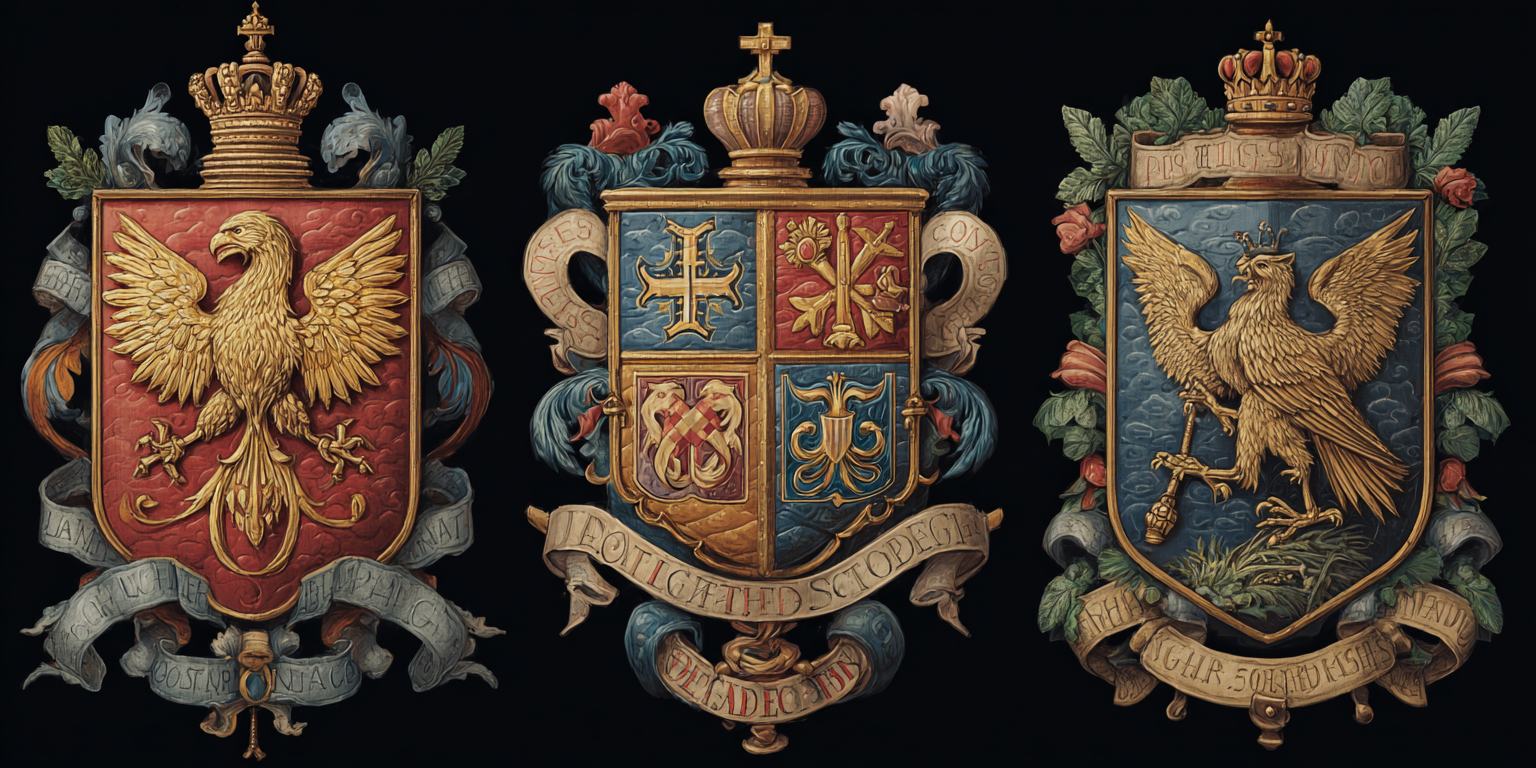
Above the shield sat the crest – originally a physical sculpture mounted on a knight’s helmet. Crests often echoed the main charge (for example, a lion’s head if the shield bore a lion). Over time, the crest became a standard part of a coat of arms.
Marketing lesson: A crest is like the secondary mark of your brand – a shorthand symbol or emblem. Think of McDonald’s using both the full “McDonald’s” name and the golden arches. Or the Premier League’s simplification of its heraldic lion to just a lion’s head. Secondary marks reinforce identity and provide flexibility across media.
The Motto: The Original Tagline
Most coats of arms carry a motto on a scroll beneath the shield. Unlike the shield, mottos weren’t formally regulated – families could adopt or change them. They distilled values into a short phrase, often in Latin.
Examples include:
-
“Dieu et mon droit” (God and my right) – motto of the British monarch
-
“Semper fidelis” (Always faithful)
-
“Hinc lucem et pocula sacra” (From here, light and sacred draughts) – Cambridge University
Marketing lesson: A motto is your brand’s tagline. Keep it short, memorable, and reflective of values. “Just Do It.” “Think Different.” “Because You’re Worth It.” Heraldry shows that mottos work best when they sit consistently alongside the main identity, reinforcing meaning without overexplaining.
Supporters: Endorsements that Elevate
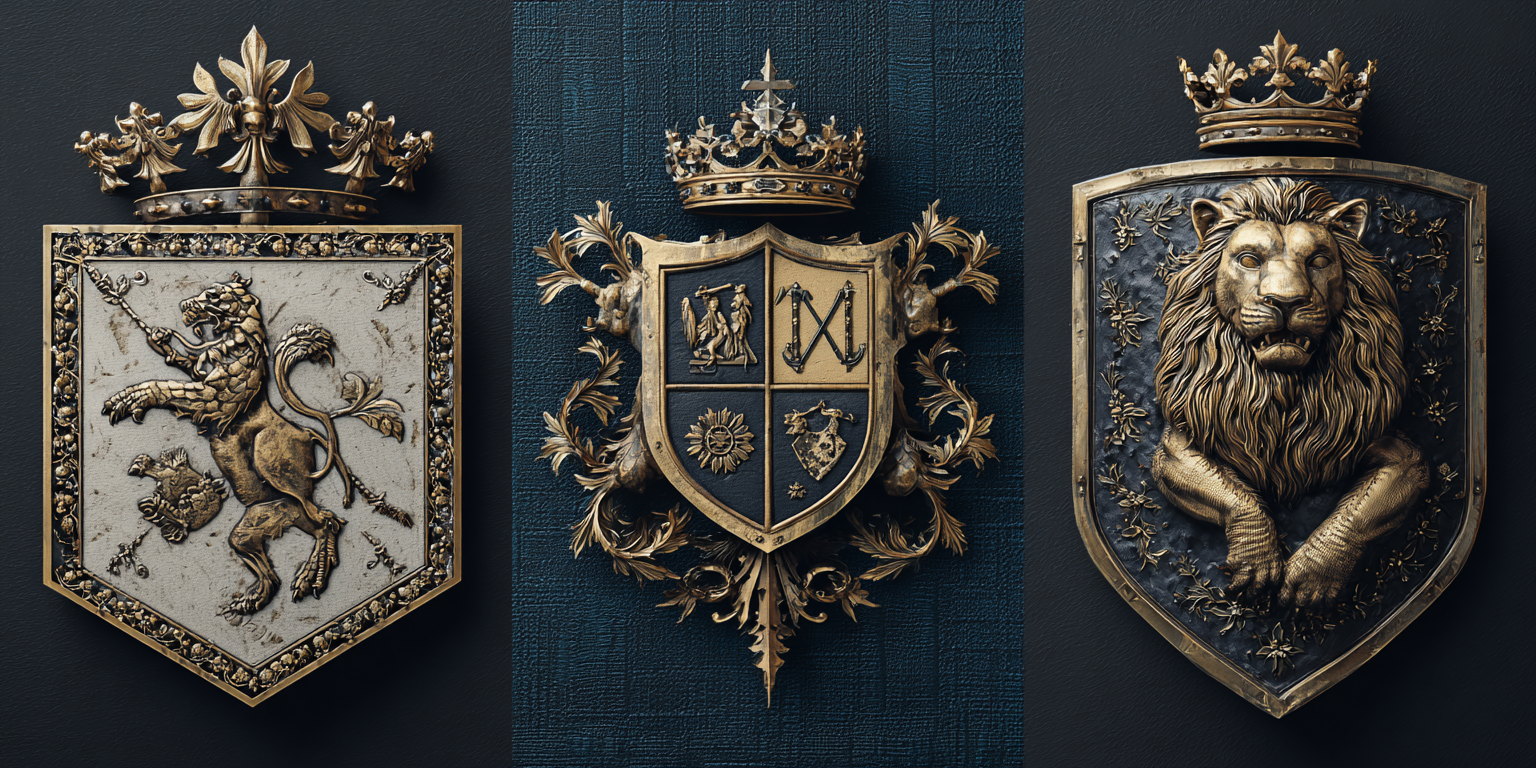
Some coats of arms include supporters – figures standing on either side of the shield, such as England’s crowned lion and unicorn. Not everyone could have them; supporters were privileges granted to peers and major institutions.
Marketing lesson: Supporters are your brand endorsements – celebrity ambassadors, co-branding partners, institutional seals. You can’t just invent them; they’re earned through association. A Royal Warrant (letting brands display the royal arms and “By appointment to…”) is literally heraldic supporters in modern form, signalling prestige.
Mantling: Decoration with Purpose
Behind the shield and crest you often see mantling – flowing drapery, said to represent the cloth knights wore over helmets. It added flourish but also framed the arms.
Marketing lesson: Mantling is your visual flourish – typography, colour gradients, packaging design. It shouldn’t distract from the core logo but can add richness. Think of Coca-Cola’s signature swirl around its wordmark or the framing devices used in luxury packaging.
Marshalling and Quartering: Mergers and Acquisitions
Heraldry had rules for combining arms when families married or titles merged. Marshalling and quartering arranged multiple shields into one. Famous example: the Royal Arms of the UK, which quarters England, Scotland, and Ireland.
Marketing lesson: Brand mergers need careful visual integration. Just as heralds combined arms without losing clarity, marketers must blend identities after acquisitions. Think of Unilever’s U logo composed of smaller icons, or Disney incorporating Pixar without losing its own brand strength.

Cadency: Differentiating Within a Family
To avoid confusion between sons of a noble family, heraldry introduced cadency marks – small symbols added to differentiate heirs. The eldest son might bear a label, the second a crescent, the third a mullet (star), and so on.
Marketing lesson: Sub-brands and product lines need subtle differentiation. Cadency is the equivalent of Apple’s product naming (iPhone, iPhone Pro, iPhone SE). Visual consistency is preserved while marks distinguish one from another. Think of how FedEx uses different colours for FedEx Express, Ground, and Freight – same shield, different cadency mark.
Heraldic Authority: The College of Arms as the Original Brand Police
In England, the College of Arms regulated coats of arms. No two could be alike, and misuse could result in legal action. Families needed official grants. Consistency was enforced by written blazons (formal descriptions) so that arms were always painted the same way, no matter the artist.
Marketing lesson: Treat your logo as legally protected intellectual property. Just as heralds recorded arms to prevent duplication, trademarks prevent brand theft today. And just as heralds wrote precise blazons (“Azure, a lion rampant Or”), brand guidelines specify Pantone codes and logo proportions. Authority and enforcement are crucial to preserving brand equity.
Heraldry in Modern Branding
The influence of heraldry remains obvious in modern logos:
-
Universities: Cambridge and Oxford still use their arms as corporate marks, signalling tradition and authority.
-
Football clubs: From Chelsea’s rampant lion to Tottenham’s cockerel, most UK clubs echo heraldic shields.
-
The Premier League: Its lion logo is directly derived from heraldry, embodying England’s national symbol of power.
-
Royal Warrants: Brands like Twinings or Bentley proudly display the royal coat of arms on products, leveraging centuries of heraldic endorsement.
These aren’t coincidences. Heraldry created a design language that is still shorthand for legitimacy, trust, and identity.
Conclusion: Why Marketers Should Think Like Heralds
Heraldry teaches us that identity systems aren’t just decoration.
They’re stories, values, and signals encoded into visual rules. The medieval knight’s shield and the modern marketer’s logo share the same purpose: clarity, recognition, meaning.
So next time you’re tempted to add “just one more gradient” to a logo, remember: a herald would have fined you for breaking the rule of tincture. And they might have been right.
TL;DR
-
Tincture Rule: Use high contrast (no colour on colour, no metal on metal) for maximum legibility.
-
Ordinaries: Start with simple shapes that give structure to your brand identity.
-
Charges: One bold symbol beats a clutter of icons.
-
Attitudes: Posture and direction matter — design conveys personality.
-
Crests: Secondary marks reinforce your logo’s story.
-
Mottoes: Short, sharp taglines are timeless.
-
Supporters: Endorsements add legitimacy — but only when earned.
-
Mantling: Decorative flourishes frame your brand, not overwhelm it.
-
Marshalling: Blend identities carefully after mergers.
-
Cadency: Differentiate sub-brands subtly while preserving family likeness.
-
Authority: Protect your logo with the same rigour heralds protected arms.
In short: be bold, be clear, be consistent. Heraldry’s rules may be medieval, but its lessons for branding are eternal.