Maslow’s Forgotten Sixth Level
Self-Transcendence And What It Means For Marketers
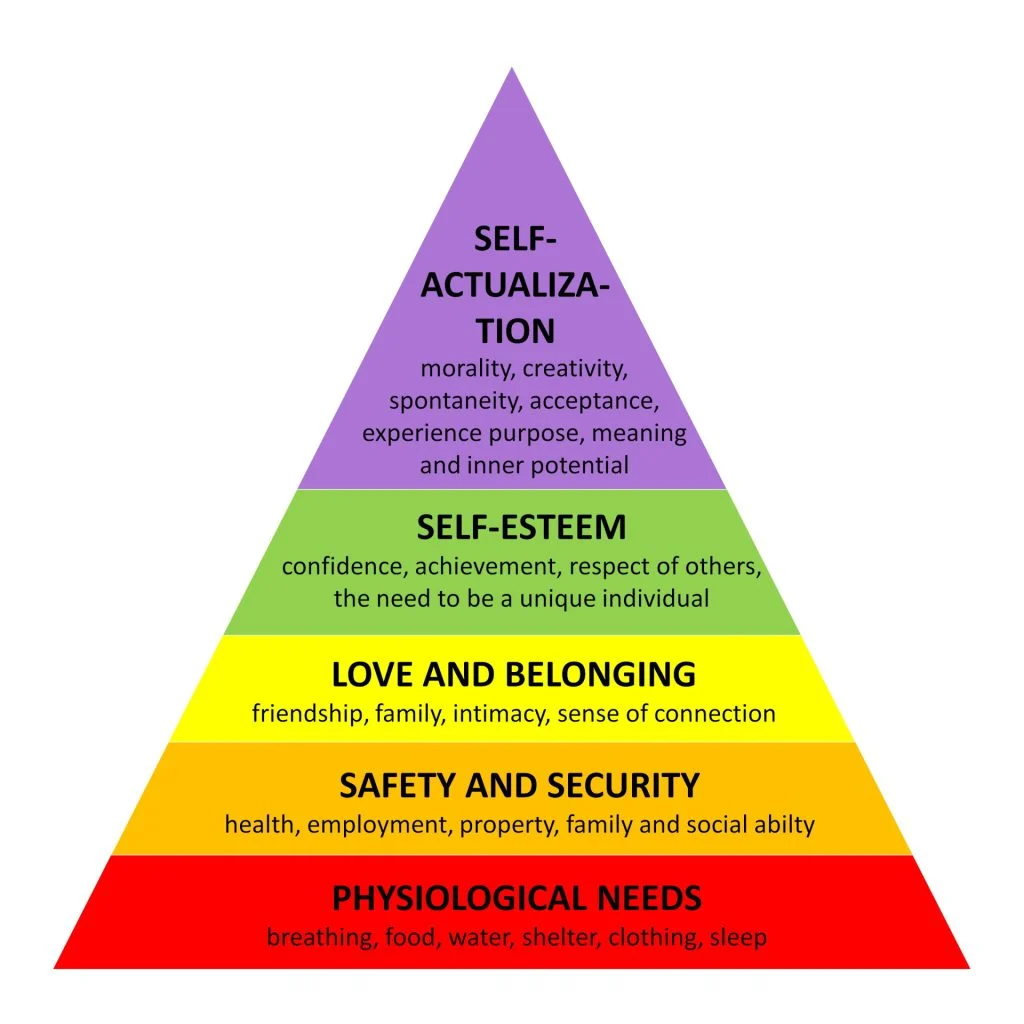
Most marketers know Maslow’s five-tier hierarchy.
On Marketing Made Clear we’ve already covered the model and how to apply it to campaigns and customer journeys, so if you want a refresher start with our article on Maslow’s life, theories and marketing lessons and our Introduction to Consumer Behaviour.
What many miss is that in Maslow’s later work he extended the hierarchy beyond self-actualisation to self-transcendence. In simple terms, it is moving past the optimisation of the self to serve, connect with, or contribute to something larger than oneself. Academically, this was pulled together persuasively by Mark E. Koltko-Rivera, who documented Maslow’s revisions and the rationale for adding self-transcendence to the model.
The Marketing Made Clear Podcast
This article features content from the Marketing Made Clear Podcast – check it out on all good platforms.
What is Self-Transcendence?
Maslow described transcendence as engaging with the “highest and most inclusive” levels of human consciousness and relating to others, nature and the cosmos as ends in themselves, not means to an end. If self-actualisation asks “How do I become my best self?”, transcendence asks “How can my best self help something bigger?”.
Contemporary psychologists have revived and reframed this idea. Scott Barry Kaufman argues that healthy self-actualisation is a bridge to transcendence and proposes a “sailboat” metaphor that replaces the rigid pyramid with a dynamic model balancing security and growth. For marketers, this reframing helps connect personal growth, purpose and pro-social impact without falling into purpose-washing.
Why it Was “Forgotten”
Maslow died in 1970 while actively revising his theory, and the iconic pyramid – ironically not drawn by Maslow – fossilised classroom teaching at five levels. The later writings and manuscripts that emphasised transcendence never penetrated mainstream business education in the same way. Koltko-Rivera’s review helped correct the record, but the five-level poster lived on.

Why Self-Transcendence Matters in Marketing
Self-transcendence unlocks motivations that sit beyond status and self-esteem. When your brand helps people contribute to a cause, lift a community, or protect something they value, you are operating at a qualitatively different motivational tier. Evidence from psychology distinguishes between personal and collective transcendence, which map cleanly onto individual goals and community impact in brand strategy.
In Practice, Transcendence Changes Five Things:
-
Value proposition
You move from “make me better” to “let me make things better”. Products become vehicles for contribution as well as features and benefits. -
Segmentation and messaging
Values-led segments respond to narratives about stewardship, fairness, solidarity and meaning. See our guide to emotional targeting in marketing for building messages that connect feelings with action. -
Experience design
Maslow wrote about peak and plateau experiences. Design rituals, communities and shared moments that feel significant, not just convenient. Think acts of service, co-creation and long-term participation, not one-off stunts. -
Success metrics
Layer impact KPIs alongside revenue: households helped, tonnes diverted from waste, hours volunteered, verified living-wage suppliers onboarded. Publish the methodology, not just the headline. -
Governance and proof
Transcendence collapses without credibility. Show independent verification, rough edges, trade-offs and longitudinal data. Avoid the trap of glossy promises with no mechanism.
A Marketer’s Field Guide to Self-Transcendence
1) Spot when it fits
-
Your audience expresses moral identity, stewardship or “legacy” language in research.
-
The category has meaningful externalities you can measurably reduce.
-
You have or can build credible partnerships to deliver impact.
2) Design for contribution, not just consumption
-
Participation: create clear, low-friction actions customers can take that add up to real outcomes.
-
Community: enable customers to meet, mentor and mobilise one another.
-
Meaning: tell specific stories of lives changed and let customers trace their contribution.
3) Build “peak” and “plateau” moments
-
Peak: a launch day collective action, a transparent live impact counter, a shared challenge that culminates in something tangible.
-
Plateau: quiet, ongoing practices that reinforce identity over time, like monthly updates that connect purchases to verified outcomes.
4) Measure like you mean it
-
Input: % revenue donated, hours, units, CO₂e avoided.
-
Output: people served, hectares restored, certifications earned.
-
Outcome: behaviour change, community resilience, wellbeing indicators.
Report quarterly, open your data schema, and invite independent critique.
5) Guardrails against purpose-washing
-
Tie every claim to a mechanism.
-
Commit to third-party standards where possible.
-
Avoid moral grandstanding in performance creative.
-
Publish misses and course-corrections with the same energy as wins.
Quick Case Notes to Spark Ideas
-
Ecosia turned searching the web into funded tree-planting, with a running counter and public financials.
-
Interface used “Mission Zero” to re-architect an entire supply chain around waste and emissions.
-
Who Gives A Crap made toilet paper a vehicle for sanitation funding while keeping the tone light but transparent.
-
Tony’s Chocolonely links product design to a mission against modern slavery and reports progress, not perfection.
These brands give customers a way to express values through ongoing participation, not just purchases. Each also communicates the mechanism behind the impact, which is where trust is built.
Using Transcendence Across the Funnel
-
Awareness: Lead with the problem your community wants to solve, then show precisely how your product is a lever within a real system.
-
Consideration: Publish an “Impact Ledger” or “Impact Tracker” page with live metrics and third-party attestations.
-
Conversion: Let customers allocate a portion of margin to causes at checkout and show estimated impact.
-
Retention: Send narrative-rich updates that connect usage to outcomes and invite further action.
-
Advocacy: Reward storytelling and mentoring, not just referrals.
Common Objections From the C-suite
-
“Will this cannibalise margin?”
Treat impact as a product feature with associated willingness-to-pay and lower CAC through earned media and community effects. -
“Isn’t this risky?”
Values work is risky when it is decorative. When it is operational, measured and co-governed, it reducesreputational risk and attracts better talent. -
“Our category doesn’t lend itself to transcendence.”
Most do. If you affect materials, labour, data or community health, you have leverage. Start with one material impact and build out.
TL;DR
Maslow didn’t stop at five levels. In his later work he added self-transcendence: motivations to serve and connect with something bigger than the self. For marketers, operating at this level means designing products and experiences that enable contribution and community, then proving the impact with rigour. Use it when your category has real-world externalities and your organisation is prepared to measure what matters. Cross-link it to your existing MMC primers on Maslow, emotional targeting and consumer behaviour for depth and context.