

Writing a Positioning Statement
Crafting a compelling positioning statement is a fundamental aspect of marketing that defines how a brand distinguishes itself in the marketplace. A well-articulated positioning statement serves as a strategic guide, aligning marketing efforts and ensuring consistency across all brand communications.
The Marketing Made Clear Podcast
This article features content from the Marketing Made Clear podcast. You can listen along to this episode on Spotify:
Understanding the Positioning Statement
A positioning statement succinctly conveys a brand’s unique value to its target audience, differentiating it from competitors. It typically addresses the following components:
- Target Audience: The specific group of consumers the brand aims to serve.
- Market Category: The industry or segment in which the brand operates.
- Brand Promise: The unique benefit or value proposition offered to the target audience.
- Reason to Believe: Evidence supporting the brand’s promise, such as unique features or customer testimonials.
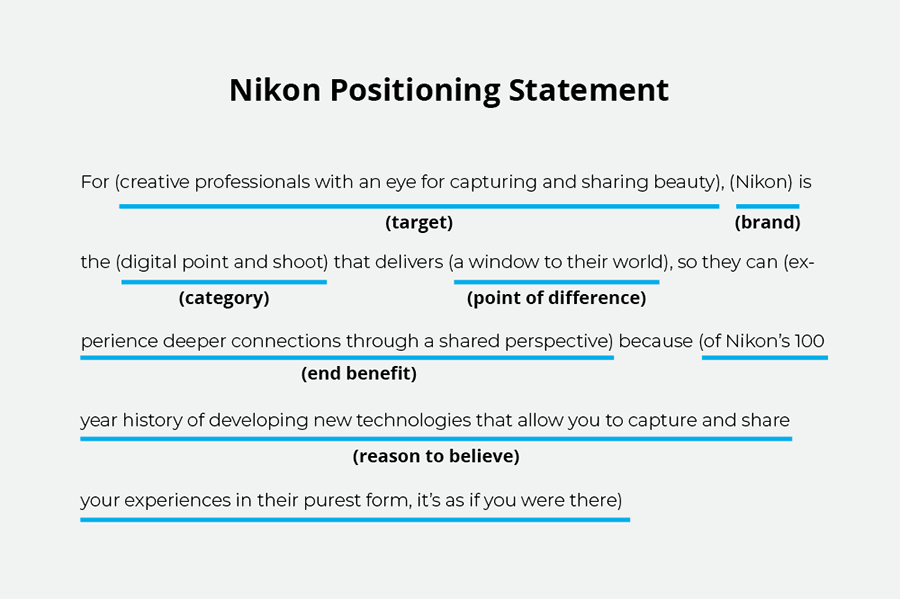
Template for Crafting a Positioning Statement
A widely accepted template for creating a positioning statement is:
“For [target audience], [brand/product] is the [market category] that [brand promise], because [reason to believe].“
- Identify Your Target Audience: Clearly define who your product or service is for, specifying demographics, interests, and pain points.
- Define Your Market Category: Determine the industry or segment your product belongs to, positioning your brand within a recognizable context.
- Articulate Your Brand Promise: Highlight the unique benefit your product offers, addressing the primary need or desire of your target audience.
- Provide a Reason to Believe: Offer evidence or justification for why your audience should trust your brand promise, such as testimonials, research, or unique features.
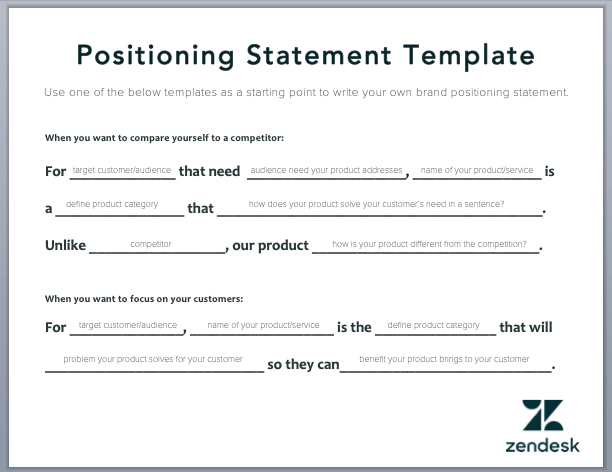
Example of a Positioning Statement
Let’s consider an example using the template:
- Target Audience: Young professionals who value convenience and quality.
- Market Category: Meal delivery services.
- Brand Promise: Offers healthy, gourmet meals delivered quickly.
- Reason to Believe: Backed by renowned chefs and high customer satisfaction ratings.
Positioning Statement:
“For young professionals who value convenience and quality, [Brand] is the meal delivery service that offers healthy, gourmet meals delivered quickly, because we are backed by renowned chefs and high customer satisfaction ratings.”
How to Check Whether Your Positioning Statement Works
The template is a starting point, not the final answer. Once you have drafted a statement, put it through four practical checks:
- Specificity: Could a competitor replace your brand name with theirs and use the same statement? If so, your difference is probably too generic.
- Relevance: Does the audience actually care about the benefit you promise? Ask prospective customers rather than relying only on internal opinions.
- Evidence: Can you substantiate your reason to believe with product features, service data, customer research or independently verifiable claims?
- Trade-offs: Does the statement help you decide what not to offer, which audience not to prioritise, or which claims not to lead with?
Worked example (fictional): “For independent cafés that want less food waste, PantryPilot is the inventory-planning service that helps teams order ingredients with greater confidence, because it combines daily sales records with ingredient-level forecasts.” The claim about forecasting would need testing and evidence before a real company could use it publicly. The example shows the difference between a specific, testable promise and a vague claim such as “the best solution for cafés”.
The positioning statement is usually an internal strategic tool. It can inform customer-facing taglines and adverts, but it does not need to be published verbatim.
Criteria for Selecting Competitive Advantages
When determining which differences to promote as your competitive advantage, consider the following criteria:
- Important: The difference delivers a highly valued benefit to target buyers.
- Distinctive: Competitors do not offer the difference, or the company can offer it in a more distinctive way.
- Superior: The difference is superior to other ways customers might obtain the same benefit.
- Communicable: The difference is communicable and visible to buyers.
- Pre-emptive: Competitors cannot easily copy the difference.
- Affordable: Buyers can afford to pay for the difference.
- Profitable: The company can introduce the difference profitably.
Common Mistakes to Avoid
- Vagueness: Ensure your statement is specific and clear, avoiding ambiguous language.
- Overpromising: Be realistic in your brand promise to maintain credibility.
- Lack of Differentiation: Clearly articulate what sets your brand apart from competitors.
Why the theory matters: A positioning statement is the practical expression of a wider positioning strategy. To understand how customers form associations with competing brands, read our guide to Ries and Trout’s positioning theory. Then return to the template above and make your intended point of difference explicit.
Conclusion
A well-crafted positioning statement is a vital tool in a marketer’s arsenal, providing clarity and direction for all marketing efforts. By following the outlined steps and criteria, and avoiding common pitfalls, you can develop a positioning statement that effectively communicates your brand’s unique value to your target audience.
Remember, the ultimate goal is to occupy a distinct and valued place in the minds of your target consumers, guiding your brand towards sustained success.