

Marketing, Messaging and Misinformation
How Trump and Clinton Battled for America in 2016
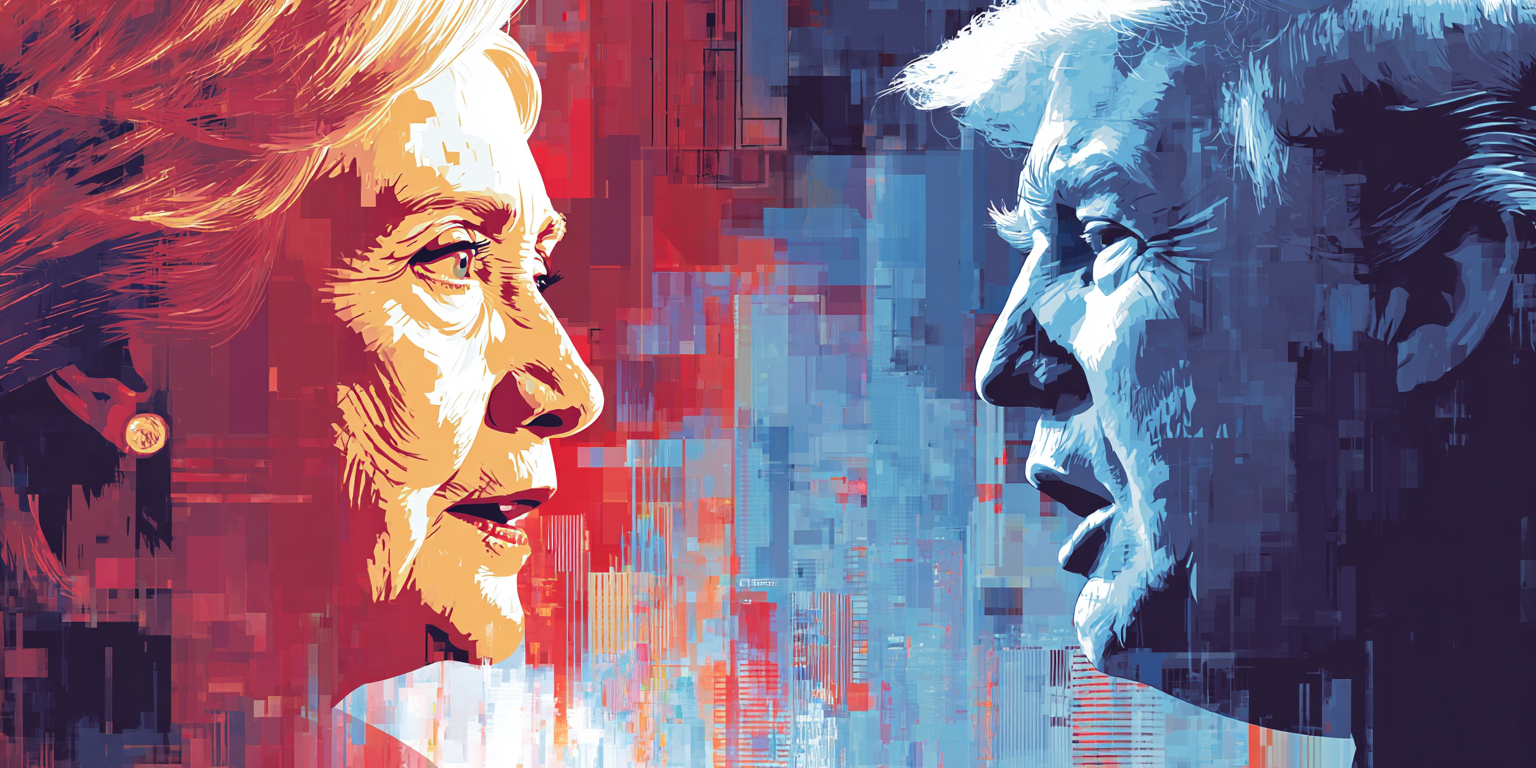
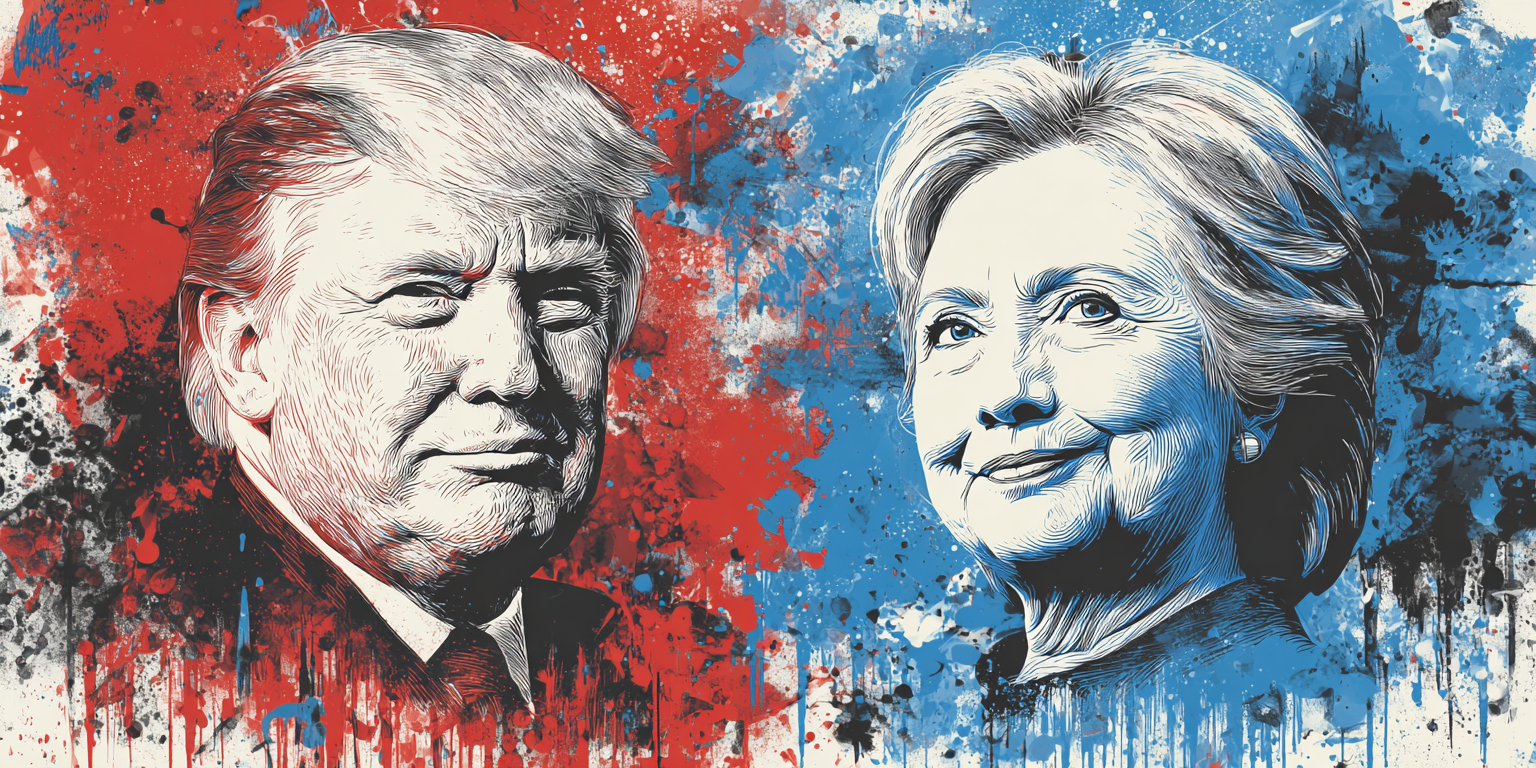
The 2016 U.S. presidential election between Donald J. Trump and Hillary Rodham Clinton marked a turning point not only in American politics, but also in how political marketing, media strategy, and propaganda operate in the digital age. At its core, the battle was a clash of ideologies, personalities, and marketing philosophies. One campaign upended traditional political marketing playbooks, while the other followed the conventional path with strategic precision. Yet both were affected by the rapidly evolving digital media landscape, external propaganda efforts, and a divided electorate.
This article explores how both sides approached the campaign from a marketing perspective: their messaging strategies, audience targeting, media usage, and how propaganda and misinformation shaped the narrative. Drawing from academic literature, institutional reports, and peer-reviewed studies, we examine the contrasting and overlapping techniques that defined the 2016 election.
In the interest of balance – and to maintain an even perspective – this article is referenced with links to sources, all of which are hyperlinked within the article.
The Marketing Made Clear Podcast
Check out the Marketing Made Clear Podcast on all good streaming platforms including Spotify:
Strategic Philosophies: Unorthodox vs Traditional
Donald Trump’s campaign broke with nearly every established norm in political marketing. He relied heavily on media spectacle, anti-elite populism, and direct voter communication via social media. As Gillies (2018) observes, Trump, like Bernie Sanders on the left, ran a campaign that “rejected the idea that a candidate must be politically experienced or diplomatically cautious.” Trump’s persona as a political outsider resonated with disaffected voters who felt alienated by mainstream politics.
In contrast, Hillary Clinton’s campaign followed a more traditional strategic path. Emphasising her qualifications and experience, Clinton sought to assemble a broad Democratic coalition through targeted messaging and get-out-the-vote (GOTV) operations. Her strategy relied on portraying Trump as unfit for office and promoting a progressive yet incremental policy platform under the slogan “Stronger Together.”
But strategic sophistication wasn’t enough.
As Shaw (2017) argues, the common post-election narrative that Trump’s campaign was a series of masterstrokes while Clinton’s was a litany of blunders oversimplifies a complex electoral reality. Trump’s success in flipping 220 counties that had previously voted for Obama reflected not just strategy, but also an understanding of cultural discontent and media manipulation.
Digital and Social Media: The New Battleground
By 2016, political campaigns had fully embraced the power of digital media. Trump’s campaign led the charge, embracing Facebook and Twitter not only as communication platforms but as key tools for fundraising, mobilisation, and persuasion.
Trump: The Algorithm Candidate
Trump’s digital strategy, aided by firms like Cambridge Analytica, focused on constant engagement and emotional triggers. His Facebook campaign reportedly ran over 175,000 ad variants and spent $44 million on Facebook alone (Redoano et al., 2018). These ads were microtargeted with precision—using attributes like gender, interests, and location to speak directly to different voter segments. Data showed this approach boosted Republican turnout by as much as 10% among key groups.
Trump’s Twitter presence became a core part of his campaign identity.
He used it to provoke, entertain, and dominate news cycles. Political analysts noted that Trump didn’t just use new media—he became the medium. His Twitter account functioned as both a content factory and a framing tool. Newsrooms followed his every tweet, creating a feedback loop between earned media and campaign messaging.
Clinton: Professional and Controlled
Clinton’s digital strategy was data-rich and tightly managed. Her campaign spent about $28 million on Facebook advertising, with a focus on voter mobilisation and persuasion among traditional Democratic voter blocs. Unlike Trump, Clinton’s team preferred to link back to in-house campaign materials rather than outside media.
According to Pew Research Center (2016), 80% of Clinton’s Facebook posts linked to her own website, while 78% of Trump’s posts linked to external news articles—often from supportive outlets.
Additionally, Clinton rarely retweeted ordinary users. Trump, on the other hand, did so frequently—78% of his retweets came from members of the public, creating a sense of dialogue and populist engagement. Clinton’s top-down control preserved message discipline but arguably made her campaign feel less authentic and viral.

Messaging and Emotional Framing
Populism and Persona
Clinton’s message revolved around experience and policy detail. Trump’s message was simple, memorable, and populist. According to Lacatus (2019), Trump and Sanders were the most prominent users of populist discourse, characterised by anti-elitism, nationalism, and emotional appeal. Clinton avoided this rhetoric, instead focusing on competence and inclusivity.
Trump’s slogan, “Make America Great Again,” carried strong nostalgic and nationalist overtones. Clinton’s “Stronger Together” was more policy-oriented and coalition-focused. Trump’s identity as a political outsider railing against a corrupt system connected viscerally with voters who felt left behind.
Emotion Drives Engagement
An analysis by Sahly et al. (2019) comparing 3,805 Trump tweets and 655 Clinton Facebook posts found that emotionally framed content—especially involving conflict or morality—drove higher engagement. Trump’s tweets were more conflict-driven and framed around outrage and morality, while his Facebook posts often carried a more upbeat or celebratory tone. Clinton’s messaging was more consistent across platforms, but less emotionally varied.
The study concluded that emotionally charged posts consistently drew more likes and retweets, especially when framed around morality or conflict. This pattern benefited Trump’s content, which frequently stirred anger, pride, or fear. Clinton’s more informational tone, while professional, didn’t generate the same level of engagement.
Audience Targeting and Microtargeting
Both campaigns used advanced analytics to target specific voter segments, but Trump’s campaign took microtargeting further, aided by third-party data vendors like Cambridge Analytica.
The firm claimed to use psychographic profiling—categorising voters by personality traits—to tailor message content. While scholars like Fink and Jakee (2024) cast doubt on the effectiveness of this approach, the campaign’s sheer scale made an impact. Redoano et al. (2018) found that microtargeted Facebook ads increased Republican turnout by up to 10% in key segments.
Trump’s campaign focused intensely on white, working-class, non-college-educated voters in Rust Belt states, using highly localised and emotionally resonant content. Clinton’s strategy, meanwhile, concentrated on turnout among minorities, suburban professionals, and women. Her campaign’s data modelling helped optimise ad spend and canvassing, but misjudged the level of threat in battleground states like Wisconsin and Michigan.
Academic research suggests that basic segmentation (e.g. targeting by party) is effective, but adding layers of complex data—like personality traits—did not yield significantly greater persuasion (MIT study, 2023). This casts doubt on the mythologising of Cambridge Analytica’s role, but reinforces the importance of emotional resonance and precise targeting.
The Role of the Media
Narrative Control and Agenda-Setting
The Harvard Shorenstein Center found that press coverage of both candidates was overwhelmingly negative, but the framing favoured Trump’s issues. Clinton’s coverage disproportionately focused on scandals like her private email server and the Clinton Foundation, rather than on policy proposals.
Meanwhile, Trump’s most controversial statements kept the spotlight on issues like immigration and trade—his campaign’s core narratives—even when coverage was critical. The Berkman Klein Center noted that attempts by Clinton to focus on competence and policy were drowned out, while Trump dominated the issue agenda.
Conservative Media and Echo Chambers
Yochai Benkler’s Network Propaganda offers a deep analysis of the asymmetric media landscape. Right-wing media ecosystems, centred around Breitbart, Fox News, and Daily Caller, functioned as insular echo chambers where pro-Trump content spread largely unchallenged.
In contrast, left-leaning media was more distributed and adhered to traditional journalistic standards. This structural asymmetry meant that Clinton faced scrutiny from both conservative and mainstream outlets, while Trump enjoyed a largely uncritical right-wing amplification loop. The study concluded that this structural imbalance in media ecosystems played a greater role in shaping voter opinion than Russian interference alone.
Misinformation and Propaganda
Fake News and Disinformation
The spread of fake news in 2016 was unprecedented. A study by Allcott and Gentzkow (2017) found that pro-Trump fake news was shared 30 million times on Facebook in the three months before the election, compared to 8 million shares for pro-Clinton fake news. Stories like “Pope Endorses Trump” and “Clinton Indicted” had no factual basis, yet were widely believed by voters.
Survey data revealed that half of Americans exposed to these stories believed them to be true, especially when the content reinforced their existing political views. This polarised misinformation environment created significant challenges for both fact-checkers and campaigns trying to correct the record.
Computational Propaganda and Foreign Influence
Foreign actors, particularly Russian-backed groups, used troll farms and bots to amplify divisive content. Kathleen Hall Jamieson’s Cyberwar (2018) argues that these efforts, alongside strategic email leaks and social media manipulation, likely affected public opinion in a close race.
However, Benkler et al. argue that domestic partisan media had a more sustained influence, creating a pipeline for disinformation to reach mass audiences without foreign involvement. Twitter bots and Facebook groups pushed hyper-partisan narratives, while legitimate media struggled to counteract them effectively.
The prevalence of conspiracy theories like “Pizzagate” illustrates how the fragmented digital ecosystem allowed propaganda to bypass gatekeepers and shape public discourse. Clinton’s campaign, in particular, was the subject of disinformation campaigns that were nearly impossible to rebut at scale.
Reflections and Lessons for Marketers
The 2016 election was not won solely through data analytics or Facebook ads. It was the culmination of emotional messaging, media manipulation, and a fragmented information ecosystem. Trump’s campaign succeeded in dominating the narrative and energising a fragmented base, while Clinton’s more conventional strategy struggled to cut through.
For marketers, the 2016 campaign offers vital lessons:
-
Emotion matters. Rational appeals are important, but emotional resonance drives engagement.
-
Virality is often unpredictable. Content that triggers strong reactions spreads faster and farther than safe, informative posts.
-
Microtargeting can move the needle—especially in low-turnout segments—but only when paired with emotionally effective messaging.
-
Media fragmentation means message control is harder than ever. Brands and political campaigns alike must navigate echo chambers, misinformation, and partisan media.
-
Authenticity and outsider status can be assets. Trump’s rejection of political correctness, whether sincere or performative, helped him connect with voters in a way polished professionalism could not.
Conclusion
The Trump vs Clinton election campaign of 2016 will be studied for decades as a case study in how politics, marketing, media, and psychology converge in the digital era. It revealed the limits of traditional campaign planning, the potency of emotionally charged branding, and the dangers of unregulated digital platforms.
While Trump shattered expectations with an unorthodox, media-savvy approach, Clinton’s campaign represented the pinnacle of professional political marketing. But in the chaotic and fragmented environment of 2016, it was the loudest message—however controversial or misleading—that often carried the furthest.
Whether one views the result as a triumph of disruptive marketing or a cautionary tale of propaganda’s power, one thing is clear: the rules of political engagement have changed. Marketers—political or otherwise—ignore these lessons at their peril.
TL;DR: The 2016 Trump vs Clinton election reshaped political marketing. Trump used emotionally charged populism, microtargeted Facebook ads, and constant social media provocation to dominate media and voter attention. Clinton relied on traditional campaign strategies, policy-focused messaging, and controlled digital content. Propaganda, fake news, and partisan media ecosystems further influenced the narrative. The outcome highlighted the power of emotional resonance, virality, and data—but also the perils of a fragmented and unregulated information landscape.