

PESTEL: A Powerful Framework Restored for the Modern Workplace
How to make PESTEL analysis dynamic, actionable, and fit for purpose using modern tools and AI
Marketing Strategy | Go-To-Market | Organisational Intelligence
Throughout all foundational marketing education, the PESTEL analysis is presented as a vital tool for market validation and go-to-market planning. And it is. But for me, it has always been that and so much more: a living barometer for everything happening around your organisation that could reshape it overnight.
The problem is that it rarely gets treated that way.
It is not uncommon for frameworks of any kind (especially legacy or foundational ones) to become little more than a paper exercise. Filled in during a strategy workshop, added to a slide deck, filed somewhere with the best of intentions, and never touched again. PESTEL is one of the most frequent victims of this fate. And that is a genuine waste of one of the most powerful strategic tools available to any organisation.
In this article, I want to do three things: diagnose exactly why PESTEL fails in practice, use learnings from the field to restore what it can be, and show you how modern tools, including AI, can transform a static PESTEL analysis into a dynamic, actionable intelligence system that earns its place at the top of every team’s agenda.
What PESTEL Is, and What It Should Be
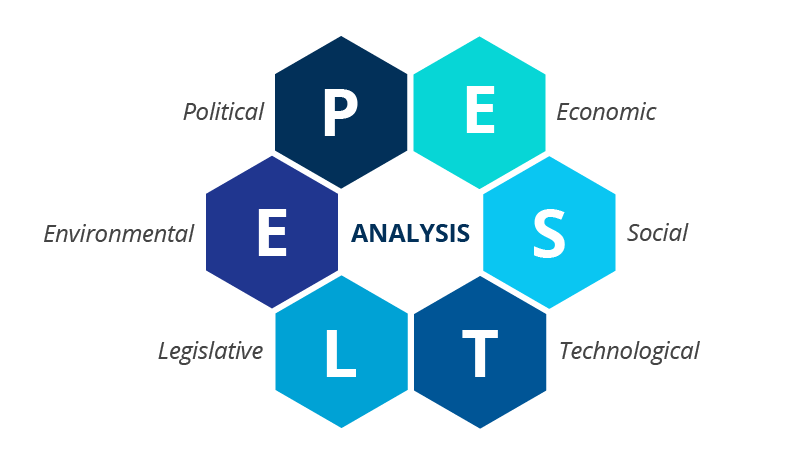
Political, Economic, Social, Technological, Environmental and Legal: PESTEL maps the macro forces that shape the environment your organisation operates in. It complements the internal analysis of SWOT (Strengths, Weaknesses, Opportunities and Threats) by giving you the external context without which your internal strategy is essentially blind.
Think of SWOT and PESTEL as the hammer and flathead screwdriver of your strategic toolkit. You need both. One without the other leaves the job half done.
Whenever we plan a marketing campaign, research product-market fit, or define the broader go-to-market strategy, these two frameworks should be the foundation. The issue is not the frameworks themselves. The issue is how we use them, and crucially, whether we keep using them after the initial exercise is done.
“PESTEL is not a one-time health check. It is a permanent vital sign monitor. The organisations that treat it that way are the ones that rarely get caught off guard.”
Why PESTEL Fails as a Static Framework
Before diagnosing the cultural problem, it is worth acknowledging that the academic community has been raising structural concerns about PESTEL for some time. Critics have described it as a simplified checklist that can encourage surface-level listing of factors without any real interrogation of how those factors connect or cascade into each other. The danger, as some researchers put it, is that practitioners confuse completing the template with actually understanding the environment. That criticism is fair, and it is part of what this article is trying to address: not just how we use PESTEL more consistently, but how we use it more rigorously and intelligently.
With that noted, the more common failure in practice is not intellectual, it is organisational. Let me describe something that will probably feel familiar.
A leadership team sets aside a half-day for strategic planning. Someone pulls up the PESTEL template. The group works through each letter, fills in the boxes with reasonable observations, and produces something that, in the moment, feels genuinely useful. Then the meeting ends, the document is saved to a shared drive, and within three months nobody can remember where it is or whether it was ever updated.
This is not a people problem. It is a systems and culture problem. The framework was never integrated into the rhythm of the business. It was treated as a deliverable rather than a process.
I have learned, over time, to visualise the acronym PESTEL in my head, in vivid bubble writing, if you will. Whenever I read a news article, hear a conversation, or notice a shift in the market, the relevant letters light up. When several light up at once, like a row on a bingo card, and I know something significant is happening that deserves strategic attention. That instinct has served me well.
But here is the honest truth about that mental model: it only works for me, in my head, in real time. It has no leverage. It cannot scale across a team. It cannot trigger an action, update a document, or alert a colleague. The insight stays private and often dissipates before it is acted on.
Whether PESTEL lives in someone’s head or in a static document buried under permissions and folder structures, neither version is delivering on the framework’s real potential. A dynamic PESTEL framework changes that.
The Six Factors Reimagined Through a Tech Lens
Before we get to the how, it is worth reframing what each letter actually means in today’s operating environment. The classical definitions are still valid, but the signals that feed them, and the speed at which they move, have changed dramatically.
| Factor | Traditional Coverage | Modern Tech-Lens Reframe | Automation Signal Source |
|---|---|---|---|
| P – Political | Government policy, trade regulation, political stability, taxation frameworks. | Platform regulation, AI policy, data sovereignty laws, geopolitical technology fragmentation (e.g. chip export controls). | Google Alerts on regulatory keywords, with Perplexity AI providing weekly policy summaries. |
| E – Economic | Inflation, interest rates, GDP growth, consumer confidence, exchange rates. | SaaS pricing pressure, enterprise budget cycles, venture capital funding climate affecting buyer behaviour in technology markets. | Notion AI dashboard pulling macroeconomic indicators, with automated weekly digests via Make.com. |
| S – Social | Demographics, cultural trends, lifestyle shifts, workforce expectations. | Remote-first culture, Generation Z workforce expectations, mental health as a retention factor, and DEI as a trust signal. | LinkedIn social listening combined with AI-summarised trend reports using a custom ChatGPT prompt. |
| T – Technological | Emerging technologies, R&D activity, automation, digital infrastructure. | AI adoption curve, API economy growth, no-code proliferation, and the evolving cybersecurity threat landscape. | Product Hunt daily digest, GitHub Trending repositories, and AI-curated technology newsletters via Perplexity Spaces. |
| E – Environmental | Climate regulation, sustainability standards, carbon commitments, ESG reporting. | Green cloud computing, hardware supply chain ethics, and sustainability as a B2B procurement criterion. | ESG monitoring tools alongside automated sustainability news alerts through tagged Feedly feeds. |
| L – Legal | Employment law, intellectual property protection, consumer rights, data privacy regulation. | GDPR enforcement updates, AI liability frameworks, open-source licensing complexity, and the evolution of cookie consent requirements. | IAPP updates delivered via RSS into Slack or Notion, supported by AI-assisted contract and compliance monitoring. |
Making PESTEL Dynamic: A Practical Automation Stack for Marketing and Strategy Teams
This is where the real transformation happens, and where an actionable PESTEL analysis earns its name. The goal is to move PESTEL from a periodic document to a continuously updated intelligence system that feeds strategic decisions in real time. The good news is that you do not need a data science team or a custom build to do this. The tools exist today, most are low or no-cost, and the setup is well within reach of any marketing or strategy professional.
Here is a practical PESTEL automation stack built around four layers:
Layer 1: Signal Collection (Automated Listening)
The first job is to make sure the right signals are always coming in without anyone having to go looking for them.
- Google Alerts: set up keyword alerts for each PESTEL letter: regulatory terms, competitor names, market category keywords, macro indicators. Free and surprisingly powerful when configured with precision.
- Perplexity AI: use it as an always-on research assistant. Create a weekly prompt template: ‘Summarise the top five macro developments this week relevant to [your industry] across Political, Economic, Social, Technological, Environmental and Legal dimensions.’ The output is consistently high quality.
- RSS feeds via Feedly or Inoreader: aggregate industry publications, government regulatory feeds, and think-tank outputs into one place. Filter by PESTEL category tags.
Layer 2: Processing and Synthesis (AI-Assisted Analysis)
Raw signals are only useful if someone synthesises them. This is where AI earns its place in a dynamic PESTEL workflow.
- ChatGPT or Claude: feed your aggregated signals into a custom prompt that outputs a structured PESTEL update: what changed, what it means for your organisation, and what actions it might trigger. This can be done weekly in under twenty minutes.
- Custom GPT (ChatGPT Pro): build a PESTEL Analyst GPT trained on your company context, your market, and your strategic priorities. It will surface relevance that a generic model will miss.
- Notion AI: if your team works in Notion, build a PESTEL database where each entry is auto-tagged by factor, source, and strategic implication. Notion AI can summarise entries and flag patterns across time.
Layer 3: Living Documentation (Dynamic PESTEL Board)
The document itself needs to stop being static. This is the core of making PESTEL actionable.
- Notion or Airtable: build a PESTEL board with a view per letter, a view by urgency, and a view by strategic theme. Each entry has a date, a source, a potential impact rating, and a linked action or owner.
- com or Zapier: connect your signal sources directly to your PESTEL board. A new item from your Feedly feed tagged ‘Legal’ can automatically create a draft entry in your Legal column, ready for a human to review and rate.
- Weekly digest automation: set a recurring automation that compiles the week’s new PESTEL entries and sends a formatted summary to a Slack channel or email list. This is how PESTEL gets into the rhythm of the business without requiring anyone to remember to check it.
Layer 4: Strategic Integration (From Insight to Action)
This is the layer that most organisations skip entirely, and it is the most important one. Signals and synthesis are only valuable if they connect to decisions.
- Quarterly PESTEL review: schedule a sixty-minute session each quarter where the team reviews the board, identifies the factors with the highest strategic relevance, and maps them to current OKRs or strategic initiatives.
- PESTEL-to-SWOT bridge: any PESTEL entry rated high impact should automatically prompt a SWOT review. Is this a new threat? Does it create an opportunity? Has it changed an assumption we were relying on? This is the connection that most frameworks teaching ignores, and it directly addresses the checklist criticism: context becomes consequence.
- Executive summary template: once a month, an AI-generated executive summary of the PESTEL board goes to leadership. Concise, formatted, actionable. Leadership stays informed without needing to live in the tool.
“The organisations that get the most from PESTEL are not the ones with the most sophisticated tools. They are the ones that have made it a habit: regular, shared and connected.”
What This Means for People, Not Just Organisations
It would be easy to read this as a systems and strategy piece. But the reason I care about making PESTEL dynamic is not just operational efficiency. It is about what happens to the people inside an organisation when strategic context is shared openly and kept current.
When teams understand the macro environment their work exists within, they make better decisions at every level. A product manager who understands that a regulatory shift is coming makes different prioritisation calls. A sales team that knows a major economic headwind is building adjusts their messaging before customers start pushing back. A marketing team that can see a cultural shift emerging has the confidence to move early rather than reactively.
Information asymmetry, where strategic context lives only at the top of an organisation, is one of the most corrosive things that can happen to a team. It breeds disengagement, misalignment, and a culture of just executing instructions rather than contributing thinking.
A living, shared PESTEL board is a small but meaningful step toward an organisation where more people understand more of the picture. That is not just strategically smart. It is how you build the kind of workplace where people actually want to do their best work.
The Oracle Reimagined
I started with the image of PESTEL lighting up in bubble writing in my mind. A private, personal signal system that worked well enough for one person but could never scale to a team, a department, or an organisation.
What I have described here is what happens when you take that same instinct, the sense that the external world is always sending signals worth reading, and build it into a shared, automated, continuously updated intelligence system.
That is what a dynamic PESTEL framework was always meant to be. Not a document. An oracle. One where the signals never stop coming, the analysis never sits still, and everyone in the organisation has the context they need to make sharper, faster, better-connected decisions.
The tools to build this exist today. The barrier is not technology. It is the willingness to treat a foundational framework with the seriousness it deserves, and the creativity to reimagine what it can become.
Key Takeaways
- PESTEL is not a one-time exercise. It is a continuous intelligence process.
- The academic critique is valid: completing the template is not the same as understanding the environment. The four-layer stack addresses this by turning signals into connected decisions.
- The paper exercise problem is a systems and culture failure, not a people failure.
- Modern no-code and AI tools can automate signal collection, synthesis, and documentation with minimal overhead.
- The PESTEL-to-SWOT bridge is the strategic connection most organisations miss entirely.
- Shared strategic context is not just operationally valuable; it builds better, more engaged teams.