

Packaging · Brand Experience · Product Design
Packaging After the Sale: Why Unboxing, Reuse and Memory Matter
Packaging does not stop working when the customer buys the product. Sometimes it becomes part of the ritual, part of the memory, part of the home — and occasionally, decades later, a box for nuts and bolts.
The best unboxing experience I can remember did not involve an iPhone, a luxury watch or a particularly clever magnetic lid.
It was a drum kit.
My first proper kit was a black Pearl Export, and getting it new remains one of the most vivid product experiences I can remember. I can still recall opening the boxes, the smell, fitting the heads for the first time and gradually turning a collection of drums, hardware and packaging into something that felt completely mine.
There was nothing especially luxurious about the packaging itself. It was cardboard boxes.
But those boxes marked the transition between wanting the product and owning it.
That distinction matters.
I have already written about packaging as the “silent salesman”: the bottle, box or pack that competes on shelf, creates recognition and helps close the sale. This is the other half of the story.
What happens to packaging after it has done the job of selling?
Sometimes it becomes rubbish immediately.
Sometimes it becomes storage.
Sometimes it becomes part of the product experience.
And sometimes, strangely enough, it becomes the thing people remember.
Packaging Has More Than One Job
One reason packaging gets underestimated is that we tend to judge it at a single moment.
Does it stand out on shelf?
Does it protect the product?
Does it look premium?
Those are useful questions, but packaging has a life cycle of its own.
The Five Lives of a Pack
The same piece of packaging can perform very different jobs before, during and after purchase.
Help me choose it
Recognition, differentiation, shelf impact and clear communication matter before the sale.
Turn purchase into ownership
The first physical interaction can create anticipation, theatre, reassurance or frustration.
Make the product easier to live with
Opening, closing, pouring, stacking, storing, freezing and carrying are all part of the experience.
Earn a second life
A jar, tin, tub or box can become useful long after the original product has disappeared.
Make the end obvious
Reuse, return, refill and recycling instructions increasingly shape the final impression of the brand.
Packaging can succeed brilliantly at one stage and fail badly at another.
A beautiful pack that nobody can open is not beautiful for very long.
Unboxing Is Not Really About the Box
The modern language of “unboxing” can make this sound like something invented by YouTube and Apple.
It was not.
People have always experienced anticipation through packaging: opening a birthday present, removing tissue paper from a pair of shoes, lifting an instrument out of a case, peeling film from a new screen or assembling something for the first time.
What digital media did was turn that private moment into content.
The Pearl Export memory is useful to me because the packaging itself was ordinary. What mattered was pacing and anticipation.
I had wanted the kit. I had imagined the kit. Then I had to physically assemble it before I could play it.
The packaging became part of that ritual without needing to be covered in foil, ribbons or inspirational copy.
That is an important corrective to some luxury-packaging thinking.
Premium packaging is not the same thing as expensive packaging.
A pack feels good when it makes the product feel considered. Sometimes that comes from materials and finishes. Sometimes it comes from making the first use simple, satisfying and memorable.
I Learned the Commercial Power of Packaging Properly at Paleo Ridge
I had worked around packaging long before Paleo Ridge.
At Arjowiggins, packaging materials were part of the business, so I became familiar with papers, print, finishes and the ways materials influence how a product feels.
But Paleo Ridge is where I became directly involved in packaging as a marketing and positioning tool.
The first big project was the Classic rebrand.
The starting point was not glamorous. The range had been sold in very plain black-and-white tubs. That made improvement relatively easy because there was so much room to create stronger identity, navigation and shelf presence.
The result was successful.
But the more interesting lesson came later with Paleo Plus.

We reworked Paleo Plus twice.
The first redesign moved it in the right direction, but eventually I still felt there was a positioning problem. Paleo Plus was the super-premium product — effectively the “best” tier — yet visually it did not feel more premium than Classic, the “better” tier.
Classic had finishes such as foiling.
Paleo Plus did not.
That is a problem because customers do not experience price architecture only through spreadsheets and category names. They experience it visually and physically.
So the later Paleo Plus redesign introduced things like spot UV and foiling and moved the design away from the brighter earlier look.
The pack had to feel like the product’s position.
Sometimes the Packaging Process Is Less Romantic
Not every packaging project involves design agencies and mood boards.
The Paleo Ridge Essentials range began, at least in part, on PowerPoint on a train to London with my colleague Gill.
That branding has lasted extremely well.
I rather like that story because it is a useful reminder that good packaging does not need a ceremonial creative process.
What matters is whether the design solves the right problem.
For Essentials, the role was different from Paleo Plus. The pack needed to communicate a different proposition and price point while still clearly belonging to Paleo Ridge.
That is what packaging architecture is really doing: helping products sit together without pretending they are identical.
The Customer Who Wants a Change Is Easier to Hear Than the Customer Who Wants Nothing Changed
Packaging redesign creates a particular research problem.
If customers complain about the current pack, you can collect those complaints.
If customers are perfectly happy with it, they tend not to email you saying, “Just a quick note to confirm that I remain broadly satisfied with the tub.”
So the evidence can become asymmetric.
A vocal group explains what it wants changed. The quiet group only becomes visible after you change it.
I have seen this happen.
You make a packaging decision partly in response to customer or stakeholder feedback, only to discover that another group was attached to the thing you have just removed.
That does not mean never redesign.
It means packaging research needs to investigate what people value about the current pack as carefully as it investigates what frustrates them.
This is one of the reasons the famous Tropicana redesign remains useful: change can remove recognition and familiarity faster than a design presentation suggests.
Gü Discovered That the Pot Had Become a Product
One of my favourite packaging stories came from a seminar about Gü desserts.
Gü helped premiumise the chilled-dessert category when it launched in the early 2000s, and its little glass ramekins became part of the experience. Packaging supplier Aegg records supplying glass ramekins to Gü from 2007. Current product copy still acknowledges that customers often keep and reuse them.
What stuck with me from the seminar was the customer feedback.
When people were asked about improvements, the conversation could have gone towards new flavours or bigger product changes. One of the things customers really wanted was wonderfully mundane:
make the glass pots stackable.
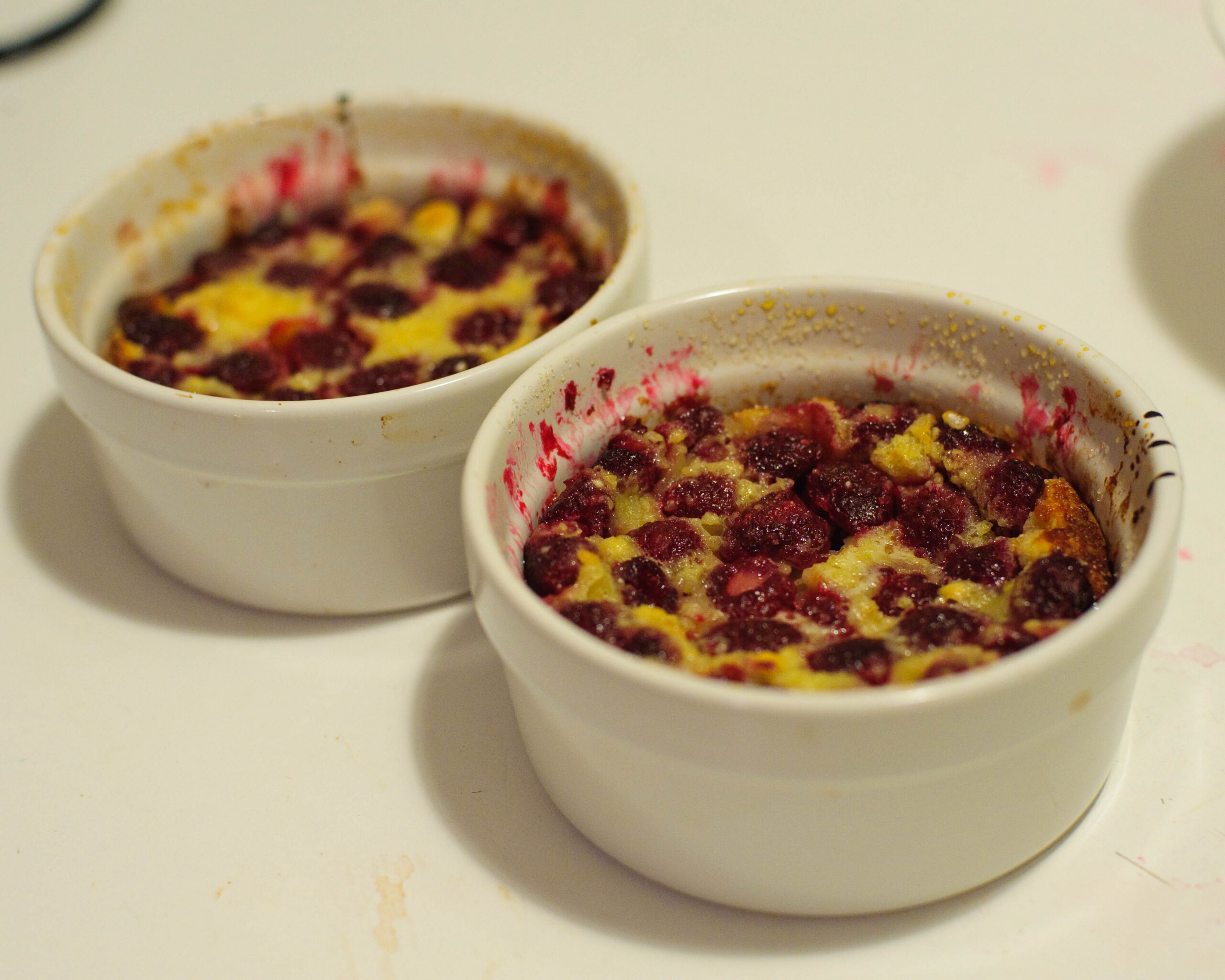
That is a brilliant piece of product feedback because it reveals that the customer had stopped treating the pack as waste.
The glass pot had entered the kitchen cupboard.
At that point the packaging is doing something very unusual: it continues occupying physical space in the customer’s life after the dessert is gone.
That is brand presence no media plan can buy in quite the same way.
We Used to Keep Packaging Because It Was Useful
I find old household packaging fascinating for the same reason.
There are still houses with old ice-cream tubs, margarine tubs and biscuit tins being used for entirely different purposes decades after the original purchase.
Vitalite tubs became storage.
Ice-cream tubs became freezer containers.
Tobacco tins became places for screws, nails and little objects nobody could otherwise find.
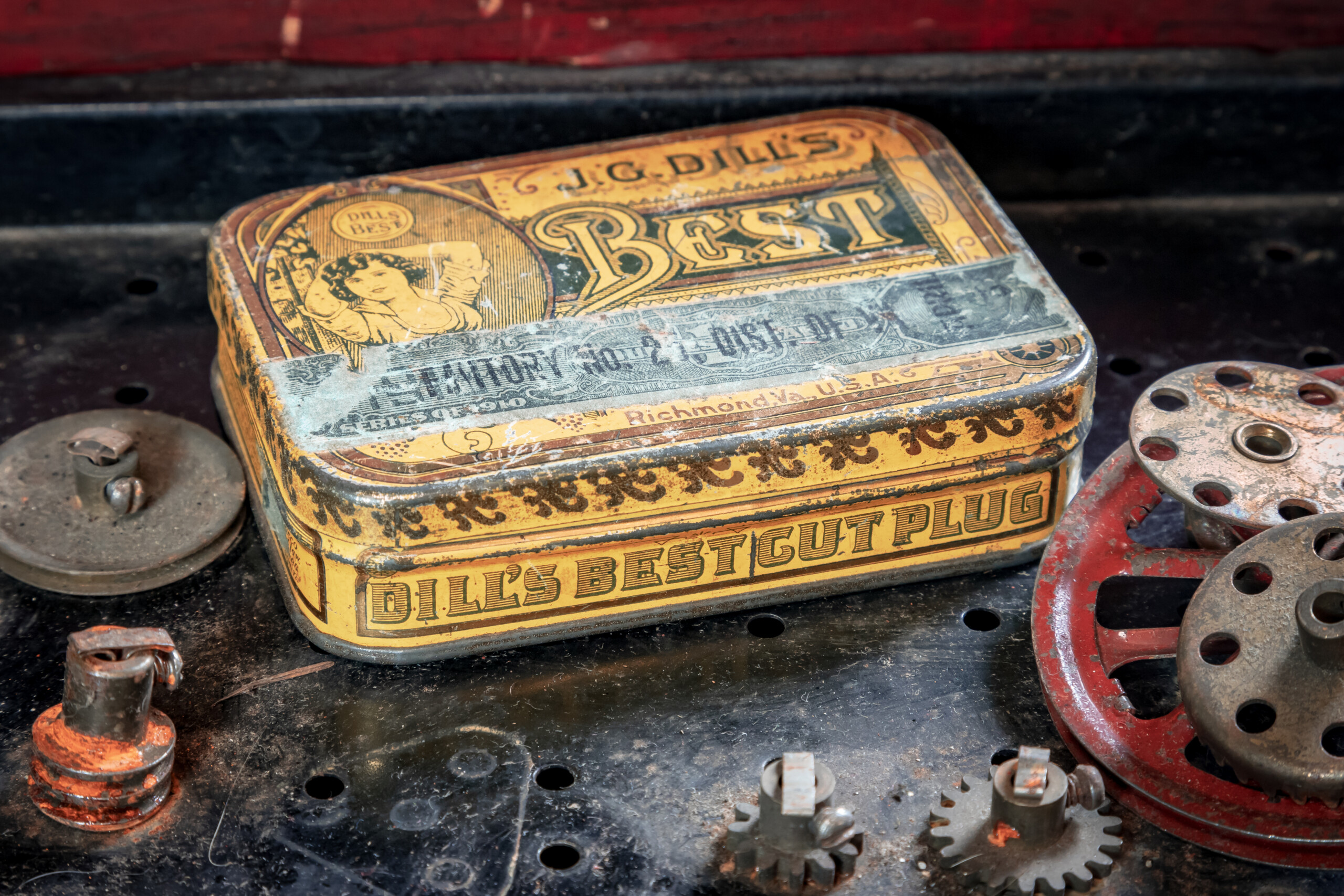
Old tobacco tins are especially interesting because they are now collectible objects in their own right.
I do not smoke, but I still think many of the old designs are beautiful.
That is packaging crossing another boundary.
It begins as a container.
Then it becomes storage.
Eventually it becomes cultural ephemera.
The product is gone and the packaging survives.
Lush Designed the Afterlife Into the System
Reuse does not have to happen accidentally.
Lush is one of the brands I think handles this particularly well because packaging choices are visibly connected to the wider brand identity.
The black pots are simple, recognisable and consistent. More importantly, Lush has built a return system around them.
The company says it has used fully recycled and recyclable polypropylene for its black pots since 2008 and launched its first take-back scheme in 2009. Its current Bring It Back scheme rewards customers for returning qualifying plastic packaging, with returned pots processed through its recycling operation and material used again in new pots or other applications.
That means the pack has an intended route after use.
It does not rely entirely on the customer correctly interpreting a recycling symbol and hoping their local infrastructure agrees.
There is also a brand benefit.
The packaging looks like Lush before you read the logo.
Sustainability and identity are doing the same job rather than sitting in separate strategy documents.
Packaging Can Also Become Personal
Another change I saw first-hand came through digital printing.
I visited Hewlett-Packard in Barcelona while working in the paper industry and saw how digital print could vary graphics at scale rather than simply reproduce the same design millions of times.
Coca-Cola used HP’s Mosaic technology to create two million individually different Diet Coke bottles in Israel. HP describes Mosaic as software capable of generating huge numbers of unique designs from a smaller set of seed artwork.
This is a different form of packaging afterlife.
A pack becomes more keepable because it feels less interchangeable.
Personalisation can turn a mass-produced container into something closer to an object chosen for me.
The technology has since been used by brands including Toblerone and others to produce large numbers of unique packs.
The interesting point is not “digital printing is clever”.
It is that manufacturing technology can change the emotional role of packaging.
The more personal, useful or beautiful a pack becomes, the less quickly the customer mentally classifies it as waste.
That can create brand value — but it also creates a responsibility to think seriously about materials and end-of-life.
Recyclability Is Becoming a Commercial Design Constraint, Not a Nice-to-Have
This is where packaging conversations have become much more technical.
In the UK, OPRL gives brands a practical system for communicating recycling instructions to consumers. Its rules look beyond the material name and consider things such as collection, sortation, processing and whether there is a market for the resulting recyclate.
That matters because “made of recyclable material” and “this pack will actually be recycled through the system” are not the same claim.
It is also worth separating OPRL from regulation.
Under the UK’s Extended Producer Responsibility system, large producers now use the government’s Recyclability Assessment Methodology — RAM — to rate relevant household packaging red, amber or green. Those ratings affect disposal fees. PackUK published the 2027 methodology in 2026.
So recyclability is increasingly attached directly to commercial cost.
In the EU, the Packaging and Packaging Waste Regulation — PPWR — is already in force and began applying from 12 August 2026. Among its long-term objectives is making all packaging on the EU market recyclable in an economically viable way by 2030.
So I would be careful about talking about one single “2028 packaging law”. The direction is real, but the framework contains different requirements and dates.
For UK businesses selling into Europe, the practical question is not simply whether Britain copies the EU rulebook after Brexit.
It is whether the business wants packaging that can work efficiently across both regulatory environments.
A Beautiful Pack Can Still Be Bad Packaging
Marketers naturally gravitate towards what packaging looks like.
Operations teams have to live with everything else.
How quickly can it be filled?
Does it seal properly?
How many fit on a pallet?
Does it survive frozen distribution?
Does the film peel?
Can the customer read the label?
Can the components actually be recycled in the intended waste stream?
How many versions have to be held in stock?
I have never personally had one of those nightmare projects where a beautiful concept proved almost impossible to manufacture. But working across paper and food has made me very aware that design cannot be separated from production indefinitely.
The pack has to work when nobody from marketing is standing beside it explaining the concept.
Packaging Matters Differently Online and on Shelf
This is probably one of the most important questions to ask before spending heavily on packaging.
Where is the sale actually happening?
In a supermarket or pet shop, the physical pack may be doing a significant amount of selling. It competes directly with neighbours, helps customers understand the range and can communicate quality before anybody picks it up.
In ecommerce, the customer may have already made the purchase before the physical pack appears.
That does not make packaging irrelevant.
It changes the job.
Now the pack may need to reassure the customer that they made the right choice, survive delivery, store well, encourage repeat purchase or create a memorable opening experience.
At Paleo Ridge, that distinction matters because the same product can be encountered very differently by someone ordering online and someone looking into a retail freezer.
Packaging strategy should follow the channel rather than assuming every pack must perform the same way everywhere.
The Packaging Job Test
Before redesigning a pack, I would want clear answers to these five questions.
Where does the buying decision happen?
A retail shelf, ecommerce page and subscription box create very different packaging jobs.
Does the pack feel like the price and proposition?
Premium products need cues that support the position rather than contradict it.
What happens after opening?
Storage, pouring, stacking, closing, freezing and carrying can matter more than design awards.
What should remain when the product is gone?
Recognition, ritual, usefulness and collectability can extend the pack’s marketing life.
What is the intended next step?
Reuse, refill, return and recycling should be designed rather than left as an afterthought.
The Best Packaging Sometimes Disappears. Sometimes It Refuses To.
There is no universal answer.
Some products benefit from almost no packaging at all.
Some need technically complex packaging simply to reach the customer safely.
Some packages become part of the ritual.
Some become kitchen storage.
Some become collectibles.
Some should probably disappear into the recycling stream as efficiently as possible.
The mistake is treating packaging as decoration applied at the end of product development.
It is part communication, part product design, part operations, part regulation and sometimes part memory.
My Pearl Export arrived in ordinary cardboard boxes.
I cannot remember what those boxes looked like.
I can remember opening them.
That may be the best test of all.
Good packaging does not always need to be remembered itself. Sometimes its job is to make the product experience unforgettable.
Sources and Further Reading
- Marketing Made Clear — Why Packaging Is One of Marketing’s Most Powerful Weapons
- Marketing Made Clear — Tropicana and the Risks of Packaging Redesign
- Aegg — company history, including Gü glass ramekins
- Gü product information — reuse of glass ramekins
- Lush — Bring It Back packaging return scheme
- HP — Coca-Cola and unique HP Indigo packaging
- HP SmartStream Designer and Mosaic
- OPRL — how UK recycling labels are determined
- GOV.UK — Recyclability Assessment Methodology 2027
- European Commission — Packaging and Packaging Waste Regulation
- Wikimedia Commons — reused tobacco tin, Cindy Shebley, CC BY 2.0
- Wikimedia Commons — ramekins, Matthew Gregan, CC BY-SA 2.0