

Marketing History · Consumer Behaviour · Brand Culture
How Marketing Turned Coffee Into a Lifestyle
From seventeenth-century coffeehouses and Nescafé to Starbucks, home espresso machines and oat milk, coffee marketing has repeatedly changed what people believe they are buying.
For most of my life, I was a tea drinker.
Coffee existed, obviously. I was aware of it. I had even encountered people who seemed to regard discussing it as a minor branch of philosophy. But tea was the dependable choice.
Then, for my 40th birthday, I used gift vouchers from friends and family to buy a De’Longhi coffee machine.
That changed the relationship. Coffee was no longer merely something ordered in a café or accepted during a meeting. Making it became a small activity: choosing what to make, learning how I liked it and trying different styles at home.
My tastes changed as well. Being slightly lactose intolerant gradually pushed me away from cappuccinos and lattes towards black coffee, with oat milk appearing when I want something less austere. This has probably improved my understanding of coffee, although it has done little for the number I sometimes drink in a day.
None of this has made me entirely obedient to coffee culture. I am not automatically excited by enormous copper vats, solemn tasting notes or a barista explaining that the beans experienced a difficult childhood at altitude. Sometimes a cup of coffee can remain a cup of coffee.
But that tension is precisely what makes coffee such an interesting marketing subject.
The history of coffee marketing is the history of repeatedly adding new meaning to a familiar drink.
Coffee has been presented as medicine, fuel, convenience, sophistication, sociability, affordable luxury, ethical choice, personal craft and cultural identity. The bean did not need to become a completely different product every time. The story around the cup did much of the work.
Coffee Was Marketed Before Branding Had a Name
One of London’s earliest coffeehouses was opened by Pasqua Rosée near the Royal Exchange in 1652. Rosée promoted the unfamiliar drink with a handbill titled The Vertue of the Coffee Drink.
The advertisement explained coffee’s exotic origins and preparation, then attached an ambitious collection of health claims to it. Coffee was said to aid digestion, prevent drowsiness and address ailments ranging from headaches to gout and scurvy.
Medical regulation was, it is fair to say, still finding its feet.
The handbill matters because it contains several techniques that remain familiar:
- Origin: the beans came from Arabia, adding novelty and mystique.
- Education: consumers were told what the product was and how it should be prepared.
- Functional benefit: coffee promised alertness and usefulness.
- Risk reduction: the strange new drink was presented as wholesome rather than threatening.
Rosée was not merely selling hot liquid. He was teaching London how to interpret an unfamiliar category.
Coffeehouses then added another layer. They became places where merchants, writers and politically engaged customers could meet, exchange information and conduct business. Different houses developed different clienteles and reputations. The venue helped position the drink.
Long before anybody used phrases such as brand community or customer experience, coffee was being sold through story, claimed benefits, atmosphere and the company one expected to find around the table.
Coffee Is a Drink, but Drinking Coffee Is a Ritual
Consumer researcher Dennis Rook argued that consumption rituals have four broad components: artefacts, scripts, roles and audiences.
Coffee fits the model almost suspiciously well.
- The artefacts include cups, machines, grinders, pods, beans and increasingly elaborate pieces of metal kept on kitchen counters.
- The script is the repeated sequence: grind, measure, brew, pour, order or collect.
- The roles include host, guest, barista, regular customer and self-appointed office coffee authority.
- The audience may be friends, colleagues, café customers—or nobody at all. A private ritual remains a ritual.
This helps explain why coffee brands can create value beyond flavour. They can own or influence part of the routine.
A branded jar can become the familiar start to a morning. A café can become the accepted place for a meeting. A machine can turn preparation into a hobby. A reusable cup can signal environmental concern. An order complicated enough to require punctuation can become a small declaration of identity.
Consumer Culture Theory offers a related perspective: people use products, services and marketplace stories to construct meaning, relationships and identity. Coffee is especially useful because it is frequent, visible and endlessly adjustable.
People do not simply drink coffee. They become the sort of person who drinks this coffee, prepared this way, in this place.
For a fuller introduction to that theory, see Consumer Culture Theory Explained.
The Four Marketing Lives of Coffee
Coffee’s history is not a clean replacement of one era by another. All four forms still coexist, but each added a new source of value that marketers could sell.
The stages overlap. Instant coffee did not disappear when cafés expanded, and home machines have not persuaded everybody to stop buying drinks outside.
Source: Marketing Made Clear original analysis, informed by the historical sources and consumer-ritual research listed below.
Nescafé Made Coffee Predictable
The next great marketing transformation was not about making coffee more public. It was about making it easier to reproduce at home.
After the Wall Street Crash damaged coffee prices and left Brazil with a substantial surplus, the Brazilian government asked Nestlé to help preserve the crop. Nestlé scientist Max Morgenthaler worked on a soluble coffee product that retained more of the drink’s flavour and aroma.
Nescafé launched in 1938.
The product converted a perishable agricultural commodity into a branded, storable and remarkably simple routine. Add hot water. Stir. Coffee appears.
Purists can object to the final noun in that sequence if they wish, but the commercial achievement was considerable.
Instant coffee reduced uncertainty. The consumer did not need specialist equipment, training or access to a coffeehouse. The brand promised familiarity from one cup to the next.
It also demonstrates an important distinction between product innovation and marketing innovation. Soluble coffee technology created the capability. Branding, packaging, distribution and repeated communication turned that capability into a consumer habit.
The result was not merely a quicker version of an existing drink. It repositioned coffee around convenience, accessibility and modern domestic life.
Starbucks Put the Place Back Around the Cup
Starbucks began in Seattle in 1971 as a retailer of roasted coffee beans. Howard Schultz’s later encounters with Italian café culture helped inspire its development into a coffeehouse business, a transition Starbucks dates to 1987.
The company’s contribution was not inventing cafés, espresso or people sitting together. Coffeehouses had managed all three for centuries.
Its achievement was packaging a recognisable version of café culture and reproducing it at scale.
The drink could be customised. The customer’s name could be attached to it. The surroundings were designed to feel more comfortable than a transactional food outlet. Coffee became a relatively accessible purchase that could still feel indulgent and personal.
This overlaps with Pine and Gilmore’s idea of the Experience Economy, which argues that businesses can create additional value by staging memorable experiences around products and services.
But additional experience is not automatically additional value.
I remain slightly resistant to coffee venues that resemble the engine room of a luxury steamship. Huge copper equipment, theatrical preparation and reverent discussion of extraction can be fascinating. They can also make a fairly ordinary customer feel as though he has wandered into the practical examination for a qualification he did not know he was taking.
Experience works when it strengthens enjoyment or meaning for the intended customer. When it becomes performance for its own sake, it can create distance instead.
That distinction matters because coffee culture has always included codes. Knowing what to order, how to pronounce it and how to behave communicates familiarity with the setting. The ritual welcomes insiders while occasionally reminding everybody else that they are not quite there yet.
The room became part of the product
Modern coffee brands do not sell only what is in the cup. They sell a setting, a social script and a particular way for the customer to feel while drinking it.
Photograph by 99.films via Unsplash.
Paris and the Tiny Cup That Fights Back
Working in Paris gave me a more direct lesson in how culturally specific coffee can be.
Espresso was normal. Small cup, short drink, carry on with the day.
I repeatedly convinced myself this was a good idea, despite already knowing that I found Parisian espressos overwhelmingly strong. The cup was tiny. The consequences felt much larger.
This is more than a difference in taste. It shows how consumption scripts vary between cultures.
An espresso may be a quick punctuation mark in one country. Elsewhere, coffee is expected to occupy a larger cup, a longer period and possibly half a litre of milk. Brands entering different markets therefore face a standardisation problem: retain the cultural meaning that makes the product distinctive, or adapt it to local expectations.
Global coffee chains tend to do both. They preserve recognisable names, store cues and preparation rituals while allowing menus, sweetness, sizes and formats to respond to local demand.
The product travels. The ritual negotiates at the border.
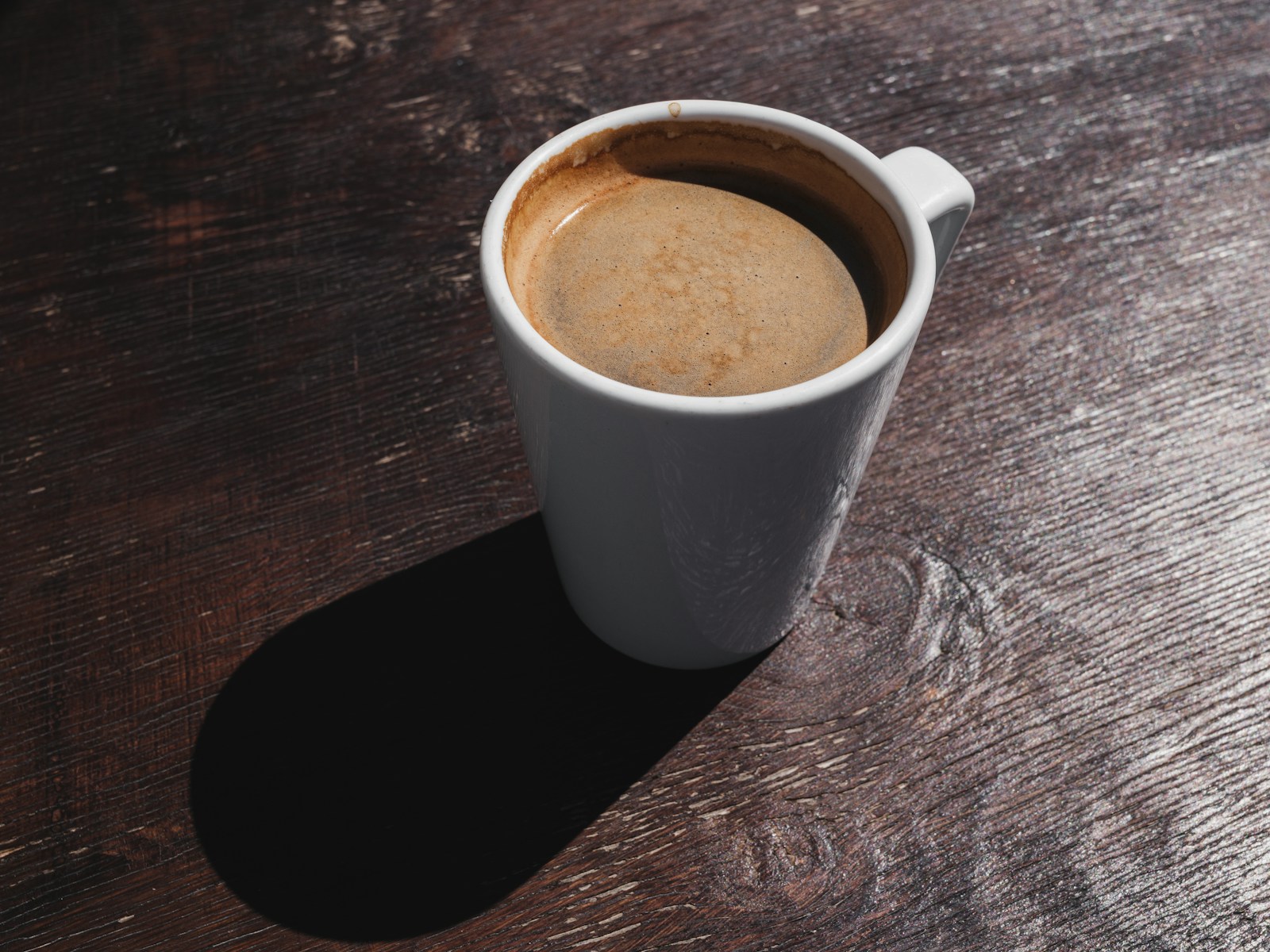
Nespresso Turned the Kitchen Into a Small Boutique
Nespresso officially launched in 1986 with a proposition that eventually became extremely powerful: reproduce a controlled espresso experience at home through a machine and pre-portioned capsule.
The capsule did several jobs at once.
It simplified preparation, protected consistency and encouraged repeat purchasing within a branded system. The machine created the initial relationship; the pods kept the relationship commercially active.
Nespresso then wrapped that system in premium design, specialist language, boutiques, membership and advertising. Coffee became part appliance, part consumable, part club and part performance.
The broader home-coffee market has continued this movement. Bean-to-cup machines, grinders, milk systems, subscriptions and speciality roasters allow consumers to bring more of the café ritual into the kitchen.
My De’Longhi did exactly that in a modest way. It did not turn my house into Milan, and nobody has yet entered the kitchen specifically to admire the workflow. It did make preparation enjoyable enough to change my behaviour.
That is an important form of marketing value. The machine does not simply improve an output. It gives the owner a role in creating it.
Milk, Oat Milk and the Expanding Coffee Order
Coffee’s adaptability also helps the category absorb changes in taste, health needs and identity.
My own gradual move away from milk-heavy coffees was partly driven by lactose intolerance. Black coffee became more attractive; oat milk offered another route when black coffee felt unnecessarily committed.
For marketers, alternatives such as oat milk do more than add an ingredient. They expand who can participate in particular coffee occasions and allow the same customer to move between formats.
They also create new positioning territory. Dairy alternatives have been sold through taste, health perceptions, environmental concern, dietary accommodation and contemporary café culture. Those meanings do not always align neatly, and the products themselves attract debate about processing, nutrition, pricing and environmental claims.
The result is a menu that functions partly as a segmentation system. Strength, milk, sweetness, temperature, origin and preparation can all be adjusted. One category supports an extraordinary number of identities and occasions.
This is useful for inclusion and commercial growth. It also explains why ordering a coffee can occasionally resemble completing a short administrative form.
Provenance Gives Coffee Another Story to Tell
Speciality coffee added another source of value: where the coffee came from, who grew it, how it was processed and what happens to the people and environments within the supply chain.
Provenance can improve understanding and help consumers distinguish between products that would otherwise appear similar. Ethical certification and direct-trade narratives can draw attention to the millions of livelihoods connected to coffee production and the volatility faced by growers.
They can also become decorative language.
A map, a farmer’s first name and a paragraph about altitude may communicate genuine traceability. They may equally offer a comforting impression of closeness while leaving the commercial relationship largely invisible.
The marketing question is not whether brands should tell origin stories. Coffee has always travelled with stories of origin.
It is whether the evidence behind the story is as carefully developed as the typography used to present it.
International Coffee Day itself reflects this wider view. The International Coffee Organization describes 1 October as both a celebration of coffee and an opportunity to recognise the farmers and workers whose livelihoods depend upon it.
That is a useful corrective to an article dominated by machines, cafés and consumer preference. The final ritual may happen in a kitchen or coffee shop, but the value chain begins a very long way from either.
The ritual begins long before the cup
Machines, menus and café theatre sit at the consumer end of a value chain sustained by growers and workers whose role can disappear behind the brand story.
Photograph by Luba Glazunova via Unsplash.
When Coffee Culture Becomes Too Much Coffee Culture
Successful categories develop expertise. Expertise creates better products, more variety and consumers capable of appreciating meaningful differences.
It also creates jargon, status games and opportunities to mistake complexity for quality.
Coffee is now capable of supporting everything from a jar of granules to a carefully traced microlot prepared with equipment worth more than a modest second-hand car. Neither end of that range automatically possesses moral superiority.
A simple coffee can be excellent for the job it is meant to do. An elaborate coffee can justify its price through craft, quality and experience. Trouble begins when the performance surrounding the product is used to discourage ordinary judgement.
If the customer enjoys the coffee, understands the proposition and believes the experience is worth the price, the marketing has added value.
If the customer mainly feels frightened of ordering incorrectly, the brand may have staged the wrong experience.
My own behaviour sits somewhere in the middle. I enjoy making different coffees at home. I increasingly appreciate black coffee. I will use oat milk. I can even survive an espresso, although Paris has repeatedly demonstrated that confidence and good judgement are not the same thing.
I still sometimes drink too much of it.
No marketing theory has yet made the sixth coffee of the day a particularly strategic decision.
The Meaning Around the Cup
Coffee marketing did not move in a straight line from primitive to sophisticated.
The seventeenth-century coffeehouse was already an experience, a community and an information network. Nescafé did not make coffee more meaningful by making it convenient. It created a different kind of value. Starbucks did not invent social coffee drinking. It branded and scaled a particular modern interpretation. Home machines did not replace cafés. They gave consumers another role inside the ritual.
All four marketing lives continue at once.
Somebody can drink instant coffee before work, meet a colleague in a chain café, order an espresso after lunch and spend Sunday morning adjusting a grinder. The same consumer can move between convenience, sociability, indulgence and craft without needing to join a different species.
That is why coffee is such a resilient category. It can accommodate changing tastes while preserving the underlying habit.
The bean has not had to reinvent itself quite as often as the meaning wrapped around it.
And somewhere between Pasqua Rosée’s health claims, Nescafé’s convenience, Starbucks’ café culture and the machine on my kitchen counter, coffee stopped being merely something people drank.
It became something people did.
Frequently Asked Questions
When did coffeehouses first appear in London?
Pasqua Rosée opened one of London’s earliest coffeehouses near the Royal Exchange in 1652. Coffeehouses expanded rapidly and became associated with trade, news, politics and social exchange.
When was Nescafé launched?
Nestlé launched Nescafé in 1938 after years of work to create a soluble coffee product following a request connected to Brazil’s coffee surplus.
How did Starbucks change coffee marketing?
Starbucks packaged and scaled a recognisable coffeehouse experience built around personalisation, atmosphere and café culture. It made the location and ritual surrounding coffee central parts of the brand proposition.
Why are coffee machines commercially valuable?
A home machine can create an ongoing system involving equipment, beans or capsules, accessories and repeated preparation. It also gives consumers a more active role in the coffee ritual.
Selected Sources and Further Reading
- International Coffee Organization: International Coffee Day
- Nestlé: Company history and the launch of Nescafé
- Nestlé: Nescafé brand history
- Starbucks: Company history
- Pine and Gilmore (1998): Welcome to the Experience Economy
- Rook (1985): The Ritual Dimension of Consumer Behavior
- Arnould and Thompson (2005): Consumer Culture Theory
- Fairtrade International: Coffee, pricing and producer livelihoods