

Attention Economy · Advertising · Brand Building
The Attention Economy Didn’t Start With Social Media: What Guinness Knew About Attention Decades Ago
TikTok did not invent the fight for attention. Neither did Instagram, television or even radio. Marketers have been trying to interrupt, intrigue and remain memorable for far longer — and Guinness offers one of the clearest examples of how to do it without confusing attention with success.
The phrase attention economy sounds remarkably modern.
It conjures up doom-scrolling, algorithmic feeds, notifications, creator thumbnails, six-second videos and marketers trying to stop somebody’s thumb for long enough to count an impression.
But the underlying problem is much older.
In 1971, the economist and decision scientist Herbert Simon argued that an abundance of information creates a scarcity of something else: the attention needed to consume it. Social media did not create that scarcity. It industrialised it, measured it obsessively and put a live auction behind much of it.
Long before anybody worried about TikTok retention curves, newspapers fought for readers, posters fought for glances, radio fought for ears and television fought for the right to keep people on the sofa through the commercial break.
Attention is not a new marketing currency. What is new is how quickly we can measure, trade and waste it.
Few brands demonstrate the continuity better than Guinness. Its advertising has moved from press and illustrated posters to television, cinema, digital film and social media, yet the basic challenge has barely changed: make somebody notice, make them know it is Guinness, and leave something behind after the moment has passed.
Before Guinness, There Was Already a Battle for the Eye
The attention economy predates the phrase because advertising predates the technology we now associate with it.
By the late nineteenth century, brands were already learning that scale created a new problem. Mass production could put more goods into the market, but mass media put more messages in front of the same human beings.
Pears Soap became an early master of that environment. Thomas J. Barratt developed publicity schemes, used famous artwork and treated advertising as something capable of becoming culture rather than merely announcing a product.
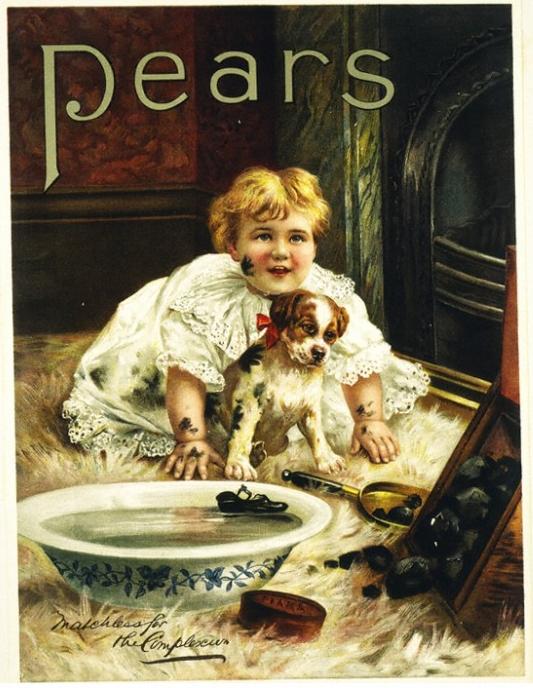
There was no click-through rate. No completion rate. No engagement dashboard.
But the problem was recognisable: how do you earn a disproportionately large share of somebody’s limited attention?
That question did not disappear when new media arrived. It just acquired new terminology.
Guinness Entered Advertising Late — and Then Became Very Good at It
According to the Guinness Archive, the brand went roughly 170 years without formal advertising. That changed in 1929, when its first official campaign appeared in the British press.
The interesting part is what happened next.
Guinness did not merely fill space with increasingly detailed explanations of stout. Working with S. H. Benson and artist John Gilroy, it developed a visual world designed to survive a hurried glance: bold type, strong colour, humour, animals, recurring slogans and unmistakable Guinness imagery.
The toucan arrived in the 1930s and became one of the most recognisable creatures in British advertising. It worked not because consumers had carefully evaluated the zoological relevance of tropical birds to Irish stout, but because it was distinctive, memorable and easy to process.
Gilroy later described the poster challenge in terms of people being in a hurry. His work had to function as what he called an “aesthetic meal-in-a-minute”.
That is an attention-economy idea written decades before the phrase became fashionable.
The advertising did not only attract attention. It made the attention attributable.
A spectacular image is less valuable if the audience remembers the joke, animal, song or stunt but forgets which brand paid for it. Guinness built creative ideas inside a recognisable brand world, so entertainment and attribution reinforced each other.
Then Television Changed the Size of the Stage
Guinness moved into television early. Its archive records its first television advert in 1955, on the first night of commercial television in Britain.
The medium changed enormously. The requirement did not.
A television commercial had more movement, sound and narrative than a poster, but it still had to compete with everything around it: the programme, the kitchen, the newspaper on the sofa and the very human urge to stop paying attention when somebody began selling something.
By 1999, Guinness had one of the most famous answers to that problem.
Watch
Guinness “Surfer” — attention with a brand idea inside it
Jonathan Glazer’s Surfer launched in Britain on St Patrick’s Day 1999. White horses emerge from a wave, Leftfield’s Phat Planet builds underneath it, and the whole film turns waiting into something heroic. Guinness’s slow pour — potentially a product weakness — becomes the strategic idea: good things come to those who wait.
It attracted attention because it was beautifully made. But the more important point is that the spectacle served something recognisably Guinness.
The brand’s own history records that Surfer won a Gold Lion at Cannes in 1999 and was voted the greatest television commercial in Channel 4’s 100 Greatest TV Ads the following year.
That is what makes it useful here. It is not evidence that “big creative always works”. It is evidence that attention becomes more valuable when it carries a strong idea about the brand.
Attention Without Attribution Is Just Entertainment Someone Else Paid For
This is where modern conversations about attention sometimes become too shallow.
We measure whether somebody stopped, watched, clicked, commented or shared. Those are useful signals, but none of them automatically tells us whether the brand gained anything.
A person can watch an advert to the end and misremember who it was for. They can share something because it is ridiculous. They can comment because they hate it. They can remember the celebrity and forget the product.
So I think of attention as the first link in a chain rather than the objective itself.
The Attention Chain
Did anything interrupt the blur?
No attention means no opportunity for communication.
Did they know it was you?
Distinctive brand assets stop successful creative becoming anonymous creative.
Did the moment say anything?
Attention needs to attach to an idea, feeling, product truth or reason to care.
What survives tomorrow?
The commercial effect often arrives after the exposure, when the category becomes relevant later.
Did anything eventually change?
Search, trial, purchase, recommendation and preference are more interesting than a view count on its own.
Attention is an input, not an outcome.
Guinness’s best work understands the whole chain.
Cadbury Gorilla: When the Product Almost Disappears
Cadbury’s Gorilla is useful because it pushes the same question in a different direction.
The 2007 advert spends most of its running time with a gorilla preparing to play the drums to Phil Collins. Chocolate is barely involved until the end.
On paper, that sounds like a dangerous way to sell confectionery.
In practice, the film was deliberately built around the idea of joy and pleasure rather than a rational product demonstration. An IPA effectiveness case study reported that Cadbury Dairy Milk had been in decline and that sales by value rose year-on-year after the campaign launched.
The lesson is not that brands should hide their products behind animals and 1980s power ballads. It is that entertainment can create commercial value when the emotional experience fits what the brand wants to own.
Watch
Cadbury Gorilla — almost pure attention, but not empty attention
Benetton Shows the Other Side of the Equation
Attention can also become detached from product meaning in a much more uncomfortable way.
Under Oliviero Toscani, United Colors of Benetton deliberately used provocative imagery and social issues to force itself into public discussion. Some campaigns were rejected by publications or censored in different markets. Others generated enormous debate.
Whatever you think of the work, it exposes a problem that applies just as strongly to modern social media.
If people are talking about the controversy, are they talking about the brand in a way that helps it?
There is no universal answer. Sometimes controversy sharpens a brand’s identity. Sometimes it overwhelms it. Sometimes the attention itself becomes the only thing anybody can remember.
That is why “it got people talking” has always been a fairly weak defence of marketing.
Red Bull Stopped Buying Media and Started Becoming Media
Red Bull takes the attention problem in another direction.
Rather than treating advertising as a interruption around interesting content, it has repeatedly created the interesting content itself.
The most extreme example is Red Bull Stratos. In 2012, Felix Baumgartner jumped from the stratosphere while millions watched live online. YouTube reported more than 8 million concurrent livestreams at the peak.
At that point it becomes difficult to draw a clean line between event, sponsorship, branded entertainment, media production and advertising.
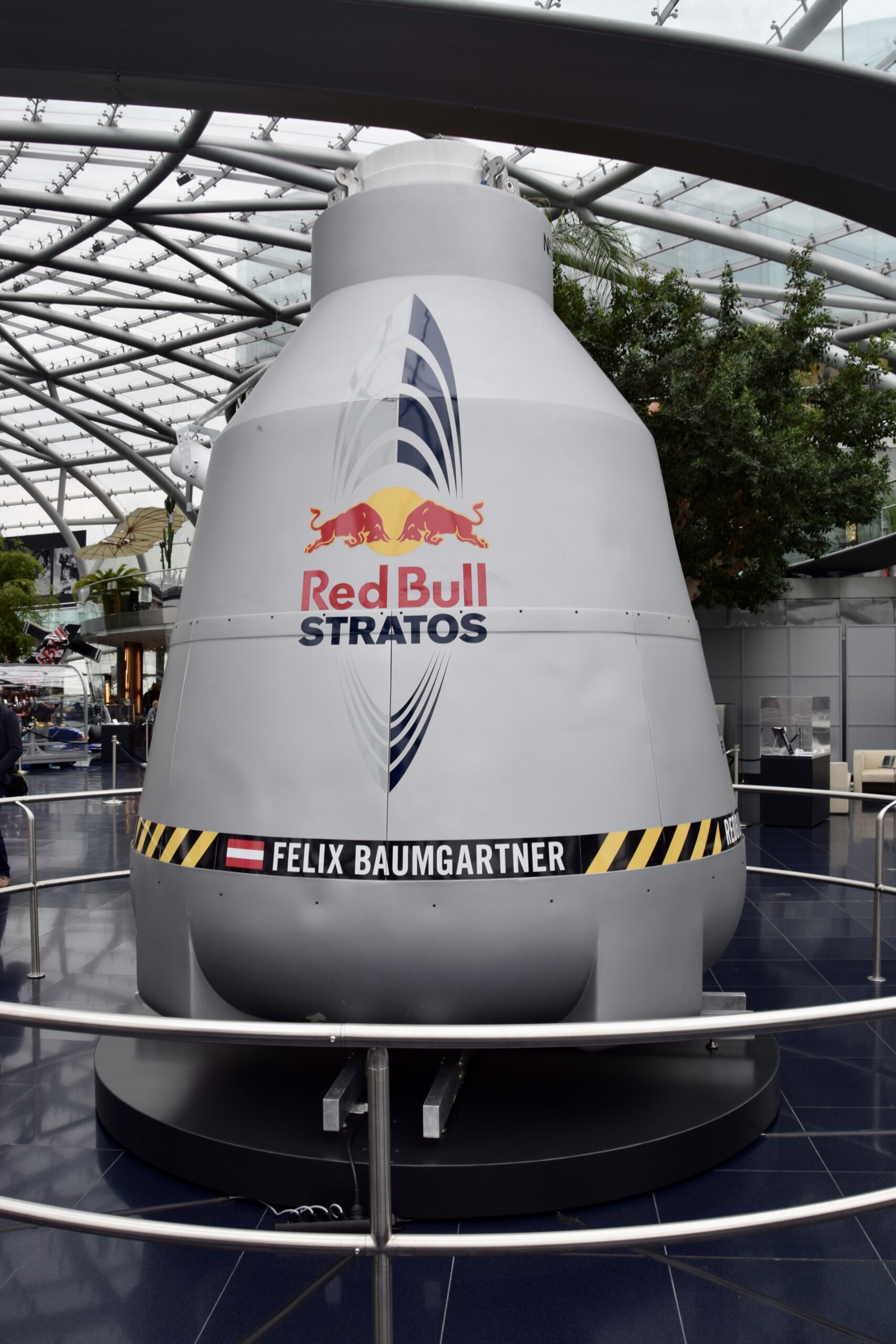
The event generated attention because the event itself was genuinely extraordinary.
That is a very different proposition from buying a pre-roll advert and asking somebody not to skip it.
Red Bull did not interrupt eight million people with content. It created the reason those people turned up.
The most powerful attention strategy can be to create the thing people choose to pay attention to.
That is one reason the old distinction between “media” and “advertising” has become increasingly messy.
Social Media Changed the Machinery, Not the Human Limitation
There is still something genuinely different about today’s environment.
A poster could compete with the street around it. A television commercial could compete with a handful of channels and whatever else was happening in the room.
A social feed is an effectively endless stream of competitors optimised by software to keep finding the next thing that might hold you.
Brands such as Ryanair have learned to behave natively inside that system: faster, stranger, more self-aware and willing to participate in the language of the platform rather than importing polished television advertising into it.
But the underlying test remains surprisingly old-fashioned.
Did I notice it?
Did I know who it was?
Did it give me any useful reason to remember them?
Google Offers an Important Counterargument
Not all marketing needs to win attention by interrupting someone.
Search advertising is powerful because it often appears when attention already exists.
Someone searching “best running shoes for flat feet”, “emergency plumber near me” or “raw dog food subscription” is not an unwilling audience that needs entertaining into awareness. They have declared intent.
That makes search fundamentally different from much of the attention economy.
It does not remove competition — every advertiser still wants to be the answer somebody notices — but it shifts the problem from capturing attention to capturing existing intent.
That is one reason marketers should be careful with blanket statements about attention. Different channels perform different jobs.
What Guinness Knew Before We Had the Metrics
Guinness did not have view-through rates in 1935.
It could not calculate thumb-stop ratios for a toucan poster.
John Gilroy could not open an analytics dashboard and discover that commuters aged 25–34 had spent 1.8 seconds longer looking at an ostrich.
But the work understood several principles that still matter:
Be distinctive enough to be noticed. Make the brand unmistakable. Give people an idea worth remembering. Repeat the assets without repeating the execution.
The technology around those principles has changed beyond recognition.
The principles have not.
The Danger of Optimising for the First Link
Digital platforms have made attention measurable at extraordinary resolution.
That is useful. It is also dangerous.
Once a number becomes visible, organisations naturally start optimising for it. Hooks become more extreme. Thumbnails become louder. Copy becomes more urgent. Videos become engineered around retention cliffs. Every opening sentence starts behaving as though the reader is attempting to escape.
Some of that is simply good communication. Nobody gets extra marks for being boring.
But there is a point where optimisation for attention begins to damage the thing the attention was supposed to achieve.
A misleading headline may win the click and weaken trust. A deliberately irritating social personality may produce engagement and narrow the brand. A spectacular advert may win awards while failing to build any useful memory structure around the product.
The metric is not wrong.
It is incomplete.
Attention is an input, not an outcome.
The job is not simply to be noticed. It is to turn being noticed into attribution, meaning, memory and eventually behaviour.
The Attention Economy Was Always Here
Social media deserves some of the anxiety surrounding attention because it has made competition constant, portable and personalised.
But it did not invent the commercial desire to occupy somebody’s mind.
Pears wanted the Victorian consumer to stop at a poster.
Guinness wanted the commuter to notice a toucan and the television viewer to wait for a surfer.
Cadbury wanted us to watch a gorilla play Phil Collins.
Benetton wanted to make itself impossible to ignore.
Red Bull wanted millions of people to watch a man step out of a capsule above the Earth.
Ryanair wants you to stop scrolling for long enough to share the joke.
The channels changed. Human attention remained stubbornly finite.
And that may be the most useful thing to remember when somebody presents the next platform as though marketing has been reinvented from scratch.
Sources and further reading
- Oxford Academic — attention economics and Herbert Simon’s 1971 formulation.
- Guinness Storehouse — history of Guinness advertising.
- Guinness Archive — John Gilroy, the animals and the toucan.
- IPA — Cadbury Dairy Milk Gorilla effectiveness case study.
- United Colors of Benetton — Oliviero Toscani campaign archive.
- YouTube — Red Bull Stratos livestream audience.
- Wikimedia Commons — Pears Soap poster, 1900 (public domain).
- Wikimedia Commons — Guinness brewery photograph by dronepicr (CC BY 2.0).
- Wikimedia Commons — Red Bull Stratos photograph by Ank Kumar (CC BY-SA 4.0).