

AI • Education • Marketing
AI and University Education: If AI Can Do Your Degree, What Is University Actually For?
MIT says artificial intelligence can now produce credible responses to almost any written assignment in its undergraduate curriculum. That sounds like a problem for students. It might actually be a much bigger problem for universities.
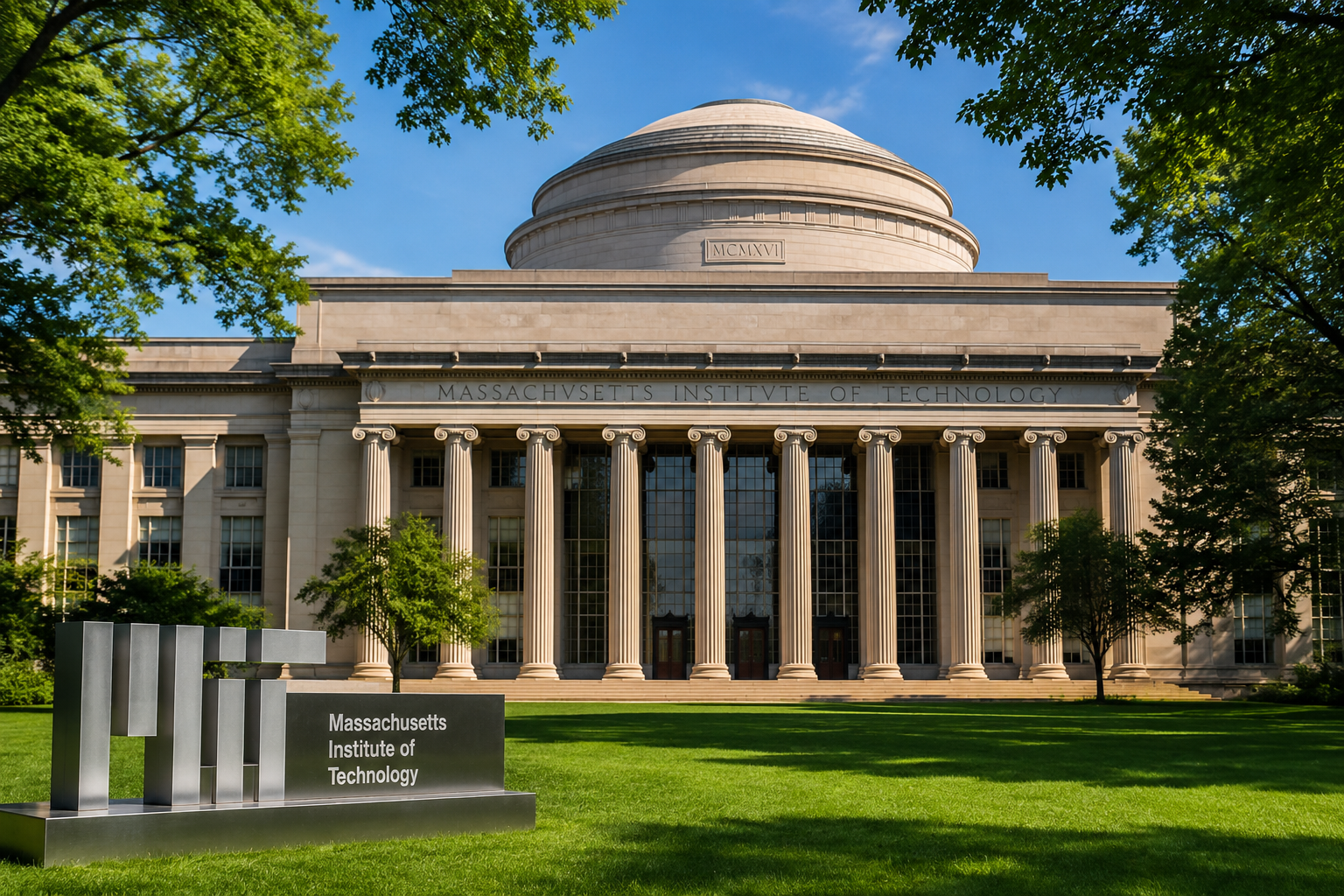
There are certain announcements you probably don't expect to come out of the Massachusetts Institute of Technology.
“We've had another breakthrough in quantum computing”? Absolutely.
“We've built a robot that can assemble an IKEA wardrobe without swearing”? Plausible.
“Artificial intelligence can now have a fairly convincing go at almost everything we ask our undergraduate students to do”?
That one is slightly more awkward.
On 25 August 2026, MIT published the final report of its Ad Hoc Committee on AI Use in Teaching, Learning, and Research Training. The committee had been asked to examine how AI was being used by students and teachers, identify potential innovations in teaching and assessment, and recommend how the Institute should respond.
The response was not: ban ChatGPT.
It was considerably more interesting than that.
We're not merely talking about 1,500 words explaining Porter's Five Forces.
The committee's concern extends across the undergraduate curriculum, while contemporary AI systems can increasingly handle essays, mathematical problems, proofs, code and analysis.
MIT President Sally Kornbluth described generative AI as a “watershed” for MIT and for higher education more broadly.
That is quite a statement coming from MIT.
Because if artificial intelligence can increasingly reproduce the work used to demonstrate that somebody deserves a degree, we need to ask an uncomfortable marketing question.
What exactly is the university selling?
The assignment was never really the product
There is an important distinction to make immediately.
AI cannot “do a degree”.
That's a magnificent headline, but it isn't really what MIT is saying.
A degree involves years of lectures, conversations, experiments, feedback, reading, mistakes, projects, relationships, arguments and probably at least one group assignment in which three people somehow end up doing the work of six.
AI hasn't experienced any of that.
What AI can increasingly do is produce the output traditionally used as evidence that somebody has experienced it.
And that may be the much more important problem.
Consider the university essay.
A lecturer doesn't actually want 3,000 words about consumer behaviour.
Nobody has spent their weekend thinking: what would really improve Sunday evening is another 47 essays about Maslow's hierarchy of needs.
The essay exists because universities need some mechanism for establishing whether students understand a subject.
The document is a proxy.
What the university really wants to observe might be knowledge, research ability, reasoning, synthesis, critical thinking or judgement.
Historically, producing a good essay required enough of those abilities that the essay became useful evidence of them.
AI weakens that relationship.
You can now possess a fairly impressive-looking output without necessarily possessing the capability that output is supposed to represent.
In marketing language, the signal has started separating from the underlying product.
And students are already using it
This isn't a hypothetical problem patiently waiting for us somewhere in the 2030s.
AI is already a normal part of university life.
The Higher Education Policy Institute's Student Generative Artificial Intelligence Survey 2026, based on responses from 1,054 full-time UK undergraduates, found that AI use had become almost universal.
The change has been spectacularly fast.
Students reporting use of generative AI to help with assessments. Source: HEPI Student Generative AI Surveys 2024–2026.
In other words, we have rather comprehensively moved beyond the question:
“Should students use AI?”
They do.
The useful questions now are considerably harder.
What should students use AI for? What should they still be expected to do themselves? What capabilities should universities actually develop? And how can anyone reliably establish that those capabilities have been developed?
Those are more difficult problems than simply blocking ChatGPT on the university Wi-Fi.
Using AI is not the same as asking AI to do your work
There is important nuance hidden inside that 94% figure.
Using generative AI in connection with an assessment does not necessarily mean asking it to write the assessment.
A student might ask AI to explain an economic theory in simpler language.
Another might use it to summarise research before going back to the original source.
Another could ask it to identify weaknesses in an argument.
And another might type:
“Write my essay. 2,500 words. Harvard referencing. Make it sound human. Deadline was technically yesterday.”
These are not remotely equivalent behaviours.
HEPI found that the proportion of students reporting that they had directly included AI-generated text in assessed work rose from 3% in 2024 to 8% in 2025 and 12% in 2026.
Students reporting directly including AI-generated text in assessed work. Source: HEPI Student Generative AI Survey 2026.
So universities face a problem familiar to anybody involved in technology or marketing.
Adoption has happened faster than governance.
Students are using the technology while institutions are still deciding exactly what the rules ought to be.
believe AI skills are essential to thrive in today's world.
feel teaching staff are helping them develop those skills for their future careers.
Source: HEPI Student Generative AI Survey 2026.
That gap matters.
Because universities aren't preparing graduates for an AI-free workplace.
There isn't one.

The marketing student problem
This gets particularly interesting when we apply the problem to marketing education.
Suppose I ask a student:
“Explain Porter's Five Forces.”
An AI can do that beautifully.
Probably better than a surprisingly high proportion of people who have sat through a strategy lecture at 9am on a Tuesday.
Ask it to explain SWOT, PESTLE, the Ansoff Matrix, segmentation, price elasticity, the product life cycle or qualitative versus quantitative research and you will receive perfectly serviceable explanations within seconds.
So if the assessment merely establishes that somebody can reproduce information that a machine can reproduce instantly, what are we actually assessing?
This doesn't make marketing knowledge irrelevant.
Quite the opposite.
A marketer who doesn't understand positioning will struggle to judge whether an AI's proposed positioning makes sense.
If you don't understand research methodology, you won't necessarily notice when AI misunderstands a sample or confidently turns correlation into causation.
If you don't understand finance, you may be extremely impressed when your AI assistant reports a 900% ROI after quietly forgetting several inconvenient costs.
Knowledge remains important.
But recall becomes less valuable while judgement becomes more valuable.
Knowing the definition of segmentation matters less than being able to examine a real market and decide whether the proposed segments actually make sense.
Knowing the four Ps matters less than recognising why a product isn't selling.
Being able to define positioning matters less than noticing that everybody inside a business thinks the brand stands for something different.
Perhaps we have spent too much educational effort testing whether students can describe marketing.
The future may require us to test whether they can do marketing.
The terrifying return of “Why?”
MIT's response points strongly in this direction.
The committee calls for MIT to create more “AI-aware” educational processes: revisiting what students need to learn, reconsidering how those learning goals are achieved, rethinking assessment and placing greater emphasis on hands-on learning.
And suddenly something remarkably old-fashioned starts looking futuristic.
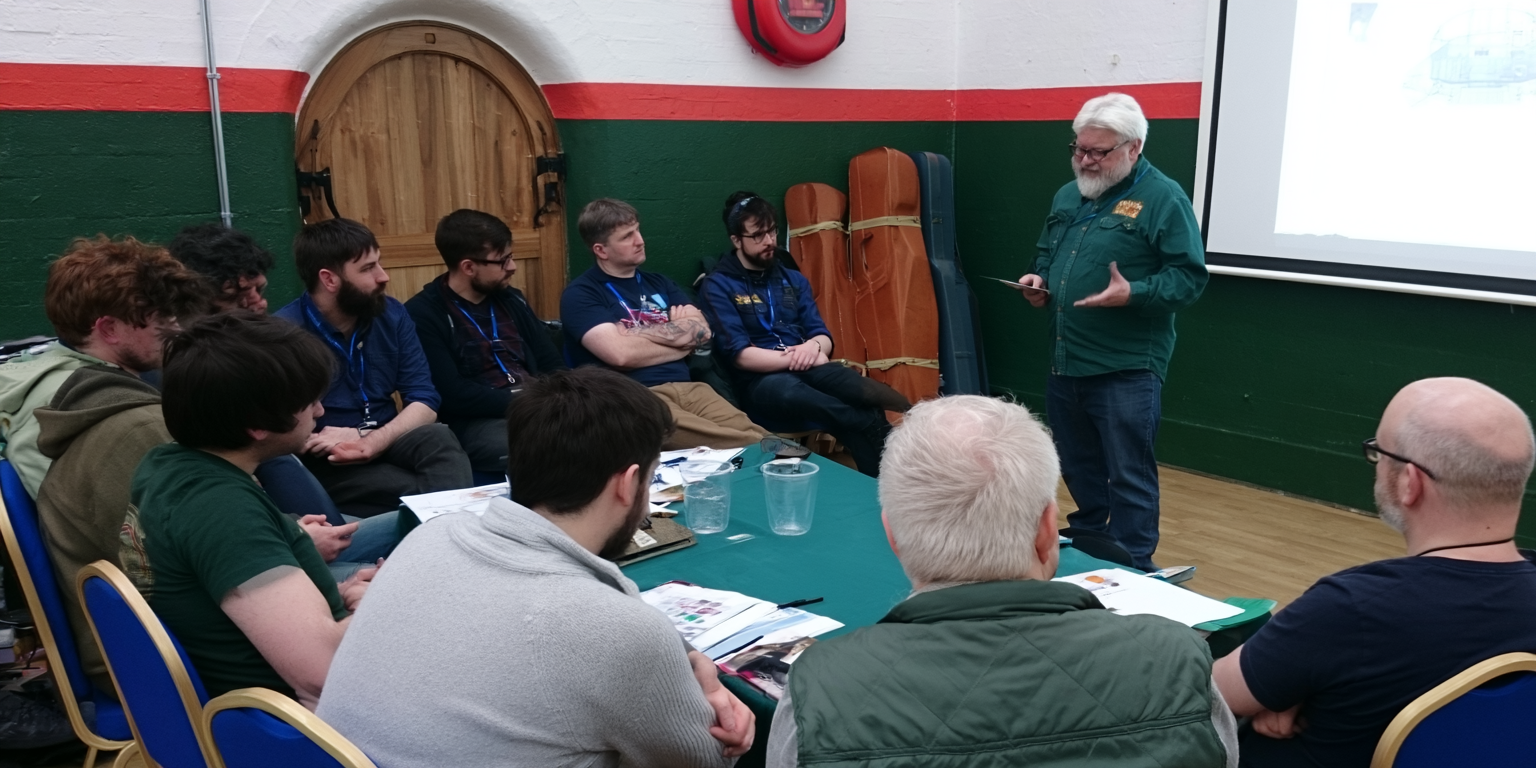
Imagine submitting your marketing strategy and then sitting opposite your lecturer.
Why did you choose that segment?
Why do you believe customers behave that way?
What evidence supports that?
What alternative did you reject?
What happens if your assumption about price is wrong?
Why?
AI can generate your original report.
It cannot rescue you from the fifth consecutive “why?” if you don't understand what you've submitted.
And that may be a far better test of capability.
The final document could still involve AI. Students might even be explicitly expected to use it.
But assessment moves from who manufactured the sentences towards who owns the thinking.
The AI detector arms race isn't especially attractive either
The obvious alternative is surveillance.
Universities could attempt to determine which essays were written by humans and which involved AI.
Unfortunately, this creates its own problems.
Recent research discussed by HEPI illustrates just how variable AI-detector performance can be. In one frequently cited experiment, seven detectors were tested against 91 genuine TOEFL essays written by people for whom English was not their first language.
That does not mean AI detectors are always wrong.
Other evaluations have found dramatically lower false-positive rates.
That's precisely the problem.
Accuracy varies according to the detector, dataset, writing style and circumstances. A percentage generated by a piece of software therefore shouldn't automatically become proof that a student cheated.
There is also something faintly ridiculous about building more artificial intelligence to determine whether somebody used artificial intelligence to complete an assignment that artificial intelligence can increasingly complete anyway.
At some point, redesigning the assignment starts looking easier.
AI might be exposing something education was already getting wrong
This is where the MIT report becomes more interesting than another story about ChatGPT.
AI may not simply be creating an assessment problem.
It may be exposing one.
Universities have traditionally relied heavily upon outputs.
Write this essay.
Complete this report.
Solve these problems.
Submit this project.
The assumption was that producing the output required the learning process.
That assumption is increasingly fragile.
And perhaps some assessments were already rewarding the wrong things.
A student capable of memorising theory, repeating lecture notes and producing academically structured prose might perform extremely well without being especially capable of applying the subject outside university.
Meanwhile, someone with outstanding commercial judgement, creativity or practical ability might be less naturally suited to conventional academic assessment.
AI makes that tension rather difficult to ignore.
Efficiency can become the enemy
AI is extraordinarily good at removing friction.
Usually, that's its greatest benefit.
But education presents a fascinating contradiction because some forms of friction are intentional.
You could make learning multiplication more efficient by giving every child a calculator.
You could remove the irritation of learning another language by permanently carrying a translator.
You could avoid learning how to navigate by following the blue line on your phone forever.
All of these approaches are efficient if the goal is simply obtaining the answer.
They are less useful if the goal is developing the capability.
There is an enormous difference between doing a task and becoming the person capable of doing the task.
AI is forcing universities to decide which one they are selling.
University is more than knowledge
This takes us back to our marketing question.
What is the university product?
It's tempting to say education.
But that's rather like saying Disney sells entertainment. True, but not especially illuminating.
A university actually bundles numerous propositions together.
It provides structured knowledge, expert tuition, assessment, credentials, facilities, opportunities to experiment, social networks, professional connections, independence, status and experience.
It is simultaneously an educational institution, a certification body, a community, a research environment and — whether universities particularly enjoy describing themselves this way or not — a brand.
AI affects these parts differently.
Access to information? Dramatically.
Basic explanation? Dramatically.
Producing competent written material? Dramatically.
Access to another human being who has spent thirty years studying your subject?
Much less so.
A laboratory?
Not particularly.
A professional network?
Not particularly.
The experience of attempting something genuinely difficult with other people?
Not particularly.
A credential employers trust?
Potentially enormously — if employers begin doubting what that credential actually proves.
Degrees are signals
Part of the economic value of a degree has always come from signalling.
An employer doesn't observe somebody's three years at university.
They see the qualification.
The degree compresses a huge amount of information into a convenient signal.
This person was admitted. They completed the programme. They met the required standard. They probably possess a certain amount of knowledge and capability.
If assessment can no longer reliably demonstrate individual capability, the signal weakens.
Employers may compensate with more practical testing, interviews, portfolios, assessment centres or live problem-solving exercises.
In other words, if universities cannot convincingly certify that somebody possesses a capability, the market will create another mechanism for verifying it.
That should concern universities considerably more than whether somebody secretly asked ChatGPT to tidy up paragraph seven.

The campus itself may become more valuable
There is another rather wonderful possibility buried inside MIT's response.
Artificial intelligence could make the physical university more important, not less.
MIT's recommendations explicitly emphasise people, community and the residential experience alongside AI-aware education.
At first glance, that sounds backwards.
The greatest digital information tool humans have created arrives, and suddenly being physically surrounded by intelligent people becomes more valuable.
But it makes sense.
Information used to be scarce.
Universities possessed libraries, experts, laboratories and knowledge that were difficult to access elsewhere.
The internet dramatically reduced the scarcity of information.
AI takes another enormous bite out of it.
If anybody can obtain a personalised explanation of practically any concept at two o'clock in the morning from their bedroom, then access to information becomes less differentiating.
The scarce thing becomes something else.
Mentorship. Debate. Trust. Experience. Community. Challenge. Human attention.
A brilliant lecturer who questions your reasoning rather than simply transmitting information.
A peer who thinks you're wrong.
A team trying to solve something difficult.
The accidental conversation after a seminar.
These things are inconveniently analogue.
They might also become much more valuable.
So what should a marketing degree look like?
Perhaps we should turn the problem around.
Instead of asking how universities prevent students using AI to complete traditional marketing assignments, ask:
What could we assess that becomes more valuable because AI exists?
Give students messy commercial data.
Make them decide what matters.
Give them contradictory research.
Ask them to make a decision.
Make them pitch the strategy and defend it.
Introduce new information halfway through.
Challenge their assumptions.
Ask them to interview customers.
Let them use AI — but require them to identify where it was wrong.
Ask them to compare competing AI recommendations and determine which one they trust.
Make them explain what they rejected and why.
Let them build campaigns.
Measure outcomes.
Give them budgets.
Put them in situations where there isn't a convenient textbook answer waiting at the back.
Because that is considerably closer to marketing.
A Marketing Director isn't normally summoned into a meeting and asked:
“Could you please define integrated marketing communications for fifteen marks?”
They get:
“Sales are down 12%. Our biggest competitor has cut its price. The CEO wants a TikTok strategy. Finance has reduced your budget. What are we going to do?”
There is no mark scheme.
Welcome to marketing.

But don't throw knowledge away
There is a danger in all of this.
We could massively overreact.
If AI can retrieve information instantly, perhaps students no longer need to learn very much.
That would be a terrible conclusion.
Judgement requires knowledge.
You cannot reliably interrogate an AI answer about marketing research if you don't understand research.
You cannot spot a fabricated historical claim if you know nothing about history.
You cannot recognise flawed statistics if you don't understand statistics.
You cannot meaningfully challenge strategic advice if you possess no strategic foundations of your own.
AI makes plausible-sounding answers extraordinarily cheap.
That may actually make expertise more valuable.
The valuable person isn't necessarily the one who can produce an answer fastest.
Machines are going to win that competition.
The valuable person is the one who can determine whether the answer is good.
Students appear to understand the problem too
The HEPI research presents an interestingly contradictory picture of student attitudes.
Almost half — 49% — said AI had improved their student experience, citing benefits including saved time, better understanding and immediate support.
But students also raised concerns around fairness, erosion of skills, isolation and future employment.
“I'm not using my brain at all.”Student response, HEPI Student Generative AI Survey 2026
There, in seven words, is almost the entire debate.
AI can extend thinking.
Or AI can replace thinking.
The technology may be identical.
What changes is how we choose to use it.
Perhaps universities need to sell transformation again
Marketing contains an old distinction between what a product physically is and the benefit somebody actually buys.
Nobody buys a drill because they have developed an emotional attachment to rotational power tools.
They want a hole.
Students don't fundamentally buy lectures, essays, seminars or PowerPoint presentations either.
Those are mechanisms.
The deeper promise of university is transformation.
You arrive capable of certain things.
You leave capable of more.
AI doesn't necessarily threaten that proposition.
But it may force universities to demonstrate that the transformation has actually occurred.
And if they can do that, artificial intelligence might ultimately make education better.
Assessment could become more authentic.
Teaching could place greater emphasis on reasoning.
Students could spend less time mechanically producing documents and more time trying to understand difficult problems.
Academics could focus more heavily on discussion, feedback and mentorship.
AI could become something students learn to use professionally rather than something everybody quietly uses while pretending they don't.
MIT's response is explicitly aimed at building an AI-aware education, not attempting to reconstruct a pre-AI university behind increasingly elaborate technological walls.
That seems considerably more realistic.
AI didn't kill university. It killed a convenient assumption.
For decades, higher education has relied on a convenient relationship:
the work submitted by the student represented the ability of the student.
That relationship is breaking.
A beautifully structured essay might demonstrate extraordinary understanding.
Or extraordinary prompting.
Or, increasingly, some combination of research, judgement, AI collaboration, editing and original thought.
Looking at the finished document alone tells us less than it once did.
So perhaps the most interesting thing about MIT's report isn't that AI can increasingly produce credible responses to undergraduate assignments.
It is what that fact forces universities to confront.
If a machine can reproduce the thing we're measuring, perhaps we need to get better at measuring the thing we actually care about.
Understanding.
Judgement.
Creativity.
Problem solving.
Curiosity.
The ability to defend an idea.
The ability to recognise when an apparently convincing answer is complete nonsense.
For marketing students, those capabilities are not becoming obsolete.
They're becoming the job.
And perhaps the university of the future won't be defined by whether students are allowed to use artificial intelligence.
It will be defined by whether, after years of using it, they have learned how to think without surrendering their thinking to it.