

A History of Dog Food
From Table Scraps to Kibble and the Rise of Raw
Dog food has come on a long journey from the days when our four-legged companions lived off kitchen scraps and carcasses they hunted themselves. Today, supermarket shelves groan under the weight of options: dry kibble, canned wet food, freeze-dried, and now fridges with fresh-cooked and freezers with frozen raw dog food. And you can even get meals delivered direct to your door.
But how did we get here?
And is the dog food industry slowly circling back to its roots, with a renewed focus on minimally processed, raw feeding?
In this article for Marketing Made Clear, we’ll take an in-depth look at the global evolution of dog food – with a focus on the US market. We’ll explore how marketing, food technology, and changing cultural attitudes transformed the way we feed our dogs.
You’ll also find an evidence-based timeline complete with market share estimates, historical turning points, and a forecast for the future – where raw and fresh food may play a starring role.
The Marketing Made Clear Podcast
Check out the Marketing Made Clear Podcast on all good streaming platforms including Spotify:
Pre-Commercial Era (Pre-1860): Dogs Ate What We Ate
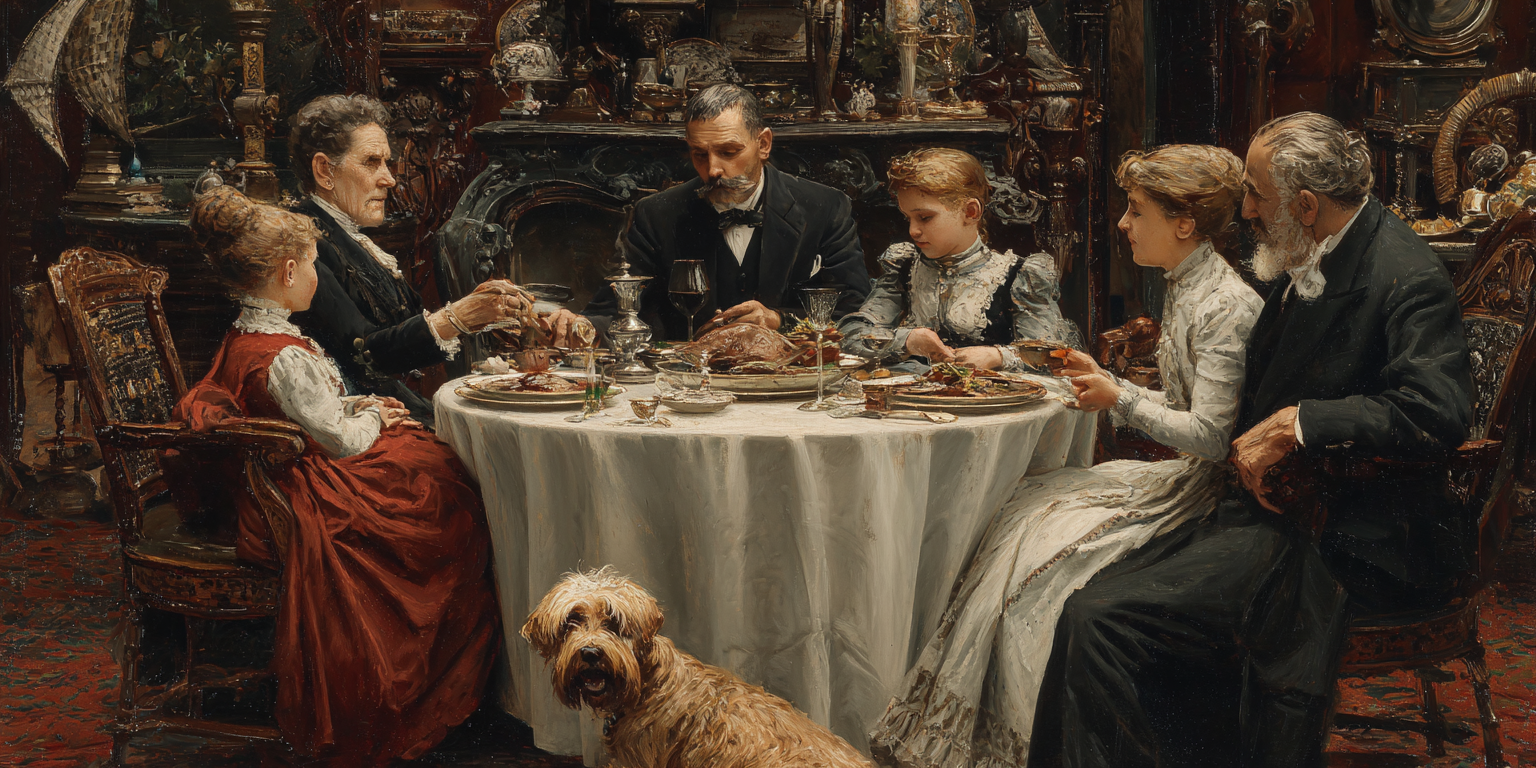
Before commercial dog food existed, dogs were scavengers and opportunists. Globally, they lived off table scraps, bones, crusts, vegetables, and whatever they could scavenge or hunt. Their diets were largely dictated by geography and socio-economic status. In rural areas, dogs had greater access to raw meat, offal, and bones – typically leftover from farming or game hunting. These dogs often assisted in working roles, and their food reflected a utilitarian approach to nourishment.
In urban settings, dogs were more likely to survive on human refuse. Cheap or discarded horse meat became a common source of sustenance in many cities, particularly as horses frequently died in the streets due to their role as transport animals. It wasn’t unusual for butchers and knackers to sell horse meat specifically for dog consumption, creating an early informal market for animal feed. Dogs were rarely considered in terms of individual nutrition – what they ate was based on availability, not formulation.
Despite the lack of scientific pet nutrition, dogs often thrived on these rough, protein-rich diets. The close bond between humans and dogs meant they were typically fed whatever was on hand, for better or worse. In essence, dogs shared in the fortunes—or misfortunes—of the household diet.
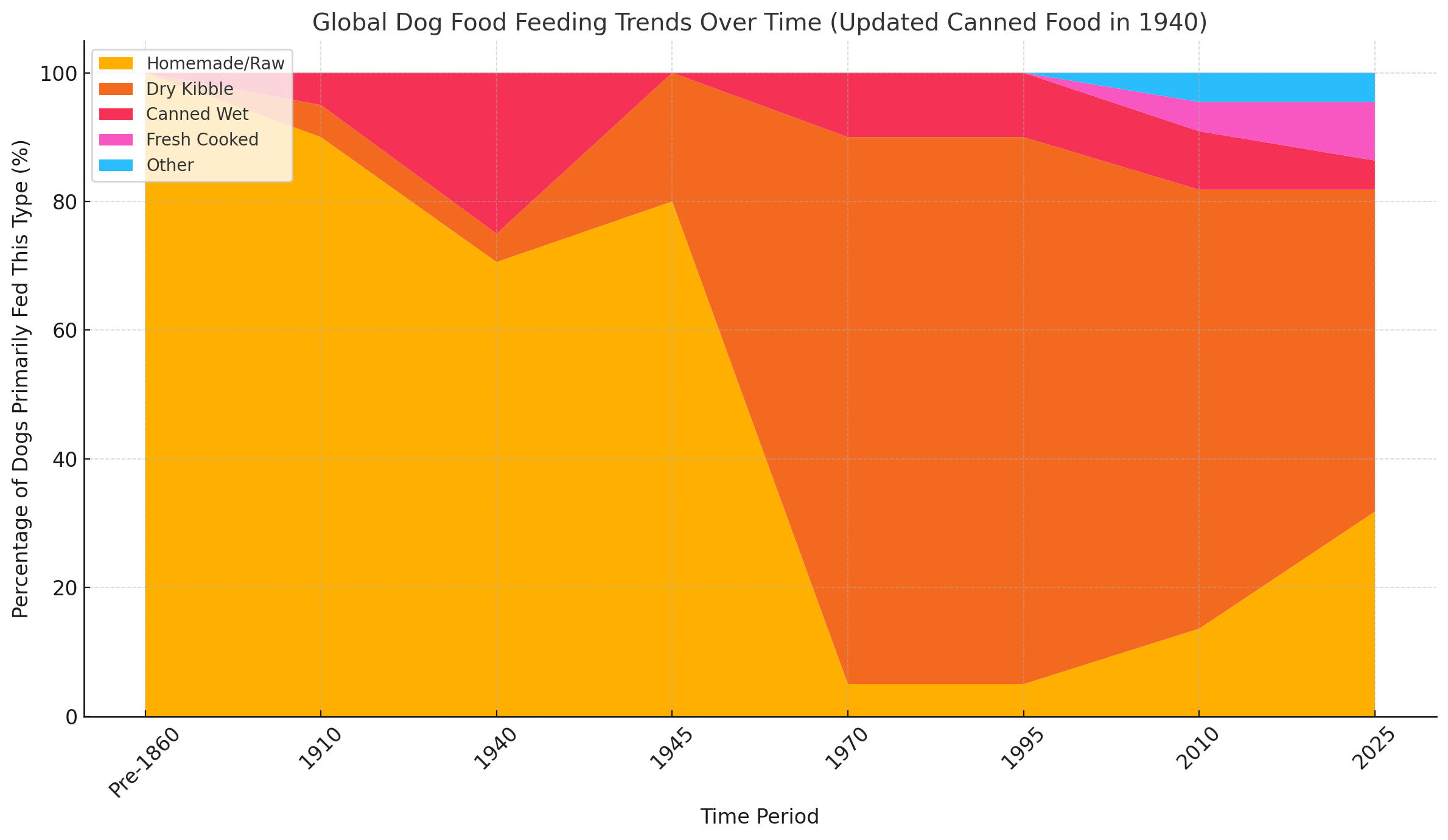
Estimated market share of dog food types (Pre-1860):
-
Homemade/raw/leftovers: 100%
1860s–1910s: The First Commercial Dog Foods Appear
The pet food industry began in the 1860s when James Spratt, an American entrepreneur, introduced the world’s first commercially available dog biscuit: Spratt’s Meat Fibrine Dog Cakes. The idea came to him while visiting London, where he noticed stray dogs eagerly devouring leftover ship’s hardtack biscuits at the docks. Recognising both the market potential and a clear need, Spratt created a baked hard biscuit made from a mix of wheat, vegetables, beetroot, and meat by-products; forming the prototype for the commercial pet food industry.
Spratt’s approach was revolutionary for its time: it introduced the concept of feeding dogs a specially formulated product rather than scraps or leftovers. The biscuits were marketed as both scientific and nutritionally complete, targeting upper-class dog owners, especially those who kept sporting or show dogs – but we all know that marketing at this time was particularly lawless… But advertising played a crucial role in building brand loyalty, with Spratt leveraging endorsements from veterinarians and dog breeders to position his product as superior.
The product’s success opened the floodgates for commercial dog food development, but access remained limited. The biscuits were expensive and seen as a status symbol, primarily available to wealthier households in Britain and later the United States. For the average household, homemade or scavenged diets remained the norm – but Spratt had planted the seed for a growing and profitable industry.
Spratt’s success led to competitors like Milk-Bone, introduced in 1908. Still, commercial dog food remained a minority niche, with most dogs continuing to eat home-prepared meals or scraps.
Estimated market share of dog food types (by 1910s):
- Homemade/raw/leftovers: 90–95%
- Commercial dry (biscuits): 5–10%
Processing method:
-
Baked biscuits (oven-baked, shelf-stable)

1920s–1930s: Canned Food Revolution
In 1922, the Chappel Brothers of Illinois launched Ken-L Ration, marking a significant turning point in the pet food industry as the first mass-produced canned dog food. The primary ingredient was horse meat, which was in abundant supply at the time due to the declining use of horses in agriculture and transport. Chappel Brothers positioned Ken-L Ration as a convenient, high-protein, meat-rich alternative to dry biscuits and scraps, cleverly marketed as a healthy and modern way to feed dogs.
The marketing campaign was groundbreaking for its time. By securing endorsements from celebrity dogs like Rin Tin Tin, the brand created emotional appeal and widespread brand recognition. They also capitalised on growing trust in processed, tinned foods among human consumers, reinforcing the idea that the same technological advancements could benefit canine diets.
By 1941, Ken-L Ration had grown into a dominant force in the commercial pet food space, with canned diets accounting for approximately 90% of all commercial dog food (not all dog food!) sold in the United States. However, it’s important to note that while canned food had captured the commercial market, many households – especially those struggling through the Great Depression – still relied on scraps, leftovers, or inexpensive meat by-products for feeding their dogs. The widespread adoption of canned dog food was driven by urbanisation, rising incomes in middle-class households, and a growing cultural shift toward treating pets as family members.
Despite this, a large portion of the population—particularly during the Great Depression—continued to feed dogs leftovers and raw food. Commercial dog food was mostly limited to urban and affluent households.
Estimated market share of dog food types (by 1940):
- Homemade/raw: 75–80%
- Commercial canned: 15–20%
- Commercial dry: ~5%
Processing method:
-
Retort canning (heat sterilisation for wet food)

1940s: WWII and the Shift to Dry Food
World War II caused severe rationing of meat and tin, which effectively decimated the canned pet food industry almost overnight. With metals prioritised for munitions and meat redirected to feed troops and war-affected civilians, canned pet food production was deemed non-essential and ceased almost entirely. Many leading pet food manufacturers had to halt operations or pivot rapidly to dry alternatives.
Pet owners, faced with these constraints, turned to dry foods – either traditional baked biscuits or newer pelleted meals made from available grains, cereals, and meat by-products. While these dry foods had existed in limited forms prior to the war, the sudden disappearance of canned options catalysed innovation. Pet food companies began experimenting with more efficient, shelf-stable formulations, often borrowing technologies from the human food and livestock feed industries.
This wartime necessity also marked the beginning of a cultural shift: people started seeing dry dog food not just as a fallback but as a legitimate, even preferable option. The convenience and practicality of dry food, especially in households where women had entered the workforce, laid the groundwork for what would soon become the post-war kibble boom.
Estimated market share of dog food types (by 1945):
- Homemade/raw: ~80%
- Commercial dry (non-extruded): ~20%
- Canned food: ~0% (due to wartime restrictions)
Processing method:
-
Dehydrated dry meals and pellets (non-extruded)
1950s–1960s: The Rise of Extruded Kibble
In 1957, Ralston Purina introduced the first extruded kibble with Purina Dog Chow, forever changing the landscape of pet nutrition. The extrusion method, adapted from the manufacturing of breakfast cereals like Chex, involved mixing ingredients into a dough and then cooking it at high temperatures and pressure before forcing it through a die to create uniform shapes. These pieces were then rapidly cooled and sprayed with fats and flavour enhancers to increase palatability.
The significance of this innovation can’t be overstated. Extrusion allowed for consistent, scalable, and cost-effective production of dog food that could be stored at room temperature for months. More importantly, it gave manufacturers a way to claim “complete and balanced” nutrition in every bite, thanks to the ability to precisely control nutrient composition.
This was a huge shift from the variable quality of canned and biscuit-style foods.
Consistency is King…?
The launch of Purina Dog Chow came at a time when American households were embracing modernity and convenience. The 1950s saw a surge in consumerism, suburban living, and supermarket shopping. Dry kibble fit perfectly into this cultural moment: it was easy to scoop, clean to store, and didn’t smell like tinned meat. This convenience, combined with clever advertising campaigns promoting scientific nutrition and pet wellness, rapidly propelled extruded kibble into the mainstream.
Mass advertising and the post-war boom in consumerism helped extruded kibble quickly surpass canned food. By the 1960s, most American dogs were being fed dry kibble.
Estimated market share of dog food types (by 1970):
- Commercial dry (mostly extruded): 80–90%
- Canned wet food: 10–15%
- Homemade/raw: <5%
Processing method:
-
Extrusion (high-heat, high-pressure puffing of dough)

1970s–1990s: Kibble Dominance and Market Segmentation
From the 1970s to the 1990s, dry kibble became the default global standard, deeply ingrained in the daily lives of pet owners across the developed world. The market matured and diversified, no longer dominated solely by basic dry formulas. Pet food companies began introducing premium kibble brands designed with elevated nutritional profiles, marketing terms like “high-protein,” “natural,” and “veterinarian-recommended” becoming mainstream. Brands like Hill’s Science Diet, Iams, and later Eukanuba targeted specific life stages (puppy, adult, senior) and medical needs (kidney support, weight control, dental care), reinforcing the perception that kibble could be tailored to individual canine health concerns.
This era also witnessed the professionalisation of pet food marketing. Pet nutrition began to mirror human health trends, with companies investing heavily in scientific research, partnerships with veterinary schools, and clinical studies to validate claims. Supermarket aisles expanded their pet food offerings, and specialised pet retailers emerged to cater to discerning owners seeking “better” food for their dogs.
Although wet food remained popular – particularly for small dogs, elderly pets, and in some European markets – it was increasingly positioned as a complementary product rather than the primary diet. The dominance of dry food was cemented by convenience, long shelf life, affordability, and the ease of automated feeding methods that aligned with increasingly busy lifestyles.
Behind the scenes, manufacturers refined extrusion technology, enabling more efficient production and enhanced palatability. Additives such as flavour sprays and palatants were developed to encourage consistent feeding behaviours. This solidified kibble’s position not just as a feeding solution, but as a cultural norm; one reinforced by marketing, vet endorsements, and generations of habit.
However, a small segment of pet owners began to question highly processed diets, exploring home-cooked meals and early raw feeding.
Estimated market share of dog food types (by 1995):
- Commercial dry: ~85%
- Canned wet: ~10%
- Home-cooked/raw: ~5%
Processing methods:
- Extrusion (dominant)
- Canning (secondary)
- Pelleting (niche)
Late 1990s–2000s: The Raw Movement Emerges
The late 1990s saw the birth of commercial raw feeding, representing a significant counter-movement to the dominance of dry, extruded kibble. In 1998, a company called Steve’s Real Food introduced one of the first commercially available frozen raw diets in the United States, drawing inspiration from the BARF (Biologically Appropriate Raw Food) model popularised by Australian veterinarian Dr. Ian Billinghurst. The BARF diet was rooted in the idea that domesticated dogs would thrive on a diet more closely resembling that of their wild ancestors; raw meat, bones, organs, and vegetables, rather than highly processed kibble made primarily of grains.
This launch was more than just a new product; it signalled the beginning of a growing movement among dog owners who were increasingly questioning the health implications of feeding ultra-processed foods. The appeal of raw feeding rested in its perceived naturalness, simplicity, and alignment with canine biology. Early adopters, often guided by holistic veterinarians, were motivated by anecdotal improvements in their pets’ skin, coat condition, digestion, and energy levels.
Momentum for the raw movement grew in the 2000s, fuelled in part by rising consumer interest in organic and natural food for humans. But a turning point came with a series of pet food safety scandals, most notably the 2007 melamine contamination crisis. This incident, involving adulterated ingredients from overseas suppliers, led to the recall of thousands of pet food products and caused illness and death in an estimated thousands of pets worldwide. The fallout eroded consumer trust in mass-market pet food brands and intensified demand for transparency, ingredient traceability, and minimally processed alternatives.
In response, the raw food category diversified and matured. Entrepreneurs began launching not only frozen patties and meal mixes, but also freeze-dried raw products for added convenience. The trend dovetailed with a broader wellness movement in pet care (in turn driven by human healthy food movements), where food was increasingly viewed not just as fuel, but as medicine and prevention. Though raw feeding remained niche at the time, it laid the foundation for the explosive growth of raw, fresh, and biologically appropriate pet foods in the decade to follow.
Alongside raw food came freeze-dried raw diets, home-cooked plans, and even frozen raw delivery services like the one you see at Paleo Ridge (UK).
Estimated market share of dog food types (by 2010):
- Commercial dry: ~75%
- Canned wet: ~10–15%
- Fresh/raw/home-cooked: ~10–15%
Processing methods:
- Freeze-drying
- Refrigerated light cooking
- HPP (High Pressure Pasteurisation for safety in raw diets)

The Now: 2010s–2020s: Variety, Fresh Food, and a Raw Renaissance
The pet food industry is now more diverse than ever, reflecting the broader shift in consumer attitudes toward wellness, sustainability, and transparency. While dry kibble still dominates (60–70%) the global market, its supremacy is slowly being eroded by new entrants offering fresh-cooked, raw, and freeze-dried foods. These formats are not only growing rapidly, but they also represent a philosophical shift in how people view pet nutrition, from convenience and price to quality, sourcing, and bioavailability.
Fresh and raw brands have successfully positioned themselves as part of a lifestyle choice, aligning with trends in human nutrition such as clean eating, reduced processing, and ingredient transparency. They are often supported by compelling brand narratives, influencer endorsements, and substantiated claims rooted in holistic health. Additionally, the rise of direct-to-consumer models and refrigerated supply chains has made it easier for these companies to reach discerning customers. As a result, younger generations of pet owners are increasingly willing to pay a premium for diets that reflect their own food values, viewing their pets not merely as animals, but as family members deserving of human-grade nutrition.
Surveys show that between 15-20% of pet owners feed exclusively commercial dry food. Most use a combination of fresh, raw, andhome-prepared foods. Raw and fresh food brands have gained trust and momentum, especially with younger pet parents.
Estimated market share of dog food types (2025):
- Dry kibble: 50–65%
- Canned wet: 10–15%
- Fresh/raw/home-cooked: 20–40%
Processing methods:
- Extrusion (kibble)
- Blast Frozen (raw)
- Freeze-drying
- High Pressure Processing (HPP)
- Refrigerated sous-vide cooking
2030s Forecast: Raw and Fresh on the Rise
The pet food market is projected to exceed $130 billion globally by 2030. Growth will be driven by raw, fresh, and personalised nutrition. Consumer demand is shifting towards:
-
Human-grade meals (meat, veggies, cooked or raw, Paleo Ridge)
-
Subscription services (e.g. Butternut Box, The Farmer’s Dog, Paleo Ridge)
-
Sustainable proteins (e.g. insects, lab-grown meat)
-
Functional foods (with added probiotics or health benefits)
While kibble will remain a core category, its market share may drop to below 50% by the 2030s in developed countries. Raw and fresh food could rise to 40–50%, driven by convenience tech, education, and growing distrust of ultra-processing.
Traditional kibble manufacturers will need to rethink their strategy positioning themselves against raw dog food and embrace the change – otherwise these giants will fall.
TL;DR Summary
-
Before 1860, all dogs ate leftovers, raw meat, or hunted food.
-
The first commercial dog biscuit launched in 1860.
-
Canned wet food exploded in the 1920s but disappeared during WWII.
-
Extruded kibble launched in 1957 and quickly became dominant.
-
Kibble peaked in popularity in the 1980s–90s.
-
Raw and fresh food began growing from the late 1990s onwards.
-
Today, most dogs eat a mix, and the future is leaning toward raw, fresh, and minimally processed diets.
Stay tuned for more deep dives like this at Marketing Made Clear, where we explore how industry trends—whether in pet food or beyond—intersect with history, culture, and the way we make purchasing decisions today.