Functional Magnetic Resonance Imaging (fMRI) in Marketing
From Brain Scans to Brand Strategy: How Coca-Cola, Pepsi and Google Have Explored the Subconscious Mind
There is a moment in every marketing campaign where the uncomfortable truth creeps in: people don’t always know why they make the decisions they do.
Ask a consumer why they chose one brand over another and you’ll often get a neat, rational answer.
- Price.
- Quality.
- Loyalty.
- Convenience.
But as anyone who has read Daniel Kahneman will tell you, much of human decision-making happens beneath the surface – fast, emotional, and largely subconscious.
This is where functional magnetic resonance imaging (fMRI) enters the conversation. Not as a silver bullet (nothing in marketing ever is), but as one of the most fascinating attempts to peek behind the curtain of human behaviour.
The Marketing Made Clear Podcast
Check out the Marketing Made Clear Podcast on all good streaming platforms including Spotify:
What is fMRI (Without the PhD-Level Headache)?

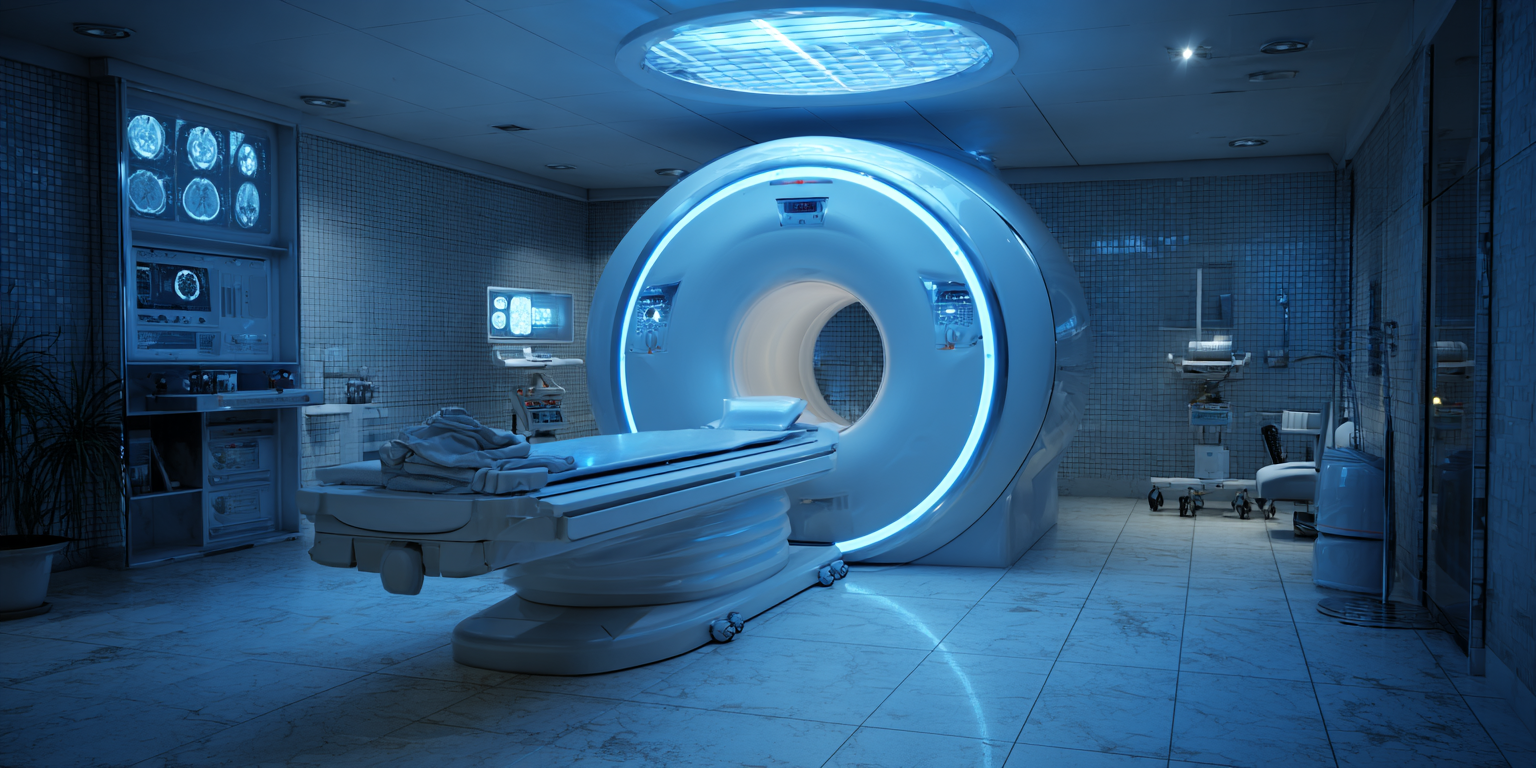
Functional magnetic resonance imaging is a neuroimaging technique that measures brain activity by detecting changes in blood flow.
In simple terms:
- When a part of the brain is more active, it consumes more oxygen
- The scanner detects these oxygen changes
- This creates a visual “heat map” of brain activity in real time
Unlike traditional MRI scans (which show structure), fMRI shows function – what the brain is actually doing.
For marketers, that’s the difference between knowing what people say and getting closer to understanding what they feel.
Why Marketers Became Obsessed With It
Traditional research methods – surveys, focus groups, interviews – rely on conscious recall. That’s a problem.
People:
- Forget things
- Misinterpret their own behaviour
- Tell you what they think you want to hear
fMRI sidesteps that (to a degree) by observing brain responses directly.
This gave rise to neuromarketing, where brands and researchers attempt to measure:
- Emotional engagement
- Memory encoding
- Reward responses
- Attention levels
In theory, it allows marketers to test campaigns not just for appeal, but for impact at a neurological level.
In practice, it’s… slightly more complicated.
The Famous Pepsi Challenge neuromarketing study
One of the most cited examples of fMRI in marketing comes from a study led by neuroscientist Read Montague.
The experiment revisited the classic Pepsi Challenge:
- Participants tasted drinks blind – many preferred Pepsi
- Then they repeated the test with branding revealed
The result?
- When participants knew they were drinking Coca-Cola, a different part of the brain lit up – associated with memory and emotion
- Brand knowledge overrode sensory preference
In other words:
Coca-Cola wasn’t just a drink – it was a story, a memory, a cultural artefact.
That’s marketing at its most powerful. And slightly unsettling.
How Brands Have Actually Used fMRI
Google – Understanding Video Effectiveness
Google has explored neuromarketing techniques (including fMRI and related neuroscience methods) to understand how users respond to video ads.
Key focus areas:
- Which moments trigger emotional peaks
- How storytelling impacts memory retention
- When viewers disengage
This has fed into how platforms like YouTube think about:
- Ad length
- Hook timing (those crucial first 5 seconds)
- Narrative structure
Hyundai – Car Design Testing
Hyundai reportedly used fMRI to evaluate consumer reactions to different car designs.
Participants viewed car models while being scanned, allowing researchers to identify:
- Positive emotional responses
- Aversion triggers
- Design elements that created subconscious appeal
It’s essentially a focus group where participants can’t politely lie.
PayPal – Messaging Strategy
PayPal used neuromarketing insights (including brain-imaging studies) to refine messaging.
The key finding:
- Speed and convenience triggered stronger emotional responses than security
This led to a shift in positioning:
- From “safe payments”
- To “fast, frictionless transactions”
A subtle change on paper.
A significant shift in behavioural impact.

Political Campaigns and Media Testing
fMRI has also been used (controversially) in political communication to test voter responses to messaging, candidates, and policy framing.
Which raises a slightly uncomfortable question:
If you can measure emotional triggers this precisely, where does persuasion end and manipulation begin?
The Strengths (Why It’s So Appealing)
There’s a reason fMRI captured the imagination of marketers:
- It provides objective biological data
- It uncovers subconscious responses
- It helps explain why campaigns work, not just if they work
- It aligns with behavioural science frameworks (Kahneman, System 1 vs System 2 thinking)
In a world obsessed with data, fMRI feels like the ultimate dataset.
The Limitations (And There Are Plenty)
Before we all start installing MRI scanners in meeting rooms, it’s worth grounding this in reality.
Cost and Practicality
- fMRI studies are expensive
- Sample sizes are often small
- Not exactly scalable for everyday marketing decisions
Interpretation Challenges
- Brain activity is not a simple “buy” or “don’t buy” signal
- Correlation does not equal causation
- Results can be over-interpreted (a favourite pastime in marketing)
Ethical Concerns
- Questions around consent and data use
- The potential for manipulation
- Public scepticism about “mind reading”
The Illusion of Precision
Perhaps the biggest risk is psychological:
fMRI looks scientific, therefore it feels definitive.
But marketing rarely deals in certainty. Even with brain scans.

What Marketers Should Actually Take From fMRI
You don’t need access to a neuroscience lab to benefit from what fMRI research has taught us.
The real lessons are surprisingly practical:
Emotion Drives Decision-Making
People don’t buy purely on logic. They justify emotionally driven decisions afterwards.
Brand Matters More Than Product (Sometimes)
As the Coca-Cola vs Pepsi study showed, perception can outweigh reality.
Memory is Everything
If your campaign isn’t remembered, it didn’t happen (commercially speaking).
Context Changes Behaviour
The same product can perform differently depending on framing, environment, and expectation.
A Slightly Uncomfortable Conclusion
fMRI hasn’t turned marketing into a mind-reading science.
But it has reinforced something many marketers already suspected:
We are far less rational than we like to believe.
And the best brands – whether it’s Coca-Cola, Apple, or emerging challengers – succeed not just because of what they sell, but because of how they make people feel.
Which brings us back to that awkward moment in the marketing meeting.
The one where someone suggests an idea that feels right, even if the data isn’t entirely there yet.
fMRI might one day explain that instinct.
For now, it simply confirms that it exists.
TL;DR
- fMRI measures brain activity by tracking blood flow and oxygen use
- It allows researchers to observe subconscious emotional responses
- Famous studies (like Coca-Cola vs Pepsi) show brand perception can override taste
- Brands like Google, Hyundai, and PayPal have used neuromarketing insights to refine strategy
- Despite its promise, fMRI is expensive, complex, and often over-interpreted
- The key takeaway: emotion, memory, and perception drive consumer behaviour more than rational thought