

Dry January, 0% Alcohol, and the Rise of the ‘Alibi Brand’: How Drinks Companies Found a Legal Loophole in Sobriety Season
Why the most explosive trend in alcohol marketing isn’t alcohol at all
Every January, millions of people decide that the festive excess must give way to discipline. The nights get darker, the gyms get fuller, and the nation collectively tries to remember what a “morning without regret” feels like.
And right on cue, alcohol brands suddenly become… very enthusiastic about your wellbeing.
The last decade has seen the explosion of 0% and low-alcohol variants from almost every major drinks company; Heineken 0.0, Guinness 0.0, Budweiser Zero, Peroni 0.0, Tanqueray 0.0, Gordon’s 0.0, even tequila brands joining the sober-curious wave.
This is partly a response to genuine demand. But it is also something else; something far more interesting for marketers:
0% alcohol products allow brands to advertise in spaces where alcohol itself cannot legally appear.
In other words, non-alcoholic variants have become alibi brands – legally permissible stand-ins that keep the parent brand visible, culturally relevant, and top-of-mind in markets where alcohol advertising is heavily restricted.
Dry January may have started as a public-health initiative, but it has accidentally handed alcohol brands one of the most effective marketing loopholes of the last 20 years.
Note:
This article features content from the Marketing Made Clear podcast. You can listen along to this episode on Spotify:
1. Why Alcohol Brands Needed an Alibi
At a high level, restrictions focus on:
-
promoting excessive drinking
-
linking alcohol to social or sexual success
-
appearing during children’s programming
-
advertising in certain public spaces
-
sponsoring events where alcohol promotion is banned
For decades, this left brands with a difficult challenge. Beer, wine, and spirits companies could be huge cultural forces – but they were increasingly boxed in by regulation.
And then someone in a boardroom realised the obvious:
If the alcohol content is removed, the restrictions vanish.
You can’t advertise Heineken during certain sports broadcasts.
But you can advertise Heineken 0.0.
This loophole changed everything.

2. The Rise of the 0% Alibi Brand
Let’s consider a few examples of how this plays out strategically.
Heineken 0.0: The Blueprint
Heineken’s 0% variant allowed the brand to appear in:
-
F1 sponsorship assets
-
Football broadcasts
-
Airports
-
Outdoor campaigns along travel routes
-
Some markets with strict alcohol laws (e.g., parts of the Middle East)
All this brand presence reinforces the main Heineken brand – even when the product being advertised is alcohol-free.
This is classic Kotler-style brand architecture in motion: a variant that carries the full semiotic identity of the master brand while bypassing regulatory barriers. In many ways, it is the purest modern example of Orwellian doublespeak in branding – the product says one thing, but its cultural utility is entirely another.
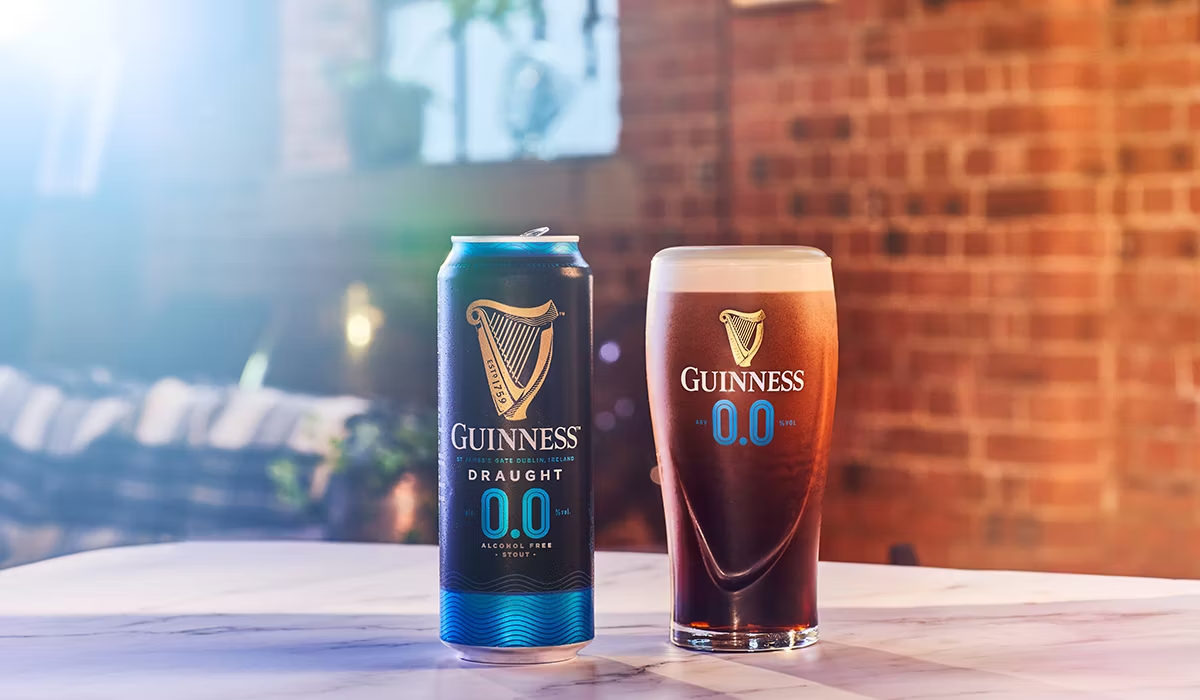
Guinness 0.0: A Cultural Trojan Horse
Guinness 0.0 solved two problems at once:
-
It gave the brand a way to participate in Dry January without diluting its Irish pub identity.
-
It allowed Guinness branding to appear in placements that would previously have been considered “alcohol promotion.”
During Six Nations coverage, for instance, Guinness 0.0 becomes the official sponsor – but you still see the iconic black-and-white branding everywhere. The consumer’s brain doesn’t really differentiate.
That is the power of an alibi.
3. How 0% Products Keep the Alcohol Brand Alive
To understand why this strategy is so powerful, you have to view it through three lenses: behavioural change, brand salience, and emotional resonance.
1. Behavioural Shifts
The sober-curious movement is growing fast, especially among younger demographics. Offering 0% drinks allows alcohol brands to remain relevant even as consumption trends change.
2. Salience Over Substitution
When Heineken runs a huge campaign for Heineken 0.0, the average consumer does not mentally separate the two.
Whether they are legally different products is largely irrelevant to human cognition.
Psychologists call this the availability heuristic: whatever brand you see most often is the one you think of first.
3. Emotional Continuity
For many drinkers, alcohol brands are part of social identity. A pub table covered in Heineken 0.0 still communicates the same tribal messages as the real thing; friendship, ritual, and a sense of belonging.
This emotional consistency is why 0% variants work so well as Trojan horses for the master brand.

4. The Clever Part: Dry January Gives Brands Cultural Permission
Without Dry January, heavy advertising of 0% variants could look suspicious.
Why promote the non-alcoholic version so much unless your real goal is to strengthen the alcoholic brand?
Dry January conveniently solves that problem.
You can run a massive national campaign for a month and claim:
“We want to support healthier choices.”
And to be fair – many of these campaigns genuinely do that.
But Dry January gives brands what every marketer craves:
an annual, socially accepted reason to blanket the media landscape.
Even better, it lands right when brands need to rebound from Christmas oversaturation.
5. Is This Health-Washing? Depends on Who You Ask
Critics argue that 0% variants may function as “gateway brands” – normalising the alcohol identity even among non-drinkers.
Others claim it is simply smart marketing within the rules.
From a marketer’s perspective, the ethics are important, but the insight is clear:
Non-alcoholic variants are not just products – they are distribution channels for brand equity.

6. The Business Case Behind the Loophole
When you strip the emotion away, the strategic logic is fascinating:
-
0% variants expand total addressable market
-
They give brands regulatory mobility
-
They maintain brand consistency in markets with bans
-
They help companies hedge against declining alcohol consumption
-
They create new usage occasions (lunchtime drinking, driving, workplace socials)
-
They allow year-round advertising, not just peak seasons
From a P&L point of view, 0% products are often still premium-priced – and frequently cheaper to produce.
Margins are excellent.
Distribution is easier.
Regulatory burdens are lighter.
Some analysts now argue that 0% alcohol could become one of the most profitable categories in the drinks industry within the decade.
7. Where This Goes Next
Expect three developments:
1. More sophisticated brand ecosystems
Brands will begin to treat their 0% variants as full-fledged sub-brands, not just “extensions.”
Think Bundaberg’s soft drinks style – but with big beer budgets.
2. Increasing legislative scrutiny
Regulators will eventually notice that alibi branding undermines the intent of alcohol advertising restrictions.
Expect debates about whether 0% variants should follow the same rules.
3. Cultural normalisation of sober choices
As younger generations drink less, 0% is becoming a lifestyle category, not a novelty.
The brands that win will be the ones that treat abstainers with respect rather than as “temporary defectors.”
Conclusion: Dry January Has Accidentally Created the Perfect Storm for Alcohol Brands
No other seasonal moment offers such clean alignment between consumer behaviour, public health narratives, regulatory advantage, and brand-building opportunity.
Dry January is a cultural movement.
0% alcohol is a product trend.
Alibi branding is the strategic loophole that ties them together.
For marketers, it is a masterclass in how brands adapt to regulation, shifting culture, and emerging audience needs – all while reinforcing their core identity with almost perfect deniability.
TL;DR
-
Alcohol brands have invested heavily in 0% variants partly because they serve as alibi brands, allowing advertising in spaces where alcohol marketing is restricted.
-
Dry January gives brands a socially acceptable moment to run huge campaigns for these 0% products.
-
Consumers see the 0% and alcoholic versions as the same brand – making the campaigns highly effective for overall salience.
-
Regulatory scrutiny is likely to grow, but for now, 0% products are one of the smartest loopholes in modern brand strategy.