

The Manager Market: Leaks, Rumours and Reality
A Deep Dive into the Strange World of Modern Football Speculation – With an Unapologetic bias towards Southampton F.C.
It starts the way these things always start: a short club statement, a few lines long, posted to social media in the early afternoon.
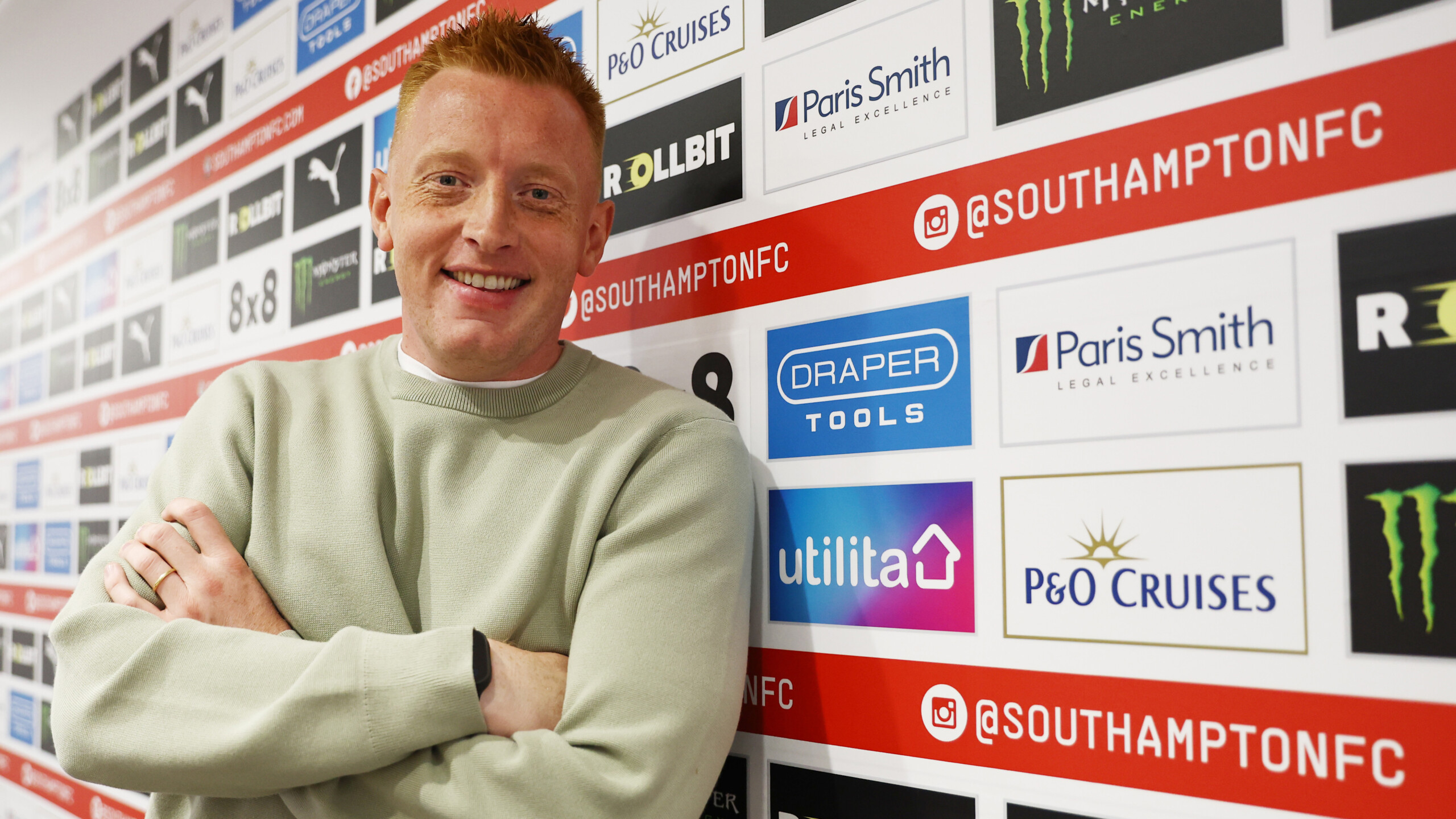
Southampton Football Club can confirm that Will Still has left the club with immediate effect…
Within minutes, the algorithm is already filling the void.
- A journalist posts a shrugging emoji.
- A betting company slashes odds on three different managers.
- A Portsmouth fan account announces that Gary O’Neil has already been “spotted at the M27 services”.
- A self-proclaimed “ITK” (In The Know) claims the board met secretly the night before.
- Someone else insists a former Champions League winner is “keen on the project”.
And so begins the familiar cycle: confusion, speculation, misinformation, hope, fear, meltdown, and meaninglessness.
This isn’t unique to Southampton. Football supporters across the world experience it whenever their club enters a state of managerial transition. But this moment – the sacking of Will Still and the surge of names attached to the vacancy within minutes – highlights something deeper and more interesting:
Modern football speculation has become an ecosystem of stakeholders, incentives, propaganda, behavioural psychology and guesswork.
A chaotic marketplace where truth is only one of many competing products.
This article investigates why.
Not as a marketer.
Not as a journalist.
But as a Southampton fan who has watched this circus repeat itself for years – and decided to examine how the machine really works.
Enjoying this article?
Check out the Marketing Made Clear Podcast. Available on Spotify and all good podcast platforms!
The Blurring of PR, Propaganda and Pure Noise
Football clubs do not operate in isolation.
They sit at the centre of a swirling network of stakeholders – from agents to journalists to bookmakers to fan accounts – each with competing incentives and degrees of influence. When a manager leaves, this network activates.
What looks like “insider info” is often little more than:
- an agent seeking leverage
- a club testing reaction
- a journalist protecting relationships
- a betting company exploiting engagement
- a fan account guessing for clicks
- a director of football gauging market conditions
- a manager signalling availability
- or simply a rumour spiralling through repetition
Several academics have observed this phenomenon. As media scholar Dr. Raymond Boyle notes in Sports Journalism: Context and Issues, modern sports reporting is shaped by
“a complex dance between access, relationships, and unverified information that gains legitimacy through repetition”.
The dance becomes frantic during managerial changes.
At the time of Still’s dismissal, Southampton’s name was reportedly linked to 18 different managers across 15 outlets in less than 48 hours. The majority could not possibly be accurate.
But accuracy is no longer the currency.
Attention is.
The Southampton Case: A Fan in the Storm
This investigation began simply: I wanted to understand why, as a Southampton supporter, I felt bombarded by conflicting reports every time the club parted ways with a manager.
You scroll through dozens of contradictory stories:
- “Talks progressing positively.”
- “Talks broke down.”
- “Candidate wants the job.”
- “Candidate not interested.”
- “Agent denies it.”
- “Club source confirms it.”
- “Exclusive: deal close.”
You’d be forgiven for thinking half the football world is on the verge of taking over at St Mary’s at any given moment.
But the more you investigate, the clearer it becomes: the chaos isn’t random. It is a system. It’s formulaic.
Football leaks aren’t mistakes.
They are messages.
And to understand them, you first need to understand the stakeholders.
The Invisible Players: Who’s Really Involved?
When a manager leaves, the public sees a shortlist.
Behind the scenes, the reality is closer to a marketplace with dozens of actors, each trying to influence outcomes.
Here is the Southampton-specific stakeholder environment, shown later in table form for easy reference:
- Southampton Football Club (board, owner, Spors, executives)
- Will Still (outgoing manager), his agent, his coaching team
- Potential incoming managers (10–20 candidates)
- Their agents
- Clubs employing those managers
- Clubs also seeking managers (Norwich, Wolves, etc. at the time)
- Journalists with reliable sources (e.g., Adam Blackmore, Alfie House)
- National media reporters
- Online rumour aggregators
- Betting companies
- Local and national radio
- YouTube/TikTok football creators
- Social media ITK accounts
- Rival fans (especially Portsmouth, whose involvement is never altruistic)
- Sponsors and commercial partners
- Players and their agents
- Fan groups and season ticket holders
Everyone in this list has different incentives, levels of access, and motives.
Many of them have reasons to leak information – or misinformation.
As Professor Damian Hughes, co-host of The High Performance Podcast, said in a 2021 interview:
“Football is not just a sport; it’s an information economy.
Leaks, stories and narratives influence negotiations before a ball is kicked.”
(High Performance Podcast, 2021)
Southampton’s situation is a perfect demonstration of this.
Stakeholder Influence vs Interest – Southampton F.C. New Manager
| Category | Stakeholders | Why They Matter |
|---|---|---|
| High Influence / High Interest |
Sport Republic (Ownership) Director of Football (Johannes Spors) Executive Board Incoming Manager Candidates Agents of Candidates Outgoing Manager (Will Still) & Agent Employer Clubs of Target Managers Club PR & Communications Team |
These actors shape the decision directly and influence timing, negotiation and public narrative. |
| High Influence / Low Interest |
Rival Clubs Governing Bodies (FA/EFL) Legal & Contract Teams Work Permit Authorities Player Agents |
Indirect but powerful — can slow or accelerate processes. |
| Low Influence / High Interest |
First-Team Players Academy Staff Local Media (BBC Solent, Daily Echo) Sponsors Betting Companies |
They cannot choose the manager but are heavily affected by the outcome. |
| Low Influence / Low Interest |
General Fans Social Media ITK Accounts Rumour Aggregator Sites Football YouTubers Opposition Fans |
Make noise but rarely affect decisions. |
Leaks: The Most Misunderstood Tool in Football
Fans often imagine leaks as secrets slipping out unintentionally.
That’s rarely the case.
As the investigative journalist David Conn has written:
“Leaks in football are rarely accidents.
They are signals – strategic, intentional, and designed to influence behaviour.”
(via The Guardian)
Why leak?
Here are real, documented motivations:
1. Agents use leaks to increase bargaining power.
If Club A knows Club B is “interested”, wages go up.
2. Clubs leak to test fan reaction.
If a controversial manager is floated and response is toxic, the club backs away.
(Spurs fans rejecting Gennaro Gattuso in 2021 is a famous example.)
3. Journalists leak to maintain relationships.
If you refuse a source’s “off the record” nudge, you lose access.
4. Managers leak to signal availability.
Marcelo Bielsa notoriously “allowed interest” stories to circulate before certain jobs.
This isn’t deceit – it’s positioning.
5. Betting companies leak to stimulate bets.
More volatility = more revenue.
Odds-moving stories are a feature, not a bug.
6. Rival fans spread rumours for disruption or entertainment.
This is especially true in derby contexts – spoken as a Southampton fan who has seen Pompey Twitter accounts “confirm” more Saints managers than the club ever did.
In short:
Leaks aren’t about truth – they are about leverage.
And fans are caught in the crossfire.
Stakeholder Incentives and Outcomes Table
| Stakeholder | Incentive | Outcome |
|---|---|---|
| Agents | Maximise client visibility and wage leverage | Inflated rumour volume |
| Journalists | Maintain access; produce content | “Exclusive” stories with partial verification |
| Betting Companies | Generate volatility and bets | Rumours amplified for engagement |
| Fans | Seek certainty, identity, hope | Create viral loops, intensifying rumours |
A Note on AI
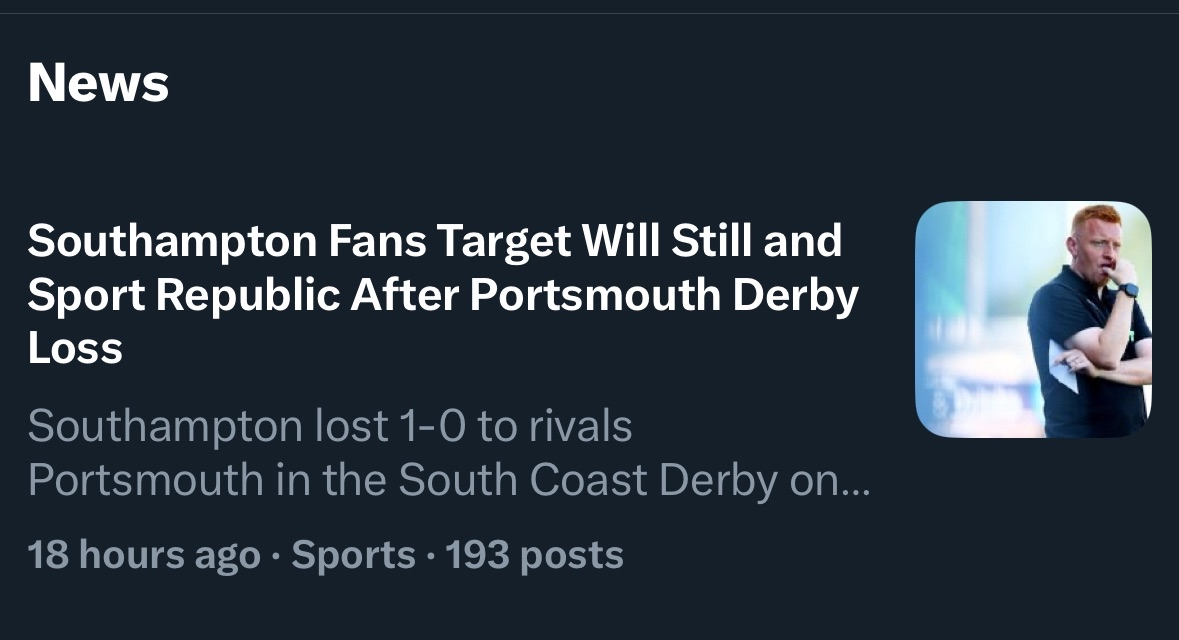
In 2025, we have another information source, or perhaps we should say “amplifier” which is AI.
I came across an example of AI misrepresenting the truth on X, when a news headline (prior to Still’s sacking) seemed to suggest pressure was mounting due to a loss to Portsmouth – the result of the game in question was a draw….
Behavioural Psychology: Why Fans Fall For it?
Football fans aren’t stupid.
But they are emotional.
And emotions dramatically affect information processing.
Here are the key behavioural biases at play:
- Confirmation Bias – Fans believe stories that align with their preferences. If you want a young, progressive manager, anyone linked who fits that profile “sounds” true.
- Authority Bias – A story shared by a journalist with a blue tick looks more credible – even if the source is weak.
- Information Cascades – When the same rumour is repeated across multiple accounts, it feels more “verified”, even if all those accounts cite each other.
- Tribal Psychology – A Southampton fan is far more likely to trust an Echo journalist than a Midlands-based outlet covering Wolverhampton.
- Dopamine Looping – Refreshing Twitter during a managerial search is a type of variable reward schedule – the same mechanism that keeps people gambling. This isn’t metaphorical; psychologists like B. J. Fogg have proven this behaviour model scientifically.
As behavioural economist Daniel Kahneman wrote in Thinking, Fast and Slow:
“Human beings are pattern seekers, even where patterns do not exist.”
This perfectly describes football rumour culture.
Fans try to make sense of a chaotic information environment that was never designed to be logical.

The Southampton Shortlist: Why so Many Names?
When Will Still departed, Southampton were linked with:
- Brendan Rodgers
- Ole Gunnar Solskjær
- David Wagner
- Liam Rosenior
- Ruud van Nistelrooy
- Scott Parker
- Kieran McKenna (before his Ipswich extension)
- Michael Carrick
- A coach from Belgium
- A coach from France
- Several out-of-work Premier League managers
Plus other names that appeared so briefly they read like fever dreams.
Fans often ask:
“Why are we being linked with so many managers?”
The answer:
Because being linked doesn’t require any actual link.
A candidate needs:
- 1 agent
- 1 journalist
- 1 betting odd movement
- 1 tweet
- 1 aggregator site
…and suddenly the rumour exists.
Even if never substantiated.
As Henry Winter once said:
“A rumour in football has a lifespan of its own.
Once released, it becomes self-sustaining.”
(The Times)
Southampton’s list wasn’t unusually long.
It was normal.
The system was behaving exactly as designed.
The Southampton Ecosystem: How a Managerial Vacancy Turns Into a Marketplace
Southampton is a particularly interesting case because the club sits at the intersection of:
- a globalised recruitment strategy
- a large and highly engaged fanbase
- a complicated ownership structure
- a proven track record (for better or worse) of unconventional appointments
- a Director of Football whose networks are international
- a recent history of rapid managerial turnover
This creates the perfect environment for rumour amplification.
The moment Will Still’s departure was announced, the market became active.
- Agents called journalists.
- Journalists called agents.
- Clubs made enquiries.
Managers let it be known that they “would listen to a project in England”.
Fans flooded timelines with wishlists and warnings.
To understand the complexity, we need to break the Southampton situation into its moving parts.
1. The Club’s Position: Sport, Strategy & Stability
Under Sport Republic, Southampton have moved towards a continental structure emphasising talent identification and succession planning. Johannes Spors (who at the time was linked with a move to Juventus), known for his network across Germany and the Netherlands, tends to maintain a rolling shortlist of managers whose profiles match specific playing styles.
This explains why Southampton often move quickly.
But it also means:
The shortlist is never just five names.
It can be ten, fifteen, or twenty.
Every name on that list is a potential source of a leak.
A club insider told BBC journalist Adam Blackmore during a previous managerial change:
“The shortlist is fluid. It changes with results elsewhere. And every agent knows when their client is being monitored.”
(BBC Solent)
Once agents know their client is being considered, rumours begin automatically.
Even if the club hasn’t made contact.
2. The Agent Motive: Leverage, Not Truth
Agents thrive on perception.
Their job is to:
- raise a client’s profile
- increase their bargaining power
- signal availability
- create competition
- pressure clubs into quicker decisions
Linking a manager to a club like Southampton accomplishes all four.
As super-agent Pini Zahavi once said:
“In football, perception becomes value.
A rumour can be as useful as a contract.”
(The Guardian)
This is not sinister. It is the industry.
If a Championship club manager is in negotiations elsewhere, a sudden “Southampton are interested” story can accelerate those talks.
Fans often believe clubs are leaking.
More often, it is agents.
And agents rarely leak directly.
They use intermediaries:
- friendly journalists
- betting markets
- continental reporters
- foreign-language outlets
The leak travels quickly because the football rumour ecosystem is global and interconnected.
3. The Media Incentive: Access & Engagement
Journalists are not villains.
They operate in a system with its own pressures.
Football writer Jonathan Wilson captured the dilemma perfectly:
“To retain access, journalists must walk a tightrope: too much scepticism and doors close, too much credulity and readers lose trust.”
(The Guardian)
Access journalism means:
- Sometimes you publish what you know is only partially verified.
- Sometimes you run with a rumour because a trusted source insists “it’s close”.
- Sometimes you avoid calling something nonsense because it came from someone you need tomorrow.
But the real pressure?
Engagement.
Modern online outlets rely on:
- clicks
- impressions
- ad revenue
- SEO cycles
- breaking content before competitors
A local Hampshire outlet cannot compete with national publications for traffic unless they run stories fans are actively searching for – manager rumours being top of the list.
The editor of one national sports site said in an interview:
“We don’t benefit from accuracy.
We benefit from being first.
Accuracy is an image concern, not a revenue concern.”
(Press Gazette)
It’s not malicious.
It’s economics.

5. How Other Clubs Prove The Pattern
To avoid making this article feel like it’s only about Southampton, here are several well-documented cases that show this is a league-wide – even global – phenomenon.
Case Study 1: Spurs & the Gattuso Backlash (2021)
When Tottenham floated Gennaro Gattuso as a candidate after sacking Nuno Espírito Santo, social media erupted.
Within 24 hours:
- #NoToGattuso trended on Twitter
- Spurs fans began circulating his past comments
- Supporters’ Trust groups contacted the club
- Journalists tore apart the rumour
Spurs backed out within 48 hours.
Sky Sports reporter Paul Gilmour later noted:
“Fan sentiment online ultimately influenced the direction of the search.”
(Sky Sports)
This proves clubs do test reaction through leaks – intentionally or not.

Case Study 2: Chelsea’s Managerial Carousel (2023–2024)
The Todd Boehly era produced some of the most chaotic media cycles in English football.
Chelsea were, at one point, linked with:

- Pochettino (accurate)
- Luis Enrique
- Julian Nagelsmann
- Ruben Amorim
- Oliver Glasner
- Vincent Kompany
- Marcelo Gallardo
- and several managers who later said they were “never in talks”
As The Athletic reported:
“Rumours around Chelsea no longer require any factual basis. The market moves on perception alone.”
(The Athletic)
This mirrors the Southampton experience:
volume of names ≠ volume of truth.
Case Study 3: Leeds United & Marcelo Bielsa
Leeds fans saw countless managerial names floated during their recent instability. Most were agent-driven.
A former Leeds journalist told the BBC:
“When Bielsa was in a job, you’d get two or three ‘Bielsa to X club’ links a month. Ninety percent were agent games.”
(BBC Sport)
Bielsa’s popularity made rumours profitable.
Popularity equals clicks.

Case Study 4: Newcastle & the Takeover Era
During the 2021–2022 takeover saga, Newcastle fans experienced repeated cycles of:
- “Deal done”
- “Deal dead”
- “Sources deny”
- “Premier League blocking”
The story was used heavily by:
- fan YouTubers
- betting companies
- national media outlets
- foreign journalists
Professor Simon Chadwick observed:
“Newcastle’s takeover became a content economy in itself.”
(Loughborough University)
The same applies to managerial stories on a smaller scale.
Why Southampton’s Fanbase is Especially Exposed to This
Southampton’s recent history makes us particularly vulnerable:
- rapid managerial turnover
- uncertain ownership narrative
- memories of relegation still raw
- strong local journalism ecosystem
- deep rivalry with Portsmouth
- a global fanbase consuming news in real time
- a Director of Football whose network is international, increasing the rumour pool
The result?
Every managerial change feels existential.
Every rumour feels important.
Every tweet feels meaningful.
Even when it isn’t.


The Southampton Press Ecosystem: Trust, Access & Accusations
Southampton are unusual in one crucial way:
their local journalism ecosystem is unusually strong:
Adam Blackmore (BBC Radio Solent) and Alfie House (Daily Echo)
both operate close to the club and have long-standing, reliable contacts.
Their reporting is generally grounded in:
- direct conversations with club sources
- years of contextual understanding
- an ability to distinguish genuine movement from noise
But being close to the club comes with a modern price:
accusations of bias.
When Blackmore and House travelled to meet the club’s ownership during the early phase of Will Still’s tenure – an access opportunity almost unheard of for Championship or Premier League sides – some fans questioned their independence.
Most journalists would have jumped at the same chance.
As Alfie House put it in a 2024 interview:
“People imagine we’re fed two-sentence statements. The truth is much more complicated – clubs try to explain their thinking, and it’s our job to challenge, not repeat.”
(Daily Echo)
The accusation that local journalists are “puppets” is not unique to Southampton; it is part of a global trend where:
- distrust in media
- social media noise
- and algorithm-driven cynicism
…erode the public’s perception of legitimacy.
But local journalists remain essential:
- they debunk the wildest rumours
- they contextualise leaks
- they understand the club’s rhythms
- they act as a stabilising force
When Southampton are caught in a rumour storm, these journalists often provide the only anchor.
If they say a link has substance, it usually does.
If they say it is nonsense, it almost certainly is.
And that brings us to the final and most interesting portion of this investigation:
How do leaks actually get from stakeholder to journalist?
And why does nobody ever fully explain the process?

How Leaks Really Work: The Invisible Pipeline
Football leaks tend to travel through three main pipelines.
You can think of them as different water sources feeding the same river.
Pipeline 1: The Agent Leak
This is the most common.
Agents leak when:
- their client wants a move
- they want higher wages
- negotiations elsewhere have stalled
- they want to show demand
- they want a club to act faster
Agents leak in ways that allow plausible deniability.
As one Premier League agent admitted publicly:
“I’ve never leaked directly to a journalist. But I’ve hinted.
Hard.
That’s the job.”
(The Athletic)
The leak then gets picked up by:
- continental reporters
- aggregator sites
- betting companies
…before making its way to UK outlets.
Pipeline 2: The Club Leak
Clubs leak less often than people think.
When they do, it’s usually because:
- they want to test fan reaction
- they want to manage expectations
- they want to soften the ground before an unpopular appointment
- they want to calm the market
- they want to show “activity” to the media
Mauricio Pochettino once said:
“Football clubs communicate in many ways, and not always on the record.”
(Sky Sports)
Club leaks usually go directly to trusted journalists with whom they have long relationships.
In Southampton’s case, that means:
- Blackmore
- House
- certain national reporters
These leaks are often reliable – but also strategic.

Pipeline 3: The Journalist Leak (Verification Leak)
This is where journalism complicates the picture.
If Journalist A hears a rumour from a source, they may:
- ask another journalist
- ask someone in another club
- ask an intermediary
Sometimes the second journalist thinks the first journalist’s inquiry is itself a tip.
Suddenly:
- Journalist B posts
- Journalist A verifies
- Journalist C aggregates
And fans think three separate sources have confirmed a story.
When in fact all three came from the same WhatsApp message.
David Ornstein once explained this phenomenon:
“Many stories don’t come from a single source.
They are assembled from fragments.
The truth emerges through triangulation.”
(The Athletic)
Fans see the outputs but not the messy process behind it.
The Behavioural Aftershock: Why Fans Feel Drained by it
The more I analysed this system, the more I realised something important:
Football rumour ecosystems aren’t just confusing – they’re emotionally exhausting.
Southampton fans oscillate between:
- excitement
- dread
- outrage
- optimism
- confusion
- paranoia
The process is psychologically taxing because:
- The information environment is chaotic
- The stakes feel existential
- The club’s recent past heightens insecurity
- Once-trusted sources now feel uncertain
- Social media amplifies noise
- Rival fans delight in stirring the pot
This is not a fanbase flaw.
It’s a system feature.
As behavioural scientist Dr. Pete Lindsay (who has worked with Premier League clubs) argues:
“Uncertainty drains cognitive resources.
In football, fans suffer the psychological consequences of decisions they do not control.”
This is why managerial searches feel long even when they move quickly.
It’s not the time – it’s the psychological weight.
Behavioural Biases Driving Rumour Consumption
| Behavioural Bias | Definition | Effect on Fans |
|---|---|---|
| Confirmation Bias | We prefer information that confirms what we already believe. | Fans treat desired candidates as “credible” and disliked candidates as “fake news”. |
| Authority Bias | We trust information from perceived authority figures. | Blue-tick journalists are believed even when their sources are weak. |
| Information Cascades | Repeated information feels true, even if it originates from one source. | Rumours seem “confirmed” when multiple outlets echo the same unverified claim. |
| Variable Reward Looping | Random rewards trigger compulsive checking behaviour. | Fans refresh Twitter constantly for the next update. |

What Southampton’s Recent Search Tells Us About The Future
Southampton’s managerial search after Will Still exposed several truths about modern football:
1. Rumour culture is no longer a by-product – it’s an industry.
Entire platforms exist solely to monetise speculation.
2. Stakeholders exploit fan emotions for leverage.
Agents play the market.
Clubs test reactions.
Betting firms amplify noise.
3. Local journalists remain the most reliable filters.
Even if imperfect.
4. Fans must be more discerning.
Credibility comes from history, not volume.
5. Social media has turned every fan into a content engine.
Retweets fuel rumours.
Quotes amplify narratives.
Dissent becomes visibility.
6. Southampton’s profile makes it a magnet for stories.
A club with ambition, turnover and a strong academy will always attract speculative reporting.
The managerial market is no longer a straight line from vacancy to appointment.
It’s a marketplace – complex, incentivised, emotionally charged.
The Conclusion: What Should Fans Do With All This?
This feature began as a personal investigation:
Why does the managerial rumour mill feel so chaotic and confusing as a Southampton supporter?
And after tracing leaks, media incentives, behavioural psychology, stakeholder strategies and case studies across the sport, the conclusion is surprisingly simple:
Fans aren’t meant to make sense of it.
The system was not designed for clarity.
It is a marketplace built on:
- incentives
- uncertainty
- positioning
- negotiation
- psychology
…and, occasionally, truth.
So what can fans do?
- Trust the outlets with the best track record. For Southampton, that means Blackmore, House, and certain national journalists.
- View rumours as signals, not predictions. A link means a conversation happening somewhere — not necessarily at the club.
- Recognise agent-driven stories for what they are. Leverage tools.
- Remember that volume ≠ credibility. A dozen links can originate from one WhatsApp message.
- Protect your emotional energy. Refresh less. Engage selectively. Remember that the club is doing far more behind the scenes than the media shows.
- Understand that you are part of the system. Your clicks, quotes and retweets fuel it.
- Maintain perspective.
Even in a storm of speculation, one thing remains consistent:
Only one manager will eventually walk into St Mary’s.
The rest were noise.
The rumour ecosystem is fascinating, frustrating, and often absurd – but by understanding it, we can navigate it with clearer expectations and less stress.
And perhaps, just perhaps, enjoy the ride a little more.