

The Fogg Behaviour Model: What Nike, Duolingo and Amazon Can Teach Us About Changing Consumer Behaviour
Why understanding motivation, ability and prompts can make or break your marketing campaigns
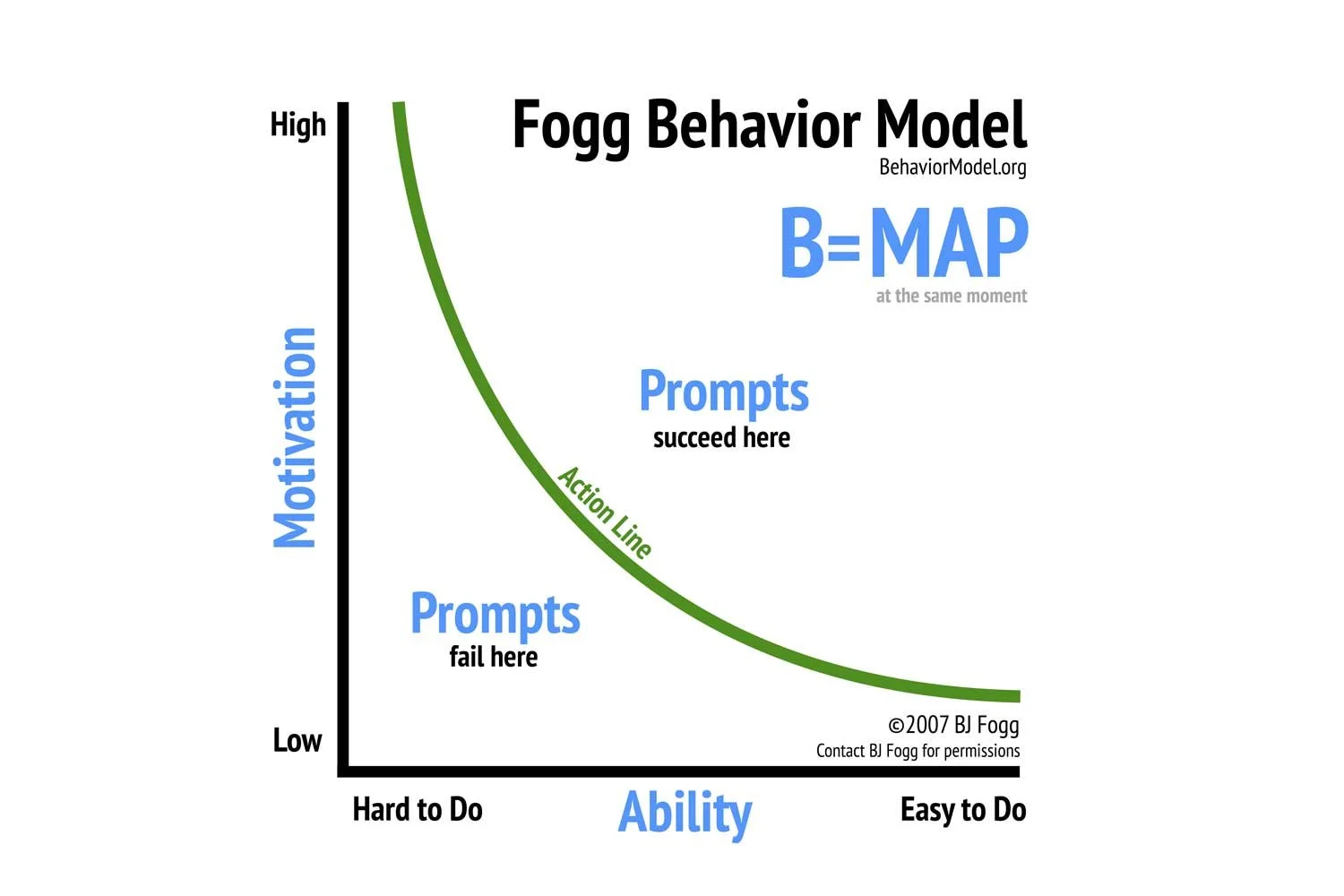
Human behaviour isn’t random – even when it seems like it. Behind every purchase, sign-up or swipe is a subtle mix of motivation, ability and timing. The Fogg Behaviour Model (FBM), developed by Dr BJ Fogg at Stanford University, breaks this down beautifully.
It’s a simple but powerful tool that helps marketers design campaigns that people actually respond to.
In a world overflowing with data, funnels and KPIs, Fogg reminds us of something fundamental: behaviour change isn’t about shouting louder – it’s about making action feel easier, more rewarding and perfectly timed.
The Marketing Made Clear Podcast
Check out the Marketing Made Clear Podcast on all good streaming platforms including Spotify:
What is the Fogg Behaviour Model?
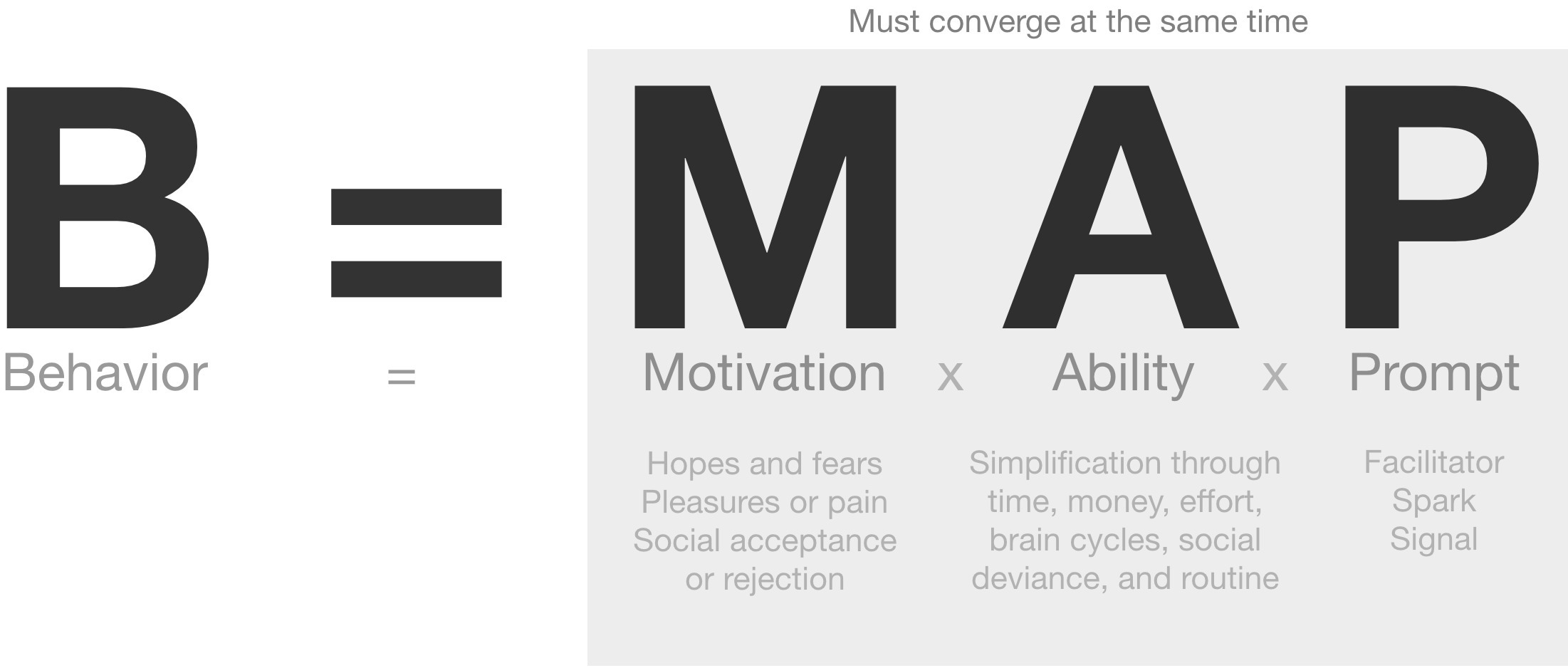
Dr BJ Fogg’s model can be summarised with a simple equation:
B = MAP
(Behaviour = Motivation × Ability × Prompt)
In other words, for a behaviour to occur – whether that’s buying a product, subscribing to an email list or downloading an app – three elements must come together at the same moment:
-
Motivation – the desire to act.
-
Ability – the ease of taking the action.
-
Prompt – the trigger that tells you to act now.
If one of these is missing, the behaviour won’t happen. A customer may want your product, but if your checkout process is a labyrinth (low ability), or your call-to-action is weak (poor prompt), motivation alone won’t convert them.
Motivation: The Emotional Spark
Motivation is the why behind a behaviour – and marketers have been trying to manipulate it since long before Fogg came along. According to his model, motivation is influenced by three core drivers:
-
Pleasure vs. Pain
-
Hope vs. Fear
-
Social Acceptance vs. Rejection
Take Nike, for example. Their campaigns rarely sell shoes – they sell self-belief. “Just Do It” is the perfect embodiment of hope over fear; it triggers the aspirational part of the brain that wants to be fitter, braver and better.
Meanwhile, Duolingo plays with pain and fear in a way that’s weirdly effective. The app’s now-iconic green owl doesn’t just remind you to practise Spanish – it guilt-trips you. Through humour and gamification, it leans into social pressure, fear of failure and FOMO, creating motivation through mild emotional discomfort.
Ability: The Simplicity Factor
You can have all the motivation in the world, but if something feels too hard, you’ll give up. Ability is about reducing friction – making the desired behaviour as easy as possible.
Dr Fogg breaks down ability into six elements that can make an action simpler:
-
Time
-
Money
-
Physical effort
-
Brain cycles (mental effort)
-
Social deviance (social awkwardness)
-
Non-routine (how unfamiliar the behaviour is)
Brands that understand this principle excel at creating seamless experiences.
Amazon’s 1-Click Ordering is a masterclass in ability design. It removes steps, reduces cognitive load, and makes it so effortless that buying something almost feels like not buying it. Fogg would call this “increasing ability” – making the target action simple enough that minimal motivation is required.
Similarly, Spotify’s onboarding flow doesn’t bombard users with decisions. It builds playlists automatically, guesses your mood, and keeps friction low enough that you’re already invested before you realise it.
Prompt: The Trigger That Makes It Happen
A prompt (sometimes called a trigger or cue) is what converts potential energy into action. It’s that nudge at the right time. Without it, all your motivation and ability go to waste.
Duolingo’s notifications are a textbook example. The app waits until the evening – when users are more relaxed – to deliver a gentle, humorous push: “Looks like you missed your French lesson again!” The timing and tone are carefully designed to feel personal and urgent, without being intrusive.
Meanwhile, Apple’s ecosystem thrives on prompts that are elegantly embedded. Think of the red notification dots on your iPhone. They’re tiny, but irresistible. Apple doesn’t need to demand your attention; it just designs triggers that exploit curiosity and habit.
Mapping It All Together
When Fogg’s three elements intersect, behaviour happens. When they don’t, it doesn’t. Simple as that – but applying it requires nuance.
Here’s how marketers can use the model to design more effective campaigns:
| FBM Element | Marketing Application | Example |
|---|---|---|
| Motivation | Align emotional drivers with your value proposition | Nike inspiring ambition; Patagonia appealing to purpose |
| Ability | Remove friction – fewer clicks, simpler language | Amazon’s 1-Click checkout; Monzo’s app simplicity |
| Prompt | Time your message perfectly and make it irresistible | Duolingo’s reminders; Apple’s notification icons |
Beyond Clicks: Behaviour Change in Practice
The Fogg Model goes deeper than just conversions. It’s about sustained engagement and habit formation.
Netflix uses behavioural triggers brilliantly. The autoplay function reduces friction (no effort required to start the next episode), and the end-of-episode cliffhanger boosts motivation (emotional reward). The “prompt” is baked into the experience – it nudges you forward without overtly asking.
Fitbit and Peloton, meanwhile, create social ecosystems that sustain long-term behavioural change. Their prompts (reminders, milestones, competitions) combine positive reinforcement and social validation, keeping motivation high even when ability or interest might dip.
BJ Fogg would argue that the ultimate goal isn’t to manipulate behaviour but to design for success. If you can make the desired behaviour easy, meaningful and well-timed, customers will feel like they’re winning – and they’ll keep coming back.
The Ethical Dimension
Of course, with great behavioural insight comes great responsibility. Marketers should ask themselves not only can we trigger behaviour, but should we?
The FBM is a tool for influence, not manipulation (beware the slippery slope of propaganda).
When used ethically, it can help people form better habits – from healthier eating to more sustainable shopping. But it can also be misused, as seen in addictive app design or dark UX patterns that exploit users’ impulses.
As Philip Kotler reminds us, true marketing is about creating value – not extracting it. Fogg’s model works best when it serves both sides of the exchange.
Key Takeaways
-
Behaviour happens when Motivation, Ability, and Prompt converge.
-
High motivation can overcome low ability – but only sometimes. It’s better to reduce friction.
-
Prompts must be timely and relevant; too frequent, and they turn into noise.
-
The most successful brands design experiences, not just messages.
-
Use behavioural design ethically – help people do what they already want to do.
TL;DR
The Fogg Behaviour Model explains why customers act (or don’t): they need the right mix of motivation, ability, and prompt.
Brands like Nike, Amazon, and Duolingo show how to master this – by inspiring emotion, simplifying the process, and timing the trigger perfectly. For marketers, the FBM is more than a theory; it’s a map for turning intention into action – responsibly.