

When Communications Become the Story: Rasmus Ankersen, Sports Republic and the Southampton Fan Fallout
A Case Study in How Not to Communicate With Football Fans
For a club like Southampton FC, communication has always mattered. This is a fanbase that largely accepted difficult decisions in the past when they were clearly explained, competently executed, and rooted in football logic. What has happened under Sports Republic feels very different – and at the centre of that disconnect sits Rasmus Ankersen.
This is not really an article about tactics, recruitment models, or even relegations, although those loom large. It is about media handling, public messaging, and how a senior figure can unintentionally (or carelessly) turn himself into the symbol of everything supporters feel has gone wrong.
From a media and communications perspective, this has been close to a masterclass in how not to manage stakeholder relationships.
The Marketing Made Clear Podcast
Check out the Marketing Made Clear Podcast on all good streaming platforms including Spotify:
Context Matters: From Premier League Stability to Serial Relegation
When Sports Republic completed its takeover of Southampton FC in 2022, the club was a Premier League side. Not a giant, but stable, well-run by historical standards, and widely admired for its academy, recruitment and pragmatism.
Fast forward to today:
-
Southampton have been relegated twice in a short space of time
-
The club’s identity feels blurred (at best)
-
There has been no discernible benefit to the multi-club model for Southampton FC
-
The fanbase is fractured and openly hostile towards ownership
Relegation alone does not cause this level of resentment. Poor communication does.
Fans will forgive failure far quicker than they will forgive being patronised, dismissed, or treated as if emotional attachment to the club is an inconvenience.
“If It Ain’t Broke, Consider Fixing It”
One of the most damaging phrases associated with Ankersen, repeated frequently by Southampton supporters is his philosophy that;
“if it ain’t broke, consider fixing it”
In isolation, this sounds like a contrarian innovation mindset. In practice, when paired with:
-
wholesale squad churn – including losing some of the most promising stars
-
managerial instability – having had a stable manager in Ralf Hasenhuttl
-
questionable player and manager recruitment – high risk / low success
-
visible regression on the pitch
…it lands as sheer arrogance.
From a communications standpoint, this is a classic mistake: intellectual positioning without emotional intelligence. Fans don’t experience clubs as systems to be optimised. They experience them as cultural institutions.
What may have been intended as a bold strategic worldview became, in the public domain, a stick to beat ownership with.

The Göztepe Problem: When Comparisons Go Nuclear
Ankersen’s public enthusiasm for Göztepe S.K. has been another flashpoint. Comments made in interviews and conferences, particularly those perceived as positioning Göztepe as larger, more important, or more culturally significant than Southampton, have caused lasting damage.
More recently, a clip has circulated Twitter where in a Göztepe press conference, Ankersen stated:
“In many ways Göztepe is a bigger club than Southampton”
Whether those remarks were taken out of context is almost irrelevant.
This is the golden rule of stakeholder communications:
perception beats intent every single time.
For Southampton supporters, the message received was simple:
-
Our club is not the priority
-
Our history is being diminished
-
Our relegation is being rationalised
Once that perception hardens, no amount of clarification fixes it.
Video available on the link below:
#SaintsFC Listen to these absolute clowns “goztepe is bigger than Southampton” 😡 pic.twitter.com/2kCorxzmrG
— Harv 🇦🇹 (@sfcharv) February 2, 2026
Note on Valenciennes:
This is also in a time when there is increased scrutiny and controversy around Sport Republic’s ownership of Valenciennes. For Southampton Fans there are many parallels due to the fact both clubs were taken over with “positive intent” but have seen sporting decline and relegation, leading to fan frustration and debate about whether the investment strategy and communications are aligning with on-pitch realities.
The Cardinal Sin: Talking About Fans, Not To Them
Perhaps the most striking failure has been the absence of empathetic, fan-first communication.
Ankersen is highly visible in the media; articulate, confident, and fond of data-led explanations. But those explanations have largely been framed at supporters, not with them. And he never speaks to the media channels that Saints fans actually listen to, such as Adam Blackmore of BBC Solent or Alfie House of the Daily Echo.
Effective football communication requires:
-
Humility in failure
-
Respect for emotional investment
-
A clear acknowledgment of pain, not just process
Instead, Southampton fans have repeatedly heard explanations that sound like management consultancy pitches delivered to clients, not supporters watching their club slide backwards.
In marketing terms, this is a category error: confusing rational justification with emotional reassurance.

How Leaders Become Symbols (Whether They Like It or Not)
It is worth noting that many of the decisions blamed on Ankersen will have been collective. Sports Republic is not a one-man operation.
But communications creates symbols.
Ankersen’s visibility, confidence, and willingness to speak publicly (usually about Göztepe S.K.) means he has become the human embodiment of:
-
perceived arrogance
-
perceived detachment
-
perceived experimentation at the club’s expense
Once that happens, every interview becomes a risk asset, not a reputation builder.
This is Reputation Management 101: if trust is broken, silence is often safer than explanation. But if you’re going to speak publicly – you have to consider all stakeholders – Southampton F.C. included.
Lessons for Marketers and Communicators
For Marketing Made Clear readers, there are uncomfortable but valuable lessons here:
-
Data does not override identity
-
Strategy does not excuse empathy
-
Transparency without humility can feel like condescension
-
Stakeholders with emotional equity require different communication rules
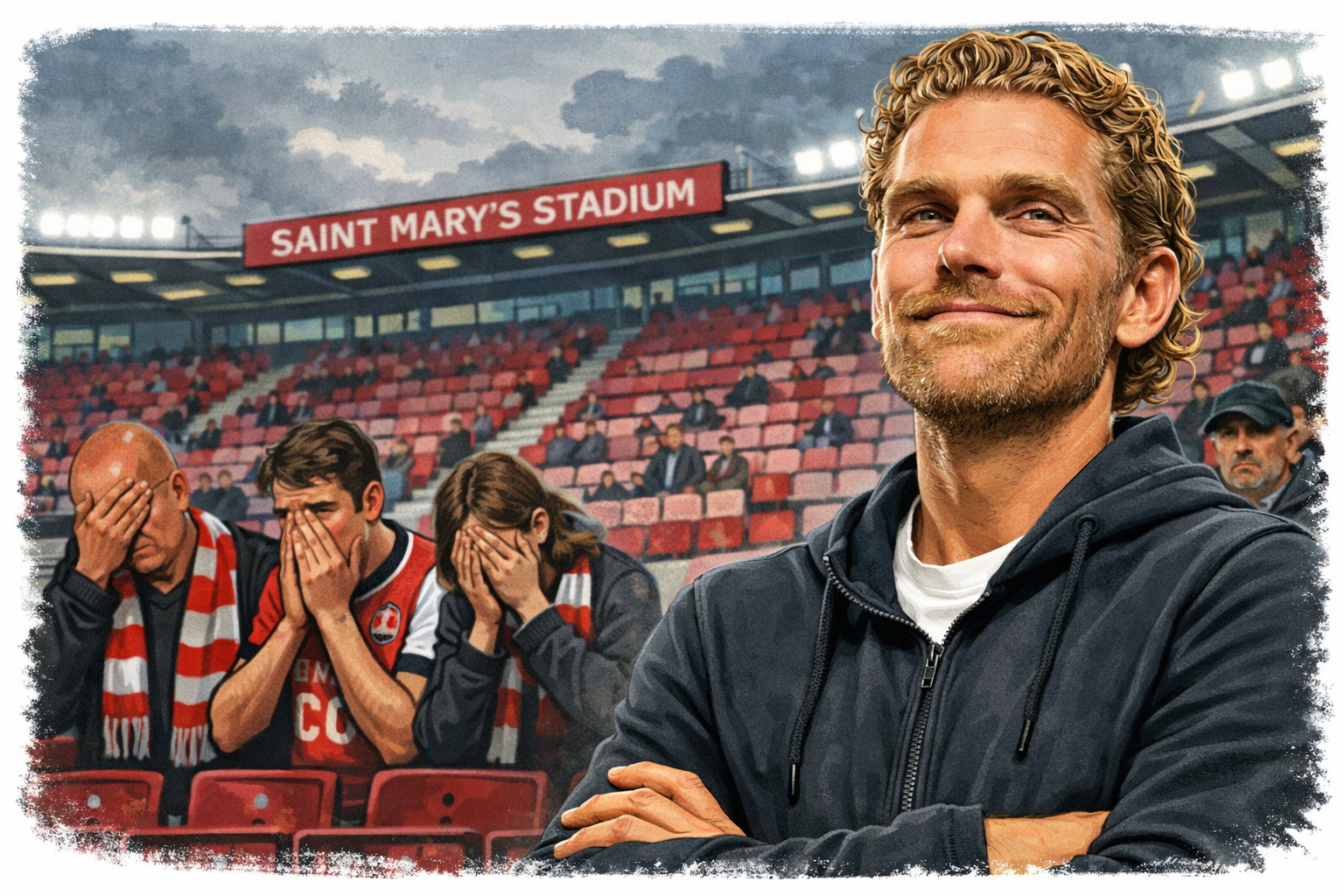
Football fans are not customers in a transactional sense; they are long-term brand custodians. Treat them like beta testers, and they will revolt.
Final Thought: When the Message Becomes the Problem
Southampton’s decline cannot be pinned solely on words spoken in interviews or conferences. But words shape narratives, and narratives shape legitimacy.
Rasmus Ankersen may believe in bold thinking, disruption, and continuous optimisation. Unfortunately, in the eyes of many Southampton fans, he has come to represent the exact opposite of what they value in their club’s leadership.
Not because of what he did, but because of how he talked about it.
And in media and communications, that distinction matters more than most executives realise.
TL;DR
Southampton fans are not just angry about relegation – they are angry about how it has been explained, framed, and justified. Rasmus Ankersen’s public comments, perceived prioritisation of Göztepe, and innovation-led rhetoric have alienated supporters by failing to respect the club’s emotional identity. It’s a stark lesson in how poor stakeholder communication can turn strategy into controversy and leadership into a liability.