

Marketing Theory · Career Development · Marketing Practice
Marketing Thought vs Marketing Practice: What Survives Contact with the Real World?
Marketing theory gives us models, language and evidence. Marketing practice adds customers, colleagues, budgets, deadlines and the inconvenient possibility that the plan will not work.
I started learning marketing before I knew that was what I was doing.
As a teenager playing in bands, the immediate problem was not how to apply a framework. It was how to persuade people to come to a gig. An empty venue is a brutally efficient form of market feedback.
Later, working around record labels and Ministry of Sound events, marketing became more recognisable. There were audiences, brands, promotional channels, commercial partners and carefully planned experiences. There were also delayed flights, changing line-ups, venue problems and the occasional issue that no respectable marketing textbook would place neatly inside a diagram.
I subsequently studied marketing formally, completing an MA in Marketing Management and, years later, an MBA. Between those qualifications came charity marketing, international events, eight years in the paper industry, digital transformation, ecommerce, FMCG, retail and commercial leadership.
That route taught me marketing in two different languages.
Marketing thought explains how markets, organisations and consumers might behave. Marketing practice is what happens when somebody has to make a decision before Friday, with imperfect information, finite money and several people holding incompatible opinions.
Theory provides the map. Practice supplies the weather.
A map remains extremely useful. It simply cannot promise that the bridge is open, the road is dry or somebody has not organised a festival directly across the route.
The Difference in One View
Understanding what should happen
The theories, concepts, evidence and models used to explain markets, customers, value, competition and organisational behaviour.
- Research and accumulated knowledge
- Frameworks that organise complexity
- Concepts that make patterns discussable
- Principles that can travel between situations
Deciding what to do next
The judgement, coordination and execution required to create value in a particular organisation and market.
- Real customers and observable behaviour
- Budgets, deadlines and limited capacity
- Trade-offs between competing priorities
- Learning from results and unintended consequences
The original Marketing Made Clear episode
This rewrite expands the original discussion with the experience I have accumulated across several very different marketing environments.
What Is Marketing Thought?
Marketing thought is the body of knowledge used to understand marketing as a discipline. It includes theories of consumer behaviour, market orientation, positioning, segmentation, branding, pricing, communications, distribution and the role marketing plays in organisations and society.
It is not merely a collection of diagrams created to make lecture slides look busy.
Good marketing thought gives us three particularly valuable things.
It names what we can see
Concepts such as positioning, social proof and customer lifetime value allow marketers to discuss patterns precisely rather than relying on instinctive noises and enthusiastic pointing.
It reduces complexity
A useful model draws attention to important relationships and creates a manageable starting point for analysis.
It challenges intuition
Research helps us test assumptions and distinguish a repeatable effect from something that happened once in a meeting and has since become company folklore.
The American Marketing Association’s definition of marketing describes an extensive system of activities, institutions and processes concerned with creating, communicating, delivering and exchanging value. That breadth matters. Marketing thought is not confined to promotion, just as marketing practice is not confined to posting on social media.
The problem begins when a framework is treated as the market itself.
No framework has a box for everything that can go wrong at 2am
Live events taught me that the brand promise is delivered through hundreds of operational decisions. The audience experiences the result, not the organisational chart behind it.
From Will Green’s personal archive.
What Is Marketing Practice?
Marketing practice is the work of applying marketing knowledge in a specific context to produce a useful outcome.
That includes research, strategy, product decisions, pricing, distribution, communications, customer experience, commercial measurement and the coordination required to make those activities agree with one another.
Practice is sometimes described as the simple “doing” part of marketing. That understates it. Pressing the button is doing. Knowing which button to press, why it matters, what might happen and whether the organisation can cope with the result is practice.
The practitioner must answer questions that theory cannot settle in isolation:
- Which evidence is relevant to this particular decision?
- What do we know, and what are we merely assuming?
- What can this organisation genuinely deliver?
- Which trade-offs are acceptable?
- How quickly must we decide?
- What will tell us whether we were right?
Marketing practice therefore involves judgement. That does not make it unscientific. It means evidence must be interpreted inside a context.
Why the Gap Between Theory and Practice Exists
The divide is not imaginary. Research into marketing education and academic publishing has repeatedly examined the difficulty of keeping scholarship connected to the problems practitioners face.
A study of more than 55,000 academic and practitioner marketing articles published between 1982 and 2019 found significant differences in the subjects that attracted attention on each side. Other research has argued that digital technology has widened parts of the theory-practice gap because the tools and capabilities used by organisations can change faster than university curricula.
This does not mean academic marketing is irrelevant. It means academia and practice operate under different conditions.
| Marketing thought often prioritises | Marketing practice often prioritises |
|---|---|
| Explanation | Decision |
| Generalisable knowledge | Context-specific usefulness |
| Methodological rigour | Speed and commercial consequence |
| Controlled variables | Interacting problems |
| Publishing what can be supported | Acting before certainty arrives |
The two sides are not enemies. The Journal of Marketing explicitly describes its purpose as advancing both the science and practice of marketing and serving as a bridge between scholarly and practical communities.
The gap becomes harmful when either side decides it has nothing to learn from the other.
What Different Industries Taught Me About the Same Theory
One advantage of working across unrelated sectors is discovering which ideas travel well and which have quietly packed for a very specific holiday.
Music and events: the customer experiences the whole system
A customer buying a ticket does not separate the advertising, venue, artist, queue, sound, security and atmosphere into departmental responsibilities. They experience one event.
This is where ideas such as the extended marketing mix and customer journey become useful. They remind marketers that people, process and physical evidence shape the proposition.
Practice adds the difficult bit: those elements are controlled by different people, organisations and contracts. A beautiful campaign cannot compensate indefinitely for an unreliable experience.
Paper: supposedly boring products still create meaning
At Arjowiggins, I worked with technical products, complex supply chains, designers, printers, merchants and international teams. Paper could be discussed through weight, opacity, whiteness, fibre, environmental credentials and print performance. Customers did not value every attribute equally.
Theory helped with segmentation, positioning and value propositions. Practice required translating technical differences into reasons to care, while remaining accurate enough that people who genuinely understood paper would not throw the brochure back across the table.
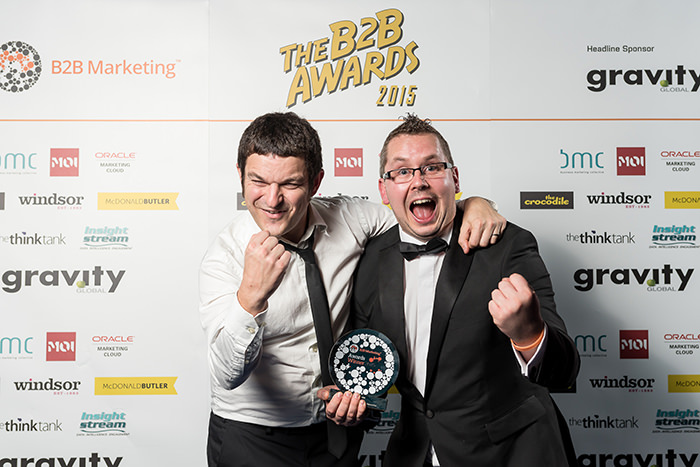
We developed a recycled papers proposition for UK designers and printers that went on to receive industry recognition, including at the B2B Marketing Awards and the W3 Awards. The success did not come from choosing between creativity and evidence. It came from making them work together.
Pet food and ecommerce: the spreadsheet eventually gets a vote
At Paleo Ridge, marketing sits close to product development, operations, customer service, ecommerce, subscriptions, loyalty, retail partnerships and sales. Decisions can affect customer behaviour, manufacturing capacity, margin and the experience of independent retailers at the same time.
A campaign may look compelling in isolation. Practice asks whether the stock exists, whether the website can support the offer, whether customer service understands it, whether it protects the brand and whether the economics survive contact with a calculator.
Consumer research matters enormously, but behaviour deserves the final word. People may express strong support for quality, sustainability or convenience and then make a different trade-off when price and effort become real.
A survey records what somebody says. A P&L records what the organisation can sustain. Neither tells the whole story, and ignoring either is an expensive form of confidence.
Strategy becomes real at the shelf
Positioning, pricing, packaging, retail relationships and customer expectations meet in one physical moment. The shopper does not see the presentation deck that brought them together.
From Will Green’s personal archive.
Coca-Cola and the Limits of Correct Research
New Coke remains a useful example because the research was not simply absent.
In blind taste tests, consumers preferred the sweeter new formula. On that narrow question, the evidence appeared persuasive. Coca-Cola changed the product in 1985 and encountered an extraordinary backlash.
The company’s own historical account acknowledges that the testing did not capture the depth of consumers’ emotional attachment to the original formula. The research answered a question about taste more successfully than it answered a question about meaning.
Theory can help explain the aftermath through brand attachment, identity, risk and consumer resistance. Practice offers the less comfortable lesson: a well-researched answer can still fail if the organisation has framed the wrong question.
Which drink tastes better in a blind test?
What does changing Coca-Cola mean to the people who believe it belongs partly to them?
Data does not remove the need for judgement. It improves judgement when the question, method and interpretation fit the decision.
The Theory-to-Practice Learning Loop
Good marketing does not move once from textbook to campaign. It repeatedly translates, tests and improves.
The learning returns to the beginning, refining how the theory is understood and applied next time.
Theory without context
Produces elegant answers to situations that may not exist.
Practice without theory
Risks repeating habits without understanding why they work or fail.
Learning without ego
Allows evidence to improve both the decision and the marketer making it.
Source: Marketing Made Clear original analysis.
Returning to University After Years of Practice
Starting an MBA at the University of Winchester in 2021 changed my relationship with management theory.
I was no longer learning concepts before encountering the problems. In many cases, I had already encountered the problem, lived with it, made a decision and occasionally discovered the consequences at speed.
Theory gave names and structure to experiences that had previously felt specific. It helped reveal similarities between apparently unrelated situations and forced me to examine assumptions that practical success can sometimes conceal.
Experience made the theory easier to interrogate. I could ask where a model fitted, where it simplified too aggressively and what would have happened if somebody had attempted to apply it inside an actual organisation.
That is why I do not see education and experience as rival routes into marketing. Each makes the other more useful.
Formal study without practical exposure can make marketing appear tidier than it is. Experience without structured learning can leave useful patterns unnamed and mistakes unnecessarily repeatable.
How Marketers Can Bridge the Gap
The objective is not to memorise every framework or to reject frameworks in favour of instinct. It is to become better at translation.
This approach also improves how marketers use familiar tools such as the marketing mix, SWOT analysis, personas and funnels.
A model is a prompt for thinking, not a substitute for it. The 7Ps can help expose a neglected process or piece of physical evidence. They cannot determine the right answer by themselves. A SWOT analysis can organise observations. It cannot prevent somebody quietly labelling a preferred idea as an “opportunity”.
The most useful question is not, “Which framework should we fill in?”
It is, “What are we trying to understand, and which evidence or concept will help us understand it?”
The Marketer Who Can Think and Do
The distinction between marketing thought and marketing practice is real, but the best marketing happens where they meet.
Theory helps marketers see beyond the habits of one employer, one category or one period in their career. Practice tests whether an idea can create value when exposed to real behaviour and organisational constraint.
I learned about audiences while trying to fill venues. I learned more formal marketing through postgraduate study. I learned about complex B2B value at Arjowiggins, commercial trade-offs in ecommerce and FMCG, and the relationship between strategy and execution by being responsible for both.
None of those experiences made theory unnecessary. They made good theory more valuable and bad application easier to recognise.
A marketer needs the map because experience alone can become a collection of anecdotes. A marketer needs the weather because the map was drawn before this particular journey began.
The real capability lies in using both, then having enough humility to change direction when the evidence says the road has disappeared.
TL;DR
- Marketing thought provides theories, evidence, concepts and models that help marketers understand what may be happening.
- Marketing practice applies that knowledge inside a particular market and organisation, where time, money and certainty are limited.
- Theory without context can become elegant but irrelevant. Practice without theory can become habit dressed as expertise.
- Strong marketers move repeatedly through theory, context, judgement, action, evidence and learning.
- A framework should improve the question and the decision. It should never be mistaken for reality itself.
Frequently Asked Questions
What is marketing thought?
Marketing thought is the body of theories, concepts, models and research used to explain markets, customers, competition, value creation and marketing’s role in organisations and society.
What is marketing practice?
Marketing practice is the application of marketing knowledge in real organisational settings. It includes research, decision-making, coordination, execution, measurement and learning.
Why is there a gap between marketing theory and practice?
Academics and practitioners work under different incentives and timeframes. Research often seeks rigorous, generalisable explanations, while practitioners must make context-specific decisions quickly and with incomplete information.
Is marketing theory useful for working marketers?
Yes, when it helps a marketer understand a problem, challenge assumptions or improve a decision. Theory becomes less useful when a framework is treated as a complete representation of reality or applied without regard to context.
Do marketers need a marketing degree?
A degree is one valuable route into marketing, but it is not the only route. Formal education and practical experience develop different capabilities, and marketers benefit most when they deliberately connect the two.
Selected Sources and Further Reading
- American Marketing Association: Definition of Marketing
- Journal of Marketing: Editorial Guidelines
- AMA: Real-World Relevance of Academic Marketing Articles
- Kurtzke and Setkute: Analytics Capability in Marketing Education
- Lilien: Bridging the Academic-Practitioner Divide in Marketing Decision Models
- The Coca-Cola Company: The Chronicle of Coca-Cola as a Global Business
- My Journey Into Marketing