

Marketing History · Propaganda · Big Tobacco
Operation Berkshire: How Big Tobacco Manufactured Doubt
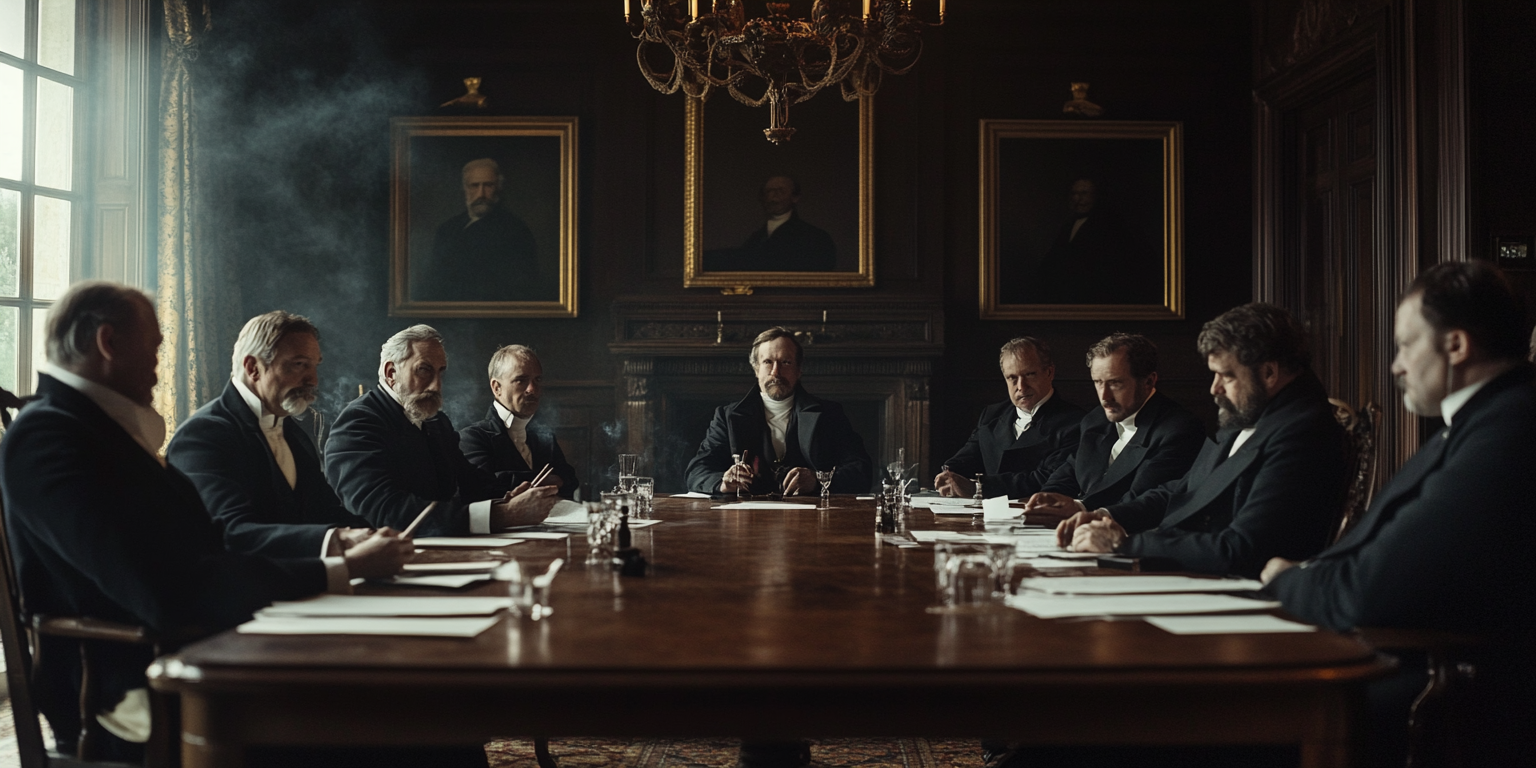
In 1977, seven rival tobacco companies met secretly in an English country house. They were not there to sell more cigarettes. They were there to protect an industry by keeping the science in dispute.
Some marketing campaigns are remembered because they created desire.
Operation Berkshire deserves to be remembered because it created doubt.
By the 1970s, the tobacco industry had a problem that no new slogan, redesigned packet or reassuring filter could solve. Evidence linking smoking with cancer and other serious diseases had been accumulating for decades. Governments were taking the threat more seriously. Restrictions were spreading. Public confidence in cigarettes was becoming increasingly difficult to maintain.
The tobacco companies were competitors, but they faced the same existential danger. If one company or country conceded that smoking caused disease, the others could fall in sequence.
So they cooperated.
In June 1977, senior figures from seven major tobacco businesses gathered at Shockerwick House, near Bath in Somerset. Their discussions helped create an internationally coordinated response to the growing scientific and political pressure on smoking.
The name attached to the project was Operation Berkshire.
What Was Operation Berkshire?
Operation Berkshire was the codename for an attempt by major international tobacco companies to coordinate their response to evidence about smoking and disease.
The initiative began with correspondence between Tony Garrett, chairman of Imperial Tobacco, and Hugh Cullman, president of Philip Morris International. Garrett warned that tobacco companies risked being “picked off one by one” unless they developed a common defensive strategy.
Representatives of seven companies subsequently met at Shockerwick House:
United States
Philip Morris
United States
R.J. Reynolds
United Kingdom
British American Tobacco
United Kingdom
Imperial Tobacco
United Kingdom
Gallaher
Germany
Reemtsma
International
Rothmans
The meeting sounds like something written for a corporate thriller: powerful executives, a secluded country house and a codename borrowed from an English county.
There is one useful geographical correction to make, though. Despite the name, Shockerwick House is not in Berkshire. It stands near Bath in Somerset. The operation supplied the Berkshire; the mansion supplied the atmosphere.

The Industry’s Problem Had Been Growing for Decades
Operation Berkshire did not emerge because a previously unsuspecting industry received some surprising news in 1977.
In 1950, major epidemiological studies published by researchers including Richard Doll, Austin Bradford Hill, Ernst Wynder and Evarts Graham reported a strong association between cigarette smoking and lung cancer. In 1954, the US tobacco industry responded with the newspaper advertisement A Frank Statement to Cigarette Smokers, promising consumers that public health was a basic responsibility and announcing an industry-backed research committee.
The reassuring language mattered. It presented the companies as calm, responsible participants in an ongoing scientific discussion. The science might be worrying, the advert suggested, but the responsible thing was to wait for more evidence.
Then came the 1964 US Surgeon General’s report, which concluded that cigarette smoking was causally related to lung cancer in men and linked smoking with other serious harms. In Britain, the Royal College of Physicians had already published Smoking and Health in 1962.
By the time the executives arrived at Shockerwick House, the core threat was not simply scientific. It was commercial, political and legal.
01
The science strengthens
Evidence connecting smoking with cancer, heart disease and respiratory illness becomes increasingly difficult to dismiss.
02
Public concern grows
Consumers begin reassessing a product that had been embedded in everyday social life.
03
Governments respond
Warnings, advertising restrictions, taxation and smoke-free policies become more likely.
04
Liability expands
Clear acknowledgement of harm could strengthen litigation and expose what companies knew internally.
If smoking caused disease, tighter regulation was justified. If second-hand smoke harmed non-smokers, smoking could no longer be treated solely as an individual choice. It could be restricted in offices, aircraft, restaurants and public buildings.
That threatened not only how cigarettes were promoted, but where and how often they could be consumed.
The Product Was Cigarettes. The Strategy Was Controversy.
Operation Berkshire’s most important marketing lesson is that the industry did not have to win the scientific argument.
It needed to prevent the argument from appearing finished.
If the public believed scientists were still divided, regulation could be described as premature. Journalists could be encouraged to present established findings as two equally credible sides of a debate. Politicians could justify waiting. Smokers could continue buying a product while reassuring themselves that nobody really knew for certain.
Doubt became commercially useful.
This distinction is crucial. Ordinary product marketing tries to increase preference for one brand over another. The coordinated tobacco response operated further upstream. It sought to influence the environment in which every tobacco company was judged.
The audience was therefore much broader than potential smokers. It included journalists, scientists, civil servants, politicians, employers, regulators and the general public.
How Big Tobacco Manufactured Doubt
The campaign was not one advertisement or press release. It was a communications system.
Tactic 01
Coordinate the message
Competing companies developed common positions so that one organisation did not concede what the rest were trying to dispute.
Tactic 02
Create apparent independence
Industry positions could travel through committees, associations, research bodies and third parties rather than appearing to come directly from cigarette manufacturers.
Tactic 03
Fund useful research
Research did not need to demonstrate that smoking was safe. Studies that complicated causation or foregrounded alternative explanations could help sustain controversy.
Tactic 04
Monitor opponents
The international network collected intelligence on tobacco-control organisations, political developments and emerging threats.
Tactic 05
Reframe regulation
Health measures could be presented as attacks on freedom, personal choice, employment or accepted social behaviour.
Tactic 06
Delay the decision
Calls for more evidence, more debate and more research created time. For a profitable industry, time had considerable value.
Academic researchers Neil Francey and Simon Chapman reconstructed this strategy using internal tobacco documents released through litigation. Their paper, “Operation Berkshire”: the international tobacco companies’ conspiracy, describes an effort to promote controversy over smoking and disease and coordinate resistance internationally.
The internal records matter because they allow us to compare public reassurance with private strategy. This is not a story assembled solely from hostile interpretations of advertising. Much of the evidence comes from the industry’s own memoranda, meeting notes and plans.
ICOSI: Turning a Secret Meeting into an International Network
The cooperation became institutionalised through the International Committee on Smoking Issues, known as ICOSI. It was later renamed INFOTAB, the International Tobacco Information Centre.
ICOSI allowed tobacco companies to coordinate across borders while working through national manufacturers’ associations. It could monitor developments, circulate intelligence, formulate shared responses and identify allies.
This structure solved an awkward communications problem. A claim made directly by a cigarette company was obviously self-interested. The same argument repeated by an association, specialist body, commentator or apparently independent expert could appear more credible.
Modern marketers might describe this as stakeholder engagement, message architecture or third-party advocacy. Those neutral expressions should not conceal what was happening here. The system helped companies obscure the health risks of their products and resist measures intended to reduce harm.
Marketing the Social Acceptability of Smoking
The battle was not confined to medical evidence.
Cigarettes had become successful partly because smoking was culturally normal. It appeared in homes, workplaces, restaurants, sport, cinema and advertising. Tobacco brands were attached to glamour, adulthood, independence, masculinity and sophistication.
If smoking became socially unacceptable, cigarette consumption would become less convenient and smokers would face greater pressure to stop. Protecting the category therefore meant protecting smoking’s place in public life.
ICOSI established a Social Acceptability Working Party. The language sounds almost comically mild, as though a committee had been formed to address poor etiquette at a village fête. In reality, the social acceptability of smoking had enormous commercial importance.
Arguments about accommodation, courtesy, ventilation, choice and tolerance could slow the transition towards smoke-free spaces. The frame shifted from public health to a conflict between reasonable adults with different preferences.
That reframing softened the industry’s position. It was easier to defend “choice” than smoke inhalation.
The Marlboro Man and the Power of Brand Mythology
Operation Berkshire concerned the whole industry, but individual cigarette brands continued doing what powerful brands do: wrapping products in stories.
Few did this more successfully than Marlboro.
The Marlboro Man turned a cigarette into a symbol of rugged independence. Open landscapes, horses and solitary cowboys placed the brand in a world far removed from laboratories, hospital wards and epidemiological data.
This is one reason tobacco marketing remains so important to study. Brands do not merely communicate product attributes. They build mental associations that can compete with uncomfortable facts.
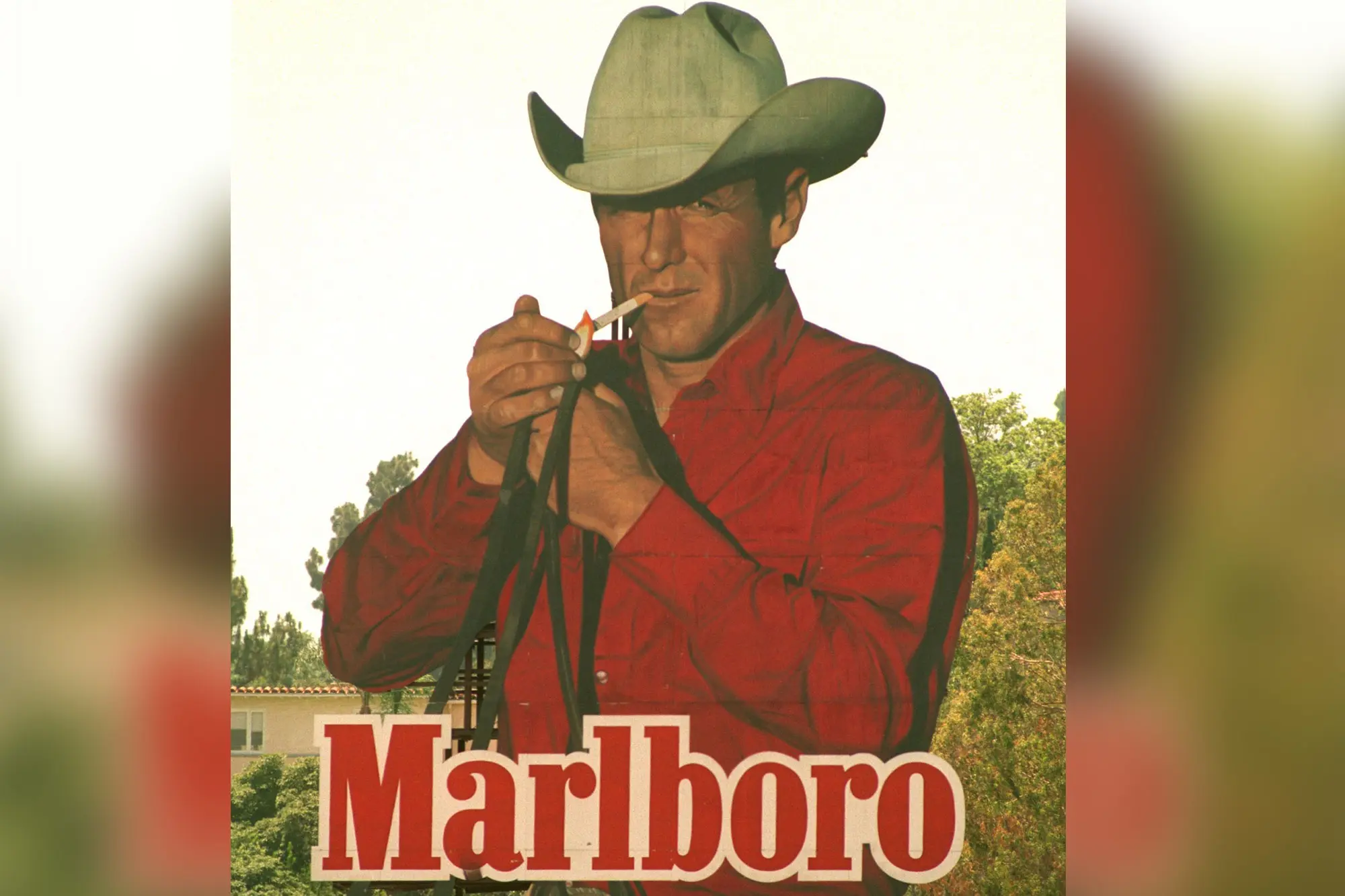
The cowboy did not rebut the medical evidence. He made the evidence feel psychologically distant.
That is a different mechanism from Operation Berkshire’s coordinated dispute of science, but the two approaches complemented one another. Brand mythology created desire. Manufactured controversy supplied permission to continue.
A Timeline of Operation Berkshire and Its Aftermath
1950
Landmark studies
Major studies report a strong association between cigarette smoking and lung cancer.
1954
A Frank Statement
US tobacco companies publish a nationwide advertisement reassuring smokers and promising industry-backed research.
1962–1964
Official reports
Authoritative British and American reports strengthen the public case that smoking causes serious disease.
1977
Shockerwick House
Executives from seven tobacco companies meet and develop a shared international defence.
1978
ICOSI begins
The International Committee on Smoking Issues provides a formal mechanism for cooperation.
1981
INFOTAB
ICOSI is renamed and its international information and lobbying role develops further.
1990s
Documents emerge
Litigation and leaks expose millions of pages of internal tobacco-industry material.
1998
Master Settlement Agreement
Four major US manufacturers settle with 46 states and other jurisdictions, accepting payments and extensive marketing restrictions.
2006
Federal racketeering judgment
A US federal court finds that major cigarette companies conducted a decades-long scheme to deceive the public.
How the Documents Finally Became Public
Secrecy was an important part of the industry’s advantage. It became much harder to maintain during the 1990s.
Whistleblowers, investigative reporting and litigation brought internal tobacco records into public view. The 1998 Master Settlement Agreement then required extensive document disclosure and permanently changed the legal and marketing environment in the United States.
The agreement was made between four major US tobacco manufacturers and 46 states, the District of Columbia and five US territories. Four other states had already reached separate settlements. It imposed continuing payments and restricted practices including youth targeting, cartoons, branded merchandise, certain sponsorships and paid product placement.
It is frequently summarised as a $206 billion settlement over its first 25 years. More precisely, the participating manufacturers accepted annual payment obligations to the settling states, alongside significant restrictions on advertising, marketing and promotion. The National Association of Attorneys General explains the agreement and its continuing requirements.
In 2006, Judge Gladys Kessler reached an even more explicit conclusion in the US federal government’s racketeering case. Following a lengthy trial, the court found that major cigarette companies had participated in a long-running scheme to deceive the American public about smoking, nicotine addiction, second-hand smoke, “light” cigarettes and other issues.
The judgment did not concern Operation Berkshire alone. It placed the operation within a much larger history of coordinated corporate deception.
Was This Marketing?
There is a temptation to protect marketing’s reputation by saying that Operation Berkshire was not marketing at all.
It was propaganda. It was lobbying. It was corporate deception. It was public relations stripped of an ethical braking system.
All of that is true.
But refusing to recognise the marketing dimension lets the discipline off too easily. Marketing influences how organisations understand markets, construct value, frame choices, manage stakeholders and shape behaviour. Those capabilities do not become something entirely different merely because they are used dishonestly.
The uncomfortable lesson is that sophisticated marketing can be highly effective while being morally indefensible.
Commercially
It protected time
Delay allowed companies to continue selling an extraordinarily profitable product while regulation developed slowly.
Communicatively
It changed the question
The debate moved from “how should society respond to harm?” to “has the harm been proved beyond every possible doubt?”
Ethically
It transferred the cost
Companies protected revenue while consumers, families and health systems carried the consequences.
The Difference Between Persuasion and Manipulation
All marketing attempts to influence. Influence alone is not the ethical dividing line.
A useful distinction lies in whether people are being helped to make an informed choice or deliberately prevented from making one.
Persuasion can emphasise benefits, build emotional meaning and present a brand’s case attractively. Ethical persuasion still leaves the audience with a substantially truthful understanding of what is being offered.
Manipulation becomes more likely when an organisation:
- conceals information that would materially change the customer’s decision;
- creates false equivalence between strong evidence and marginal dissent;
- uses apparently independent voices without disclosing commercial influence;
- targets vulnerabilities that the audience cannot reasonably recognise;
- frames delay as neutrality when delay directly benefits the organisation; or
- privately accepts evidence that it publicly disputes.
Operation Berkshire crossed that line repeatedly.
The Playbook Did Not Disappear with Cigarette Advertising
The details of Operation Berkshire belong to tobacco history. The underlying communications strategy does not.
When evidence threatens a powerful commercial interest, an organisation may be unable to prove the evidence wrong. It can still attack the appearance of consensus.
The recurring playbook looks something like this:
01
Identify the threatening fact
Find the evidence most likely to produce regulation, litigation or behavioural change.
02
Magnify uncertainty
Treat the normal limits of research as proof that no conclusion can yet be trusted.
03
Recruit credible messengers
Move the argument through institutes, experts, associations and sympathetic commentators.
04
Reframe the intervention
Present regulation as an attack on choice, jobs, innovation, affordability or personal freedom.
05
Demand more time
Insist that action must wait until an unrealistically perfect standard of proof has been reached.
This does not mean every corporate disagreement with emerging research is equivalent to Big Tobacco. Scientific claims should be challenged. Regulations can be poorly designed. Companies are entitled to defend themselves.
The warning sign is the gap between private knowledge and public argument—especially when creating that gap becomes a deliberate commercial strategy.
What Marketers Should Learn from Operation Berkshire
1. Effectiveness is not the same as legitimacy
A campaign can achieve its commercial purpose and still represent a profound failure of marketing. Performance measures cannot answer moral questions on their own.
2. Framing can be more powerful than advertising
The tobacco companies influenced which question society debated. Once the question became “is every detail conclusively settled?”, delay became easier to defend.
3. Third-party credibility must be transparent
Associations, experts and research bodies can add legitimate knowledge. When their financial relationships are hidden, borrowed credibility becomes disguised persuasion.
4. Category protection can unite competitors
Businesses that fight aggressively for market share may still cooperate when the legitimacy of the whole category is threatened. Marketers should understand the difference between collective advocacy and coordinated deception.
5. Internal evidence eventually becomes external evidence
Emails, research reports, presentations and meeting notes rarely remain private forever. A useful ethical test is simple: would the strategy still seem defensible if its internal explanation appeared on the front page tomorrow?
6. Trust is not a communications veneer
Trust cannot be restored through warmer language while the underlying behaviour remains unchanged. Reputation is ultimately an operational outcome.
Operation Berkshire FAQs
What was Operation Berkshire?
Operation Berkshire was the codename for a coordinated international tobacco-industry strategy developed during the 1970s. It sought cooperation between major manufacturers in responding to scientific evidence, public-health campaigns and regulation concerning smoking.
Why was it called Operation Berkshire?
The surviving correspondence shows “Berkshire” being used as the project’s codename. It should not be confused with the meeting location: Shockerwick House is near Bath in Somerset, not in Berkshire.
Which tobacco companies were involved?
The 1977 meeting brought together representatives associated with Philip Morris, R.J. Reynolds, British American Tobacco, Imperial Tobacco, Gallaher, Reemtsma and Rothmans.
What was ICOSI?
ICOSI was the International Committee on Smoking Issues, created as a mechanism for cooperation between tobacco companies and national manufacturers’ associations. It was later renamed INFOTAB.
What was the purpose of manufacturing doubt?
The industry did not need to establish that cigarettes were safe. Keeping the science publicly contested could delay regulation, weaken litigation, preserve the social acceptability of smoking and reassure consumers who wanted to continue.
Did the 1998 Master Settlement Agreement end tobacco marketing?
No. It imposed major restrictions on participating manufacturers in the United States, including rules concerning youth targeting, cartoons, sponsorships, merchandise and product placement. Tobacco marketing continued through channels and practices that remained available.
Conclusion: They Were Selling Permission to Wait
Operation Berkshire was not a moment when seven companies suddenly decided to create better cigarette advertising.
It was an attempt to manage reality itself.
The science threatened the product. Regulation threatened consumption. Litigation threatened the companies. In response, competitors coordinated messages, created organisations, cultivated allies and treated uncertainty as a commercial asset.
Their most important product was no longer the cigarette.
It was permission to wait.
Wait for another study. Wait for absolute certainty. Wait before restricting advertising. Wait before making workplaces smoke-free. Wait before accepting that the individual smoker’s “choice” had been shaped by addiction, brand mythology and incomplete information.
For tobacco companies, every delay protected sales.
For everybody else, the cost was measured rather differently.