Leadership, Management & Behind the Scenes
Behind the Scenes at Glastonbury: What I Learned From Nearly a Decade Working at British Festivals
I went from coordinating doctors at Glastonbury and Reading to becoming a trustee of Festival Medical Services – just in time for COVID to make festivals disappear. This is what nearly a decade on the other side of the festival fence taught me about people, management, perspective and the extraordinary machinery behind some of Britain’s biggest events.
There are two versions of Glastonbury Festival.
There is the Glastonbury most people know.
Hundreds of thousands of people descend on a farm in Somerset. Fields become campsites. Some of the biggest musicians in the world perform on stages that seemingly appear from nowhere. There are flags, food, mud, sunshine, questionable toilets and an entirely reasonable chance that you will lose your friends for six hours.
Then there is another Glastonbury.
Behind the stages, bars and crowds is the infrastructure required to turn farmland into something approaching a temporary city.
There are roads, communications networks, security operations, sanitation, logistics, welfare services and an extraordinary medical operation.
For the best part of a decade, I was lucky enough to see a little of that other side.
I volunteered with Festival Medical Services (FMS), initially as a Doctor’s Coordinator and later as an elected trustee of the charity.
It took me from trying to persuade some of the UK’s most senior emergency doctors to change their shifts at Reading Festival, to discussing the future of a charity when COVID-19 suddenly removed almost its entire source of income.
Along the way, I saw some incredible bands, met some interesting people, learned far more about medical specialisms than I ever expected to know and discovered that one of the greatest privileges available at Glastonbury isn’t access to celebrities.
From Festival-Goer to Festival Worker
My relationship with Festival Medical Services actually started with my mum.
She was a doctor with FMS for many years and worked at Glastonbury, so I’d already seen glimpses of the organisation before becoming directly involved myself.
I’d also been to Glastonbury several times as a normal festival-goer.
My first Glastonbury completely blew my mind.
I wasn’t particularly accustomed to going to enormous concerts at that point, so there was something difficult to comprehend about wandering around a field and seeing some of the most famous musicians in the world appearing on stages in front of you.
Then there was the scale.
You can see photographs of Glastonbury. You can watch it on television. You can look at maps.
None of them really prepare you for how enormous the place feels when you’re actually there.
After my first festival, I even walked back to my uncle’s house in Shepton Mallet.
This is not a Glastonbury travel strategy I particularly recommend.
On later visits I camped, which felt like progressing to the full experience. Eventually, though, I got to experience Glastonbury from the other side of the fence.
I joined Festival Medical Services as a Doctor’s Coordinator.


FMS traces its origins at Glastonbury back to 1979. What began as a comparatively small medical operation developed over the decades into an organisation capable of providing everything from smaller first-aid teams to multidisciplinary medical centres, ambulance services and specialist clinical provision at major events.
Today, Festival Medical Services says around 1,500 volunteer clinicians and support staff are involved in its work.
I was about to become one of them.
The City Most Festival-Goers Never See
One of the things that fascinated me most was the infrastructure behind a major festival.
Glastonbury is on another level.

Its medical operation can involve emergency medicine, GPs, nurses, paramedics, mental-health professionals and numerous other specialists.
At major events, Festival Medical Services can provide multidisciplinary medical centres, ambulance support and services that go considerably further than most people would associate with “festival first aid”.
At Glastonbury, I saw facilities capable of dealing with things such as X-rays, alongside specialists including podiatrists.
That gives you some indication of the scale of planning involved.
The objective isn’t simply to patch people up. Providing substantial medical capability on site can also reduce the number of patients who need to be transferred into surrounding NHS hospitals.
When you suddenly create a temporary population on the scale of Glastonbury, that matters.
As a festival-goer, you rarely think about any of this.
And that’s probably a sign that it’s working.
My Job Was to Make the Doctors Fit
My role was specifically concerned with coordinating doctors.
Before joining FMS, I’d spent much of my career in commercial and marketing roles. I’d previously worked for a charity at YMCA, but even there I’d been working in marketing.
This was different.
This was operational.
And suddenly I needed to understand a world of ED consultants, GPs, anaesthetists, psychiatrists, medical indemnity, DBS checks and clinical rotas.
I worked alongside two GPs and a management consultant, which itself was fascinating because we could approach the same problem from very different professional perspectives.
Our challenge wasn’t simply: do we have enough doctors?
It was: do we have the right doctors, in the right places, at the right times?
Those are very different questions.
Headcount Isn’t the Same as Capability
This was one of the first lessons that stuck with me.
Imagine you need ten doctors for a particular period.
You have ten doctors.
Problem solved?
Not necessarily.
Emergency Department consultants were particularly important because of the level and type of clinical cover they could provide. We also had a substantial number of GPs interested in volunteering.
Then there were other specialists.
We could, for example, have considerably more anaesthetists applying than we could realistically accommodate.
Psychiatric provision worked differently again. At times, psychiatrists might be available on call for particular periods rather than physically sitting in a festival medical centre throughout the entire day.
So a rota could theoretically be “full” while still having the wrong mixture of capability.
Managing People Who Were Considerably More Qualified Than Me
Perhaps the best example of this came at Reading Festival.
I arrived as the only Doctor’s Coordinator and discovered that some key people weren’t going to be there when expected.
This wasn’t an inconvenience.
Without making changes, important elements of the medical cover could potentially be compromised.
So there I was, relatively junior in my own career, having conversations with extremely senior doctors – including ED consultants who, in their normal working lives, might be responsible for running emergency departments.
And I needed them to change their plans.
There was another complication.
These people were volunteers.
Yes, they had agreed to work shifts, but they were also at a music festival. They wanted to see bands. They wanted some time off. They had arranged their festival around their rota.
I couldn’t simply pull rank.
I didn’t have any rank to pull.
What I did have were relationships.
Over the years, I’d become the point of contact for many of the doctors. I spoke to them, organised their shifts and got to know them. There was mutual respect.
So when I explained the problem, people helped.
That experience probably taught me more about stakeholder management than any stakeholder matrix ever could.
Everyone Wanted Glastonbury
Of course, there was one particularly powerful incentive available to us.
Glastonbury.
Unsurprisingly, lots of doctors wanted to volunteer at Glastonbury.
Other festivals weren’t always quite as easy to staff.
So Glastonbury itself could become an incentive. Working another event such as Reading could, at times, help secure the opportunity to work at Glastonbury.
From a marketing perspective, I find that fascinating.
The incentive wasn’t more money.
There wasn’t any money. These were volunteers.
The valuable commodity was access.
Glastonbury had created such desirability that the opportunity to volunteer your professional expertise there had value in itself.
Sunshine Changes Everything. So Does Rain.
The medical operation also gave me a completely different perspective on how an event responds to what’s happening around it.
Weather is an obvious example.
If conditions are particularly hot and dry, you might start seeing more dehydration. Dust can cause problems with people’s eyes.
That information can feed into decisions elsewhere across an event, such as encouraging greater access to water.
Then Britain remembers that it’s Britain and it starts raining.
Now you potentially have more people slipping over.
Suddenly something as mundane as your supply of crutches becomes rather important.
The same principle applies to recreational drugs.
Patterns change. Particular substances can appear or reappear, and medical teams need to understand what they are seeing and prepare accordingly.
I’m deliberately not going to tell individual patient stories in this article.
After spending years around festival medical provision, you inevitably become aware of incidents that would make interesting stories.
But they aren’t my stories to tell.
Patient confidentiality matters considerably more than producing an entertaining article.
What I can talk about is the operational pattern: a medical team isn’t simply sitting around waiting for individual patients to appear.
It can become an early-warning system for what’s happening across an enormous temporary population.
The GP and the Emergency Doctor
One of the most interesting things I learned from the doctors was about perspective.
It was explained to me – in deliberately simplified terms – that a GP and an Emergency Department doctor can sometimes approach a patient from different starting points.
The way it was described to me was that a GP may often be working towards establishing the most likely, straightforward explanation and ruling out serious concerns, whereas emergency medicine is necessarily oriented towards identifying what might be seriously wrong.
I am absolutely not attempting to teach medicine here.
I am a marketer who spent a few years organising doctors.
Please do not cite me in The Lancet.
But the idea stayed with me because it demonstrated something important.
Two intelligent, highly trained people can look at the same situation differently because their experience has trained them to ask different questions.
Marketing
What is the opportunity?
Finance
What is the exposure?
Sales
Will the customer buy it?
Operations
How difficult will this be to deliver?
Legal
What could go wrong?
Leadership
What are the other perspectives seeing that I’m not?
The interesting question isn’t always who is right?
Sometimes it’s:
The Slightly Surreal Side of Working at Glastonbury
Of course, not everything needs to become a management lesson.
Working at festivals is also just really good fun.
Having access to some of the working areas at Glastonbury means occasionally finding yourself in slightly surreal situations.
I bumped into Pritchard from Dirty Sanchez.
I met Mike Skinner from The Streets.
I once queued for a coffee next to the guitarist from The Killers.

You also occasionally encountered artists and touring crews through the medical operation.
One of my favourite bands is Deftones.
On one occasion, somebody from their road crew needed treatment after being injured by equipment.
Afterwards, I ended up with a handful of the guitarist’s plectrums.
I still think that’s pretty cool.
And that’s part of what working at a festival feels like.
One minute you’re worrying about whether you have sufficient ED consultant cover.
Then you’re watching one of the biggest bands in the world.
Then somebody needs you.
Then you’re back to work.
The main difference from attending as a punter is that there is always a bit of responsibility sitting in the back of your mind.
You’re probably not going to completely let your hair down when you know you’re working later.
On the other hand, the staff facilities included proper showers and flushing toilets.
Then I Became a Trustee
After several years coordinating doctors, an opportunity came up to stand for election to the FMS Board of Trustees.
I put myself forward.
My reasoning was fairly simple.
I wasn’t a doctor.
I came from marketing and commercial roles, I was considerably younger than many of the existing trustees, and I thought that combination might allow me to bring a different perspective to the board.
I was elected.
The board contained some extraordinary experience, including people who had been involved with FMS for decades.
I found the governance side fascinating.
The financial reporting was particularly impressive – some of the best I’d experienced at board level. Forecasting could be extremely accurate because, under normal circumstances, the organisation operated with relatively predictable revenue streams and a great deal of accumulated knowledge.
People had been doing this for a very long time.
Then COVID happened.
And suddenly decades of experience couldn’t tell us what next year looked like.
The Brilliant FMS Model
To understand why COVID presented such a profound problem, you need to understand the Festival Medical Services model.
Festivals Pay FMS
Festivals commission Festival Medical Services to provide professional medical cover for their events.
Medical Professionals Volunteer
Doctors, nurses, clinicians and support staff donate their time and professional expertise.
FMS Delivers the Medical Service
Festival-goers receive substantial professional medical provision while the event reduces unnecessary pressure on surrounding NHS services.
The Surplus Supports Charities
Money generated through the model can then support health-related charitable projects in the UK and around the world.
By its 40th anniversary, FMS had donated more than £1 million in grants.
The organisation now says its charitable giving has passed £2 million.
The charities it has worked with span the UK and the world, supporting healthcare, education, disability services, palliative care and communities where medical resources can be desperately limited.
One organisation I particularly remember was the Tulsi Trust, which supports healthcare and education in rural India.
This was one of the things that made FMS so special to me.
Someone could volunteer their medical expertise at a British music festival and, through that model, help create a surplus that eventually supported people thousands of miles away.
Festival Medical Services was recognised with the Queen’s Award for Voluntary Service in 2020.
Which, as years for a festival organisation go, was quite a year to receive an award.
What Happens When Your Entire Market Disappears?
COVID didn’t cause FMS a downturn.
Festivals stopped.
The charity’s income came overwhelmingly from events, while many of its costs didn’t magically disappear because Worthy Farm was empty.
There were premises.
There were employees.
There were decisions about furlough.
There were reserves.
There was medical stock.
And some of that stock had shelf lives.
Even apparently mundane medical supplies can expire. If events don’t happen for long enough, equipment and supplies bought to enable you to operate can become unusable.
Meanwhile, another problem was developing.
Many of the people FMS relied upon were NHS clinicians.
The same doctors, nurses and healthcare professionals we would ordinarily have been asking to volunteer at festivals were dealing with the biggest healthcare crisis of their professional lives.
Even during periods when there was uncertainty about whether festivals might legally be able to proceed, there was another question hanging over us:
It wasn’t simply an operational problem.
It was an ethical one.
Suddenly the Trustees Really Mattered
Trusteeship can sound quite dull from the outside.
Governance.
Policies.
Accounts.
Minutes.
Reserves.
Then something goes seriously wrong and you discover why governance exists.
During normal periods, the trustees could sometimes be one of the less visible parts of an organisation filled with people actually delivering events.
During COVID, there were periods when trusteeship felt like one of the only parts of FMS that remained fully active.
There were genuine conversations about survival.
Stakeholders questioned whether the organisation would make it through.
Board members were simultaneously dealing with their own jobs and the pandemic.
At one point, one of our trustees was stranded in Vanuatu by travel restrictions and joining meetings remotely from the other side of the world.
And we had decisions to make.
I Learned Why Charities Need Reserves
Reserves are an interesting subject.
When everything is going well, money sitting in reserve can look like money that could be doing something more useful.
Why isn’t it being spent?
Why isn’t it being donated?
Why isn’t it helping somebody?
Then your revenue disappears.
And you understand.
They gave the organisation the ability to survive.
And that created one of the hardest tensions I experienced as a trustee.
What if the People Who Need Your Help Can’t Wait?
FMS existed partly to support other charities.
Those charities hadn’t stopped needing money because festivals had stopped.
Quite the opposite.
Some were operating in communities where COVID was creating even greater pressure.
We were receiving requests from organisations doing work that was incredibly difficult to say no to.
So what do you do?
Protect every penny because your own organisation might not survive?
Or use your reserves to help organisations whose beneficiaries might need that support immediately?
There isn’t a clever marketing model that answers that question.
There isn’t a 2x2 matrix.
It’s governance.
It’s judgement.
It’s understanding that trustees have responsibilities towards the long-term sustainability of their own charity while also remembering why that charity exists in the first place.
We did everything we could to balance those responsibilities.
We also managed to source additional donations and support, including help connected with Glastonbury, which enabled FMS to continue supporting charitable causes during an extraordinary period.
And FMS itself adapted.
When the Festival Medical Charity Started Helping With Vaccinations
One of the things that helped FMS navigate the pandemic was applying its capabilities somewhere they were suddenly desperately needed.
COVID vaccination.
Think about what FMS already knew how to do.
- Bring healthcare professionals together.
- Coordinate them.
- Create rotas.
- Operate temporary medical environments.
- Manage clinical processes.
- Deploy people.
The context had changed dramatically.
But many of the underlying capabilities hadn’t.
FMS became involved in supporting COVID vaccination activity, creating an alternative source of activity and revenue during a period when traditional event work had disappeared.
FMS couldn’t make festivals happen.
But it still knew how to mobilise medical professionals.
That capability mattered enormously.
Meeting Michael Eavis
One of the privileges of my involvement with FMS was meeting Michael Eavis a couple of times.

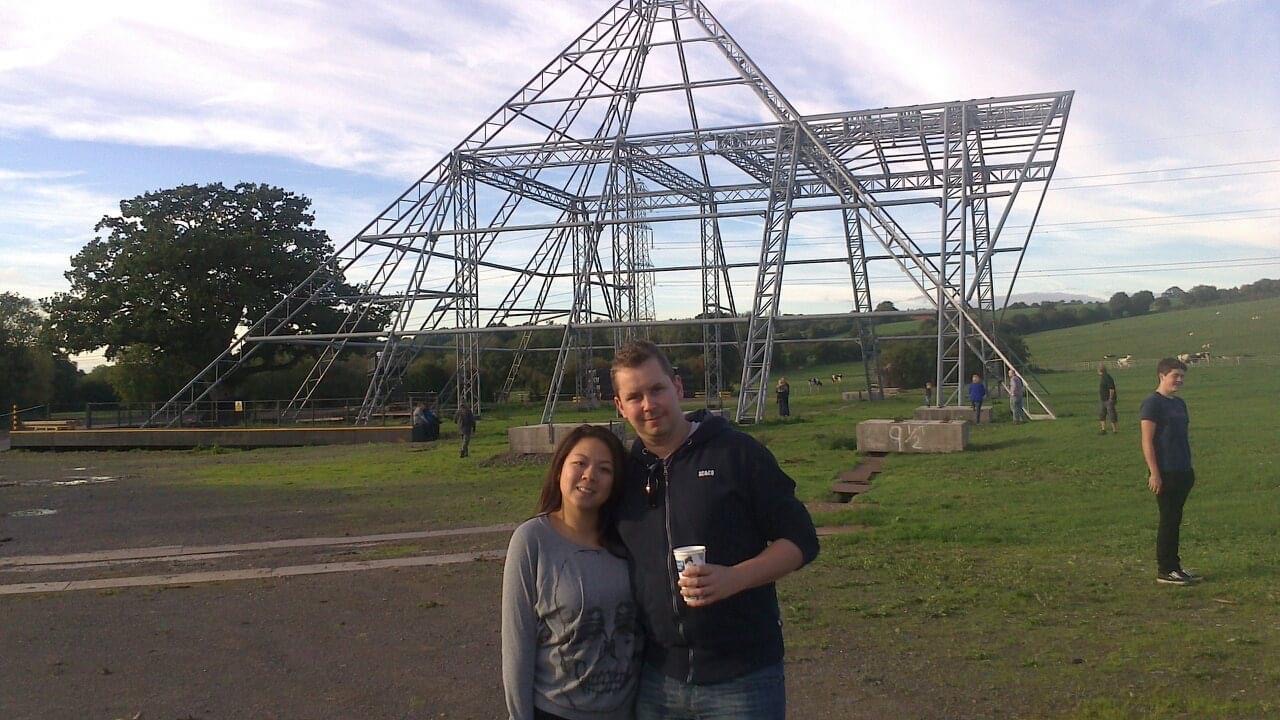
There is an area at Glastonbury called William’s Green.
My name is William Green.
Obviously, I felt it was important to thank Michael personally for naming part of Glastonbury Festival after me.
He very kindly explained that he hadn’t.
William’s Green actually has a connection to his family’s history at Worthy Farm.
Still, worth a try.
What struck me more seriously was how Michael came across.
Everyone I knew who encountered him seemed to say something similar: he was an incredibly gentle, warm person who cared enormously about the festival, the farm and the land around it.
There’s something difficult to describe about Glastonbury.
For all its enormous commercial and cultural significance, there is still something about the place that feels different.
Almost spiritual.
Michael always struck me as someone who saw himself less as the owner of that phenomenon and more as one of its custodians.
I found that inspiring.
Eventually, Something Had to Give
I spent the best part of a decade volunteering with Festival Medical Services.
I would have loved to do more.
But my life had changed.
My own career had progressed and I’d become a director. I had a young family. I was playing in a band. I wanted to study for my MBA.
It turns out there are limits to how many lives you can simultaneously live.
COVID had also meant that some of the enjoyable parts of being a trustee – actually attending and being involved with festivals – had disappeared for a significant period.
By the time festivals were properly returning, my own circumstances were different.
So after completing my term as a trustee, I informed the board that I wouldn’t stand for another.
It was difficult, because I remained enormously positive about FMS and the people involved with it.
I still am.
Seeing the Machinery Changes How You See the Show
I don’t think my time with Festival Medical Services gave me one neat lesson.
And I’m slightly suspicious of articles that pretend every interesting life experience conveniently produces Seven Leadership Lessons You Can Apply On Monday Morning.
It doesn’t work like that.
Stakeholder Management
I learned about it because I once found myself having to persuade incredibly senior doctors to change their festival plans.
Capability
I learned that having enough people means nothing if they’re not the right people.
Perspective
GPs, emergency doctors, management consultants and marketers can look at the same problem and see something completely different.
Incentives
The opportunity to work at Glastonbury could sometimes be more motivating than money.
Frontline Information
Weather, injuries, substances and patient presentations could tell you something about what was happening across an entire festival.
Resilience
I learned what reserves really mean when I watched an organisation move from predictable financial planning to discussing its own survival.
Governance
I happened to become a trustee shortly before the world provided a fairly extreme practical examination in it.
Invisible Organisations
I learned that the things which appear effortless from the outside are often anything but.
That last point is probably the thing that has stayed with me most.
As a festival-goer, you look towards the stage.
You see the artist.
You see the lights.
You see the crowd.
After working behind the scenes, you start seeing the invisible organisation underneath it all.
The medical professionals.
The volunteers.
The logistics teams.
The people managing rotas.
The people monitoring what’s happening.
The people making contingency plans.
The people having meetings that festival-goers will never know happened.
The people solving problems quickly enough that, ideally, nobody outside the operation ever knows there was a problem in the first place.
Glastonbury still feels extraordinary to me.
Perhaps more extraordinary than it did before.
Sources & Further Reading
Historical and organisational information about Festival Medical Services has been checked against information published by Festival Medical Services and Glastonbury Festival. Personal experiences and recollections throughout this article are my own.
- Festival Medical Services – organisational history, volunteering, event healthcare and charitable giving.
- Festival Medical Services – Charitable Giving – information about supported medical charities and projects.
- Glastonbury Festival – Festival Medical Services Receives Queen’s Award for Voluntary Service