

Retail Strategy · Own Label · Manufacturing
Own Label: How M&S and the Supermarkets Became Brand Owners
Own label used to sound like the cheaper thing next to the real brand. That is increasingly the wrong way to think about it. For retailers, it can create differentiation, margin and loyalty. For manufacturers, it can fill factories and spread cost. The interesting bit is what happens when those incentives meet.
I tend to look at own label from the manufacturer’s side first.
That is partly because I have spent more of my working life making things than running supermarkets.
From a manufacturer’s perspective, the attraction is fairly straightforward: capacity matters.
A fuller factory is usually a more efficient factory. Fixed costs are spread across more volume. Labour, machinery, purchasing and overheads work harder. If a retailer or another brand can bring in meaningful production volume, manufacturing for them can make very good commercial sense.
But there is an important qualifier.
You would still rather fill that capacity with your own brand if you can.
Your own product builds your own equity. Own-label production builds somebody else’s.
Own label is one of those arrangements where both sides can win — but they are not winning for the same reason.
The retailer wants control, differentiation and a stronger customer relationship. The manufacturer wants volume, utilisation and economies of scale.
That tension is what makes own label interesting.
Own Label Is Much Older Than the Supermarket Aisle We Recognise Today
Retailers have been putting their own names on products for a very long time.
Marks & Spencer provides one of the clearest British examples. Its St Michael trademark was introduced in 1928 as a quality mark for products made to M&S specifications. Over the following decades it expanded until, by the 1950s, it appeared across essentially the whole M&S range.
That matters because it shows own label was never only about copying a national brand and charging less.
At its strongest, it is a retailer saying: we are willing to put our reputation directly onto the product.
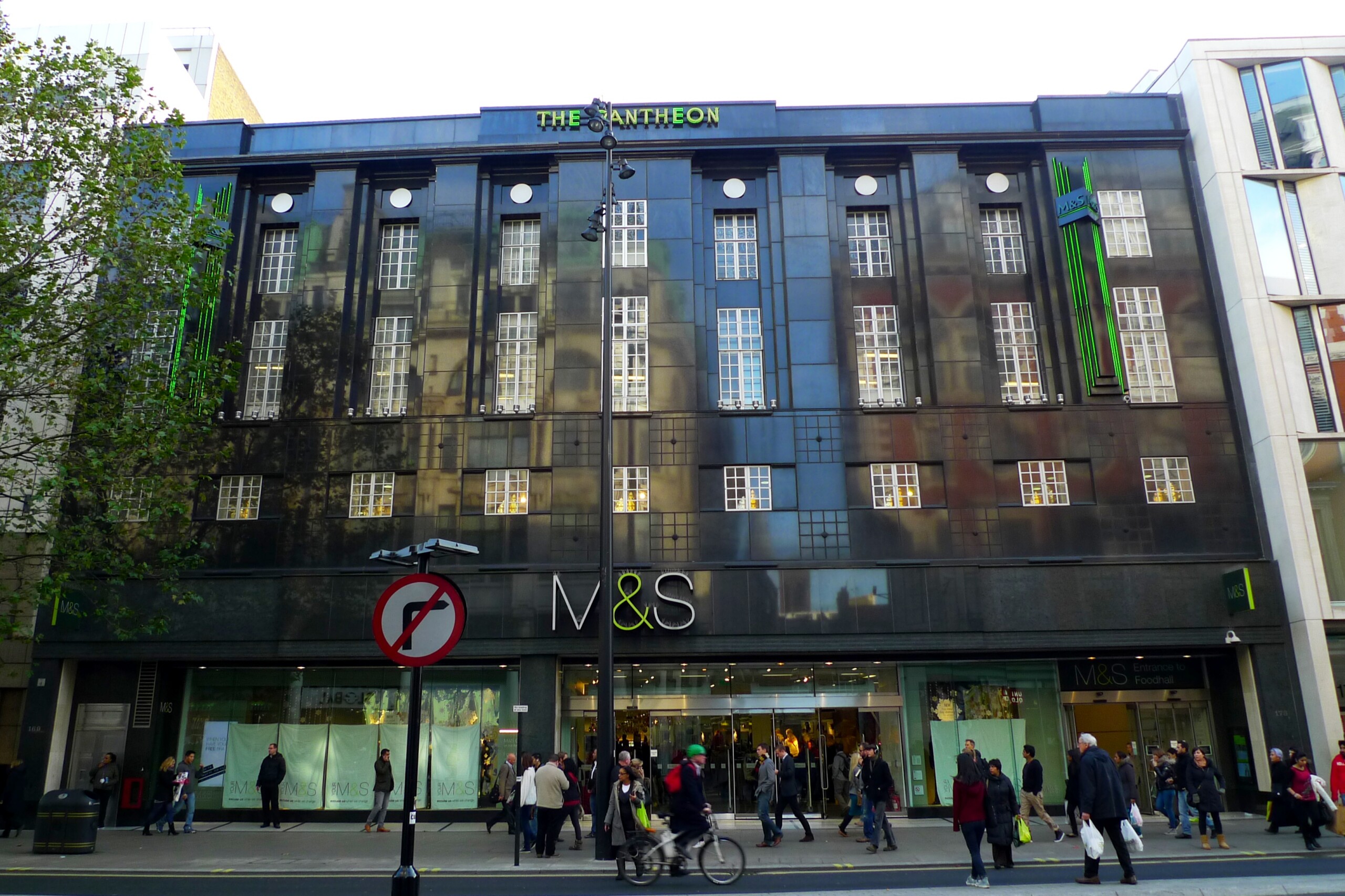
M&S still describes itself as a retailer focused on its own-label businesses. In Food, it says being predominantly own label gives it greater control over product development, quality and its supplier relationships.
That is why M&S is probably the retailer I trust most instinctively on own brand.
There is very little sense that you are buying the “M&S version” of the proper product. The M&S product is the proposition.
Own label becomes much more powerful when it stops feeling like an alternative to the brand and starts behaving like the brand.
That is the difference between a retailer merely filling a gap in a category and a retailer building product equity of its own.
From the Retailer’s Side, the Logic Is Strong
I have less direct experience sitting on the retailer’s side of the table, but the commercial logic is not difficult to see.
An own-label product can give the retailer several things simultaneously:
You cannot buy exactly the same thing elsewhere
Exclusive products give customers a reason to choose the retailer rather than simply compare the same branded SKU across stores.
The retailer controls more of the value chain
Removing or changing the manufacturer-brand layer can create more room to manage margin and price architecture.
One retailer can own several positions
Entry price, mainstream, healthy, indulgent and premium tiers can all sit within the same retail portfolio.
The retailer sees the customer directly
Loyalty data, category behaviour and basket combinations can feed back into product and range development.
Specifications become strategic
Ingredients, quality standards, sourcing, packaging and innovation can all be shaped around the retailer’s positioning.
The shop becomes the endorsement
If customers trust the retailer, that trust can transfer across hundreds or thousands of products.
That last point is why I do not treat all own label equally.
I am much more willing to take a chance on an unfamiliar M&S, Waitrose or Sainsbury’s product than I am on some retailer brands where my expectation of quality is lower.
The retailer’s masterbrand is doing work before I have even read the ingredients.
Sainsbury’s Taste the Difference Shows How Far Own Label Has Travelled
There is a reason Sainsbury’s does not market Taste the Difference like a generic supermarket substitute.
The range launched in 2000 as its premium own-label tier. By February 2026, Sainsbury’s said it had passed £2 billion in sales.
That is not a side range tucked away for people who refuse to buy brands.
It is a sizeable brand architecture sitting inside another brand.

Sainsbury’s says Taste the Difference is its fastest-growing premium range and notes that customers increasingly combine value-led lines and premium own label in the same basket.
That is an important development.
The old mental model was often a simple ladder: branded product at the top, retailer copy underneath.
Modern supermarket portfolios are much more sophisticated than that. A retailer can compete at the budget end, create a mainstream own range and then offer a premium brand that asks the customer to trade up.
In other words, supermarkets are not just retailers.
They are portfolio managers.
The Manufacturer Sees a Different Spreadsheet
For the manufacturer, own label can be attractive for a different reason.
I have been involved with it in several industries.
In paper, Arjowiggins manufactured products that appeared under other names. Revive recycled paper moved through different brand and distribution arrangements over time, and we manufactured products such as MCS for Elliot Baxter in the UK.
In pet food, I have also been involved in producing white-label products for other businesses.
The attraction is consistent.
If you already have the factory, people, technical capability and purchasing scale, incremental volume can improve utilisation.
The Capacity Logic
Fill the line
More production can spread fixed manufacturing costs across a larger output base.
Buy more efficiently
Higher ingredient, raw-material or packaging volumes can improve buying leverage and planning.
Make assets work harder
Machinery and labour are expensive when they sit idle. Additional contracts can increase productive use.
Do not confuse volume with ownership
The retailer owns the customer relationship and brand equity. A large contract can help the factory while increasing dependence on the buyer.
That final point matters.
Own-label manufacturing is not automatically inferior business. Sometimes it is excellent business.
But if I had a choice between producing the same profitable volume under my own brand or somebody else’s, I would normally prioritise my own.
One fills the factory.
The other fills the factory and builds an asset I own.
Capacity can belong to the manufacturer while the customer belongs to the retailer.
That can be a very good commercial arrangement — provided the manufacturer understands what it is trading away in return for the volume.
Private Label, White Label and Contract Manufacturing Are Not Quite the Same Thing
The language gets messy because businesses often use these terms interchangeably.
As a practical distinction:
- Private label usually means a manufacturer produces something to be sold under a retailer’s brand or exclusive range.
- White label often describes a more standardised product that can be branded and sold by different customers.
- Contract manufacturing is the broader manufacturing relationship: one business makes a product on another business’s behalf, whether the formulation is bespoke or not.
In the real world, the boundaries blur very quickly.
The commercially important question is less about terminology and more about who owns the specification, who owns the customer, who carries the inventory risk and whose brand gets stronger if the product succeeds.
Aldi and Lidl Changed the Emotional Status of Own Label
This is where the discounters deserve real credit.
They helped normalise the idea that an own-brand product could simply be the normal product, rather than the apologetic cheap version sitting underneath the famous name.
When most of the shop is private label, the customer is not constantly choosing between “brand” and “own brand”.
They are choosing between products inside Aldi or Lidl’s ecosystem.

I still find one part of the model strange, though: the deliberate resemblance to established brands.
There are products where the colour, format, typography or overall presentation is clearly designed to remind you of the category leader.
As a marketer, I find myself wondering how close is too close.
The answer is: sometimes the courts wonder the same thing.
The “How Do They Get Away With That?” Question Has a Legal Answer
A useful recent example is Thatchers v Aldi.
Aldi launched a Taurus cloudy lemon cider after benchmarking against Thatchers’ product. The Court of Appeal found that Aldi’s presentation took unfair advantage of the reputation of Thatchers’ registered trade mark. The judgment concluded that Aldi intended the packaging to remind customers of Thatchers and communicate that its product was similar but cheaper.
Aldi sought permission to appeal further, but the UK Supreme Court refused permission in June 2025.
That does not mean every lookalike own-label product is unlawful.
Trade mark and packaging disputes turn on the particular rights, similarities, evidence and legal tests involved.
But it does answer part of the instinctive question.
Retailers can push resemblance a long way. They cannot assume there is no boundary.
M&S Is Interesting Because It Barely Needs the Comparison
This is why I come back to M&S as the strongest example.
Its best own-label products do not need to sit beside a famous brand and whisper, “I’m basically that, but cheaper.”
The retailer has spent decades building enough trust that M&S can be the reassurance.
Its Food of the Future programme is particularly revealing. M&S can trial emerging supplier brands in stores and, where there is a fit, explore developing unique own-label products with them.
That reverses the old idea of the retailer passively buying what manufacturers invent.
The retailer becomes an active brand owner, innovation partner and product developer.
The supplier still matters enormously.
But the consumer-facing equity may sit with M&S.
Premium Own Label Is Probably the Clearest Sign the Category Has Matured
Cheap own brand is easy to understand.
A retailer removes some brand cost, simplifies the proposition and undercuts the famous product.
Premium own label is strategically more interesting because the retailer is asking the customer to pay more for something carrying the retailer’s name.
Kantar reported that premium own label grew 9% over Christmas 2025 and reached 7.5% of total grocery sales during the period. Sainsbury’s says over half of grocery spend is now on own label, citing Worldpanel data.
That tells us own label is no longer only a defensive value response.
Retailers can use it to stretch upwards as well as downwards.
Once that happens, the supermarket is doing brand management in the fullest sense.
The modern retailer is not merely choosing which brands to stock. It is deciding which brands it wants to own.
That changes the balance of power between retailer and manufacturer — and makes brand-building capability increasingly important on both sides.
The Manufacturer Still Has Leverage — If It Has Something the Retailer Needs
It would be wrong to tell this story as though retailers simply absorb value from powerless factories.
Manufacturers can possess technical expertise, formulations, specialist equipment, patents, sourcing relationships, certifications and manufacturing know-how that are difficult to replace.
A strong supplier can become strategically important even if the consumer never knows its name.
M&S itself talks openly about long-term supplier relationships, specialist production and dedicated supply arrangements as part of its quality model.
That is another reason own label can be mutually beneficial.
The retailer gets a product it could not easily create alone.
The manufacturer gets access to scale and demand it may struggle to generate under its own brand.
The best relationships are not simply “retailer tells factory what to make”.
They are capability partnerships.
The Own-Label Balance
What do we gain by owning the proposition?
Differentiation, margin, trust, exclusivity, data and control can all make private label strategically attractive.
What do we gain by giving up the brand?
Volume, utilisation, buying efficiency, a route to market and scale need to compensate for building somebody else’s equity.
Can we protect quality and supply?
The retailer’s name is on the product. Supplier failure becomes retailer-brand failure.
How dependent do we become?
A factory can look wonderfully full until one large customer changes supplier, delists the range or renegotiates the economics.
So Who Owns the Power?
Usually, both parties have something the other wants.
The retailer owns access to customers.
The manufacturer owns the ability to make the product.
The balance depends on how replaceable each side is.
A commodity manufacturer competing with dozens of similar factories is in a different position from a specialist supplier with hard-to-replicate knowledge.
A tiny retailer is in a different position from a national chain capable of filling a factory by itself.
That is why the phrase “own label” hides a huge range of commercial relationships.
Some are tactical capacity fillers.
Some are genuine strategic partnerships.
Some suppliers quietly manufacture products that consumers strongly associate with a retailer.
The Brand Has Not Disappeared. It Has Moved
This is the point I find most interesting.
Own label is sometimes described as though it represents the decline of brands.
I think that is wrong.
The brand has often simply moved from the manufacturer to the retailer.
If I buy Taste the Difference because I trust Sainsbury’s, or an M&S ready meal because I trust M&S, brand is doing enormous work.
It is just not the factory’s brand.
Aldi and Lidl have shown that retailers can build enough trust in their own ranges to make unfamiliar product names feel normal. M&S shows that a retailer can make own label feel premium. Sainsbury’s shows that a supermarket can build a £2 billion premium sub-brand inside its masterbrand.
None of that is brandless commerce.
It is retail branding becoming more powerful.
Why Manufacturers Keep Saying Yes
And yet manufacturers will continue making these products.
I would.
If the commercial terms are sensible, the relationship is healthy and the volume improves utilisation, it can be an excellent piece of business.
The mistake would be assuming volume and brand value are the same thing.
They are not.
One improves the economics of the factory today.
The other may improve the economics of the whole company tomorrow.
The strongest manufacturers know which job each contract is doing.
Own Label Is Not the Absence of Branding
It is increasingly one of the clearest examples of how branding, manufacturing and retail strategy overlap.
The retailer can become the brand owner.
The manufacturer can become the invisible capability underneath it.
Customers can switch between premium own label and value tiers without feeling they have left the retailer’s ecosystem.
And the old hierarchy — famous brand first, supermarket copy second — becomes harder to sustain.
From the manufacturer side, I still know which volume I would prioritise.
But I completely understand why retailers want more of the shelf to belong to them.
Sources and further reading
- M&S Archive — St Michael and the development of M&S own brand.
- Marks & Spencer — current business overview and own-label focus.
- M&S Food of the Future — supplier and own-label innovation programme.
- M&S — own-brand food supply model and dedicated supplier relationships.
- Sainsbury’s — Taste the Difference passes £2bn in sales, 2026.
- Sainsbury’s — Taste the Difference and premium own-label growth.
- Kantar — premium own-label grocery growth, Christmas 2025.
- UK Supreme Court — Thatchers Cider Company Limited v Aldi Stores Limited.
- Sainsbury Archive — history of own-brand products.
- Wikimedia Commons — Marks & Spencer, Oxford Street.
- Wikimedia Commons — Sainsbury’s, Portswood, Philip Halling.
- Wikimedia Commons — Aldi store, Malcolm Neal.