Brexit: The Greatest Marketing Campaign in British Political History
How a Red Bus, Three Words, and One of the Most Controversial Campaigns in British History Changed a Nation
The United Kingdom had voted to leave the European Union.
- The pound fell.
- Markets panicked.
- Politicians resigned.
- Experts scrambled to explain what had happened.
And somewhere in Britain, a red bus quietly completed one of the most successful marketing campaigns in modern history.
- Not a product launch.
- Not a brand campaign.
- Not a viral stunt.
- A political campaign.
Because while historians will spend decades arguing about whether Brexit was a success or failure, marketers can already agree on one thing.
The Leave campaign understood something that many businesses still struggle to grasp:
People don’t buy facts.
They buy stories.
The Marketing Made Clear Podcast
Check out the Marketing Made Clear Podcast on all good streaming platforms including Spotify:
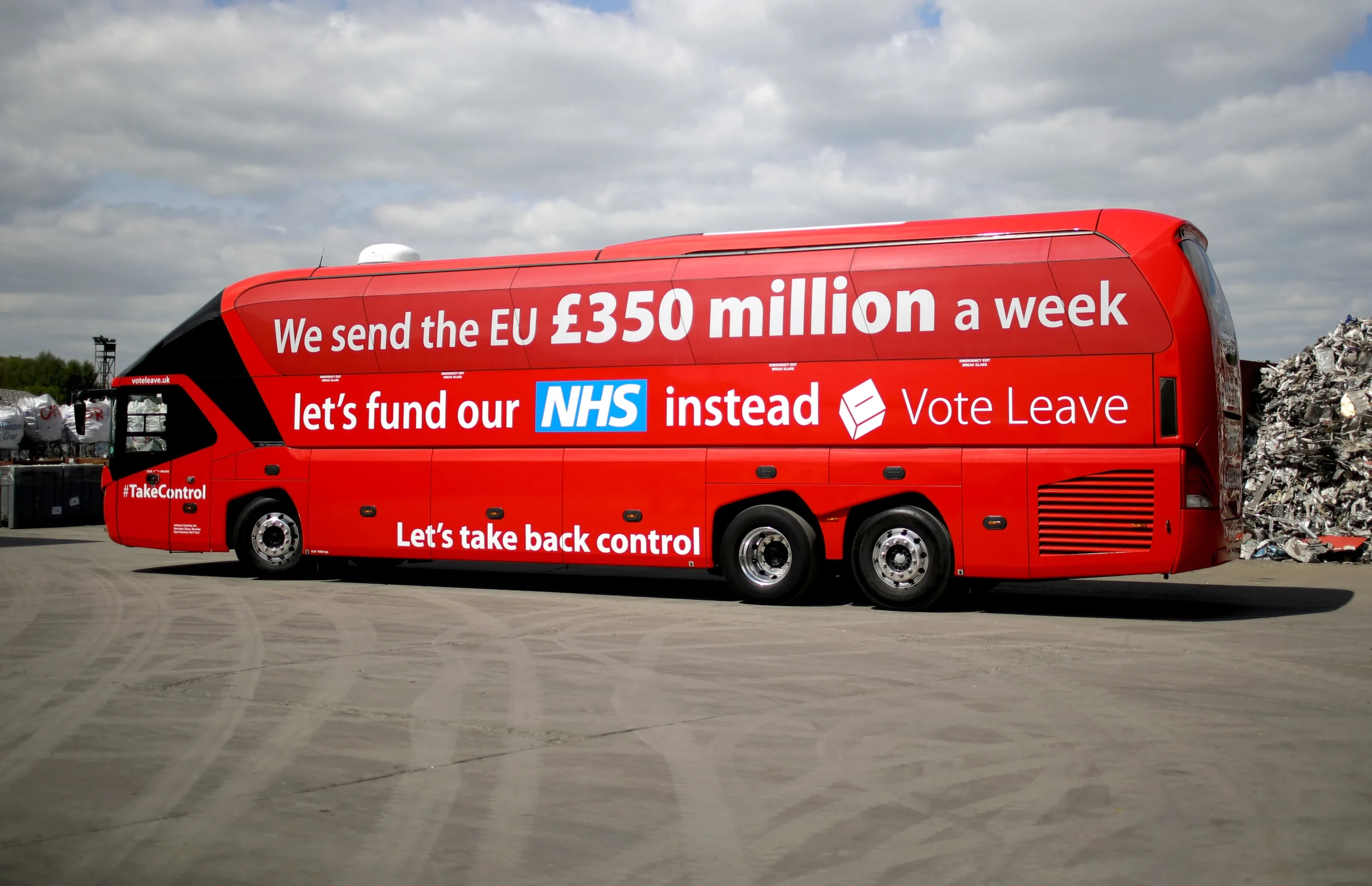
The Bus That Wouldn’t Go Away
If you lived in Britain during 2016, you almost certainly remember it.
A large red campaign bus carrying a message that became impossible to escape.
“We send the EU £350 million a week – let’s fund our NHS instead.”
The claim would become one of the most disputed political messages in British history.
- Economists challenged it.
- Fact-checkers challenged it.
- Journalists challenged it.
- Politicians challenged it.
Yet nearly a decade later, millions of people can still remember the slogan.
That alone tells us something important.
Most advertising campaigns struggle to remain memorable for six weeks.
This one is still being discussed ten years later.
In marketing terms, that is extraordinary.
The message became bigger than the bus itself.
- It became a symbol.
- Supporters saw it as truth.
- Opponents saw it as deception.
- But both sides talked about it endlessly.
And every time they did, the campaign received another burst of free publicity.
The old saying is that there is no such thing as bad publicity.
That is not always true.
But in this case, the controversy helped turn a campaign slogan into a national conversation.
Britain Was Never Really Voting on Trade Agreements
One of the strange things about Brexit is that the debate appeared to be about the European Union.
In reality, it was often about something else entirely.
- Immigration.
- Identity.
- Trust.
- Globalisation.
- Political elites.
- Economic change.
- The decline of traditional industries.
- The feeling that decisions were being made somewhere else by people you had never met.
The European Union became a container into which millions of voters poured their frustrations.
And that made it incredibly difficult to have a rational debate.
How do you argue with somebody who believes Brexit will restore national pride?
How do you counter somebody who believes Brexit threatens economic stability?
These are emotional positions.
Not statistical ones.
And emotion nearly always beats statistics.
Just ask any marketer.
The Leave Campaign Found Its Story
Every great campaign has a central narrative.
- Nike sells achievement.
- Apple sells creativity.
- Disney sells magic.
The Leave campaign sold control.
- Not economics.
- Not regulations.
- Not trade.
Control.
Three words captured the entire story:
Take Back Control.
It is difficult to overstate how effective that slogan was.
The beauty of it was that it meant different things to different people.
- Concerned about immigration?
Take Back Control.
- Fed up with politicians?
Take Back Control.
- Worried about sovereignty?
Take Back Control.
- Feeling left behind by globalisation?
Take Back Control.
The slogan acted like a mirror.
People saw their own concerns reflected back at them.
The best marketing often works exactly the same way.
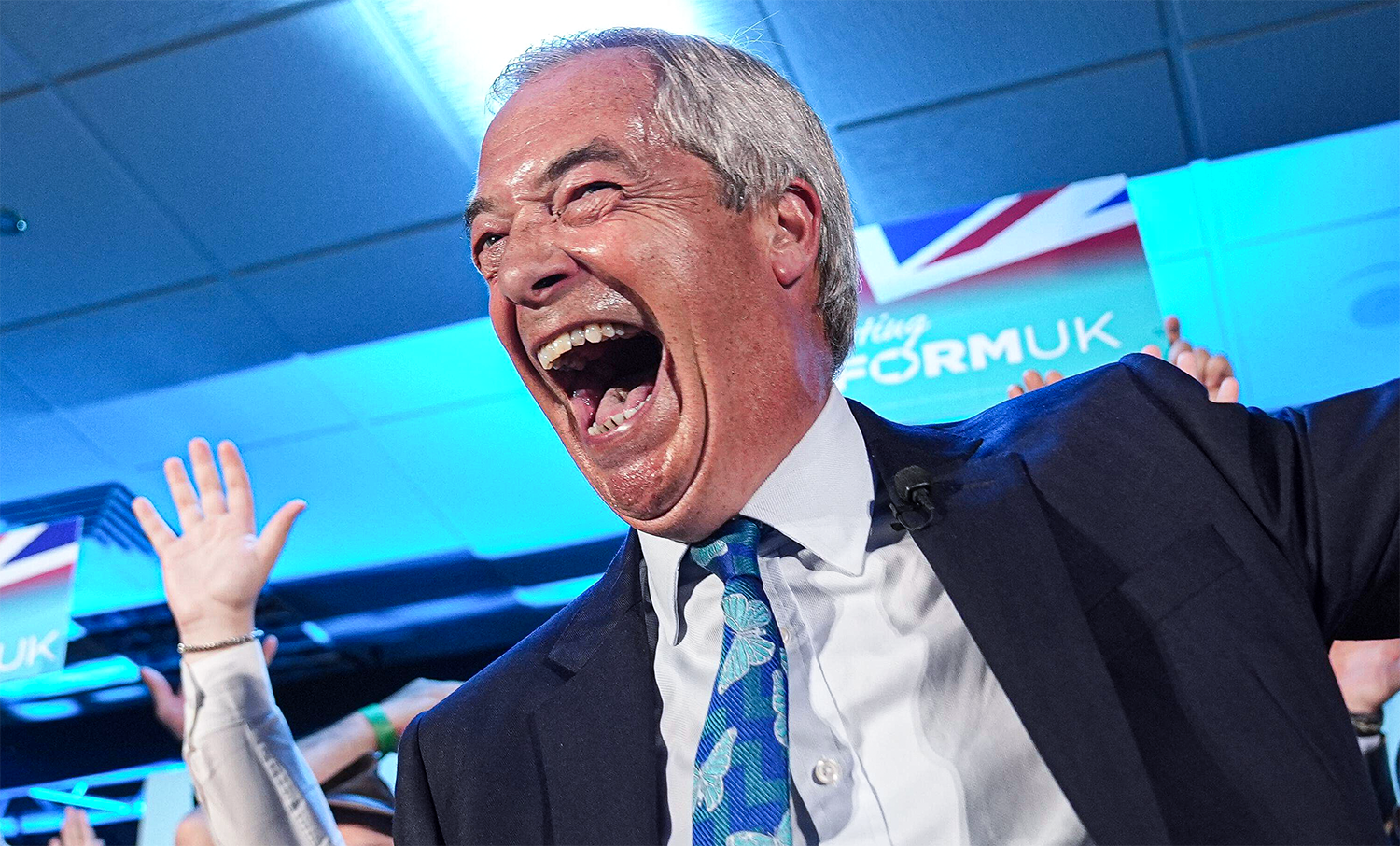
Meanwhile, Remain Was Selling a Spreadsheet
This may sound unfair.
But it is also largely true.
The Remain campaign had facts.
Lots of facts:
- Economic forecasts.
- Trade forecasts.
- GDP forecasts.
- Employment forecasts.
- Expert opinion.
- Warnings from businesses.
- Warnings from economists.
- Warnings from international organisations.
The problem was not necessarily that the facts were wrong.
The problem was that facts make poor stories.
Imagine trying to sell Disneyland by handing somebody a spreadsheet.
Imagine trying to sell a holiday by explaining airport logistics.
Imagine trying to persuade someone to buy a Labrador by discussing veterinary statistics.
People connect with stories.
Remain often responded to emotional arguments with technical explanations.
That is rarely a winning communications strategy.
The Day the Experts Lost
Perhaps the most significant lesson from Brexit was not political.
It was psychological.
For decades, governments, academics and major institutions assumed expertise carried authority.
Brexit suggested that assumption was no longer safe.
Many voters had reached a point where they distrusted institutions entirely.
- Warnings from economists were interpreted as evidence of bias.
- Warnings from politicians were viewed with suspicion.
- Warnings from businesses were dismissed as self-interest.
This created a communications problem that marketers increasingly face today.
When trust disappears, expertise becomes less persuasive.
And once trust is lost, it is incredibly difficult to rebuild.
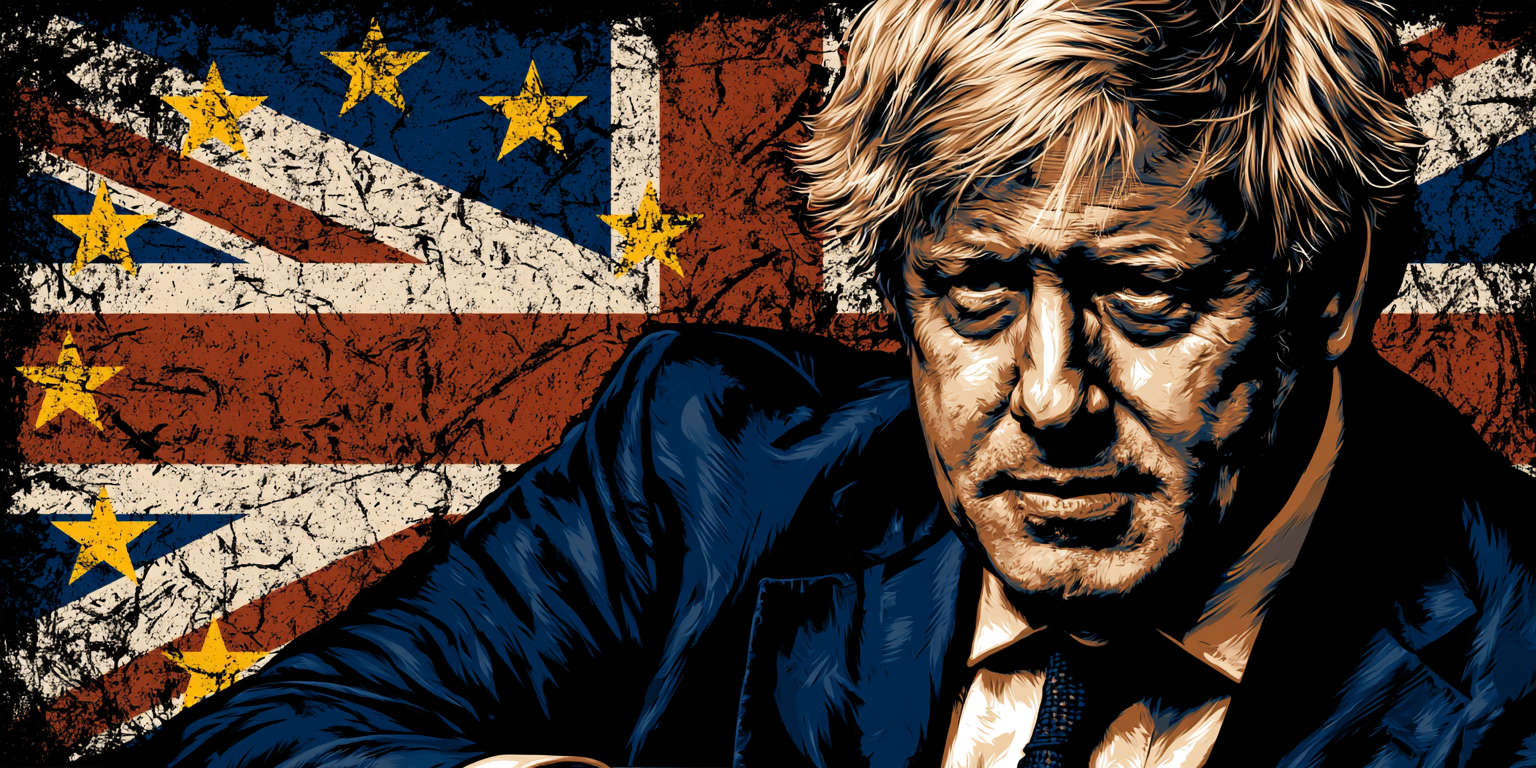
What Brexit Teaches Marketers
This is where some readers may become uncomfortable.
Because the lessons are not entirely positive.
- Brexit demonstrates that simple messages outperform complex ones.
- It demonstrates that emotional appeals often outperform rational arguments.
- It demonstrates that repetition works.
- It demonstrates that people are drawn to identity-based narratives.
Unfortunately, none of these lessons guarantee truth.
- A campaign can be memorable without being accurate.
- A campaign can be persuasive without being honest.
- A campaign can be successful without producing the outcome people expected.
That is why marketers have a responsibility that extends beyond simply getting attention.
As Philip Kotler has argued throughout his work, marketing should create value, not merely influence behaviour.
Brexit shows what happens when persuasion becomes more powerful than explanation.
George Orwell Saw This Coming
Long before social media, data analytics and campaign buses, George Orwell worried about political language.
In Politics and the English Language, Orwell argued that vague slogans and emotionally loaded phrases could be used to simplify complicated realities.
Reading some of the Brexit campaign material today, it is difficult not to think he had a point.
Terms such as sovereignty, control, freedom and democracy were powerful.
But they often meant different things to different people.
That ambiguity was not necessarily a weakness.
It may have been one of the campaign’s greatest strengths.
The more flexible a slogan becomes, the more people can adopt it as their own.
The Greatest Marketing Campaign in British Political History?
Whether you supported Leave or Remain is almost beside the point.
From a communications perspective, Brexit was remarkable.
A campaign transformed a deeply complex constitutional question into a simple story.
It found a memorable slogan.
It created iconic imagery.
It generated endless media coverage.
It mobilised millions of people.
And it won.
Few commercial marketers ever achieve anything on that scale.
Verdict
The history books will continue debating Brexit for generations.
Economists will argue about the numbers.
Politicians will argue about the consequences.
Voters will continue arguing with each other.
But marketers should study Brexit for a different reason.
It demonstrated that stories beat spreadsheets.
That emotion beats explanation.
And that the simplest message in the room is often the most powerful.
The red bus may eventually fade into history.
The lessons it taught about persuasion almost certainly won’t.
TL;DR
Brexit was not just a political event. It was one of the most effective communications campaigns in modern British history. Through memorable slogans, powerful storytelling and emotionally resonant messaging, the Leave campaign turned a highly complex issue into a simple narrative that millions of voters understood. Whether Brexit was right or wrong remains contested. Its significance as a case study in persuasion does not.