

St Patrick’s Day Marketing: How Irish Brands Turn a National Holiday into Global Gold
What marketers can learn from Guinness and other iconic Irish brands
Every year on 17th March, the world turns a little greener. Rivers are dyed, parades roll through city streets, and millions of pints of stout are poured. What began as a religious feast day celebrating Ireland’s patron saint has evolved into one of the most globally recognised cultural celebrations.
For marketers, St Patrick’s Day is a masterclass in cultural branding.
Irish brands have successfully turned a national celebration into an international marketing platform. Some do it through authenticity and heritage. Others through humour, storytelling, and clever timing.
And at the centre of it all sits a pint of stout that has become synonymous with the day.
The Marketing Made Clear Podcast
This article features content from the Marketing Made Clear podcast. You can listen along to this episode on Spotify:
Guinness: The Unofficial Sponsor of St Patrick’s Day
If one brand owns St Patrick’s Day in the public imagination, it is Guinness.
Founded in Dublin in 1759, Guinness has spent centuries embedding itself into Irish culture. But the genius of the brand is how it has exported that culture worldwide.
Today, St Patrick’s Day is one of the biggest sales periods for the brand globally. According to figures frequently cited by the drinks industry, millions of pints of Guinness are consumed worldwide on the day, with demand spiking in markets far beyond Ireland – including the United States, the UK, and Australia.
What Guinness does brilliantly is avoid heavy-handed sales messaging.
Instead, its marketing focuses on:
-
Irish heritage and authenticity
-
The ritual of pouring and drinking the perfect pint
-
Celebrations of community and togetherness
Classic Guinness campaigns lean into storytelling and symbolism rather than product features.
From a marketing perspective, Guinness demonstrates a key principle often discussed by Philip Kotler: strong brands embed themselves in culture rather than simply promoting products.
On St Patrick’s Day, Guinness doesn’t need to shout. The world effectively markets the brand for them.
Jameson: Turning Irish Identity into Global Appeal
Another brand that capitalises brilliantly on St Patrick’s Day is Jameson.
Owned by Pernod Ricard, Jameson has become one of the world’s best-selling Irish whiskeys, and St Patrick’s Day plays a major role in reinforcing its cultural positioning.
Jameson’s marketing tends to emphasise:
-
Irish humour
-
Craft heritage
-
Music and nightlife culture
In many cities around the world, the brand sponsors St Patrick’s Day events, bar activations, and music festivals, effectively turning the holiday into a global brand showcase.
Limited-edition packaging and collaborations with artists are also common.
The strategy is simple but effective: align the brand with the emotional energy of the celebration.
People may start the evening with Guinness, but by midnight the whiskey usually makes an appearance.
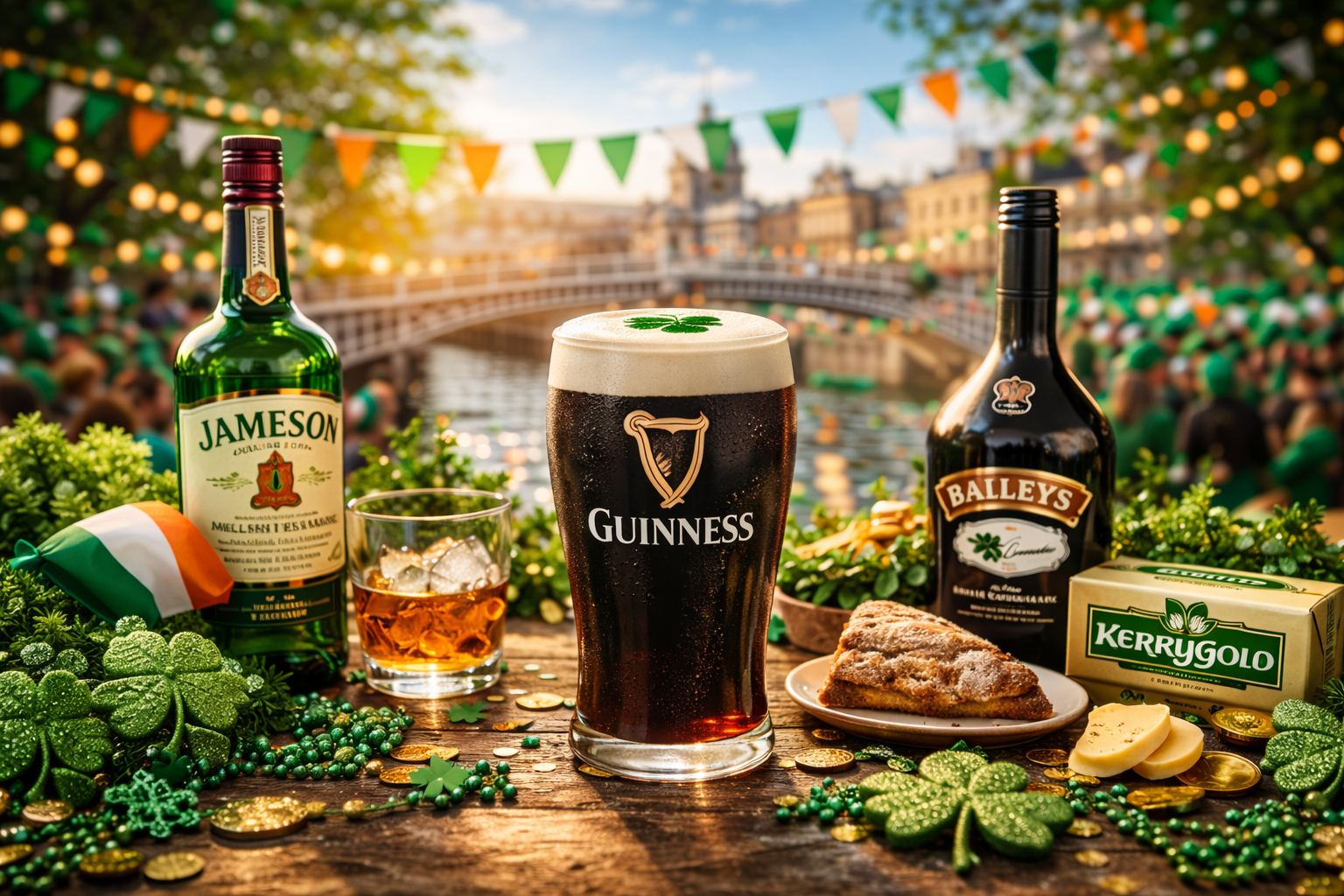
Baileys: Bringing the Celebration Home
Not every St Patrick’s Day celebration takes place in a pub.
Baileys Irish Cream, also owned by Diageo, has carved out a different role in the celebration.
Instead of positioning itself around nightlife, Baileys focuses on:
-
At-home celebrations
-
Dessert cocktails
-
Seasonal recipes and indulgence
Around St Patrick’s Day, Baileys often promotes cocktail recipes and themed drinks, encouraging consumers to create Irish-inspired moments at home.
It is a subtle reminder that occasion marketing doesn’t have to be loud. Sometimes it simply needs to make a product feel appropriate for the moment.
Kerrygold: Turning Irish Farming into a Premium Story
Owned by Ornua, Kerrygold has become one of the most recognisable butter brands globally.
While butter might not immediately scream “St Patrick’s Day”, Kerrygold cleverly leverages the broader celebration of Irish heritage and agriculture.
Around the holiday, the brand often promotes:
-
Irish recipes
-
Baking content
-
Farm-to-table storytelling
The marketing emphasises grass-fed cows, green pastures, and traditional farming practices, all of which align perfectly with the imagery associated with Ireland.
This reinforces a broader lesson for marketers: cultural moments can elevate even everyday products when tied to a compelling origin story.
Tourism Ireland: Marketing an Entire Country
St Patrick’s Day isn’t just a marketing opportunity for brands. It’s also one of the most powerful nation-branding exercises in the world.
Each year, Tourism Ireland orchestrates a global campaign known as “Global Greening.”
Iconic landmarks across the world are illuminated in green, including:
-
The Sydney Opera House
-
Niagara Falls
-
The London Eye
-
The Colosseum in Rome
The campaign is a remarkable example of earned media on a global scale.
Instead of traditional advertising, Tourism Ireland leverages spectacle, partnerships, and social media to ensure that Ireland dominates the news cycle every March.
For a relatively small country, it is an extraordinary feat of international marketing.
The Psychology Behind St Patrick’s Day Marketing
St Patrick’s Day marketing works because it taps into several powerful psychological triggers.
Identity and belonging
People enjoy participating in cultural rituals – even if they are only loosely connected to them.
Symbolism
Green clothing, shamrocks, Irish music, and traditional drinks create instantly recognisable visual cues.
Shared celebration
Events and festivals create communal experiences that brands can become part of.
These dynamics reflect principles explored by behavioural psychologists and marketing theorists alike. Humans respond strongly to ritual, symbolism, and storytelling, which makes cultural holidays incredibly fertile ground for brand engagement.
The Risks of “Paddy’s Day Marketing”
Of course, not every St Patrick’s Day campaign lands well.
Brands that have no genuine connection to Ireland sometimes fall into the trap of superficial “greenwashing” – simply adding shamrocks and green filters to their logos.
There are also cultural sensitivities to consider.
For example, many Irish people strongly dislike the phrase “St Paddy’s Day” being shortened to “St Patty’s Day”, which appears regularly in American marketing campaigns.
Authenticity matters.
The brands that perform best during St Patrick’s Day are those that have real cultural credibility.
Lessons for Marketers
St Patrick’s Day offers several valuable lessons for marketers across industries.
Cultural relevance creates marketing shortcuts
When a brand aligns with a widely celebrated moment, awareness comes naturally.
Heritage is a powerful asset
Brands like Guinness and Jameson benefit enormously from centuries of storytelling.
Occasion marketing works best when it feels authentic
Consumers can quickly detect opportunistic campaigns.
Rituals build brand memory
The act of pouring a Guinness or mixing a whiskey cocktail becomes part of the celebration itself.
TL;DR
St Patrick’s Day has evolved from a religious feast day into one of the world’s biggest cultural celebrations – and Irish brands have turned it into a powerful marketing opportunity.
Brands like Guinness, Jameson, Baileys, and Kerrygold use the occasion to celebrate Irish heritage, storytelling, and community. Meanwhile, Tourism Ireland amplifies the moment globally through spectacular campaigns like the annual “Global Greening” of international landmarks.
For marketers, the lesson is simple: cultural relevance, authenticity, and ritual can transform a single calendar date into a global brand platform.