

Tesco Clubcard and the Psychology of Loyalty Cards
Why Points Feel Like Progress (and Why We Can’t Leave Them Behind)
Loyalty cards are one of those marketing inventions that feel almost boring – until you remember they’ve quietly rewired how entire categories compete.
On the surface, a loyalty card is a simple value exchange:
You buy.
You collect points or unlock member prices.
You feel like a sensible adult who “shops smart”.
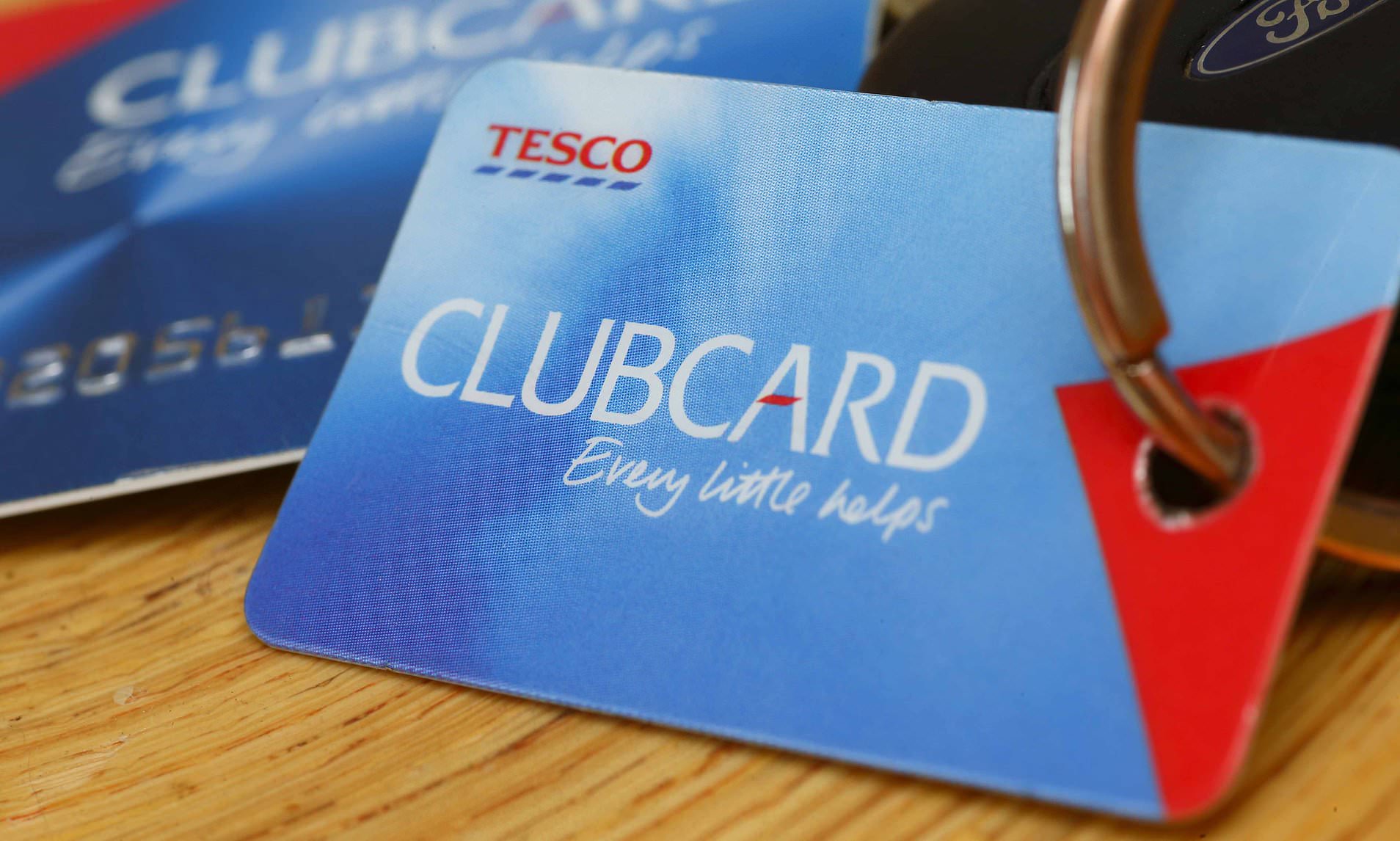
Underneath, it’s a beautifully engineered behavioural system: it changes how we perceive value, progress, and even our relationship with a retailer. And in the UK, there’s no better example than Tesco Clubcard – a scheme that has evolved from “points on your keyring” into the central operating system of Tesco’s pricing, personalisation, and customer insight.
This article unpacks:
- Why loyalty cards work (psychologically, not just commercially)
- What Tesco Clubcard got right – and what the wider industry learned from it
- The ethical and regulatory tension: when “loyalty” starts looking a lot like “paywall pricing”
- Practical takeaways for marketers designing loyalty programmes in any category
The Marketing Made Clear Podcast
Check out the Marketing Made Clear Podcast on all good streaming platforms including Spotify:
What a loyalty card really sells: certainty, status, and progress
Most loyalty programmes claim to do one thing: reward repeat custom.
In reality, they do several jobs at once:
-
They reduce switching (even if the rival is cheaper sometimes).
-
They create a sense of progress (“I’m nearly at a voucher”).
-
They shift how people judge prices (member price becomes the “real” price).
-
They generate data that can be used to personalise offers, improve ranges, and sell retail media.
If that sounds like a lot, it is. Loyalty cards aren’t just retention tools – they’re behavioural economics, CRM, pricing strategy, and data science wearing a polite little plastic badge.
Tesco’s scale shows how powerful this can become. Industry reporting has put Clubcard membership at around 23 million, with sales penetration reported as 82%. That’s not a “programme”. That’s a parallel economy.

Tesco Clubcard: from points scheme to competitive weapon
The early shock: fast adoption and market momentum
Clubcard launched in 1995, and the immediate uptake was huge – Campaign reported that within two weeks, seven million cards had hit stores.
That speed matters because it hints at something fundamental: loyalty programmes work best when they feel like a social norm quickly. Once “everyone has one”, not having one feels like turning up to a barbecue and refusing to use a plate on principle.
Contemporary coverage also framed Clubcard as part of Tesco’s rise to the top of UK grocery. Marketing Week reported Tesco gained close to two percentage points of market share in 1995, overtaking Sainsbury’s.
The data leap: dunnhumby and the birth of modern retail personalisation
Tesco didn’t just run a points programme. It professionalised customer insight.
Tesco’s long partnership with Dunnhumby (and its investment stake in the early 2000s) is widely credited with helping Tesco turn Clubcard data into targeted marketing and smarter ranging decisions.
This matters because a loyalty programme isn’t only a “reward engine”. It’s a learning engine:
-
Who buys what
-
In what frequency
-
With what substitutions
-
In what life stage signals (new baby, new pet, new diet, new habits)
That insight is a competitive advantage you can’t copy overnight.
The modern era: Clubcard Prices and loyalty as pricing architecture
The biggest shift came when loyalty moved from “points later” to “discount now”.
Tesco rolled out Clubcard Prices widely from 2020, making thousands of lower prices accessible only to members.
Reuters reported that Clubcard Prices went on to account for more than 95% of Tesco’s promotional sales, putting Clubcard at the heart of its strategy.
In Tesco’s own reporting, Clubcard Prices are framed as a meaningful household benefit – Tesco’s Annual Report 2025 cites
“up to £392 annual savings per customer”
(based on the top 25% of Clubcard members in a defined period).
At this point, Clubcard isn’t a “nice to have”. It’s a core part of Tesco’s value proposition.

The psychology behind loyalty cards (and why they’re hard to resist)
1) The goal-gradient effect: we speed up as we get closer
Humans tend to increase effort as they approach a goal. Loyalty schemes turn shopping into a progress bar.
Even if you weren’t planning to “be loyal”, the programme creates a narrative:
-
“I’m close to my voucher.”
-
“It would be silly not to get over the line.”
This is closely related to research like the Endowed Progress Effect, where giving people a head start increases completion rates because it reframes the goal as already underway.
That’s why “starter points”, “bonus stamps”, and “you’ve already earned X” messaging can be so effective. You’re not bribing people, you’re changing how they interpret their own momentum.
2) Loss aversion: the pain of missing out beats the joy of gaining
Classic behavioural economics: people dislike losses more than they enjoy equivalent gains.
Loyalty pricing weaponises that quietly:
-
The member price feels like the “correct” price.
-
The non-member price feels like a penalty.
So the consumer motivation shifts from “I want a reward” to “I don’t want to be mugged off”.
That’s one reason member-only pricing spreads quickly across categories. It doesn’t just offer a deal, it creates a threat of paying more.
3) The sunk cost fallacy: once you’ve invested, you stick around
Every point collected is a tiny commitment.
Over time, shoppers build up a mental account:
-
time spent
-
points earned
-
habits formed
-
app installed
-
offers personalised
Even if a competitor is cheaper on a given basket, switching feels like abandoning progress. That’s sunk cost psychology in everyday clothes.
4) Operant conditioning: rewards shape habits
Points are a form of reinforcement. But the more interesting layer is that loyalty schemes don’t just reward purchasing – they reward routine.
The “cue” might be:
-
weekly shop
-
payday
-
school run
-
fuel stop
-
lunch meal deal
The scheme becomes part of a habit loop, and once it’s embedded, customers don’t actively decide each time. They default.
5) Reciprocity: “they’re good to me, so I’ll be good to them”
Reciprocity is a powerful social norm. Even in a supermarket context, it applies:
-
“They’ve helped me save.”
-
“They treat me like a valued customer.”
That feeling is why programmes that feel generous can build genuine brand warmth, not just transactional repeat purchases.
6) Identity and status: loyalty as self-image
Some programmes create tiers. Tesco’s has historically had status elements (and today has a strong “member” identity via pricing access).
The psychology is simple: people like being “in”. Being “out” feels like you’re not playing the game properly.
Why Tesco Clubcard has been so successful (beyond “it saves money”)
It’s tempting to explain Clubcard success as “Tesco is big”. But big brands launch plenty of things that go nowhere.
Clubcard has endured because Tesco has repeatedly made it feel:
-
Easy (join quickly, use in-store and online)
-
Immediate (Clubcard Prices matter today, not in three months)
-
Relevant (personalised offers and targeted mechanics)
-
Legitimate (positioned as value for households, not a gimmick)
And crucially: Tesco has built business infrastructure around it. This isn’t a marketing side project – it’s integrated into pricing, promotions, media, and insight.
That said, there’s also a reason it’s controversial.
The ethical tension: when loyalty becomes a requirement, not a reward
As loyalty pricing grew, regulators and consumer groups started asking a fair question:
Are member-only prices still “loyalty”, or are they effectively a two-tier pricing system?
The UK Competition and Markets Authority reviewed loyalty pricing and concluded that loyalty prices generally offer genuine savings, finding very little evidence of supermarkets inflating usual prices to exaggerate discounts. The CMA also highlighted the need to avoid disadvantaging certain groups (for example, shoppers without smartphones) and advised retailers to keep promotions compliant and clear.
Consumer perception is still messy though, because fairness isn’t only about whether savings are “real”. It’s about whether access feels equitable.
And when branding and price signalling get too similar to a competitor, it gets even messier. Tesco’s Clubcard Prices branding notably became part of a legal dispute with Lidl, with Tesco required to change the logo after losing in court (as reported by The Guardian).
So yes, loyalty pricing can be effective – but marketers need to manage the trust side with care.

What marketers can learn from Clubcard (even if you don’t sell groceries)
1) Make the reward feel like progress, not maths homework
If customers have to do mental accounting, you’ve already lost. Clear milestones beat abstract points.
2) Don’t rely on “points someday” as your only hook
Tesco’s shift toward immediate value (member prices) helps explain why Clubcard stayed central as shopping habits changed.
3) Treat loyalty as a product, not a promo
Programmes decay when they’re “set and forget”. The best ones evolve, add new mechanics, improve UX, and keep the value story fresh.
4) Be transparent about the data exchange
People will trade data for value, but they resent feeling tricked into it. If your scheme depends on data, communicate that clearly and responsibly.
5) Design for inclusion, not just optimisation
If participation requires a smartphone, an app, or perfect memory, you’ll exclude real customers. Even the CMA flagged the need to consider groups who may struggle to access loyalty schemes.
6) Loyalty should strengthen brand trust, not just lock people in
There’s a difference between being chosen and being cornered. If your loyalty design makes customers feel punished for not participating, you might win short-term share but lose long-term sentiment.
TL;DR
Tesco Clubcard works because it’s not just a points scheme – it’s a behavioural system that taps into goal pursuit, loss aversion, habit formation, reciprocity, and identity. Tesco scaled it early, built serious customer insight capability around it, and later made it central to pricing via Clubcard Prices (which Reuters reported accounts for over 95% of Tesco promotional sales). Regulators have generally found loyalty pricing delivers genuine savings, but the ethics and accessibility of member-only pricing still need careful handling.