Gap’s 2010 Logo Redesign: Timeline, Backlash, and Aftermath
Why Gap Decided to Change Its Iconic Logo
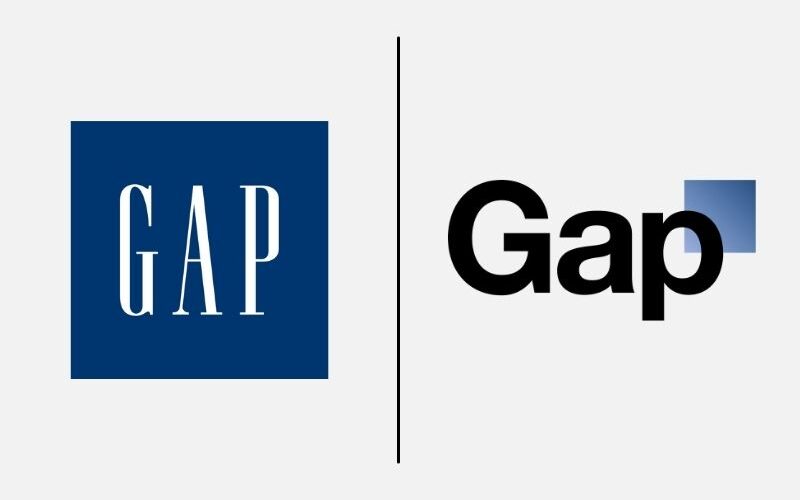
By 2010, Gap’s branding had remained largely unchanged for over two decades. The familiar “blue box” logo; white GAP letters in a serif font inside a navy blue square, had symbolised the company since 1990.
However, after the 2008 financial crisis Gap was struggling with falling sales and waning consumer interest, particularly among younger shoppers. Executives felt the brand needed a fresh, modern image to revive its fortunes and appeal to a new generation. As Gap’s President in North America, Marka Hansen, later explained, the company had been “living and breathing” a journey to make Gap more relevant, updating products (e.g. premium 1969 denim line) and store designs and
“the natural step”was to see how the logo should evolve”
to align with these changes. In short, leadership believed the logo, untouched for 20+ years, had grown “stale” and that a redesign could signal a contemporary reinvention of the brand.
Gap’s rationale for the change was articulated by company spokesperson Louise Callagy, who said the goal was to move the brand from
“classic, American design to a modern, sexy, cool aesthetic”.
The new logo was intended as a visual statement of this shift. Gap’s VP of corporate communications, Bill Chandler, described the design as:
“a more contemporary, modern expression”
…retaining only a small nod to the past in the form of a blue square motif. Internally, there was also a sense of “brand fatigue” – the feeling that after 20 years, change was needed for its own sake. Thus, in mid-2010 Gap commissioned a logo redesign as part of a broader strategy to rejuvenate the brand’s image and reverse declining sales.
The Marketing Made Clear Podcast
Check out the Marketing Made Clear Podcast on all good streaming platforms including Spotify:
The Rebranding Process and Key Players Involved
Gap entrusted the logo redesign to a leading New York branding agency, Laird & Partners, which had handled many of Gap’s advertising campaigns over the years. The agency’s founder, Trey Laird, and his team created a radically different look: the word “Gap” in bold Helvetica lettering, coloured black, with a small blue square (gradient-toned) perched behind the “p”. This stripped-down wordmark discarded Gap’s capitalised serif font and iconic blue box background, aiming for a minimalist, modern feel.
While Gap never officially disclosed the cost, some industry estimates put the total rebranding investment (design work, rollout, etc.) at up to $100 million; a significant gamble predicated on optimism that a new look would signal positive change.
The key decision-makers included Marka Hansen, President of Gap North America, who championed the rebrand internally. Gap’s CEO Glenn Murphy supported efforts to revitalise the core Gap brand amid years of stagnant growth. Company spokespeople like Louise Callagy and Bill Chandler coordinated the messaging around the new logo. On the agency side, Laird & Partners was deeply involved in crafting the design and brand narrative. (Notably, Laird’s influence on Gap’s marketing was such that in prior campaigns they had often downplayed the old logo, which perhaps emboldened the agency to make a bolder change.)
Timeline of the Rebrand:
Gap did not stage an extensive teaser campaign or public build-up for the new logo. Instead, the change came rather abruptly:
-
4 October 2010 (Monday): Gap quietly unveiled the new logo on its website with little fanfare.
-
5–6 October 2010: Customers and designers began noticing the change. Confusion and ire on social media ensued and design blogs.
-
6 October 2010 (Wednesday): As criticism snowballed, Marka Hansen published an article on Huffington Post defending the decision.
On the same day, Gap’s social media team responded to the backlash by announcing a crowd-sourcing initiative (via Facebook) to involve the public in refining or redesigning the logo.
-
11 October 2010 (Monday): Less than a week after launch, Gap executives decided to abandon the experiment.
-
12 October 2010 (Tuesday): Gap confirmed to the press that it was scrapping the new logo entirely and reverting to its 1990 design, acknowledging mistakes in how the rebrand was handled.
The new logo’s lifespan had lasted only 6 days.
Public Backlash and Social Media Outcry
The reaction to Gap’s new logo was swift, loud, and overwhelmingly negative. Loyal customers and designers alike were shocked that they would discard an identity that had become virtually synonymous with the brand’s image.
Within hours of the logo’s debut, social media erupted with ridicule and protests. Consumers flooded Gap’s Facebook page and other forums with complaints “over 400” posts appeared on the company’s Facebook page in the first day alone, many accusing Gap of having
“destroyed what it took 20-plus years to build”
…by tossing aside a classic logo.
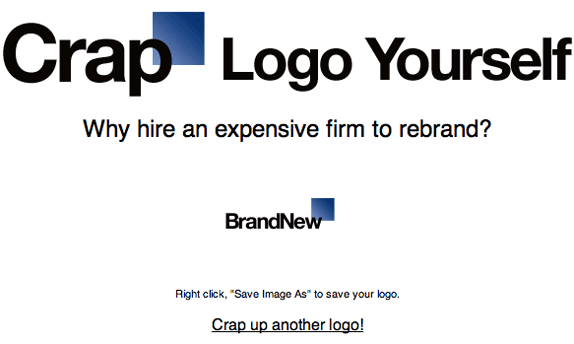
Within a few more days, those negative comments on Gap’s Facebook ran into the thousands. On Twitter, a parody account @GapLogo quickly amassed about 5,000 followers, relentlessly lampooning the design. A web developer even created a “Make Your Own Gap Logo” generator, inviting people to mock the simplistic new look; it went viral and produced some 14,000 parody versions of the logo within a week. In the design community, blogs and forums lit up with scathing critiques, one contest on a design site offered a prize for the funniest caption about the new logo (entries included quips like “Gap’s new branding inspiration: PowerPoint ’97”).
Traditional media and industry experts also piled on.
Headlines in major outlets dubbed it “Gap’s logo fiasco” and a case of corporate identity gone wrong. Bloomberg News, noting shopper reactions, reported that many found the new look “ugly and bland”. Slate’s design columnist snarked that the logo looked like it belonged to
“a failed low-fare airline spinoff”
…and fashion site Refinery29 compared it to a cheap, uncool T-shirt graphic one might find at a thrift store. The consensus was that the new logo felt generic, corporate, and devoid of Gap’s personality – in other words, a downgrade. Crucially, what might have been mild disappointment turned into full-blown backlash because of how abruptly the change came. Gap gave no advance warning or rationale to loyal customers, so many perceived the rebranding as arbitrary and even disrespectful to the brand’s heritage.
As one marketing analyst observed during the storm:
“people often react negatively to change”
…especially when a beloved icon is replaced without explanation, and social media now gives them a megaphone to broadcast that displeasure.
It’s worth noting that a few observers tried to defend Gap’s intentions, arguing that any new design requires an adjustment period. But such voices were drowned out by the torrent of criticism in the days immediately following the logo’s release. Monitoring of online sentiment showed the overwhelming majority was negative: a tech firm that analysed 75 million social media posts found the general vibe was “dislike”; with frequent mentions of the word “bland”; coupled with a surge of nostalgia for the old logo’s “classic” feel. In essence, Gap’s attempt to appear cool and modern was being received as a clueless rejection of its own brand equity.

Gap’s Response: Damage Control and a Six-Day Reversal
Caught off-guard by the intensity of the backlash, Gap’s leadership scrambled to respond. Their approach evolved rapidly over the course of a week. Initially, Gap defended the new logo and urged people to give it a chance. Marka Hansen took to the Huffington Post on 7 October to rationalise the change, claiming
“our brand and our clothes are changing, so we want our logo to reflect that change”
… and assuring readers that the design was chosen for being
“more contemporary and current, while still honouring our heritage through the blue box”.
This explanation, however, did little to mollify critics, many felt it was laden with corporate-speak and failed to address why the beloved old logo had to go.
As the uproar continued, Gap attempted a more interactive form of damage control. On 6 October, the company had posted a message on its Facebook page framing the new logo as a starting point for a collaborative redesign effort.
“Thanks for everyone’s input on the new logo!”
Acknowledging the “buzz” (to put it mildly), Gap wrote that it was “thrilled to see passionate debates unfolding” and invited the public to “share your designs” for a better logo:
“We love our version, but we’d like to see other ideas,”
…the post declared, adding that the company would crowd-source suggestions in the days ahead. This move was unprecedented – essentially Gap was admitting that its new identity might not be the final answer and that it was open to outside ideas.
However, the crowd-sourcing gambit misfired.
Instead of calming the outrage, it attracted further criticism. Branding professionals decried it as a sign of desperation and a devaluation of design expertise (why launch a new logo only to ask the public to design one for free?). Many consumers interpreted it as Gap not standing behind its own decision.
Internally, Gap soon recognised that this strategy was doing more harm than good. As one Gap spokesperson later admitted,
“this wasn’t the right project at the right time for crowd sourcing”
…effectively conceding that the open-call for designs was a mistake. In fact, no crowd-sourced designs were ever implemented; within a few days Gap quietly shelved the idea of a public contest altogether.
Gap Retreats
Facing relentless negative press and no sign of public acceptance, Gap’s top management decided on a full retreat. On 11 October, Marka Hansen announced that Gap would restore its classic blue-box logo, ending the experiment after less than a week.
In a frank statement posted on Gap’s site and social media, Hansen wrote:
“We’ve been listening to and watching all of the comments this past week. […] We heard them say over and over again they are passionate about our blue box logo, and they want it back. So we’ve made the decision to do just that – we will bring it back across all channels.”
he went on to acknowledge the company’s missteps:
“We’ve learned a lot in this process. And we are clear that we did not go about this in the right way. We recognise that we missed the opportunity to engage with the online community.”
Hansen affirmed that while there “may be a time to evolve our logo” in the future, “if and when that time comes, we’ll handle it in a different way.”
This public mea culpa was a rare move for a major corporation, essentially admitting that the rebrand was handled poorly and that customer sentiment had been grossly underestimated. By 12 October 2010, Gap’s stores, website, and marketing materials were officially back to using the old logo. The infamous new logo was scrapped, living on only in branding textbooks and “worst logo flop” listicles. Gap’s reversal, coming just six days after rollout – was so swift that it became a news story in itself. Vanity Fair, in a tongue-in-cheek obituary, pronounced the new logo “dead at one week” of age.
Gap Logo Aftermath and Lessons Learned
Gap’s logo U-turn, while stemming the immediate furor, had lasting repercussions inside the company and offered the business world a cautionary tale. In the months following the debacle, Gap underwent a shake-up of its marketing leadership and strategy.
In February 2011, just three months later, Marka Hansen stepped down as President of Gap North America. The company insisted her departure was due to broader issues (disappointing sales over the holiday season) and not solely the logo incident, but the timing was widely noted.
Gap’s CEO Glenn Murphy diplomatically stated it was “the right time for a change in the organisation in order to take the Gap brand to a new level”, thanking Hansen for her contributions. Nonetheless, Hansen had been the public face of the logo fiasco, and her exit underscored that the episode was seen internally as a serious misstep.
Around the same time, Gap parted ways with Laird & Partners, the agency behind the new logo, ending a long-standing relationship. The company brought in a new global creative agency (Ogilvy & Mather) and even hired a new Global Chief Marketing Officer, a role that had not previously existed at Gap. This was part of a broader brand reboot: consolidating marketing in New York, setting up a “global creative center”, and refocusing on core brand messaging. In an unusually candid press release, Gap acknowledged the need for more “transparency” and dialogue with consumers going forward. As Gap’s spokeswoman Louise Callagy admitted, today’s consumers expect to have a conversation with brands and “not just be told” what’s happening. The implication was clear – Gap had learned a hard lesson about ignoring customer sentiment and the power of social media.
Key Learnings From the Gap Logo Fiasco
Beyond the internal shake-up, the “Gap logo fiasco” quickly became a case study in branding circles. Marketers and academics have dissected it in articles, journals, and classroom discussions as an example of how not to manage a rebrand. A few key learnings emerged for Gap and other companies:
-
Don’t undervalue brand equity: Gap underestimated the emotional attachment customers had to its old logo. The outcry highlighted that logos are core to brand identity – a visual shorthand for trust and familiarity built over years. Abruptly changing such an iconic element can feel to loyal customers like a betrayal of the brand’s heritage. Any change must be carefully considered and signalled in advance to avoid alienating the base.
-
Research and test before you leap: The failure suggested Gap did little to test the new design with consumers or get feedback from brand loyalists before launch. With more foresight (e.g. focus groups or soft launches), the company might have realised the design was unpopular. As one branding journal put it, Gap’s move appeared “out-of-the-blue” with no evident strategic driver, making it seem like change for its own sake.
-
Engage your customers (the right way): Ironically, Gap’s biggest mistake was not involving its community beforehand. Once the backlash hit, the attempt to crowdsource a solution was viewed as disingenuous. The lesson is to engage customers early – co-create rather than react. Gap itself later admitted it “missed the opportunity to engage with the online community” at the crucial moment. Brands now cite this fiasco as proof that in the age of Facebook and Twitter, major brand changes should never be sprung on customers without dialogue.
-
Social media can make or break rebrands: The speed and scale of the Gap backlash demonstrated the amplifying effect of social networks. What might have been a minor PR blip a decade earlier became a firestorm in 2010. As a PR executive noted, people who previously might have just grumbled in-store could now “share their view with others and rally around a cause” online. Gap learned firsthand that social media sentiment is a powerful force – one that can force a corporation into a humbling reversal in a matter of days.
In the years after 2010, Gap never attempted another radical logo redesign. The company doubled down on its classic logo and worked on product-focused turnarounds instead. The blue square Gap logo remains in use to this day, a reminder of both the brand’s heritage and the failed experiment.
While the 2010 episode was bruising, some observers have noted that Gap at least showed responsiveness to its customers in the end, albeit under duress. By listening to consumer passion, however belatedly, and restoring the familiar logo, Gap preserved the brand loyalty that might have been lost had it stubbornly stuck to the revamp.
Ultimately, Gap’s six-day logo saga has entered industry lore. It’s cited alongside New Coke and other infamous marketing U-turns (in fact, many headlines at the time explicitly compared them). But within Gap Inc., the event prompted a refocusing on brand fundamentals: know your customer, respect your brand’s legacy, and embrace transparency when change is necessary.
As CEO Glenn Murphy later emphasised, the company’s renewed changes were aimed at delivering “what our consumers ask for” around the world.
In retrospect, the fiasco proved a costly lesson in the importance of brand identity and customer engagement – one that Gap and other retailers have not forgotten.