

Burns Night: How Robert Burns Became Scotland’s Greatest Brand Ambassador
From a Poet’s Supper to a Global Cultural Export
Every year on 25 January, Scotland (and a surprisingly large number of people with no Scottish blood whatsoever) gathers to celebrate Burns Night.
There will be haggis.
There will be whisky.
There will be at least one person who has never read a poem aloud before confidently attempting Address to a Haggis with theatrical gusto.
What looks like a cosy national tradition is, in reality, a fascinating blend of genuine historical continuity, 19th-century reinvention, and cultural branding so effective that it has exported Scottish identity across the world.
To understand Burns Night properly, you need to understand three things:
- Who Robert Burns actually was (beyond the tea towels)
- Which traditions are far older than Burns himself
- And which “ancient customs” are, frankly, not that ancient at all
The Marketing Made Clear Podcast
Check out the Marketing Made Clear Podcast on all good streaming platforms including Spotify:
Who was Robert Burns (and why does he matter)?
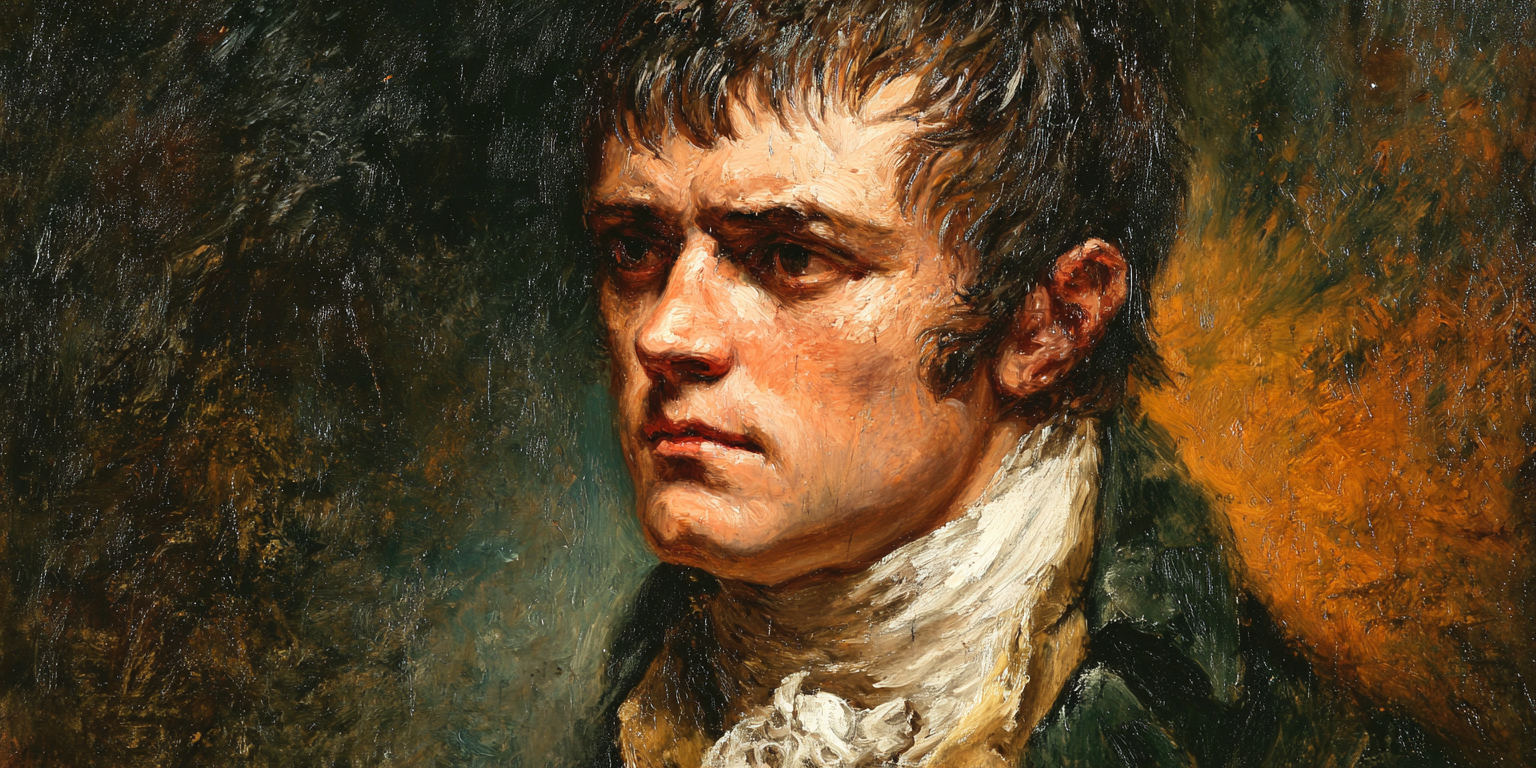
Robert Burns (1759–1796) was a farmer, poet, political radical, and cultural irritant – often all at once. Born in Alloway, Ayrshire, Burns wrote primarily in Scots, at a time when English literary norms dominated respectable writing.
This mattered.
Burns wasn’t just writing poetry. He was:
-
Preserving Scots language and dialect
-
Giving voice to ordinary people rather than elites
-
Smuggling Enlightenment-era ideas about equality and liberty into verse
-
Being quietly (and sometimes loudly) republican in a monarch-friendly Britain
Poems like To a Mouse, A Man’s a Man for a’ That, and Tam o’ Shanter weren’t polite salon pieces. They were earthy, funny, political, and emotionally direct.
Burns also played a major role in collecting and reworking traditional Scottish songs, including Auld Lang Syne, which has since become one of the most sung songs on Earth. That alone would secure him a place in cultural history.
He died aged just 37, leaving behind a body of work that became central to Scottish identity – especially for Scots living abroad.
The Origins of Burns Night
Here’s the first myth to clear up:
Burns Night did not begin as a national tradition.
The very first Burns Supper was held in 1801, five years after Burns’ death, by a small group of his friends in Ayrshire. It was informal, sentimental, and explicitly commemorative.
Only later did it become ritualised.
By the early 19th century, Burns Clubs had sprung up across Scotland and beyond. These clubs formalised:
-
The structure of the evening
-
The order of speeches
-
The poems to be recited
-
The central role of haggis and whisky
In other words, Burns Night evolved from private mourning into public cultural performance.
That shift matters. Because once something becomes repeatable, it becomes exportable.

Traditions That Are Older Than You Might Expect
Haggis (older than Burns by centuries)
Haggis often gets treated as a novelty food, but it has medieval roots. Offal-based dishes were practical, economical, and widespread across Europe.
Burns didn’t invent haggis.
He elevated it.
Address to a Haggis (1787) turned a humble dish into a symbol of Scottish pride – mocking aristocratic pretension while celebrating plain, nourishing food. That rhetorical move has aged remarkably well.
Scots Language and Oral Tradition
Burns was writing within a long oral and poetic tradition that pre-dated him by centuries. Ballads, folk songs, and vernacular verse were already deeply embedded in Scottish culture.
Burns’ contribution was preservation and amplification, not invention.
Whisky as a social glue
Whisky predates Burns by hundreds of years and was already deeply woven into Scottish social life. What Burns Night did was place whisky within a ceremonial framework – tasting, toasting, and storytelling.

Traditions That are Newer Than People Think
The Strict Burns Supper Format
The familiar structure – piping in the haggis, formal speeches, set responses – is largely a 19th-century creation.
Burns himself would almost certainly have found it a bit stiff.
The formalisation happened as Burns Clubs tried to standardise celebrations, particularly as they spread internationally. Structure made the tradition easier to replicate in London, New York, Toronto, and Sydney.
Tartan Overload
While tartan has ancient roots, its hyper-codified clan associations are partly a Victorian invention, popularised after Sir Walter Scott’s involvement in George IV’s 1822 visit to Scotland.
Burns Night didn’t create this, but it happily absorbed it.
Burns as a “Safe” National Figure
Burns the radical was gradually softened into Burns the romantic national poet. His sharper political edges were smoothed to make him more universally palatable – particularly in imperial Britain.
The irony, of course, is that Burns himself would have enjoyed pointing that out.
How Burns Night Popularised Scottish Traditions Globally
Burns Night is one of the most successful examples of cultural export marketing in history – achieved without a marketing department.
Its success lies in a few simple elements:
-
A fixed date (25 January)
-
A repeatable format
-
Food, drink, and performance
-
A central human story
Crucially, Burns Night doesn’t require Scottish birthright. Anyone can participate. That inclusivity has allowed it to spread wherever Scottish diaspora settled – and beyond.
Today, Burns Suppers are held by:
-
Corporations
-
Universities
-
Sports clubs
-
Diplomatic missions
-
And people who just quite like whisky
Why Burns still resonates
Burns survives not because he’s compulsory reading, but because his work remains:
-
Funny
-
Emotional
-
Politically relevant
-
Human
He wrote about class, love, regret, ambition, hypocrisy, and the dignity of ordinary people. Those themes don’t expire.
Burns Night works because it celebrates a person without pretending he was perfect, and a culture without freezing it in amber.
That balance – tradition without stagnation – is rare.
Burns Night as a Lesson in Cultural Longevity
Burns Night reminds us that traditions don’t need to be ancient to feel meaningful. They need to be:
-
Repeatable
-
Adaptable
-
Rooted in genuine human stories
Some elements are older than we think.
Some are newer than we admit.
But together, they form something resilient.
Which is probably exactly what Burns would have approved of – ideally with a dram in hand.
TL;DR
-
Burns Night began in 1801 as a small memorial supper, not an ancient ritual
-
Robert Burns was a radical poet who preserved Scots language and challenged social hierarchy
-
Haggis, whisky, and Scots poetry long pre-date Burns, but he elevated them culturally
-
Many “traditional” Burns Night rituals were formalised in the 19th century
-
Burns Night succeeded globally because it is inclusive, repeatable, and human
-
Burns endures because his themes remain relevant, funny, and quietly rebellious